
News
Proprietary Planters Alliance is catalyst Lanka’s plantation sector urgently needs


In the lush hills and tropical lowlands of Sri Lanka, a quiet revolution is stirring—one that seeks not just to revive but to radically transform the plantation sector. The Proprietary Planters Alliance (PPA) has emerged as a game-changing force with a clear mission: to give voice, vision, and viability to proprietary planters—Sri Lanka’s underrepresented yet vital stakeholders in agriculture.
At a time when global markets demand traceability, value-chain efficiency, environmental stewardship, and ethical labour practices, the plantation sector remains burdened by archaic structures and fragmented representation. This is the void the PPA is built to fill. With this intention in mind, PPA inaugurated its operations on 01st June 2025 at a simple ceremony held at the Orient Club – Colombo. The Office Bearers appointed are: Founder -Dammika Kobbekaduwa, Chairperson- Dr. Janaki Kuruppu, Directors- Dr. Dilhan Sampath Jayatilleke, Upananda Karunaratne, Dr. R A D Kumarawickrama, Dr. W G Somaratne, Rehan Jayathilake, S M P Jayantha, Arjun Dharmadasa, Dr. Nadaraja Rejendran, amd Dyan Seneviratne.
The Gap: A Fragmented Sector Without a Unified Voice
For decades, proprietary planters—those who own and operate small to mid-sized tea, rubber, coconut, spice, and fruit estates—have lacked a centralized platform to lobby for policy, access finance, and leverage innovations. Unlike corporate plantations, these planters rarely benefit from R&D, climate adaptation schemes, digital agri-tools, or direct trade exposure.
Meanwhile, national goals like doubling the GDP to $160 billion and making Sri Lanka a smart agricultural hub are simply unattainable without tapping into the true potential of these grassroots actors.
PPA bridges this divide by acting as:
A policy think-tank
A technical innovation platform
A channel for climate finance and ESG compliance
A collaborative hub for agri-tourism, value addition, and sustainable exports
Vision, Mission, and Purpose
Vision:
To create a resilient, sustainable, and globally competitive proprietary plantation sector in Sri Lanka that leads in innovation, value addition, and ethical agricultural practices.
Mission:
To empower proprietary planters through unified representation, advanced agronomy, policy advocacy, climate-smart innovations, and integrated value-chain management—enabling prosperity from plot to port.
Strategic Goals:
1. Policy Reform: Influence national agricultural, trade, and labour policy to favour modern proprietary estate models.
2. Value Chain Integration: Promote vertically integrated models from cultivation to retail, including tea-based wellness products and processed spices.
3. Innovation & Digitalization: Provide members access to precision agriculture, remote sensing, and AI-driven analytics.
4. Climate Resilience & ESG: Implement globally aligned climate-smart practices and position members for green financing.
5. Market Access: Enable direct links with exporters, supermarkets, and buyers for improved farm-gate pricing.
6. Capacity Building: Facilitate continuous training, certification, and professional development.
7. Youth & Gender Equity: Encourage new generations and women to become plantation entrepreneurs.
The Colombo Declaration: A Defining Milestone
On June 1st, 2025, the PPA took a bold step forward by ratifying the Colombo Declaration at the Orient Club, Colombo 07—a formal charter of unity, purpose, and transformation for Sri Lanka’s proprietary plantation community. This Declaration is not just a ceremonial pledge; it is the institutional backbone of a national movement toward a climate-smart, value chain-driven, and people-first plantation model.
The Declaration reinforces key commitments including ESG-driven agriculture, HRM-centered workforce transformation, policy engagement, and access to global green finance. By aligning proprietary planters around these shared objectives, the Colombo Declaration directly contributes to closing the productivity and market access gaps that have historically limited the sector’s GDP contribution.
In essence, the Colombo Declaration positions PPA as a strategic national instrument to unlock the latent economic value in Sri Lanka’s plantation economy—potentially adding billions to the country’s agri-GDP through inclusive, sustainable growth.
Why Every Proprietary Planter Must Join
1. Power in Numbers:
Alone, a planter is a commodity producer. As a member of PPA, you become part of a national movement with lobbying power, donor engagement, and export linkages.
2. Tools of the Future:
Access the latest in satellite crop monitoring, regenerative soil tech, and climate insurance models.
3. Policy Access:
Be at the decision-making table—on issues ranging from subsidy allocation to land reform and smart agri-investments.
4. Climate & ESG Compliance:
Get certified, get recognized, and get financed. PPA’s alignment with global standards allows members to qualify for carbon credits, green loans, and sustainability-linked certifications.
5. Shared Prosperity:
PPA offers a space for collaboration—not competition—among fellow planters, innovators, and financiers.
A Tropical Model for the Global South
While rooted in Sri Lanka, PPA offers a scalable model for tropical countries across Asia, Africa, and Latin America—regions with similar plantation legacies and rural enterprise structures. Whether it’s nutmeg in Kerala, coffee in Ethiopia, or cacao in Ecuador, the proprietary planter model remains a potent but under-leveraged development tool.
Final Word: From Marginal to Mainstream
The time for waiting is over. Whether you’re a third-generation tea grower in Kandy, a cinnamon cultivator in Matara, or a fruit planter in Monaragala, the PPA is your passport to relevance, resilience, and returns. Don’t let another season pass by under outdated systems. Stand up, sign up, and scale up.
Because the future of plantations is proprietary.
Optional Technical Appendix
Colombo Declaration KPIs:
Net income per hectare (? by 20–30%)
Youth participation in plantation ownership (? by 50% in 3 years)
% of estates adopting traceability tools
% of members accessing green finance or ESG-linked investment
Macro Impact to GDP:
If even 30% of Sri Lanka’s 200,000+ proprietary holdings align with PPA’s Colombo Declaration framework, it could conservatively add LKR 300–500 billion annually in value-added export earnings and Agri-tourism—boosting national GDP by over 1.5 percentage points within five years.
By Dr Dilhan Sampath Jayatilleke – Director : Brand, Communications & Stakeholder Development – PPA ✍️

Latest News
Sun directly overhead Pomparippu, Anuradhapura, Mihinthale, Galenbindunuwewa, Agbopura and Serunuwara about 12:11 noon today (11)


On the apparent northward relative motion of the sun, it is going to be directly over the latitudes of Sri Lanka from 05th to 15th of April in this year.
The nearest areas of Sri Lanka over which the sun is overhead today (11th) are Pomparippu, Anuradhapura, Mihinthale, Galenbindunuwewa, Agbopura and Serunuwara about 12:11 noon.
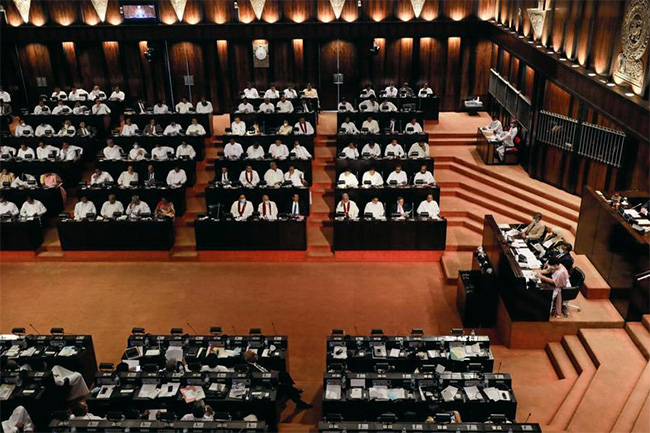
A no-confidence motion brought by the Opposition against Energy Minister Kumara Jayakody was defeated in Parliament yesterday by a majority of 104 votes.At the end of the debate, 49 members voted in favour of the motion, while 153 voted against it.
The motion, submitted to the Speaker on 19 March, was signed by Opposition Leader Sajith Premadasa, SJB MPs, and other Opposition members.
It accused Minister Jayakody of failing to ensure the procurement of adequate and quality coal for the Lakvijaya Coal Power Plant in Norochcholai, alleging that such negligence amounted to a breach of ministerial responsibility over a critical national energy asset.
The motion also cited ongoing legal proceedings against the Minister, noting that he has been indicted by the Commission to Investigate Allegations of Bribery or Corruption and produced before the Colombo High Court under Section 70 of the Bribery Act, in connection with alleged acts of corruption during his tenure as Procurement Manager of the Ceylon Fertiliser Company Limited.
The motion read: Vote of No Confidence against Kumara Jayakody, Minister of Energy,— Whereas the Provision in Section 6 of the Part III of the Code of Conduct for Members of Parliament which states that: “The Members shall on all occasions act in accordance with the public trust entrusted with them and shall always behave with probity and integrity, including the use by them of any public resources.” has been violated; And whereas the following rules of conduct set out in Section 9 of the Part V of the Code of Conduct for Members of Parliament have prima facie been breached, namely:- “(a) to be conscience; (c) to act so as to merit the trust and respect of the people; (e) to hold themselves accountable for the conduct and duties for which they are responsible;” And whereas it is observed that the Minister has failed, in his capacity as a Minister of the Cabinet of Ministers, to discharge the fundamental duties incumbent upon him in accordance with Article 28 of the Constitution;
And whereas it is established that the Minister of Energy has failed to discharge his primary duty of ensuring the procurement of adequate and good quality coal for the Norochcholai Lakvijaya Coal Power Plant;
And whereas such gross negligence in overseeing a critical national energy asset constitutes a fundamental breach of ministerial responsibility;
And whereas the Minister of Energy has failed to carry out the subjects and functions vested in him by the Notification of Gazette Extraordinary No. 2412/08 of 25th November 2024 of the Democratic Socialist Republic of Sri Lanka, including taking necessary steps to reduce the losses at the institutional management level and technical damages that occur to the electricity generation and distribution system and reduction of costs for generating electricity and removal of uncertainties during generation;
And whereas the Commission to Investigate Allegations of Bribery or Corruption has filed formal indictments before the Colombo High Court against the incumbent Minister of Energy under Section 70 of the Bribery Act (Chapter 26) for the offence of “corruption” in connection with acts of corruption allegedly committed while he was serving as the Procurement Manager of the Lanka Fertilizer Company;
And whereas, in light of the foregoing, the Minister of Energy has irretrievably forfeited the confidence of Parliament and the people of Sri Lanka by causing losses to public finances, endangering national energy security, corruptly mishandling the procurement process, being subjected to active judicial proceedings for the offence of “corruption”, and betraying the Government’s own “anti-corruption mandate”, and his continued tenure as the Minister of Energy is contrary to the public interest, the rule of law, and the principles of good governance;
That this Parliament resolves that it has no confidence in the competence of Kumara Jayakody, Minister of Energy to function as a Minister of the Cabinet of Ministers any longer.”
by Saman Indrajith

Chinese Ambassador to Sri Lanka Qi Zhenhong yesterday assured that China would not allow a fuel crisis to arise in Sri Lanka, under any circumstances, reaffirming Beijing’s continued support to the country.
The Ambassador made these remarks addressing the media after attending a dry ration distribution programme for 350 low-income families at Sri Chandananda Buddhist College, at Asgiriya, in Kandy.
Highlighting the longstanding ties between the two countries, Ambassador Qi said China has consistently stood by Sri Lanka and remains ready to extend assistance whenever required.
Amid concerns over global energy disruptions, stemming from the ongoing Middle East conflict, he noted that several countries are already facing difficulties, but stressed that China is prepared to support Sri Lanka at any time.
He said that any potential fuel shortage in Sri Lanka could be managed with the involvement of China’s Sinopec.
Reiterating Beijing’s commitment to Sri Lanka’s economic recovery and development, the Envoy also expressed hope that the current ceasefire in the Middle East would hold, while assuring that China stands ready to respond to any future developments and assist Sri Lanka as needed.
By SK Samaranayake

Sooryavanshi blitz, Jurel 81* help Rajasthan Royals take down Royal Challengers Bengaluru with ease

Sun directly overhead Pomparippu, Anuradhapura, Mihinthale, Galenbindunuwewa, Agbopura and Serunuwara about 12:11 noon today (11)

Showers expected in the Western, Sabaragamuwa, North-western , Southern and Uva provinces and in Anuradhapura, Mannar, Kandy and Nuwara-Eliya districts after 2.00 p.m.

Opposition NCM against Energy Minister defeated

Chinese Ambassador assures Lanka China will not allow a fuel crisis to develop here

Minister Jayatissa blames administrations since 2010 for not following proper procedures when procuring coal

‘Dates have the highest sugar content to fight Coronavirus’

Sunday Island 27 December – Headlines

#SundayIsland 17th December – Headlines

Sunday Island – 28th March

Sunday Island Headlines – 21 March

Sunday Island – 21st February – Headlines
-

 Features7 days ago
Ranjith Siyambalapitiya turns custodian of a rare living collection
-

 News7 days ago
Global ‘Walk for Peace’ to be held in Lanka
-

 News5 days ago
Lankan-origin actress Subashini found dead in India
-

 News3 days ago
AG: Coal procurement full of irregularities
-

 Business2 days ago
Israeli attack on Lebanon triggers local stock market volatility
-

 Features7 days ago
Beyond the Blue Skies: A Tribute to Captain Elmo Jayawardena
-

 Features7 days ago
Aspects of Ceylon/Sri Lanka Foreign Relations – 1948 to 1976
-

 Business3 days ago
Hayleys Mobility introduces Premium OMODA C9 PHEV