
News
Proposed restructuring of Sectoral Oversight Committees: House in talks with UNDP


By Shamindra Ferdinando
The newly elected National People’s Power (NPP) government intends to restructure the existing Sectoral Oversight Committees (SOCs) meant to examine Bills except those defined in Article 152 of the Constitution, treaties and reports, including annual and performance reports pertaining to institutions coming under their purview.
Parliament and the United Nations Development Programme (UNDP) would examine the government’s proposal in this regard, authoritative sources told The Island.
Sources said that both parties agreed that expenditure could be curtailed through proper restructuring. The UNDP over the years provided a significant amount of funding for strengthening of SOCs, in addition to providing expertise.
SOCs could also examine any other matter referred to them by Parliament or any Committee or a Minister relating to the subjects and functions within their jurisdiction, sources said.
Altogether there were17 SOCs in the last parliament and the majority of them didn’t function properly, sources said. The SOC process attracted public attention late last year when the US invited heads of all SOCs except Colombo District Lawmaker Rear Admiral (retd.) Sarath Weerasekera who led the one on national security. Weerasekera is on record as having said that the US embassy in Colombo sidelined him because of criticism of the US ambassador Julie Chung’s role in the high profile campaign that led to President Gotabaya Rajapaksa’s ouster.
The fully sponsored 10-day programme gave lawmakers an opportunity to study the committee process in the U.S. Congress. The United States Agency for International Development (USAID) and the National Democratic Institute (NDI) facilitated the programme. However, quite a number of MPs who represented SOCs in the last parliament either hadn’t contested the last general election or were defeated, hence the responsibility on the part of the Parliament to pay a lot more attention to the proposed restructuring process.
Parliament introduced the SOC system during the yahapalana administration. The system allowed selected youth to represent SOCs thereby participating in the process, sources said, adding that the operation of the committee system was of pivotal importance.





It has been reported that former Inspector General of Police (IGP) C.D. Wickramaratne has been found dead at his residence in Athurugiriya this morning (17)
it is suspected that he may have taken his own life.
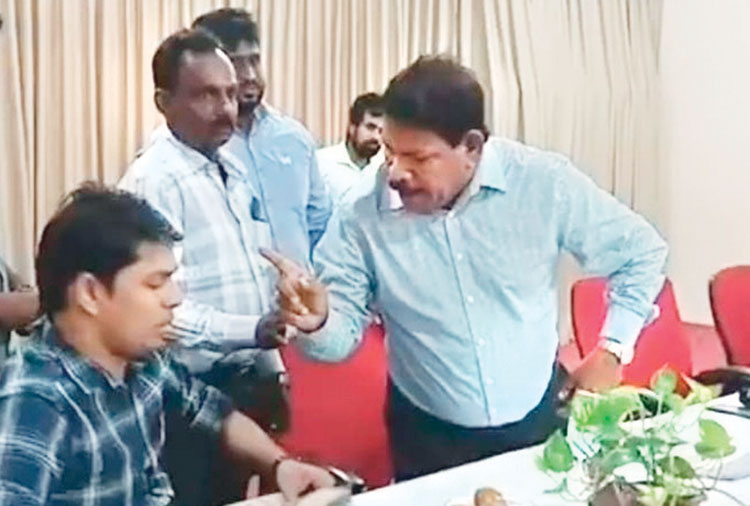
A heated argument broke out between Jaffna District MP Archchuna Ramanathan and Fisheries Minister Ramalingam Chandrasekar during the Kilinochchi District Coordination Committee meeting held yesterday (16).
A video footage of the incident shows the MP and the Minister engaging in a heated verbal exchange, following which a physical confrontation appeared to develop when the Minister attempted to grab files reportedly in the possession of MP Ramanathan.
“If you lay a hand on me, I’ll lay a hand on you too… got it?” Ramanathan is heard telling the Minister during the exchange.
Police and officials present at the meeting intervened to prevent the situation from escalating further.
The circumstances that led to the confrontation were not immediately clear.
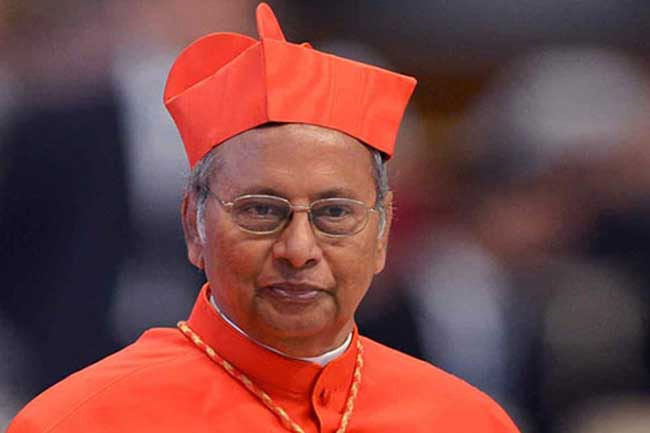
Archbishop of Colombo Malcolm Cardinal Ranjith has filed an intervening petition before the Court of Appeal in connection with a petition filed by former head of the State Intelligence Service, Major General (Retired) Suresh Sallay, challenging his arrest and detention under the Prevention of Terrorism Act over investigations into the Easter Sunday terror attacks.
The Cardinal has sought permission from the court to make submissions in relation to Sallay’s petition and requested that it be dismissed.

Former IGP C.D. Wickramaratne found dead at his residence

Venezuela earthquake: Number of known dead rises to nearly 5,000 victims

A few showers may occur in the Western, Sabaragamuwa and North-western provinces and in Kandy, Nuwara-Eliya, Galle and Matara districts

Harmer, Markram and Wolvaardt win top honours at CSA awards

War of words erupts between Minister Chandrasekar and Archchuna in North

Cardinal seeks dismissal of Sallay’s petition

‘Dates have the highest sugar content to fight Coronavirus’

Sunday Island 27 December – Headlines

#SundayIsland 17th December – Headlines

Sunday Island – 28th March

Sunday Island Headlines – 21 March

Sunday Island – 21st February – Headlines
-
 Features5 days ago
Prison riots and politics: NPP’s biggest challenge and Sri Lanka’s biggest opportunity
-

 Editorial6 days ago
What’s the world coming to?
-
 Features2 days ago
Dirty Money
-

 Editorial5 days ago
Much ado about crime: Fish or cut bait
-
 Features5 days ago
More on Saudi Arabia: ARAMCO and beyond
-
 Latest News3 days ago
Oil prices hit 1-month high as US-Iran attacks dim Strait of Hormuz outlook
-
 Midweek Review2 days ago
The sordid tale of theft and tragedy at Finance Ministry
-
 Features4 days ago
Deepening Democracy – Constitutions and Constitutionalism