
Opinion
Profit Making State Organizations Going Bankrupt


It was with much mirth that we read in the newspapers of current cabinet ministers and those who held such portfolios earlier slandering each other about the misdeeds in respect of the almost bankrupt status of public organizations and corporations for which all of them should take the blame.
Earlier the private enterprises were run very efficiently and also the new state corporations that were established were run similarly by very competent and efficient top management of such institutions. For example, when the passenger transport system run efficiently by some owners such as the South Western Bus Company was nationalized with all the buses and the employees taken over, it was run much better than during the company days with Mr. Vere de Mel, a former Civil Servant at the helm of the CTB with a team of very competent government servants on secondment.
After some years things began to change. The ministers under whose purview these organizations came considered them to be the ideal places to give employment to their henchmen and lackeys. They started filling various positions from top to bottom with their supporters over-staffing these institutions and making them nonviable. Once profit making concerns became loss makers and some were on the verge of bankruptcy.
The Ceylon Transport Board which was supposed to have an average of ten employees per bus now had double that number or more, and in addition most of the depots were not meeting the revenue targets assigned to them by the head office. As a result, this largest passenger transport organization in Asia was running at a loss. The CTB went down the pallang likes the CTB bus which went down the Dowa precipice close to Bandarawela killing more than half the passengers on board many decades ago.
A similar fate befell the Ports Authority when a Member of Parliament from the Eastern Province was appointed as the minister in charge of the Ports. He packed the ports, not only Colombo but also Oluvil which had not even been built and was only in the pipeline! The numbers were so large that many of the employees did not even have a place to sit. Of course they were paid a monthly salary summa and also given the lunch packet at the subsidized rate! One can just imagine the financial state of the Authority thereafter.
Many of the other corporations such as the Steel Croporation in Oruwila, Paper Corporation in Valaichennai, the Sugar Corporation in Kantale, Milk Board in Narahenpita, etc. all suffered the same fate due to complete mismanagement with incompetent persons being put in charge by the subject ministers to help their kith and kin without any consideration of the institution. SriLankan Airline is the best example of a State organization going almost bankrupt due to the appointment of close relatives of ruling politicians or their henchmen. They not only mismanaged but also misused the airline to their advantage with one person one ordering himself flown to Singapore on an unscheduled flight at the airline’s cost. The next Chairman who was drawing an exorbitant salary of millions, and also obtained a large amount of money as compensation and vanished Down under.
All these state corporations were running at a profit with almost all of them having a monopoly of their product at the beginning with very competent persons at the helm who were only interested in seeing their institution running at a profit without misusing any of the facilities. Two very good persons that come to my mind are Mr. Vere de Mel, the first Chairman of CTB and Mr. MJ Perera, the Chairman at the inception of the Paddy Marketing Board (PMB).
Recently it was found that a large stock of paddy stored in a warehouse of the PMB in Aralaganwila in 2015 had been lying there till this year and was found unfit for human consumption. This type of thing would never have happened during the time of a person like Mr. MJ Perera.
When will Sri Lanka get the benefit of seeing competent persons at the helm of the state corporations like the gentlemen mentioned above? Or will we ever get them as long as we have corrupt politicians ruling the country?
HM Nissanka Warakaulle


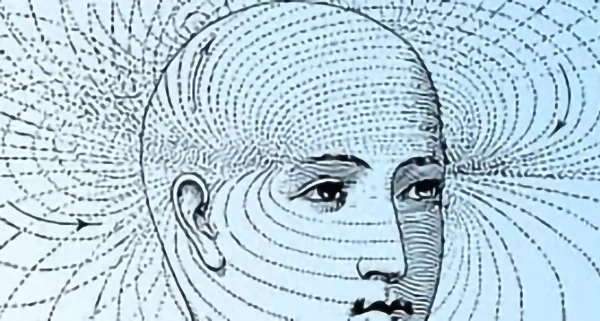
It is both an honour and a pleasure to address you on this occasion as we gather to celebrate International Philosophy Day. Established by UNESCO and supported by the United Nations, this day serves as a global reminder that philosophy is not merely an academic discipline confined to universities or scholarly journals. It is, rather, a critical human practice—one that enables societies to reflect upon themselves, to question inherited assumptions, and to navigate periods of intellectual, technological, and moral transformation.
In moments of rapid change, philosophy performs a particularly vital role. It slows us down. It invites us to ask not only how things work, but what they mean, why they matter, and how we ought to live. I therefore wish to begin by expressing my appreciation to UNESCO, the United Nations, and the organisers of this year’s programme for sustaining this tradition and for selecting a theme that invites sustained reflection on mind, consciousness, and human agency.
We inhabit a world increasingly shaped by artificial intelligence, neuroscience, cognitive science, and digital technologies. These developments are not neutral. They reshape how we think, how we communicate, how we remember, and even how we imagine ourselves. As machines simulate cognitive functions once thought uniquely human, we are compelled to ask foundational philosophical questions anew:
What is the mind? Where does thinking occur? Is cognition something enclosed within the brain, or does it arise through our bodily engagement with the world? And what does it mean to be an ethical and responsible agent in a technologically extended environment?
Sri Lanka’s Philosophical Inheritance
On a day such as this, it is especially appropriate to recall that Sri Lanka possesses a long and distinguished tradition of philosophical reflection. From early Buddhist scholasticism to modern comparative philosophy, Sri Lankan thinkers have consistently engaged questions concerning knowledge, consciousness, suffering, agency, and liberation.
Within this modern intellectual history, the University of Peradeniya occupies a unique place. It has served as a centre where Buddhist philosophy, Western thought, psychology, and logic have met in creative dialogue. Scholars such as T. R. V. Murti, K. N. Jayatilleke, Padmasiri de Silva, R. D. Gunaratne, and Sarathchandra did not merely interpret Buddhist texts; they brought them into conversation with global philosophy, thereby enriching both traditions.
It is within this intellectual lineage—and with deep respect for it—that I offer the reflections that follow.
Setting the Philosophical Problem
My topic today is “Embodied Cognition and Viññāṇasota: Buddhist Insights on the Extended Mind Thesis – Some Observations.” This is not a purely historical inquiry. It is an attempt to bring Buddhist philosophy into dialogue with some of the most pressing debates in contemporary philosophy of mind and cognitive science.
At the centre of these debates lies a deceptively simple question: Where is the mind?
For much of modern philosophy, the dominant answer was clear: the mind resides inside the head. Thinking was understood as an internal process, private and hidden, occurring within the boundaries of the skull. The body was often treated as a mere vessel, and the world as an external stage upon which cognition operated.
However, this picture has increasingly come under pressure.
The Extended Mind Thesis and the 4E Turn
One of the most influential challenges to this internalist model is the Extended Mind Thesis, proposed by Andy Clark and David Chalmers. Their argument is provocative but deceptively simple: if an external tool performs the same functional role as a cognitive process inside the brain, then it should be considered part of the mind itself.
From this insight emerges the now well-known 4E framework, according to which cognition is:
Embodied – shaped by the structure and capacities of the body
Embedded – situated within physical, social, and cultural environments
Enactive – constituted through action and interaction
Extended – distributed across tools, artefacts, and practices
This framework invites us to rethink the mind not as a thing, but as an activity—something we do, rather than something we have.
Earlier Western Challenges to Internalism
It is important to note that this critique of the “mind in the head” model did not begin with cognitive science. It has deep philosophical roots.
Ludwig Wittgenstein
famously warned philosophers against imagining thought as something occurring in a hidden inner space. Such metaphors, he suggested, mystify rather than clarify our understanding of mind.
Similarly, Franz Brentano’s notion of intentionality—his claim that all mental states are about something—shifted attention away from inner substances toward relational processes. This insight shaped Husserl’s phenomenology, where consciousness is always world-directed, and Freud’s psychoanalysis, where mental life is dynamic, conflicted, and socially embedded.
Together, these thinkers prepared the conceptual ground for a more process-oriented, relational understanding of mind.
Varela and the Enactive Turn
A decisive moment in this shift came with Francisco J. Varela, whose work on enactivism challenged computational models of mind. For Varela, cognition is not the passive representation of a pre-given world, but the active bringing forth of meaning through embodied engagement.
Cognition, on this view, arises from the dynamic coupling of organism and environment. Importantly, Varela explicitly acknowledged his intellectual debt to Buddhist philosophy, particularly its insights into impermanence, non-self, and dependent origination.
Buddhist Philosophy and the Minding Process
Buddhist thought offers a remarkably sophisticated account of mind—one that is non-substantialist, relational, and processual. Across its diverse traditions, we find a consistent emphasis on mind as dependently arisen, embodied through the six sense bases, and shaped by intention and contact.
Crucially, Buddhism does not speak of a static “mind-entity”. Instead, it employs metaphors of streams, flows, and continuities, suggesting a dynamic process unfolding in relation to conditions.
Key Buddhist Concepts for Contemporary Dialogue
Let me now highlight several Buddhist concepts that are particularly relevant to contemporary discussions of embodied and extended cognition.
The notion of prapañca, as elaborated by Bhikkhu Ñāṇananda, captures the mind’s tendency toward conceptual proliferation. Through naming, interpretation, and narrative construction, the mind extends itself, creating entire experiential worlds. This is not merely a linguistic process; it is an existential one.
The Abhidhamma concept of viññāṇasota, the stream of consciousness, rejects the idea of an inner mental core. Consciousness arises and ceases moment by moment, dependent on conditions—much like a river that has no fixed identity apart from its flow.
The Yogācāra doctrine of ālayaviññāṇa adds a further dimension, recognising deep-seated dispositions, habits, and affective tendencies accumulated through experience. This anticipates modern discussions of implicit cognition, embodied memory, and learned behaviour.
Finally, the Buddhist distinction between mindful and unmindful cognition reveals a layered model of mental life—one that resonates strongly with contemporary dual-process theories.
A Buddhist Cognitive Ecology
Taken together, these insights point toward a Buddhist cognitive ecology in which mind is not an inner object but a relational activity unfolding across body, world, history, and practice.
As the Buddha famously observed, “In this fathom-long body, with its perceptions and thoughts, I declare there is the world.” This is perhaps one of the earliest and most profound articulations of an embodied, enacted, and extended conception of mind.
Conclusion
The Extended Mind Thesis challenges the idea that the mind is confined within the skull. Buddhist philosophy goes further. It invites us to reconsider whether the mind was ever “inside” to begin with.
In an age shaped by artificial intelligence, cognitive technologies, and digital environments, this question is not merely theoretical. It is ethically urgent. How we understand mind shapes how we design technologies, structure societies, and conceive human responsibility.
Buddhist philosophy offers not only conceptual clarity but also ethical guidance—reminding us that cognition is inseparable from suffering, intention, and liberation.
Dr. Charitha Herath is a former Member of Parliament of Sri Lanka (2020–2024) and an academic philosopher. Prior to entering Parliament, he served as Professor (Chair) of Philosophy at the University of Peradeniya. He was Chairman of the Committee on Public Enterprises (COPE) from 2020 to 2022, playing a key role in parliamentary oversight of public finance and state institutions. Dr. Herath previously served as Secretary to the Ministry of Mass Media and Information (2013–2015) and is the Founder and Chair of Nexus Research Group, a platform for interdisciplinary research, policy dialogue, and public intellectual engagement.
He holds a BA from the University of Peradeniya (Sri Lanka), MA degrees from Sichuan University (China) and Ohio University (USA), and a PhD from the University of Kelaniya (Sri Lanka).
(This article has been adapted from the keynote address delivered
by Dr. Charitha Herath
at the International Philosophy Day Conference at the University of Peradeniya.)
Reference ,the Indian High Commissioner’s recent comments ( The Island, 9th Jan. ) on strong India-Sri Lanka relationship and the assistance granted on recovering from the financial collapse of Sri Lanka and yet again for cyclone recovery., Sri Lankans should express their thanks to India for standing up as a friendly neighbour.
On the Defence Cooperation agreement, the Indian High Commissioner’s assertion was that there was nothing beyond that which had been included in the text. But, dear High Commissioner, we Sri Lankans have burnt our fingers when we signed agreements with the European nations who invaded our country; they took our leaders around the Mulberry bush and made our nation pay a very high price by controlling our destiny for hundreds of years. When the Opposition parties in the Parliament requested the Sri Lankan government to reveal the contents of the Defence agreements signed with India as per the prevalent common practice, the government’s strange response was that India did not want them disclosed.
Even the terms of the one-sided infamous Indo-Sri Lanka agreement, signed in 1987, were disclosed to the public.
Mr. High Commissioner, we are not satisfied with your reply as we are weak, economically, and unable to clearly understand your “India’s Neighbourhood First and Mahasagar policies” . We need the details of the defence agreements signed with our government, early.
RANJITH SOYSA
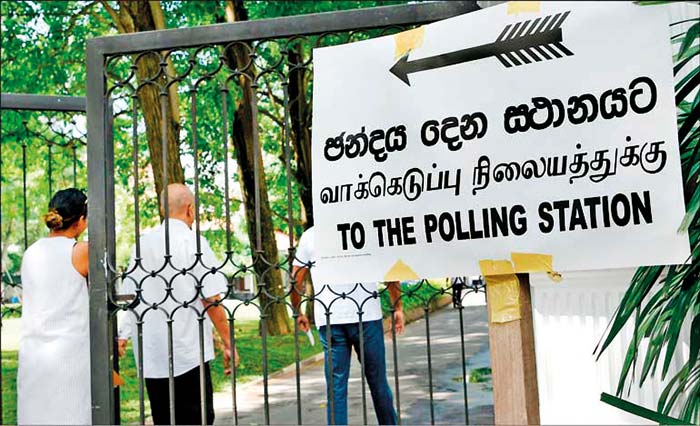
At every election—general or presidential—we do not truly vote, we simply outvote. We push out the incumbent and bring in another, whether recycled from the past or presented as “fresh.” The last time, we chose a newcomer who had spent years criticising others, conveniently ignoring the centuries of damage they inflicted during successive governments. Only now do we realise that governing is far more difficult than criticising.
There is a saying: “Even with elephants, you cannot bring back the wisdom that has passed.” But are we learning? Among our legislators, there have been individuals accused of murder, fraud, and countless illegal acts. True, the courts did not punish them—but are we so blind as to remain naive in the face of such allegations? These fraudsters and criminals, and any sane citizen living in this decade, cannot deny those realities.
Meanwhile, many of our compatriots abroad, living comfortably with their families, ignore these past crimes with blind devotion and campaign for different parties. For most of us, the wish during an election is not the welfare of the country, but simply to send our personal favourite to the council. The clearest example was the election of a teledrama actress—someone who did not even understand the Constitution—over experienced and honest politicians.
It is time to stop this bogus hero worship. Vote not for personalities, but for the country. Vote for integrity, for competence, and for the future we deserve.
Deshapriya Rajapaksha

Fair weather will prevail except for a few showers in the Uva, Eastern, Western and Central provinces and in Galle, Matara and Rathnapura districts

Trump cancels US-Iran meetings, urges protesters to take over institutions

Govt. bows to pressure, shelves Grade 6 reforms

AKD: Govt. agenda on track despite Ditwah disaster

SL to receive 10 helicopters from US

Foreign couple held over alleged biopiracy at Horton Plains

‘Dates have the highest sugar content to fight Coronavirus’

Sunday Island 27 December – Headlines

#SundayIsland 17th December – Headlines

Sunday Island – 28th March

Sunday Island Headlines – 21 March

Sunday Island – 21st February – Headlines
-

 Business3 days ago
Dialog and UnionPay International Join Forces to Elevate Sri Lanka’s Digital Payment Landscape
-
 News3 days ago
Sajith: Ashoka Chakra replaces Dharmachakra in Buddhism textbook
-

 Features3 days ago
The Paradox of Trump Power: Contested Authoritarian at Home, Uncontested Bully Abroad
-

 Features3 days ago
Subject:Whatever happened to (my) three million dollars?
-

 News3 days ago
Level I landslide early warnings issued to the Districts of Badulla, Kandy, Matale and Nuwara-Eliya extended
-

 News3 days ago
National Communication Programme for Child Health Promotion (SBCC) has been launched. – PM
-

 News3 days ago
65 withdrawn cases re-filed by Govt, PM tells Parliament
-

 Opinion5 days ago
The minstrel monk and Rafiki, the old mandrill in The Lion King – II