
Opinion
Prof. Harshana Sasanka Rambukwella: A Charismatic Pedagogue

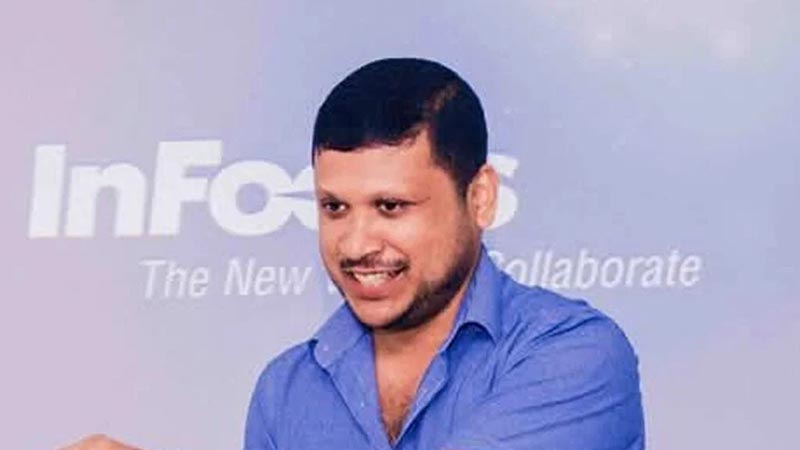
Yesterday, a sumptuous rainbow manifested over Pera. I could not but think of you, my friend!
Harshana was my batchmate at Pera in 1997.
Since he was the only boy among a bevy of girls, taking the first year English course offered by the English Department, Professor Erskine called him the “thorn among roses” at the very first lecture we had with him. But Harshana Sasanka Rambukwella was never a thorn in anyone’s side, so the name did not stick.
He was a lovely human who was happy to spread goodwill among all he associated with. What I remember most distinctly about him is that he was level-headed even as a raw fresher and could argue a point with strength without showing an ounce of unnecessary aggression. Though he had a temper it was reserved for what called for anger.
My most distinct memory of him is when he and I went to the E.F.C. Ludowyk memorial lecture, when Dr. Jayantha Dhanapala spoke on Neruda, as a poet and diplomat. We were awe -struck and though shy as freshers enjoyed the academic atmosphere and the sophistication Dr. Dhanapala exuded. I am glad we did not know of Neruda’s darker side then. That would have spoilt the experience.
I also remember that we chortled when Professor Walter Perera told us not to partake of the refreshments, sotto voce because he had not thought that many people would show up. Then later, good old “Wally,” told us to go on and tuck in because there was enough to go around, with very visible relief. The two of us laughed and chuckled all the way home.
Those were good times.
I was reminded of his temper when I met him as my Professor in my Sociology of Education class, which he taught with Professor Harini Amarasuriya. It was one of the most enjoyable sessions that I was fortunate enough to attend. He would speak on Pierre Bourdieu with such magnanimous expertise helping even the most reluctant of students understand the depth of the French sociologist and philosopher’s views on education and other matters, relating these theories as they should be adopted in the teaching of English in Sri Lanka. When students in his zoom meetings were quiet, he would say with severity, ” the level of engagement is very low.”
The Charismatic Pedagogue was the title on one of his kuppi talks contributions. He was indeed a charismatic Pedagogue.
When he brought up the notion of the Brown Sahib and Thomas Macaulay, I could not help but feel nostalgic, reminded of the time we had spent as raw freshers at Pera. There was Ramila, who remained his best friend until he passed away and of course Prashani and many others. There was nothing very raw about Harshana. He was always a gentleman whether as a young man or as the gentleman I met last on 6th August 2022, when I first visited the PGIE. He would always check my availability when he called me later on and I would say “What men! Don’t stand on ceremony just call anytime!”
It was pure irony that he was one of the judges at a competition and when my entry which went without my name won, his happiness on my success was very evident when he called to congratulate me.
As a scholar, Professor Rambukwella has made many notable contributions both as the director of PGIE and also through his quite prolific writing and research which include research papers such as , Anagarika Dharmapala: the nation and its place in the world, Patriotic Science–The Corona Virus Pandemic, Nationalism, and Indigeneity, and the countless papers he co-authored with the best in the field, and his explorations on Sri Lankan English and last but not least his magnum opus: ‘The Politics and Poetics of Authenticity: A Cultural Genealogy of Sinhala Nationalism.’ This work translated by his good friend Professor Wasantha A. Liyanage, “Amare,” will influence the Sri Lankan reader for time to come. It was a timely and necessary work which will in future help countless students, scholars and readers make sense of the dialogue surrounding the notion of Sri Lankan Nationalism as manifest in politics and literature and Sri Lankan culture. He was not simply an academic he was a man of taste who lived and loved and partook of culture.
Harshana’s life, though brief made its mark on the world because he was not simply an idealist, he was an activist and a trade unionist. He led by example and was a mentor to countless people, students, writer and scholars and a miscellany of others who defy labelling. This must be a trait that he inherited from his father, who was a mild gentleman when we met him during his stint at the English Teaching Unit, but had a reputation as one of the best teachers and school masters Dharmaraja College, Kandy could boast of.
Harshana was a great scholar, a teacher par excellence and a warm kind hearted human being. He will be missed, not only by Prashani, and the two lovely girls about whom I have heard so much, but by everyone who knew him however briefly.
Rest easy my friend! You will be loved. Your life though brief is a cause for celebration not for lament!
By Ashanthi Ekanayake


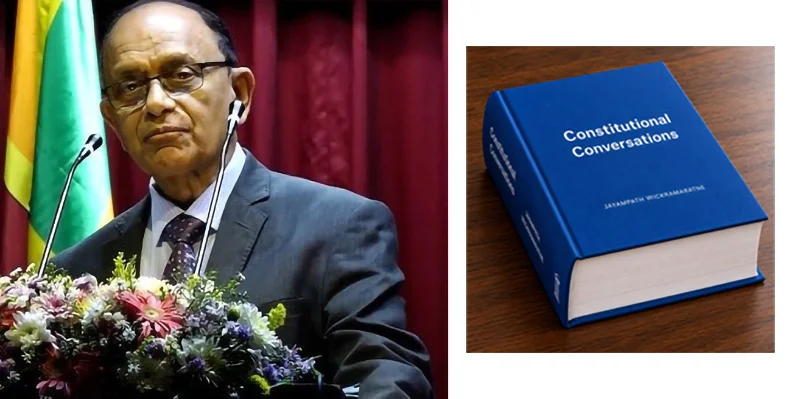
Let me first, on behalf of Lake House Printers and Publishers and myself, thank you for accepting the invitation to attend this launch.
I will not say anything about the book but will leave that to others; Saliya and Dinesha have already done so. Thank you, Saliya and Dinesha, for your contribution.
Why do we need conversations about constitutional law and constitutional reform?
Sri Lanka, like most countries in the Commonwealth, is a common law country. Common law countries are distinguished by their reliance on judicial precedent and judge-made law, which evolve through case-by-case reasoning rather than comprehensive codification. This tradition emphasises flexibility, judicial independence, and the adversarial process.
In common law countries, the legal community therefore has a vital duty to critique judicial decisions, as precedent-based systems rely on ongoing scrutiny to ensure fairness, coherence, and legitimacy. Without critique, judge-made law risks stagnation, bias (whether institutional, personal, or doctrinal), or detachment from evolving social values. A critique is a structured, analytical evaluation of a work, idea, or situation that highlights both strengths and weaknesses, aiming to provide constructive insights rather than mere faultfinding. It differs from simple criticism by being more formal, balanced, and evidence-based.
Critique ensures that precedents are tested, refined, or overturned when they no longer serve justice. It often inspires legislative intervention when judicial precedent proves inadequate. Critiquing judgments trains lawyers to think critically and equips them to argue for doctrinal changes. Transparent debate reassures citizens that judicial power is exercised responsibly. Critique allows courts in different common law countries to learn from each other’s reasoning.
“The law is what the last judge said in the last case” is a pithy way of expressing a feature of the common law—that the law develops through judicial precedent and that the most recent authoritative decision ordinarily represents the current law. There is no such thing as settled law; what appears settled remains so only until a later judgment unsettles it. An example would be helpful.
The makers of the Indian Constitution debated whether the exception to the protection of life and liberty should be limited to a procedure established by law or to due process of law. If it was according to procedure established by law, the legislature ought to be trusted not to make bad laws. If it were according to due process of law, the judiciary would have the authority to question a law on the ground that it is not good law and is not in consonance with fundamental principles. The Constituent Assembly consciously decided on ‘procedure established by law’.
Soon after the Indian Constitution was adopted, it was argued in A.K. Gopalan v Madras that the word ‘law’ in Article 21 meant the principles of natural justice. That argument was rejected.
But a quarter of a century later, in Maneka Gandhi’s case, the Supreme Court headed by Chief Justice Bhagwati laid down that any law which deprives a person of his life or personal liberty is invalid unless it prescribes a fair and just procedure for such deprivation. In short, the Court read ‘due process’ into Article 21 despite the Constituent Assembly’s conscious decision not to use the phrase.
In 1991, at the first SAARCLAW conference in Colombo, Justice Bhagwati, who had retired by then, spoke on Indian developments in public law. I asked him at question time how he did it in the face of that conscious decision by the Constituent Assembly. His response was that a country must keep pace with modern legal developments and that the people are entitled to benefit from them.
A few words about the influence of foreign jurisprudence. Some in the legal community are reluctant to draw on foreign jurisprudence, viewing it as incompatible with domestic legal traditions, or just because it is foreign.
Just two examples of how foreign jurisprudence has helped develop the law in Sri Lanka.
In India, the Supreme Court had given an expansive meaning to equal protection of the law by holding that ‘anything that is arbitrary violates equal protection’. In Elmo Perera v. Jayawickrama, Mr HL De Silva PC strenuously argued for a similar expansion. A full-bench, divided 6 to 3, declined, holding that the petitioner had not shown that there was unequal treatment. Justice Wanasundera, in his dissent, held that in the case of a person in a group, the comparison would be with the norm or protection applicable to the group.
In the landmark case of Jayasinghe v Attorney-General, Justice Mark Fernando went further and held that a violation of the norm would be a violation of equal protection, as judicial notice could and should be taken of the fact that the norm is ordinarily followed. That judgment has since been followed consistently. This was made possible because of developments in India.
As to the actions of state-owned companies and corporations violative of fundamental rights, our Supreme Court initially took a restrictive view, especially in Wijetunga v Insurance Corporation, Chandrasena v National Paper Corporation, and the five-member bench case of Wijeratne v People Bank, all three judgments penned by Chief Justice Sharvananda. He was supervising my doctoral thesis at that time and used to engage in lengthy discussions with me. I expressed my reservations on the correctness of the 3 judgments, and he was ready to listen. One day, he asked me to read Sukhdev v Bhagatram, a judgment by Justice Mathew, whom he held in high esteem. That judgment supported my line of thinking, and I included it in my draft, noting that our Supreme Court has taken a very narrow view. I remember making an ‘oral submission’ as if I was in Court before him. He listened and nodded occasionally. Just that.
Later, I was junior counsel to Mr Batty Weerakoon in a fundamental rights case against some corporation; we appeared for some Sama Samajist trade unionists who had a strong case. Mr NTS Kularatne, who taught me Local Government Law at Law College, appeared for the corporation and confidently cited the three judgments of Chief Justice Sharvananda that I mentioned. Addressing him, the Chief Justice said, ‘Mr Kularatne, do you want to proceed with that argument? I have reconsidered this issue, and I am prepared to write a judgment.’ Mr Kularatne back-tracked, much to my disappointment. We were denied a judgment on the issue which, I am sure, would have been a lucid one.
But very soon, Justice Atukorale, in Rajaratne v Air Lanka, adopted the views of Justice Mathew in Sukhdev v Bhagatram.
A law student from one of the universities interviewed me for an assignment she was working on. She was outspoken and told me that my critiques of judgments seemed measured, temperate, and overtly respectful of the courts. ‘You always say “I submit”, “it is respectfully submitted”.’ I explained to her that a critique of a judgment should not become a polemical exercise, as polemics are adversarial, rhetorical attacks aimed at winning arguments rather than at deepening understanding or improving the law. In the legal community, polemics risk undermining the credibility and constructive purpose of critique.
I took the example of my treatment of Namasivayam v Gunawardena, a judgment by Chief Justice Sharvananda in a case which I myself had argued. The Police officer concerned swore an affidavit to say that he boarded the bus in which the petitioner was travelling, ‘required’ the petitioner to accompany him to the Police Station for questioning, and ‘released’ him after recording his statement. The Chief Justice held that it amounted to an arrest as the Petitioner was deprived of his liberty to go where he pleased. I have described that part of the judgment as a watershed in the field of personal liberty in Sri Lanka, but was critical of another aspect of the judgment.
The petitioner was detained under a detention order under emergency regulations, but fresh orders were not made every month, which, I argued, made continued detention unlawful.
Section 4 of the Public Security Ordinance provides that the expiry or revocation of any Emergency Proclamation shall not affect ‘any offence committed, or any right, liberty or penalty acquired or incurred’. Chief Justice Sharvananda, referring to section 4, stated that the liability to be detained was a penalty incurred by the petitioner under the Emergency Regulations. So, monthly detention orders were unnecessary. I was appalled and said this in my draft chapter:
‘By no stretch of imagination could the liability of a person arrested under Regulation 18 to be detained be termed a ‘penalty’ incurred.’
Chief Justice Sharvananda went through that part, did not say a word, but struck off the words ‘by no stretch of imagination’ with a pencil. The message was clear: ‘Be temperate in the use of language, but you are entitled to critique my judgment’.
The book now reads: ‘It is respectfully submitted that the liability of a person arrested under regulation 18 to be detained cannot be termed a ‘penalty’ incurred.’ I learnt a lot.
Soon after the judgment, the Public Security Ordinance was amended to provide that fresh orders need not be made each time the emergency is extended.
Talking about critique, once when I met Justice Shirani Bandaranayake, she inquired about the progress of the second edition of my book, ‘Fundamental Rights in Sri Lanka’, which she knew I was working on. Among other things, I told her that I was critical of the three determinations on the freedom of religious propagation she had authored. Her response was: ‘Oh! That is alright, as long as you don’t call me names.’ Now, that is the correct spirit.
This book is not only about constitutional jurisprudence but also constitutional reform. I hope the reform process will benefit from my contribution.
I want to thank Lake House Printers and Publishers for a job well done.
Now that this book is finally out, I will rest for a few weeks and start work on the 4th edition of ‘Fundamental Rights in Sri Lanka.’
Text of the speech by Dr. Jayampathy Wickramaratne
at the launch of his latest book, Constitutional Conversations in Colombo on 16 July 2026)
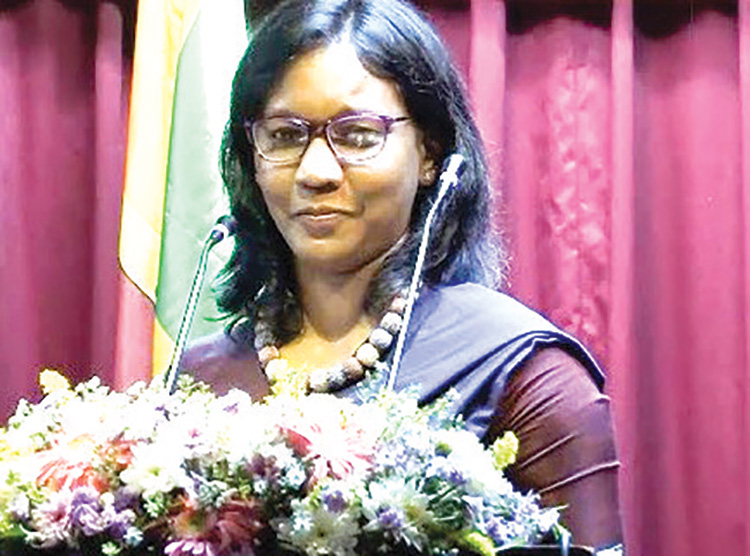
Constitutional Conversations:
We gather here today to celebrate yet another publication of a prolific writer on public law in Sri Lanka. Congratulations, Dr Wickramaratne, and thank you for this valuable contribution to our knowledge and for the opportunity to offer my assessment of this book with this distinguished audience.
In the next 15 mins or so, based on my reading of Constitutional Conversations, I will speak on the following five points. First, I will provide a brief overview of the book; second, I will speak to the significance of this book to knowledge, theory and practice of constitutional law; third, I will offer reactions to some of the ideas that are presented; and fourth, I will comment on the genre of this book. Fifth and finally, I will offer some suggestions for Dr Wickramaratne to consider for any future publications that he might have in mind.
Overview
The book comprises 11 chapters on constitutional governance in Sri Lanka and deals with relevant issues and developments up to the end of 2025. Anyone who is familiar with Dr Wickramaratne’s professional life and public service would immediately recognise that its chapterisation closely follows his contributions to constitutional governance in Sri Lanka in the last two to three decades. The eleven chapters cover, broadly, the executive, the checks and balances between the executive and parliament, Sri Lanka’s experiences with constitutional reforms in the last two decades and two thematic issues in the law – terrorism and noise pollution.
Significance
I think Constitutional Conversations is a significant contribution not only to public law in Sri Lanka but also at the global level for several reasons. Almost all the chapters are written from an insider perspective and therefore provides information, insights and explanations on significant recent constitutional developments that have hitherto only been available anecdotally. Dr Wickramaratne has been, what is described in literature on constitutional law as, a constitutional actor. Over the last two decades he has served as an expert on drafting committees, as an advisor to the President and as a Member of Parliament. Importantly, this book does not come across as an attempt to justify or further explain a constitutional actor’s past work. It is transparent, dispassionate, and presented in an argumentative mode making it clear that the author’s objective is to convince rather than to assert. The title, Constitutional Conversations, aptly reflects this spirit of the book. This book is also significant in that it complements the more academic work on these recent developments. Dr Wickramaratne brings in a granular account of how and why some of these developments came about while the more academic work situates these developments in constitutional theory. To this extent, Constitutional Conversations fills a notable gap in the literature. Furthermore, this work is significant because, if I am not mistaken, for the first time, an argument has been presented as to why the constitutional provisions on the Executive Presidency and the direct election of the President may be amended without recourse to a referendum. I know these arguments have been made before Court but I do not think they have been systematically dealt with in any written work on the subject. My own writing on this issue has only dealt with the matter briefly.
A highly useful aspect of this book is that almost every chapter includes proposals for specific constitutional reforms. I will return to this point later in my remarks. Dr Wickramaratne’s work is inherently comparative. Most chapters offer discussions on a wide range of comparative examples that go beyond the usual suspects such as India, the US and UK and include examples from a wide range of countries including Finland, Uruguay, Portugal, Costa Rica and France. This comparative engagement reflects both Dr Wickramaratne’s knowledge of constitutional developments in the world as well as the work he has done as an expert in different jurisdictions.
Some reactions
Let me now offer some reactions to the ideas presented in Constitutional Conversations. I will first speak to two specific aspects and then to what I think is an overarching implicit theme of the book.
Chapter one of this book is titled, ‘Entrenched Constitutional Provisions’ Dr Wickramaratne makes the argument that the constitutional provisions on the office of the executive president and on the direct election of the president are not entrenched and therefore may be amended without seeking approval of the people at a referendum. As we all know, Justice Sharvananda, writing for the majority in the Thirteenth Amendment special determination of 1987 noted the drafting history of articles 3 and 4 of the Constitution and held that, the ‘agencies or instruments for the exercise of the sovereignty of the people’ may be amended, ‘provided such amendment has no prejudicial impact on the sovereignty of the People.’ However, in subsequent special determinations our Courts have held differently. Most recently, in the special determination on the 22nd Amendment (which was enacted as the 21st Amendment), Court proposed two tests – of delegation and alienation in determining whether a referendum will be required in relation to a proposed amendment that impacts Article 4. In his book, Dr Wickramaratne makes a dispassionate case as to why any proposed amendment to the Constitution that impacts Article 4 would not require a referendum and explains, with all due respect to Court, why he thinks that the majority reasoning in the special determination on the Thirteenth Amendment is the more accurate constitutional interpretation that ought to apply. I find Dr Wickramaratne’s argument to be persuasive. In fact, in my own work, I have argued that most certainly, in Sri Lanka’s political imagination and consciousness, the Executive Presidency is entrenched but that the argument for its constitutional entrenchment is weak. This political and cultural weight attached to the office of the Executive President, in my view, is at odds with the constitutional scheme because Article 83 does not include any of the provisions related to the Executive President, with the exception of any extension to the term of office. The case for this approach to interpreting Article 4 is supported on the basis of the drafting history, as well as the literal reading of the Constitution.
The second reaction is related and one in which I have had a vested interest in the recent past, which is the Constitutional Council. Dr Wickramaratne offers a useful account of how the Council came to be and the political negotiations that shaped the different versions of the Council we have had under the respective constitutional amendments. My reading of Dr Wickramaratne’s analysis is that he does not venture to analyse the type of power exercised by this Council. I wondered whether not going into this question about the constitutional nature of the Council more deeply was an opportunity missed.
I say this for the following reasons. Sri Lanka’s Constitutional Council is, from what I know, unique in the world. The Nepali Constitutional Council inspired it, but the two Councils have a fundamental difference, in that the Sri Lankan Council includes independent unelected members. Interestingly, the consensus seems to be that in Nepal, the Council has, by and large, been ineffective. While Sri Lanka’s Council too has had a chequered history, I think it’s fair to say that it has had some positive impact as well. It is clear that the Council acts as a check on the power of appointment by the Executive President to constitutional high offices and constitutional commissions. With regard to its identity and nature, notably in the special determination on the 18th Amendment Bill of 2002, the Court has held that the Council is part of the Executive. I, however, along with a few other academics who study independent constitutional institutions, am of the considered view that the power exercised by the Council is better described as a guarantor power, a power that has been hitherto mostly latent in our constitutional systems. I don’t want to get into the details of this argument here except to say that guarantor power is described as the power to guarantee non-self-enforcing constitutional norms, such as integrity of elections or judicial independence. The Council guarantees some of these norms as a meta-guarantor institution, through a multi-partisan and independent decision-making process. I am mindful of the counter-arguments to this position and think that this is a debate that this book could have taken on.
Now let me turn to what I think is one of the overarching implicit themes in this book. In his acknowledgements, Dr Wickramaratne notes, and I quote, ‘My aim is to show that constitutional law is not merely a matter of doctrine but a lived struggle for justice, equality and peace – one that demands both critical reflection and committed engagement.’ In the book, Dr Wickramaratne engages with the political developments of 2022, among others, and indeed, throughout his work, offers commentary on the dynamics between politics, constitutional governance and constitutional reform. And yet, in my reading, he only deals indirectly with the fundamental challenges that are presented to liberal constitutionalism by the political developments that he discusses. In fact, he, in my view, short sells his own contribution to the thickening of the ‘immutable republican principles’ that the preamble of our constitution refers to, notably, representative democracy, freedom, equality, justice, fundamental human rights and the independence of the judiciary. As we all know, a thin account of liberal constitutionalism concerns itself with supremacy of the constitution, negative protection for civil and political rights, judicial review of legislation, separation of powers and independence of the judiciary. However, Constitutional Conversations, documents the ways in which, several in Sri Lanka, including Dr Wickramaratne, have advocated for going beyond the liberal understanding of constitutionalism to also engage with the social justice questions of the day, such as equal citizenship for ethnic minorities, judicial protection for welfare through justiciability for economic and social rights and re-imagining the constitutional architecture of the state through the innovation of a Constitutional Council. Now, to some extent, my reading is that Dr Wickramaratne’s ideology lies somewhere between a left leaning commitment to state responsibility for minimum standards of living and therefore a strong state, and a commitment to the liberal idea of avoiding concentration of state power. I think these dual commitments undergird his treatment of the different topics in this book.
Genre
Now I would like to offer some reflections on the genre of Constitutional Conversations. This book is very different from Dr Wickramaratne’s most well-known work, Fundamental Rights in Sri Lanka which is now in its third edition. I understand that Fundamental Rights in Sri Lanka originated as a PhD thesis and has since then evolved into the only reference book on the subject. That book is a systematic discussion and analysis of constitutional text, doctrine and jurisprudence, which is woven in with a consistent engagement with foreign law and Sri Lanka’s obligations under international human rights law. In contrast, Constitutional Conversations, is written by a constitutional actor who is self-conscious of his professional experience, his ideological commitments and his academic insights and brings all of them to bear on his writing. Reflecting this mixed approach, I noticed how the writing style shifts across the different chapters. Some sections are more reflective of the style of writing we would use in writing opinions, some sections are written more in the style of advocacy and some other sections are written in a more academic style.
Not all forms of writing on constitutional law are the same, nor should they be the same. They could be more or less professional or academic or advocacy type in substance, form and style, or aspire to straddle all three. I read Constitutional Conversations as offering a predominantly professional account while including academic discussion and as including very useful and significant recommendations for constitutional reform. Such work can only be produced by the few members of our legal community who have straddled the professional, academic and advocacy dimensions of our work, and Dr Wickramaratne is certainly one of them.
This character of Constitutional Conversations gives added weight to the recommendations for constitutional reform that Dr Wickramaratne includes in most of his chapters. The set of recommendations that I found most interesting is found on p 198. He argues that responding to the demands of the Argalaya calls for an explicitly transformative constitution and not a reformist one and he identifies 4 features that should be included in such a transformative constitution.
= Dynamic constitutional interpretation that would advance justice and equality
= A social justice orientation including the dismantling of systemic discrimination
= A commitment to participatory democracy
= A constitution that is evolutionary in character and a living document
I hope we can consider these recommendations as points of departure in our next cycle of constitutional reform. Unlike Nepal and Bangladesh, Sri Lanka managed to stay within the constitutional framework in its recent experience of mass mobilisation in 2022. The developments since then confirm to us that while it is not easy for a set of political ideas and demands to become a social movement which leads to mass mobilisation, it is hard to ensure that the demands of such a movement are translated into actual decisions by those in power and even harder to bring about the long-term institutional, policy, legislative and constitutional change that Sri Lanka is desperately in need of. This book can assist us in that difficult but essential constitutional journey.
Suggestions
Dr Wickramaratne, reading Constitutional Conversations in preparation for this launch, I had two thoughts which I am going to repurpose as suggestions for future work that you might think of producing. The first is to consider adding an introduction and conclusion to future work of this genre. The introduction could bring together the themes that run across the different chapters and speak more directly to your experiences as a constitutional actor in each of these developments. A conclusion could underscore for the reader the main insights you offer. The addition of an introduction and conclusion would make this work more accessible to law students as well as to a regional and or international readership. Constitutional developments in Sri Lanka have always attracted professional and scholarly interest and I know work of this nature has much to offer in that regard.
The second suggestion is a substantive one. Implicit across the eleven chapters of Constitutional Conversations is the role Dr Wickramaratne played in the relevant constitutional developments and related political negotiations. Occasionally, you modestly refer to yourself as ‘the author’ who was involved. It is clear to the reader that through these experiences, you have developed acumen on the prospects for progressive constitutional change, constitutional governance and constitutional politics in Sri Lanka. It is clear that you have your own ‘theory of change’ and that you also have an understanding of what constitutional actors ought to do, when their efforts seem to fail or are being rejected. I do think that writing more intentionally about your experiences as a constitutional actor would be very useful for the field, in Sri Lanka and beyond. I hope this is a project that you will consider worth pursuing in the future.
Conclusion
And now, in conclusion – For the curious student, committed professional and discerning citizen Constitutional Conversations provides the foundation that they need to more fully understand the constitutional challenges of our time, here in Sri Lanka, through the experience of a constitutional actor but presented dispassionately and with reason. Reading this book, I could see the ways in which Dr Wickramaratne’s professional and political choices enabled him to make a significant contribution to the advancement of constitutional governance in Sri Lanka. He has been able to combine his professional work with the academic and advocated politically to bring about the change he believed in. This book is a fitting testament to that life of service. Congratulations Dr Wickramaratne and I thank all of you for your patient listening.
Speech made by
Prof. Dinesha Samararatne
at the launch of “Constitutional Conversations” authored by Jayampathy Wickramaratne
on 16 July 2026
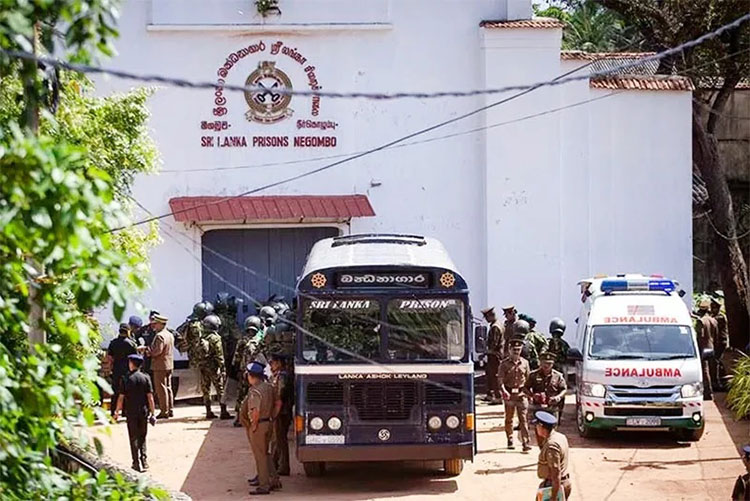
I watched the Negombo Prison riots on news channels from London, and the tragic deaths of the prisoners, and the prison officers, who were killed during the riots. Ten prison officials and 21 prisoners died in the two days of fighting between two groups of inmates at the prison.
Some mainstream media in Sri Lanka always exaggerate the cruelty of the prisoners, while ignoring the circumstances of the ill-fated prisoners and their poor relatives. The government came to power promising to eradicate poverty but their priority became eradicating the drugs. By launching the aggressive war on drugs, the government arested a large number of suspects without a comprehensive plan to accommodate them in remand prisons. There were complaints and reports about how some police officers had abused their power to arrest and detain some individuals, on false drug charges
The number of inmates in Sri Lankan prisons is reported to be 4,000, but in their NPP election manifesto (2024) placed the figure at 138,581 in 2022. How would the government explain this discrepancy? Did the NPP exaggerate the true figure for political gains? (Reference: https://www.scribd.com/document/766722056/NPP-Presidential-Election-Manifesto-2024)
(See page 115-116)
Negombo Prison, with a capacity for about 650 inmates, held around 2,400 at the time of the riot.
In the National People’s Power (NPP) election manifesto, ‘A Thriving Nation, A Beautiful Life’, it recognises the increase in the remand prisoner population as a major cause of overcrowding due to the long time it takes to complete the legal proceedings.
This shows that President Anura Kumara Dissanayake was well aware of the critical issues in the prisons and the judicial system, and resolving them should have been a top priority of this government. The judicial process has been adversely affected by backlogs of cases. The situation seems to have taken a turn for the worse under the current government.
The following attractive pledges were made in the (NPP) manifesto to improve the conditions of the prisons and the life of the prisoners;
=Preventing all forms of torture inside prisons
=Analysing the nature, mental status and other qualities of the prisoners and categorising and placing of prisoners accordingly.
=Expanding the facilities, within the prisons, including special facilities, according to international standards.
=Ensuring the quality of food given to the prisoners. (pages 115-116)
But, according to the reports and the prisoners’ experience, appalling conditions in the prisons had gone from bad to worse since the NPP government came to power.
President Anura Dissanayake has been in power since 2024 and the government had sufficient time to address the issues, at least the major issues. Had he taken a genuine interest to resolve the critical issues, in consultations with the prisoners, and the relevant parties, this tragedy could have been prevented. Although the Minister of Justice Harsana Nanayakkara has taken responsibility for the tragedy, President Dissanayake himself is also responsible for the bloodshed, as the Minister of Defence. The government always boasts of having so many professors in key positions. Did they advise the President and the minister/s about the remedies for the prison issues?
Although sycophants misled him, President Dissanayake should have heeded the voice of the media. It is said that some of our great kings, in the history, went from village to village, incognito, to ascertain public opinion. Reams have been written to educate the government to address the critical national issues, proposing viable solutions to them, such as human-elephant conflict, deforestation, human-monkey conflict, and invasive foreign fish which destroyed the biodiversity in our fresh water lakes. But many issues still remain unsolved because of lack of political will. For example, deforestation continues, largely aggravating the human-elephant conflict; invasive fish released to the freshwater lakes, by The National Aquaculture Development Authority, continue to destroy the biodiversity in our freshwater lakes, including traditional fish, such as ‘Lula’, and lotus, and the waterweed. Did the government take serious interest in the disasters?
President Dissanayake tells the public fairy tales. Do people really believe him, the way they did in the past? Farmers are protesting against the import of massive quantities of rice from India and China when Sri Lanka has stocks of paddy to meet the needs of the rice consumers. ‘Recent farmer unrest in Sri Lanka was heavily exacerbated when over 160,000 tonnes of imported Indian and Chinese rice flooded the domestic market immediately before the local harvesting season, crashing paddy prices.’
Last week, by launching a Japanese-funded safe drinking water project in Anuradhapura, President Dissanayake said, “We imported rice for foreign tourists, they don’t like to eat Sri Lankan rice.” This is a totally misleading picture. When tourists go to any country, they like to enjoy the traditional foods of the country. They do so in Sri Lanka and they relish rice and curry.
The government has clearly failed to deliver its promises yet, as they pledged. Paddy farmers’ protests against the government demanding a reasonable price for paddy, demonstrate widespread anger and the frustration of the farming community. The harsh blows on the faces of the effigies of the Minister Lal Kantha and Deputy Minister Namal Karunarathna demonstrate the frustration of farmers. The dengue epidemic is another example of the failure of the government’s ‘Clean Sri Lanka’ programme; even the Beira Lake, next to the Presidential Secretariat, is not clean.
The controlled price for rice is also not working. Although the maximum retail price of rice per kilo is Rs 260, people always have to pay more than Rs.360 per kilo for some varieties of rice. One of the aims of the government’s digitalisation programme was to improve efficiency in the government departments and minimise delays in serving the public. However, when you send emails to government officials, including to the permanent secretaries, they never bother to even acknowledge the receipt of the email, thus forcing the public to visit their offices, physically, if they need to.
After the Negombo Prison riots, the Minister of Justice Harsana Nanayakkara announced that the Bogambara Prison would be used to accommodate the prisoners. It is a wise decision, although some politicians and NGOs are critical about the move. As it has been purpose built and is the second largest, it can be improved and developed within a short period of time to accommodate more than 2,000 inmates. In my view, it should be preserved and continued as a prison for the benefit of the prisoners. The critics should understand the priorities. Since the closure of the prison in 2014, the conditions of the buildings have deteriorated. The prison will provide foreign tourists of a glimpse of our colonial legacy.
by Rajasinghe Bandara

Trump threatens to bomb a power plant for each ship strike

Mexico goalkeeper Guillermo Ochoa retires after 22-year career

New Chairperson and Members appointed to the Finance Commission

True leadership is not about titles or power, but about acting responsibly for the well-being of others – Prime Minister

A few showers will occur in the Western, Sabaragamuwa and North-western provinces and in Kandy, Nuwara-Eliya, Galle and Matara districts

Customs asked to resume probe or face legal action

‘Dates have the highest sugar content to fight Coronavirus’

Sunday Island 27 December – Headlines

#SundayIsland 17th December – Headlines

Sunday Island – 28th March

Sunday Island Headlines – 21 March

Sunday Island – 21st February – Headlines
-
 Features4 days ago
Two memorable excerpts from a former SLAF commander’s memoir
-

 Business4 days ago
‘Giving up was never an option’: The fisherman who fought back after losing millions in SL
-
 Latest News4 days ago
Davis cup Asia/Oceania Group IV 2026 to be held in Colombo from 20th to 25th July
-
 Features4 days ago
Erdoğan’s New Republic
-

 Life style4 days ago
Taste of the Swiss Alps comes to Colombo
-
 News5 days ago
Evidence recorded in money laundering case against Yoshitha Rajapaksa
-

 News5 days ago
Dengue outbreak gallops ahead: Infections surpasses 73,455, leaving 50 dead
-

 News6 days ago
Money laundering case against Yoshitha, fixed for pre-trial conference