
Business
Private sector chamber offers employment opportunities to government servants


By Sanath Nanayakkare
National Chamber of Exporters of Sri Lanka (NCE) has made a proposal to Prime Minister Ranil Wickramasinghe and to the Ministry of Public Administration, Home Affairs, Provincial Councils and Local Government, with a view to providing employment opportunities to government servants in the private sector companies for a specified period.They made this proposal after learning that The Ministry of Public Administration has appointed a committee to look into the possibility of granting 05 years of leave to government employees to work in the private sector.
Considering the financial burden and the reportedly excessive workforce attached to the public sector, NCE member exporters are proposing following options to reach a mutually beneficial agreement for both government and the export sector.The Chamber, however, said that labour requirements of exporters vary according to the relevant industry, yet in general, all categories could be considered.
NCE highlighted following key points in their proposal.
1. Any government employee in the permanent carder is eligible to apply for employment in the export sector, excluding following institutions as they are involved in law enforcement in the country which may lead to conflict of interests.
a) Department of Police
b) Department of Inland Revenue
c) Department of Customs
d) Department of Excise
2. Government to grant unpaid leave up to a maximum of 59 months.
3. Employer will offer a “Temporary Labour Contract “to such selected individuals which include: –
a) Period of contract for 59 months (because on completion of the 60th month, the employee will be eligible for Gratuity.)
b) Their employment will be in accordance with the laws and statutes under which the respective private sector company’s employees of similar cadre is employed.
c) Leave entitlement as per employer’s policy on leave
d) Employment contract can be terminated with either party giving 30 days’ written notice.
e) In case of maternity leave, a number of stipulated days will be available as unpaid leave.
f) At the end of 59 months, the government to absorb such individuals back to the public sector employment as per pertinent rules and regulations.
“The Export Sector has been able to sustain business and has also reached the pre pandemic level of an average of USD.01 billion export revenue during the period January to April 2022. Before the outbreak of the pandemic, exporters were facing difficulties due to the lack of skilled workers. During the pandemic, many exporters were compelled to downsize their operations and lay off employees which has created a vacuum in crucial areas of operations,” NCE said.


Pan Asia Banking Corporation PLC’s Senior Listed Rated Unsecured Redeemable Debenture issue of up to Rs. 5 billion was oversubscribed following its opening reflecting strong investor interest.
The debentures, with a par value of Rs. 100 each, will be listed on the Colombo Stock Exchange (CSE). The three-year debentures offer an interest rate of 12.75% interest payable annually, while the five-year debentures offer 13.50% interest payable annually.
The issue has been assigned a BBB+ (Stable) rating by Lanka Rating Agency.
The debenture issue was managed by the Investment Banking Unit of Commercial Bank of Ceylon PLC, with SSP Corporate Services (Private) Limited serving as the Registrar to the Issue.
The Bank said the strong investor response demonstrates continued confidence in Pan Asia Bank and its approach to creating long-term value for its stakeholders.
Pan Asia Bank, which positions itself as ‘The Truly Sri Lankan Bank’, continues to strengthen its role in supporting the financial requirements of individuals and businesses while contributing to the development of Sri Lanka’s economy.
Business
SLIIT International and Liverpool John Moores University inaugurate dedicated international learning facility
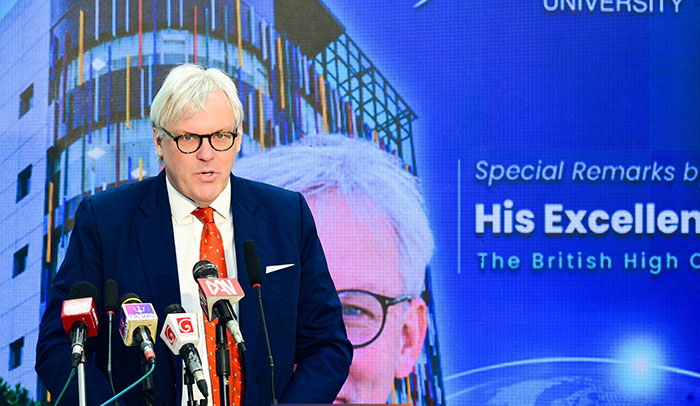
The Sri Lanka Institute of Information Technology (SLIIT) and Liverpool John Moores University (LJMU), United Kingdom, recently inaugurated SLIIT International in Collaboration with LJMU, a dedicated international learning facility located at No. 17, Dickmans Road, Colombo 04, marking a significant milestone in a partnership spanning more than a decade and reinforcing their commitment to providing Sri Lankan students with access to internationally recognised UK higher education qualifications.
The Grand Opening Ceremony was attended by Andrew Patrick, British High Commissioner to Sri Lanka, who graced the occasion as Chief Guest, alongside senior representatives from SLIIT, Liverpool John Moores University, the British Council, academia, industry and other stakeholders, marking the next chapter of the longstanding SLIIT–LJMU collaboration. The new facility is particularly significant as Sri Lanka’s first academic facility dedicated exclusively to the delivery of LJMU degree programmes, reflecting the strength, maturity and long-term commitment of the partnership.
Over the past decade, the SLIIT–LJMU partnership has established a growing network of more than 1,500 alumni, while providing Sri Lankan students with opportunities to gain internationally recognised UK qualifications locally. The new dedicated facility has been designed to provide a world-class learning environment exclusively for LJMU programmes, supporting future programme expansion, strengthening the student experience and creating opportunities for deeper academic collaboration, innovation, research and student engagement.
Commenting on the milestone, Prof. Lalith Gamage – Vice-Chancellor, Managing Director and Chief Executive Officer, SLIIT, stated, “The launch of SLIIT International in Collaboration with Liverpool John Moores University represents an important new chapter in our longstanding partnership with Liverpool John Moores University. Our vision is to provide Sri Lankan students with a world-class education and student experience right here in Sri Lanka, while equipping them with the global outlook, critical thinking, professional capabilities and career readiness required to succeed in an increasingly interconnected world. This dedicated facility strengthens the student experience while providing a strong foundation for the continued growth of our collaboration with LJMU.”
Prof. Timothy Nichol, Pro-Vice-Chancellor, Faculty of Society and Culture, Liverpool John Moores University, said, “The opening of Sri Lanka’s first facility dedicated exclusively to LJMU degree programmes represents a significant milestone for the University and our partnership with SLIIT. It reflects the strength of our collaboration and our shared commitment to delivering a high-quality LJMU educational experience in Sri Lanka. The new facility also creates exciting opportunities for deeper academic collaboration, innovation, research and student engagement as we look towards the next phase of our partnership.”
A key highlight of the Grand Opening Ceremony was the panel discussion titled “Beyond Borders: The Role of British Higher Education in Developing Globally Competitive Graduates.” The discussion examined the growth of international educational opportunities in Sri Lanka, the future expansion of UK degree programmes, maintaining the quality and integrity of UK qualifications, developing future-ready graduates with global competencies, and the role of international higher education in strengthening graduate employability. The panel brought together Prof. Lalith Gamage; Prof. Timothy Nichol; Mr. Sajeewa Meepage, Representative of the British Council; and Dr. Harsha Cabral, Board Member of SLIIT.
The panelists further emphasized on emerging trends in areas including law, business, psychology and artificial intelligence, as well as the contribution of UK higher education to Sri Lanka through internationally recognised qualifications that uphold global academic standards.
The discussion explored the history and future of the SLIIT–LJMU partnership, the strategic significance of the new SLIIT International facility, academic quality, graduate employability and the long-term growth of LJMU programmes in Sri Lanka.
The ceremony also featured a special address by Andrew Patrick, British High Commissioner to Sri Lanka, followed by an address by Mrs. Clare Sears, Country Director, British Council Sri Lanka. The evening also included the ceremonial exchange of the partnership document between SLIIT International and Liverpool John Moores University, symbolising the continued commitment of both institutions to strengthening their collaboration and expanding international educational opportunities for Sri Lankan students.
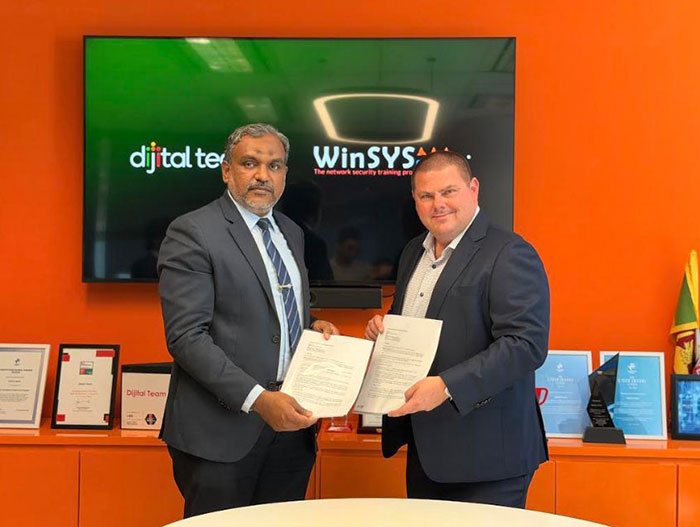
Dijital Team has signed a two-year partnership with Winsys City University, strengthening the skills and capabilities of its team members to support Managed Service Providers and IT service providers while elevating tech talent to immediate industry-readiness. With a Memorandum of Understanding (MOU) signed recently, the partnership was formally launched on 9 September 2026 at Dijital Team’s office premises, Colombo.
Combining Dijital Teams’ international employer network and understanding of the capability requirements of MSPs and IT service providers across Australia, New Zealand and the United Kingdom with Winsys City University’s training heritage of 21 years, the joint programmes create legitimate classroom-to-international-career pathways, offering structured learning and certification avenues that support deeper capability across cloud, cybersecurity, automation, AI and emerging technologies.

Turkish court detains football refereeing chief pending corruption trial

Ten injured after car crashes into rugby supporters in Australia

Polls open in Latvia against backdrop of perceived Russia threat

Abhishek, Tilak and spinners secure gold for India at Asian Games again

Tharindu Rathnayake, bowlers secure Asian Games Bronze for Sri Lanka

G7 to release 100 million barrels of oil and diesel after Trump export ban threat

‘Dates have the highest sugar content to fight Coronavirus’

Sunday Island 27 December – Headlines

#SundayIsland 17th December – Headlines

Sunday Island – 28th March

Sunday Island Headlines – 21 March

Sunday Island – 21st February – Headlines
-

 News6 days ago
Police remove Thileepan statue in Jaffna
-

 Features6 days ago
The 22nd Amendment, constitutional recovery and illiberal slippage
-

 Features6 days ago
Of foreigners as CEOs of Lankan ventures
-

 Latest News4 days ago
Gold winner Tharanga gets brand-new Honda Vezel from SLAAJ
-

 News6 days ago
Sajith rejects Jt. Opp. protest sabotage claim; SJB TU chief demands remedial action
-

 Features4 days ago
Why Sri Lanka needs an Inclusive Civic Nationalism – urgently
-

 Features5 days ago
Thailand’s biggest new global star …
-

 News3 days ago
US-assisted ‘Ice’ detection: NPC to examine IGP’s move to transfer drug-busting team