
News
Prez discusses global situation with focus on Ukraine war, etc.

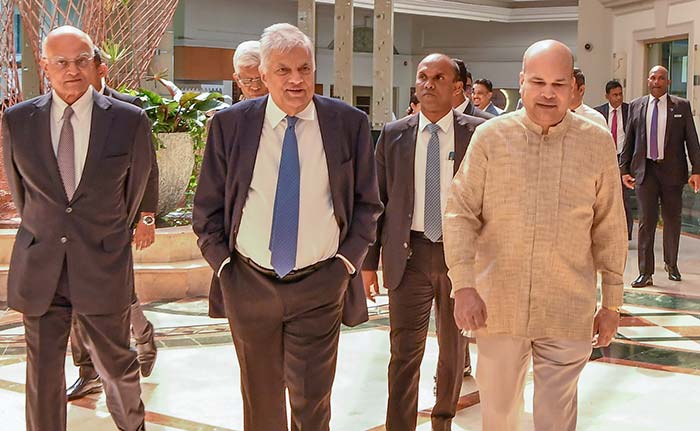
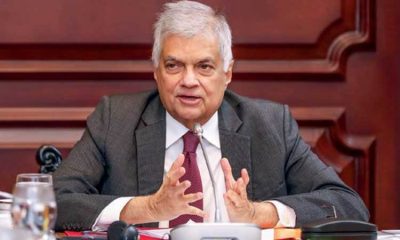
President Ranil Wickremesinghe told the Indian Ocean Security Conference in Colombo that the sanctions imposed on Russia over the war in Ukraine had not caused the collapse of the Russian economy, which had just shifted eastwards.
The following is the text of the statement issued at the conference (Phase II) organised by the Pathfinder Foundation:
It gives me great pleasure to be here with you and the Pathfinder Foundation in addressing one of the key issues for us in Sri Lanka, for us in the region and for all of us in the world.
I must also commend Milinda Morogoda for having organised this session and for the continuing interest that has been shown in security in this region.
The Indian Ocean, let’s take it on its own, not as a part of BRI or part of the Indo-Pacific. The Indian Ocean has now ceased to be in the backwaters and we have become one of the strategic geopolitical regions in the world.
It has happened in the last five, six years. Events have helped us more than any other issue.So how does Asia fit into this context? Asia after all has its own identity, an identity older than that of Europe.
The first set of geopolitics was played either in the Mediterranean or in the Indian Ocean.The Indian Ocean geopolitics have gone on and it has also changed the politics of the world.Britain’s second empire and its rise to pre-eminence was due to India. Without India, Britain was nothing. That’s what Churchill realized.
So he opposed the independence being granted to the Indian Empire, but that was too late. By that time the world opinion had turned in favour of India and more than that, two and a half million Indians had fought in World War II and they were returned. That’s something they could not deal with. So that’s one. That certainly had an impact. India has always influenced the outcome of the Indian Ocean geopolitics to a large extent.
In the Muslim kingdoms, the Arab kingdoms were another, and for some time Indonesia and that area from the time of Srivijaya onwards. So this is basically Asia. Of course, colonial rule meant that we were shoved into the backwaters, but nevertheless, we were one of the most important regions in World War II.
And after independence, we started reasserting identity. Firstly, even before independence, Prime Minister Nehru summoned the Asian Relations Conference. This was followed by Prime Minister John Kotelawala, who summoned the Colombo Powers Conference, which in turn summoned the Bandung Conference. Bandung is the key watermark.
That is where the Asian identity was established. And we carried that forward. Thereafter, Prime Minister Nehru, with President Tito and President Nasser, started the Non-Aligned Movement. You had to include Indonesia, who was responsible for summoning the second Bandung Conference, the Asia-African Conference and also Sri Lanka, which got involved. So, India, Indonesia, Sri Lanka, has been involved throughout. Pakistan and Myanmar at different stages dropped out.
Now, what has happened in the last five years? We have come to the forefront for different reasons. One is the continuing, the build-up of tensions over Taiwan and in East Asia, which has resulted in China shifting its emphasis to the Indian Ocean. And the Silk Route, the BRI, has played a prominent role. The only question that has come is with the debt crisis of how the debt is to be handled by China. So that’s one issue that’s come up.
But during the process, one thing has happened. The Ukraine war, the sanctions imposed by the West did not result in the collapse of the Russian economy. It just shifted eastward. If you look at the amount of oil that is being refined in the Gulf refineries, it is far more than what is found in the Middle East, with the Russian and the Iranian oil. No one knows, we don’t know what we are buying. There’s a certificate.
But the whole of the Russian economy shifted here, into this region, towards Singapore and Hong Kong. But this became the main region, Dubai. So Russia has not collapsed, but the Russian economy, instead of looking westward, has come eastwards. And the money is here. So that became one presence.
Secondly Iran, Iran and Saudi Arabia have made up due to the Chinese intervention. So that’s the second power block that’s coming up. The Arab nations and the Sunnis and the Shias, both are coming together. They have their differences. But nevertheless, they are talking to each other. And some relationships have come about. But it also means, in the medium term, the rise of Iran. After all, the road to Central Asia lies through Iran. And India is helping Iran also in developing the second pole. So you’ve got a second group there.
Third one is India. India itself has become one of the largest economies and the Indian market will keep expanding till the late 21st century. So look at the potential for India, which everyone has recognized. And next is Indonesia and finally, South Africa. So you can see how the new power balances have come.
First was the issue of The US-Chinese rivalry, it brought China in here. Secondly, is the presence of Russia, rise of Iran, even Turkey showing interest, and a large presence of China as it happened there and then the rise of the Asian powers.
But it goes beyond that. For instance, you have the Shanghai cooperation countries bordering the Indian Ocean. Another aspect is the BRICS. The majority of the BRICS are in this region. These are the ones who are challenging the supremacy of the dollar. You take India you take South Africa and Saudi Arabia. Take Iran, even Egypt. All those countries are around the Indian Ocean.
In a sense, it’s building up on one of the resolutions of the Bandung Conference on economics. So the centre has come back here, because somehow other Indian Ocean nations want to take the lead again. And that’s happening.
Then, within it, what are we committed to? Sri Lanka is committed to the strategic position to ensure there is no big power rivalry and the freedom of navigation.
The freedom of navigation has led us now to take part in the operations, for a prosperity guardian in the Red Sea. Because as you see now as the rates go up, the Suez Canal is important for us. During the Six-Day War, when the canal was closed, for ten years, the Colombo port suffered. So we have to ensure that there is, as far as we are concerned, freedom of navigation. The main issues have been the Somali pirates, and now the Houthis. Houthis themselves are a terrorist organization, because we have recognized the Yemen government. So this is one part.
The other issue which is now coming up is the undersea domain, as far as security is concerned. How do you deal with that? So we feel now that the Indian Ocean is the future.
Then what is our relationship? How do we fit into the Indo-Pacific? That’s something that has to be worked out. Because basically, as Bernard Gunatelaka said, it’s of recent origin after World War II. You had the San Francisco system to maintain American dominance in the area and the Shanghai communiqué which brought China and the US together.
So with these two, we saw the emergence of Asia-Pacific when relations were good. Now the relations have turned sour.
So are we to be the battleground in the Indian Ocean?
Secondly, to me, it was a lackadaisical approach of bringing the Indian Ocean in. All of a sudden, decided that the Indo-Pacific will stop at the western boundary of India. Now that is not our ocean. That’s not something that we could accept. For us, the ocean went all the way up to the African coast.
Now the Chinese went one step further. They didn’t stop at the African coast. They thought of putting a rail line, which would take them to the Atlantic coast. On one hand, you are drawing the line at the Indian coast. The other one is taking it all the way up to the Atlantic coast. So those are the differences that have come up. So this meant that we had to see how it’s being developed. It’s only now. And that raises one of the issues. Whether this is really an extension of the manifest destiny?
It brought them into Hawaii, to the Philippines, into Asia Pacific. Is it manifest destiny here? Because then everyone else here has a manifest destiny. India has a manifest destiny. Indonesia thinks of a manifest destiny. So we’ll have a mix of manifest destinies in the Indian Ocean.
So I think we have to sit down and discuss it. And finally, of course, came the fact that Prime Minister Modi and others extended the Indian Ocean all the way up to the African coast.
And secondly, has come the ASEAN view of the Indo-Pacific, where you see as two different entities that are connected. I think that’s the best way that we could go.
But there are also the developments that are taking place in the Indian Ocean. Now while we are talking of this, there are new concepts that are coming in. We have to understand. Firstly, China has already got access to the Indian Ocean through Pakistan, the Friendship Highway. They will come into the Bay of Bengal through Myanmar, another port.
They get access from the interior of China. So that alone, then on the other hand, the agreements between India and Sri Lanka on connectivity, on developing the Trincomalee Harbour, also makes a change there.
Then on the other hand other new roles as I said, one that will go into, one that will take us into Central Asia. Secondly, the one is again what India, the Mumbai, UAE, Israel, Europe connection. That won’t take place immediately. But it is going to, it will take place maybe about another 10 years, 15 years. But it will most probably come through.
Once the Indian economy, if it hits half of what the Chinese economy has got to, you won’t be able to send the goods across. The Suez Canal will not be sufficient. We have to find other ways of approaching destinations.
So in this background, there’s one more issue that has come up now, which is really Gaza. What’s happening there? The Hamas attack on Israel, we have all condemned. But the war in Gaza has created issues. And that’s again, we’ll have the sentiment is not with the U.S. and may not be for some time, maybe five years, six years, longer.
That’s also going to affect diplomacy, whatever the governments want to do. Gaza has become another issue, and its important issue here, because remember, from the Middle East all the way to Indonesia is the arc of Islam. So how are you going to manage here?
This will most probably, will guide the developments in the Indian Ocean in the next few years, the coming decade.
But first is to accept the Indian Ocean and its own identity and its own history, and negotiate from there onwards. That is to me the best way, because most of us in the Indian Ocean, or all of us will insist that identity be retained. There should be no big power rivalry, and how we go ahead. We feel much of the development in the 21st century is going to shift, not merely to India, but beyond that to Africa. So that’s, that’s where it is.
And while we’ve driven it, also you’ve seen a change, where the, excuse me for saying it, but the European influence has got limited. There was a talk on NATO coming into the Indian Ocean, now the question is not coming into the Indian Ocean or Pacific, it’s real that NATO is an organization that can only handle west, and that’s the important issue that has.
So there will be a change here. It has to take place, because the Asian viewpoint of ours, which was first stated in the Bandung Declaration and subsequently in the IORA leaders’ declaration in Jakarta, I think in 2017, will have to guide us in the developments of the Indian Ocean.I don’t want to take any more of your time, but I just express my thoughts as to what the developments would be.”








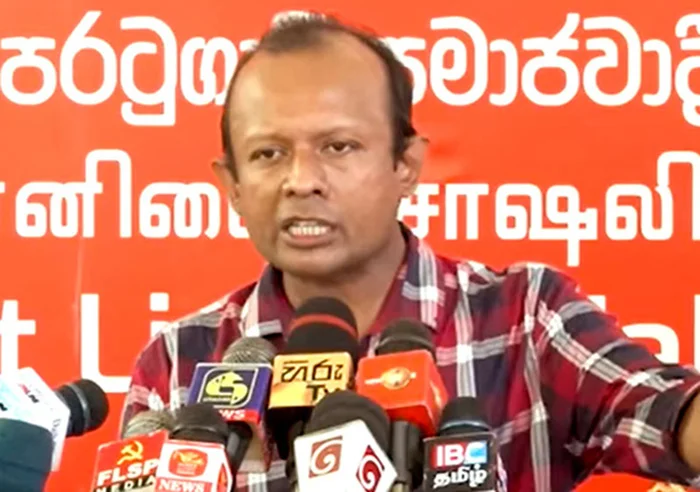
The Frontline Socialist Party (FSP) yesterday accused the government of seeking to use the proposed Protection of the State from Terrorism Act (PSTA) to suppress popular political activity, claiming that some of its provisions were more repressive than those of the Prevention of Terrorism Act (PTA).
FSP Education Secretary Pubudu Jayagoda told a media briefing, in Nugegoda, that the definition of terrorism in the Bill was so broad that it could be used to label almost any form of popular political activity as terrorism.
He said the Bill’s approach to defining terrorism was based largely on attempts to compel a government, or an international organisation, to do, or refrain from doing something, rather than on internationally recognised criteria, such as killings, causing serious bodily harm, kidnapping or acts intended to spread terror among the public.
Jayagoda also alleged that the Bill transferred substantial powers from the judiciary to the executive, while extending powers of arrest, investigation and detention to the armed forces, in addition to the police.
He claimed that the government had sought to portray the Bill as a replacement for the PTA while retaining or introducing provisions that could facilitate political victimisation and repression.
The FSP also questioned the government’s decision to proceed with the Bill, despite having previously sought public views on an earlier draft.
Jayagoda said a draft had been published earlier this year, with the period for public submissions ending on February 28, but the Bill subsequently gazetted was essentially the same draft with some provisions rearranged.
Jayagoda also referred to a letter reportedly sent by Attorney-at-Law Saliya Peiris, a member of a Committee, chaired by President’s Counsel Rienzie Arsecularatne, that had been appointed to draft the legislation. He said Peiris had stated, in the October 06 letter, that changes had been made to the draft prepared by the Committee.
“This means that even the Committee, appointed to prepare the Bill, was a deception,” Jayagoda alleged.
He said that the PSTA was fundamentally similar to the Anti-Terrorism Bill introduced by the previous government, in 2023, which the National People’s Power (NPP) opposed and challenged in court.
“If the NPP opposed that Bill then and is now bringing the same legislation before Parliament, the government must explain its position,” he said.
Jayagoda called on NPP MPs to oppose the PSTA in Parliament and urged trade unions and other groups to build a broad public movement against the legislation.
He challenged the government to an open debate on the Bill.
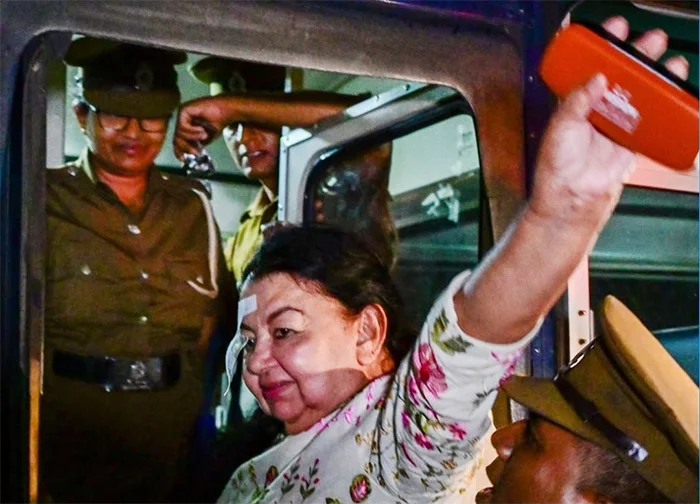
Former First Lady Shiranthi Rajapaksa was yesterday remanded until 13 October after being produced before the Colombo Magistrate’s Court following her arrest by the Commission to Investigate Allegations of Bribery or Corruption (CIABOC).
Shiranthi, wife of former President Mahinda Rajapaksa, was arrested at her residence on Poorwarama Road, Kirulapone, after CIABOC officers recorded a statement from her for nearly two hours.
According to the CIABOC, the arrest was made over allegations that Rs. 10 million obtained from the National Savings Bank through the Siriliya Saviya organisation was misappropriated.
The money was allegedly obtained to provide a Computed Tomography (CT) scanner to the children’s hospital. Investigators allege that the scanner was not provided and that the funds were instead unlawfully used.
CIABOC is investigating alleged offences under the Public Property Act and corruption-related provisions in connection with the transaction and other financial activities involving Siriliya Saviya, which was headed by Rajapaksa.
Rajapaksa returned to Sri Lanka on Monday night on a flight from Malaysia after travelling overseas for medical treatment. She left for Singapore on 16 September after being admitted to a private hospital in Colombo on 15 September following an illness.
She had been due to appear before the Financial Crimes Investigation Division (FCID) on 13 October in connection with its investigation into the financial affairs of Siriliya Saviya.
Meanwhile, her lawyers filed an anticipatory bail application before the Maligakanda Magistrate’s Court on Monday, seeking an order preventing her arrest in connection with the FCID investigation.
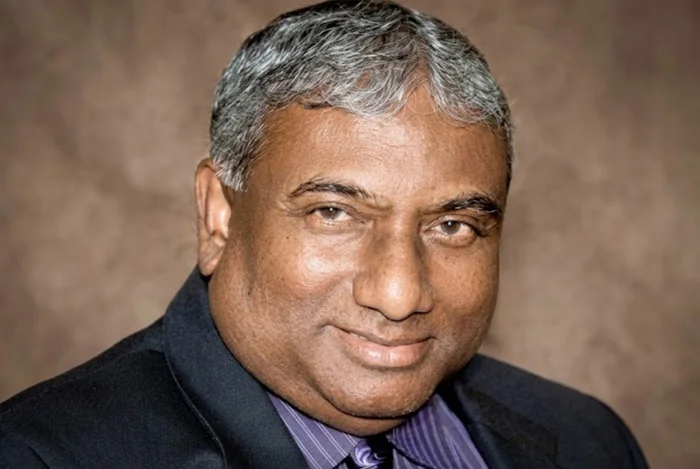
Former National Savings Bank (NSB) Chairman Pradeep Kariyawasam was yesterday granted bail by the Colombo Magistrate’s Court following his arrest by the Commission to Investigate Allegations of Bribery or Corruption (CIABOC).
Kariyawasam, husband of former Chief Justice Shirani Bandaranayake, was arrested in connection with the Bribery Commission’s investigation into the ‘Siriliya Saviya’ account linked to former First Lady Shiranthi Rajapaksa.
The investigation concerns financial activities involving the Siriliya Saviya initiative, which was headed by Rajapaksa, wife of former President Mahinda Rajapaksa.
CIABOC is continuing investigations into the alleged financial irregularities relating to the account.

Showers above 100 mm are likely at some places in the Western, Sabaragamuwa, Central, Uva and Southern provinces and in Anuradhapura district

PSTA worse than PTA: FSP

Shiranthi R remanded until 13 Oct.

Former NSB Chairman Kariyawasam granted bail

Katchatheevu row: India SC urges fishermen to avoid Sri Lankan waters

Remembering Juvenal, Coke, Acton and Machiavelli

‘Dates have the highest sugar content to fight Coronavirus’

Sunday Island 27 December – Headlines

#SundayIsland 17th December – Headlines

Sunday Island – 28th March

Sunday Island Headlines – 21 March

Sunday Island – 21st February – Headlines
-

 Editorial6 days ago
Colombo Port drug bust: The plot thickens
-

 Features4 days ago
The first woman in the foreign service or Ceylon Overseas Service it was then called
-

 Editorial5 days ago
Fuelling discontent and protest
-

 News3 days ago
Geneva takes up Sallay’s case and govt. ignores opportunity to answer accusations
-

 Latest News5 days ago
Tharindu Rathnayake, bowlers secure Asian Games Bronze for Sri Lanka
-
 Foreign News5 days ago
Ten injured after car crashes into rugby supporters in Australia
-

 Features3 days ago
Sri Lanka Cricket Bill: Governance reform is not yet a cricket strategy
-
 News4 days ago
Nearly 20 Iranian tankers stranded off Lanka amid US sanctions