
News
President’s Counsel raps presidential pardons outside the rules

by Hiran Senewiratne
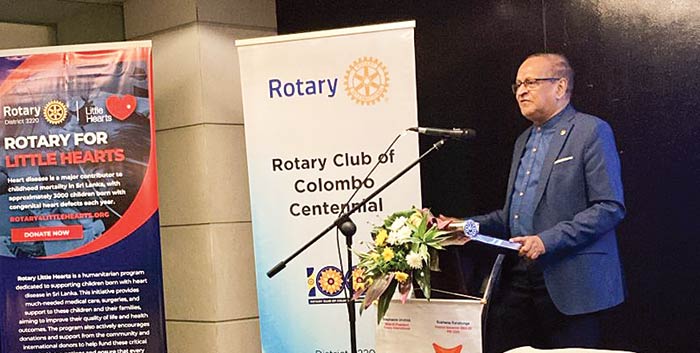
Eminent lawyer Presantha Lal de Alwis PC criticized the presidential pardon granted to convicted prisoners, particularly those sentenced to death, as a violation of established procedures outlined in the Sri Lankan Constitution.
Addressing a meeting of the Rotary Club of Colombo Centenarian, under the chairmanship of its President, Chrisantha Perera at the Cinnamon Grand Hotel in Colombo on Thursday, De Alwis said: “The pardoning of individuals from execution, particularly drug offenders, is not based on any policy or procedure outlined in the Constitution or any legal framework.”
He emphasized that the process for granting presidential pardons, especially for death penalty cases involving drug offenders, lacks a defined policy or procedure and needs to be properly regulated.He recalled that during the July 1983 riots, then Minister of Justice Nissanka Wijeratne resigned following the killing of Tamil prisoners at Welikada during the J.R. Jayewardene administration.
In contrast, he pointed out that in the United Kingdom, which operates under an unwritten Constitution, three Prime Ministers recently resigned due over various issues. Notably, one was forced to resign for violating Covid-19 rules, demonstrating the UK’s strict adherence to procedures and laws.
“Adherence to law and order and the strict maintenance of state policy are fundamental features of the British political system,” he said adding that the unwritten Constitution in the UK is designed to protect individual rights rather than fulfilling the whims of rulers, thus ensuring that the rights of citizens are upheld.

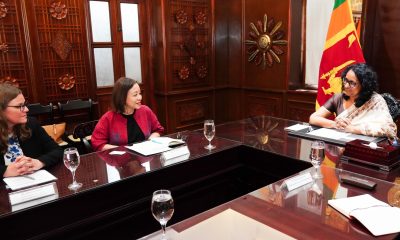



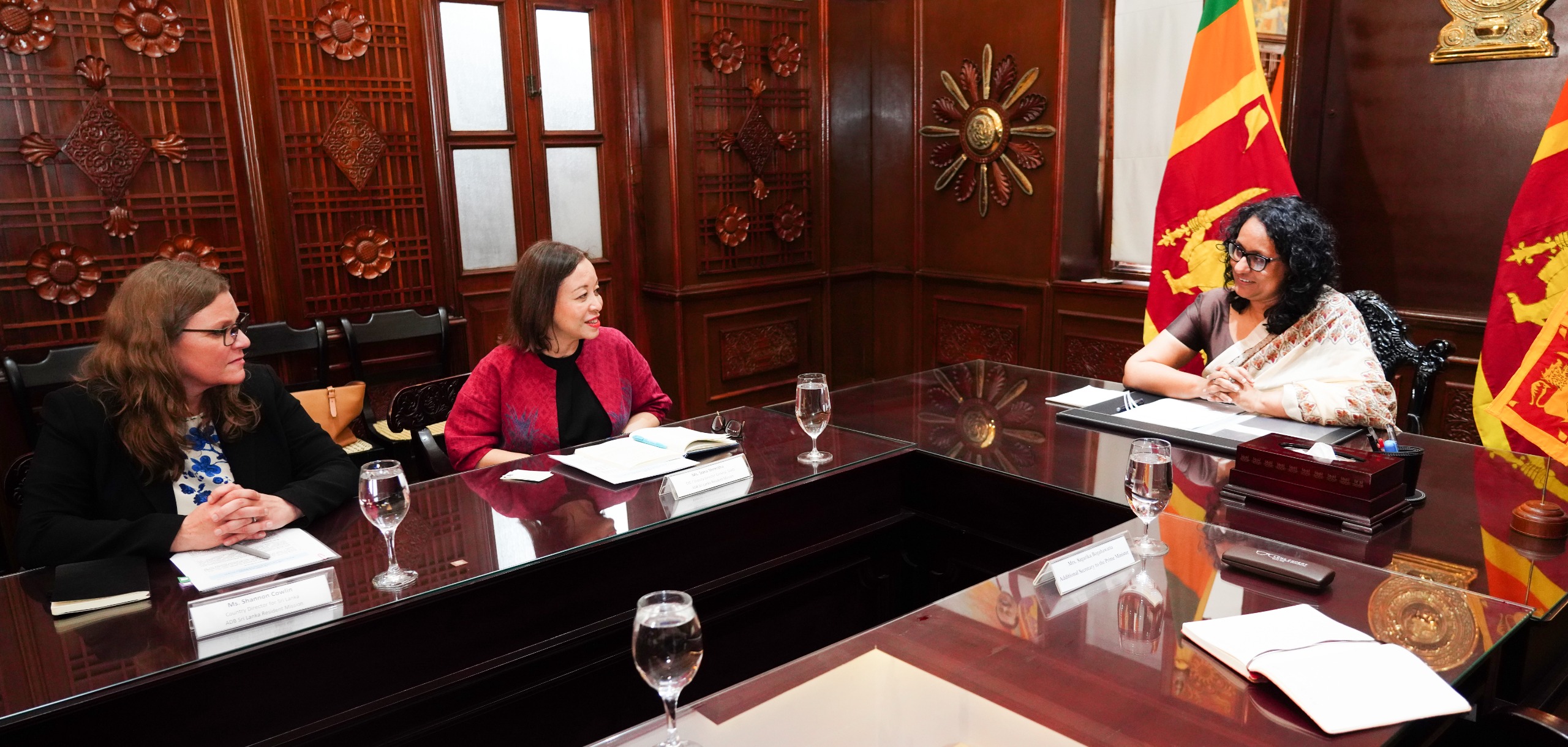
The newly appointed Country Director of the Asian Development Bank for Sri Lanka Ms Shannon Cowlin and the accompanying delegation met with Prime Minister Dr. Harini Amarasuriya on Tuesday [0th of February] at the Prime Minister’s office.
Welcoming the delegation, the Prime Minister extended congratulations to the newly appointed Country Director and acknowledged the long-standing partnership with the Asian Development Bank. The Prime Minister also expressed appreciation for ADB Bank’s continued engagement and support aligned with Sri Lanka’s national development priorities.
The Prime Minister also conveyed gratitude for the timely assistance extended by the ADB in response to Cyclone Ditwah, noting the importance of such support in mitigating the immediate impacts of natural disasters.
The ADB delegation reiterated its readiness to further assist Sri Lanka during the post-cyclone recovery phase, including rebuilding and reconstruction efforts, and emphasized its commitment to the supporting the education sector.
The meeting was attended by OIC / Deputy Director General, SARD Ms. Sona Shrestha, Ms. Cholpon Mambetova Country Operations Head of ADB Sri Lanka Mission Resident, Additional Secretary to the Prime Minister Ms. Sagarika Bogahawatta, Director General of the External Resource Department, Ministry of Finance Samantha Bandara, Director for ADB Division in External Resource Department, Ministry of Finance Ranjith Gurusinghe.
[Prime Minister’s Media Division]
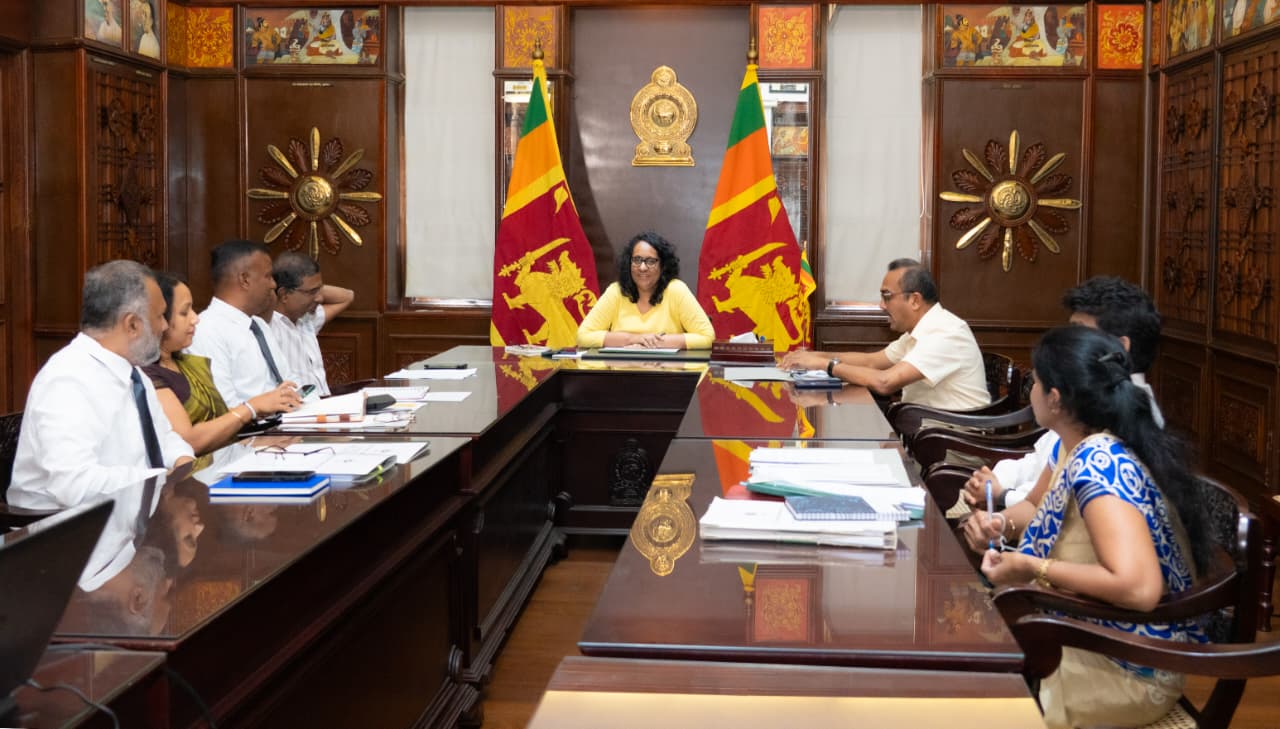
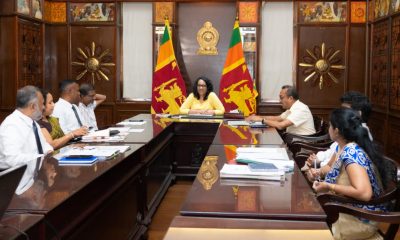
A discussion on regulating school student transport services was held on the 09th of February at the Prime Minister’s Office under the patronage of Prime Minister Dr. Harini Amarasuriya, with the participation of officials from the National Transport Commission and the Ministry of Education.
The authority for regulating school student transport has been vested with the National Transport Commission, and as the relevant draft of regulations have already been prepared, discussions were held on the provisions contained in these drafts as well as on new proposals that should be incorporated.
During the discussion, the attention was focused on meeting the emerging needs of transportation arising from the schools, minimizing issues encountered in the transportation of school students by establishing an organized transport mechanism, and deploying the “Sisu Sariya” school transport service in a more efficient and effective manner followed by the new educational reforms process.
Discussions were also held on introducing laws and regulations to systematize the transportation of schoolchildren, prioritizing child protection by preventing reported incidents of abuse and harassment during student transport, and enhancing professionalism among school transport service providers to ensure a responsible and accountable service.
The focus was also emphasized on the need for coordinated action among the Ministry of Transport, Highways and Urban Development, the National Transport Commission, the Ministry of Education, Higher Education and Vocational Education, and the National Child Protection Authority.
The discussion was attended by the Minister of Transport, Highways and Urban Development Bimal Rathnayake, Chairman of the National Transport Commission P. A. Chandrapala, officials of the National Transport Commission, and the officials from the Ministry of Education, Higher Education and Vocational Education.
[Prime Minister’s Media Division]

… ex-Public Security Minister says lives of MP and bodyguard could have been saved
The Gampaha High Court Trial-at-Bar yesterday (11) sentenced 12 persons to death by hanging over the May 9, 2022, killing of former Polonnaruwa District SLPP MP Amarakeerthi Athukorala and his police bodyguard. They were among altogether 39 persons tried by the High Court for the double murder. Of the remaining accused, four persons were handed six-month sentences, suspended for five years, and 23 others acquitted by the Gampaha High Court Trial-at-Bar, consisting of High Court Judges Sahan Mapa Bandara Rashmi Singappuli and A.D. Ruwan Pathirana.
Of the 12 sentenced to death, one continues to evade the law.
The verdict was to be announced on January 14.
Sri Lanka suspended implementation of the death penalty in 1976. The EU has repeatedly warned that resumption of judicial executions would result in consequences.
The new entrant to Parliament, and his bodyguard, were lynched by a ‘Aragalaya’ mob, in broad daylight. They were on their way back to Polonnaruwa when the gang intercepted the MP’s car, in the Nittambuwa town, during violence unleashed in the aftermath of SLPP goons’ attack on those camping at the Gotagohome site at Galle Face.
Footage secured from a nearby CCTV camera showed MP Amarakeerthi Athukorala fleeing the scene with his security officer, who was armed with a gun. Dozens of suspects had been subsequently arrested on several occasions on suspicion of involvement in the MP’s murder. The MP and police officer were killed in a garment store where they took refuge.
Earlier, the case caused major controversy over the Gampaha High Court Trial-at-Bar granting bail to all suspects. The Attorney General appealed to the Supreme Court (SC) to cancel the bail granted by the High Court Trial-at-Bar. The AG argued that releasing the accused on bail would impede a fair trial. The AG asked that the SC cancel the bail order and requested that the accused be placed in remand custody till the conclusion of the trial.
One-time Law and Order Minister Rear Admiral (retd) Sarath Weerasekera told The Island that the lives of the parliamentarian and his police bodyguard could have been saved if the military swiftly responded to the then developing situation. Former Colombo District MP said that he told Parliament that the Army, in spite of having troops at Nittambuwa, didn’t intervene. The powers that be never inquired into the lapses on the part of those responsible for maintaining law and order, the ex-Minister said, alleging that successive governments conveniently neglected that responsibility.
by Shamindra Ferdinando

Newly appointed ADB Country Director to Sri Lanka and delegation meet PM

School student transport services are being regulated

Shanaka and Rathnayake blow Oman away with frenetic half-centuries

Namibia look to make a splash with India battling injury and illness

Powerful cyclone kills at least 31 as it tears through Madagascar port

US House votes to overturn Trump’s tariffs on Canada

‘Dates have the highest sugar content to fight Coronavirus’

Sunday Island 27 December – Headlines

#SundayIsland 17th December – Headlines

Sunday Island – 28th March

Sunday Island Headlines – 21 March

Sunday Island – 21st February – Headlines
-
 Features5 days ago
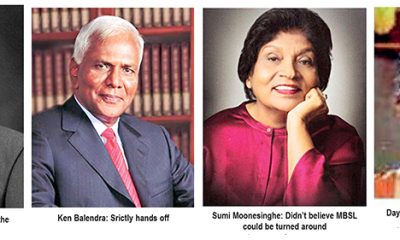
My experience in turning around the Merchant Bank of Sri Lanka (MBSL) – Episode 3
-

 Business6 days ago
Zone24x7 enters 2026 with strong momentum, reinforcing its role as an enterprise AI and automation partner
-

 Business5 days ago
Remotely conducted Business Forum in Paris attracts reputed French companies
-

 Business5 days ago
Four runs, a thousand dreams: How a small-town school bowled its way into the record books
-

 Business5 days ago
ComBank and Hayleys Mobility redefine sustainable mobility with flexible leasing solutions
-
 Business2 days ago
Autodoc 360 relocates to reinforce commitment to premium auto care
-

 Business6 days ago
HNB recognized among Top 10 Best Employers of 2025 at the EFC National Best Employer Awards
-

 Business6 days ago
GREAT 2025–2030: Sri Lanka’s Green ambition meets a grid reality check