
News
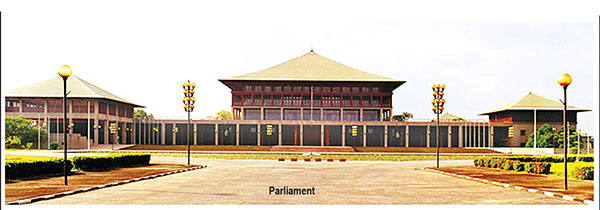
Port City Economic Commission Bill sails through parliament

By Saman Indrajith
Colombo Port City Economic Commission Bill was passed in parliament yesterday with a majority of 91 votes. The bill received 149 votes in favour and 58 voted against.
The SJB, the JVP and the TNA voted against the bill.
A vote was taken at the end of the second reading stage of the bill. There were 148 votes for the bill and 59 against. Accordingly, the second reading of the bill was passed by a majority of 89 votes. Thereafter, the government introduced amendments to the bill during the committee stage known as the third and final reading of the bill.
The Colombo Port City Economic Commission Bill was presented to Parliament on April 8 by Leader of the House Dinesh Gunawardena. The bill provides for the establishment of a commission empowered to grant registrations, licences, authorisations, and other approvals to carry on businesses and other activities in the Special Economic Zone (SEZ) to be established within the Colombo Port City.
The Supreme Court on April 23 concluded the consideration of petitions filed challenging the bill and announced that the determination would be directed to the Speaker.
Speaker Mahinda Yapa Abeywardena announced the Supreme Court determination in the House on May 18.
A two-day debate on the bill commenced on Tuesday. Opening the two-day debate on the bill, Prime Minister Mahinda Rajapaksa said the Port City project was expected to attract over $ 15 billion worth of investments in the next five years and that it was essential to bring in a legal framework to help achieve that goal.
“Today, there is much competition among countries to attract investors and to make our country attractive we have to offer incentives, facilities, and services. We should also have a single window investment facilitation process to attract foreign investment,” the PM said.



Text and Pic by Priyan de Silva
Director General of the Commission to Investigate Allegations of Bribery and Corruption (CIABOC) Ranga Dissanayake has questioned whether some promises contained in the National People’s Power (NPP) manifesto, A Thriving Nation – A Beautiful Life, could be fulfilled even if the government wanted to implement them.
Dissanayake raised the issue during a discussion following the release of the third biannual report on manifesto monitoring by the March 12 Movement, at the BMICH, on Wednesday.
He questioned whether the report had taken into account legal and institutional constraints affecting the implementation of certain pledges.
Citing the proposal to establish Anti-Corruption Investigation Offices in each district, Dissanayake said such offices could be established only with the agreement of CIABOC and that amendments to the Anti-Corruption Act would be necessary.
He also referred to the pledge to abolish the Executive Presidency, noting that successive governments had made similar commitments since 1994. He questioned whether there had been adequate consideration of where the powers vested in the Executive President would be transferred if the system were abolished.
On the proposal to establish a Public Prosecutor, Dissanayake questioned whether the Government intended to maintain the office alongside the Attorney General, who currently performs prosecution-related functions.
Executive Director of the Institute for Democratic Reforms and Electoral Studies (IRES) Manjula Gajanayake said Dissanayake’s remarks should be regarded as his personal views and not as Government policy.
Monitoring and Evaluation Consultants M. Thilakarajah and D.D. Mataharaarachchi presented the third-phase findings, covering January to June 2026.
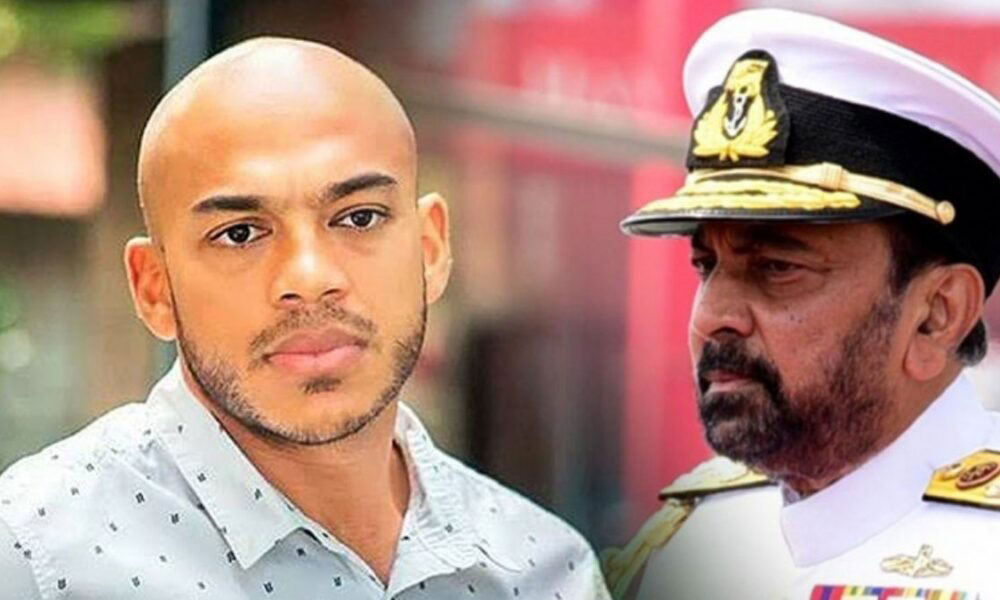
The corruption case filed by the Commission to Investigate Allegations of Bribery or Corruption (CIABOC) against former Navy Commander, Admiral of the Fleet Wasantha Karannagoda, and Yoshitha Rajapaksa was set for a pre-trial conference by the Colombo High Court.
The case was taken up before the Colombo High Court on Thursday (17), when the accused, who are currently out on bail, appeared before the court. After considering the submissions made, the court ordered that the case be called for a pre-trial conference.
The CIABOC had filed the case against the accused, alleging that a corruption offence was committed by sending Yoshitha Rajapaksa, son of former President Mahinda Rajapaksa, for training at the Royal Naval College in the United Kingdom despite him not having the required qualifications.

The Colombo Magistrate’s Court yesterday directed the Inspector General of Police (IGP) to conduct an investigation and submit a report on whether a statement made by former Minister Wimal Weerawansa at a political rally, in Anuradhapura, on September 12, amounted to contempt of court.
Deputy Solicitor General Janaka Bandara, appearing for the Commission to Investigate Allegations of Bribery or Corruption (CIABOC), made the request when a complaint filed against MP Namal Rajapaksa in connection with the Airbus issue was taken up.
Bandara also handed over to court a compact disc containing the relevant speech made by Weerawansa.
After considering the request, Colombo Chief Magistrate Asanga S. Bodaragama directed the IGP to conduct an investigation into the matter and submit a report to court.

Some NPP manifesto promises may be difficult to fulfil – CIABOC DG

Yoshitha and ex-Navy chief Karannagoda’s case fixed for PTC

Court orders probe into Wimal’s rally speech

Court to rule on Dilith’s writ petition on September 30

Shanakiyan urges urgent action over reported death sentence for Lankan in Saudi Arabia

Namal further remanded over Airbus probe

‘Dates have the highest sugar content to fight Coronavirus’

Sunday Island 27 December – Headlines

#SundayIsland 17th December – Headlines

Sunday Island – 28th March

Sunday Island Headlines – 21 March

Sunday Island – 21st February – Headlines
-

 News6 days ago
Gnanasara Thero absconding after SC ruling
-

 News7 days ago
Green Climate Fund (GCF) Regional Dialogue for East and South Asia will be held from 14 to 17 September 2026 at Cinnamon Life at City of Dreams Hotel, Colombo
-

 Opinion5 days ago
From Galkissa (Mount Lavinia) to Tambuttegama
-

 Latest News7 days ago
ITS Giuseppe Garibaldi’ departs Colombo
-

 Business6 days ago
HNB Finance strengthens Board with four independent directors
-

 News2 days ago
US embassy won’t comment on IGP’s probe into joint drug raid
-
 Sports6 days ago
Culture within cricket team worrying authorities
-

 Features5 days ago
Sri Lanka’s university crisis: Brain drain and union action demand urgent reform