
Foreign News
Philippines feud escalates as lawmakers vote to impeach vice-president


The Philippines’ parliament has voted to impeach Vice-President Sara Duterte following complaints about alleged corruption.
Duterte has been accused of misusing millions of dollars in public funds and threatening to have President Ferdinand ‘Bongbong’ Marcos Jr assassinated.
She has denied the charges and alleged she is the victim of a political vendetta.
The shock move is widely seen as an escalation of the bitter feud between Duterte and Marcos which has kept the nation on edge for months. Both are scions of Philippine political dynasties: she is the daughter of former president Rodrigo Duterte, while he is the son of the late strongman leader Ferdinand Marcos Sr.
A total of 215 out of 306 members of the House of Representatives voted for impeachment, well above the one-third threshold needed for the bill to pass. The bill will now be heard by the 24-member Senate, which will convene as an impeachment court.
If found guilty, Duterte faces removal from her post and would be the first vice-president in Philippine history to be impeached. She is expected to stay in office until the Senate delivers its judgement. A trial date has not been set yet.
Duterte is widely perceived as a potential successor to Marcos, who is ineligible to run again in 2028 as the constitution limits presidents to a single six-year term.
An impeachment would effectively bar her from the presidency, as she would be permanently banned from holding public office.
The move comes ahead of the mid-term elections in May, which will be seen as a referendum for Marcos halfway into his term as well a barometer of public support for Duterte.
Duterte has not commented on the impeachment vote. But her elder brother who represents their hometown of Davao in parliament, Paolo Duterte, said the administration was “treading on dangerous ground” with what he described as a “clear act of political persecution”.
Marcos has also not commented on Duterte’s impeachment. In November, he had said it would be a “waste of time” for lawmakers to impeach her when it has more important work to do.
Since the end of Ferdinand Marcos Sr’s dictatorship and the restoration of democracy in 1986, only one sitting president has been impeached – Joseph Estrada in 2000, for alleged corruption.
But his trial ended without a judgement after a popular revolt forced him from power in January 2001.
Only one impeachment trial made it to a verdict, that of former Supreme Court chief justice Renato Corona, who was convicted of corruption in 2012.
Both the Estrada and Corona impeachment trials were highly politicised and divisive affairs and dragged on for months.
What’s behind the Marcos and Duterte feud?
Duterte and Marcos had presented a picture of unity when they ran for the 2022 elections, calling themselves the “UniTeam”.
But cracks began to appear even before they assumed office, when Duterte asked to handle the defence portfolio in Marcos’ cabinet but instead was made education minister.
Their alliance unravelled further soon after they took power, as they pursued their separate political agendas while differing on crucial fronts such as diplomacy.
Their differences on the Philippines’ relationship to the US and China became more pronounced, as encounters between Philippine and Chinese ships in disputed waters became more frequent.
Marcos has pivoted the Philippines back to the US, reversing the pro-China stance of Duterte’s father.
He has also promised a less violent approach against illegal drug rings, dialling back the elder Duterte’s “war on drugs” that left over 6,000 suspects killed, according to a government count.
The lower house of parliament, where Marcos’s allies hold power, then started scrutinising Duterte’s budget requests, particularly her confidential funds which are not covered by state audits.
In July last year, she resigned from the cabinet.
The feud took a dramatic turn a few months later when, in a late-night livestreamed press conference, Duterte said she “talked to a person” to “go kill” Marcos if she were assassinated.
She later said that she was not plotting to assassinate the President and Marcos had dismissed the threat as a “storm in a teacup”.

[BBC]

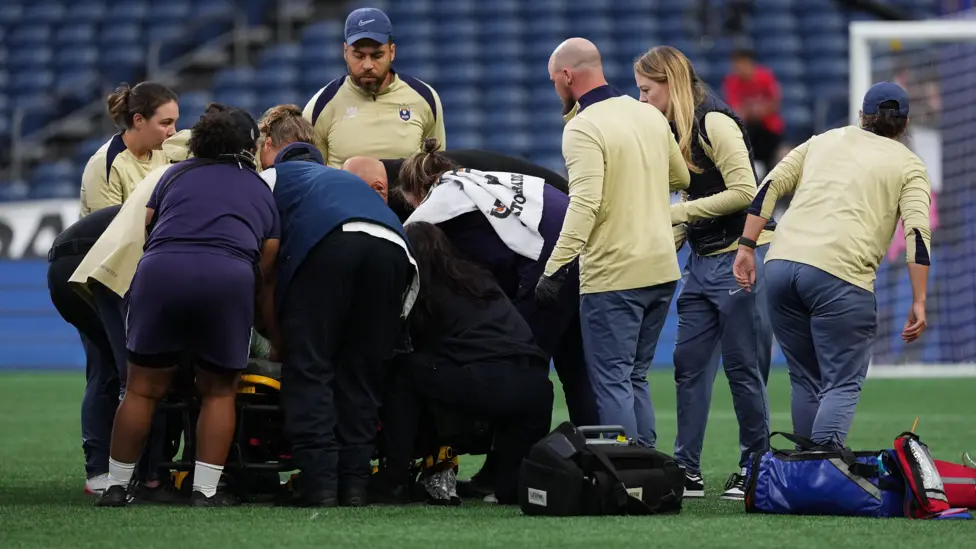
United States women’s national team player Savannah DeMelo is suing a hospital and two doctors after she suffered a cardiac arrest on the pitch last year.
Midfielder DeMelo, who has seven senior caps for the USA, has filed a lawsuit against University of Louisville Health (UofL Health) for negligence.
The 28-year-old, who plays for Racing Louisville, collapsed in the first half of a National Women’s Soccer League (NWSL) match on 14 September 2025.
According to documents seen by BBC Sport, the case was filed on Tuesday morning with Jefferson Circuit Court in Kentucky, where her club is based – a year and a day after her on-field collapse.
DeMelo’s filing claims UofL Health and two doctors, Dr Sarabjeet Suri and Dr Jennifer Daily, “failed to act as a reasonably prudent and competent medical practice, and such negligence was a substantial factor in causing DeMelo to suffer severe physical injuries, including, but not limited to, her cardiac arrest”.
Dr Daily, according to her online UofL biography, is Racing Louisville’s chief medical officer. The lawsuit states DeMelo was under the care of Dr Daily from January 2024 to July 2026.
It states that in March 2025, Dr Daily referred DeMelo to Dr Suri for “evaluation and treatment” after she had been complaining of chest pain, dizziness and shortness of air; Dr Suri obtained a history, performed a physical examination and ordered diagnostic tests.
Nearly six months later, DeMelo suffered the cardiac arrest.
“She was subsequently diagnosed and treated for ventricular tachycardia [an abnormal heart rhythm],” the suit states.
DeMelo, who has spent her entire professional career with Racing Louisville, has not played since her collapse.
In a post to her instagram page on Tuesday, De Melo – who was picked in the USA squad for the 2023 Women’s World Cup and started their first two games – marked the anniversary of the incident.
“A year ago today, while playing soccer, I collapsed due to an undiagnosed cardiac arrhythmia, that caused me to go into cardiac arrest,” she wrote.
“I respect and appreciate the privacy everyone has met me with while going through everything I have this year. I’ll never be able to fully put into words how emotionally hard this year has been. There has been a lot of uncertainty and emotions intertwined with it all.”
[BBC]

The Philippine Coast Guard says it has recovered 41 bodies from the wreckage of a ferry that caught fire this week, bringing the total death toll to 76.
More than 130 people were on board the MV June Aster when the blaze erupted on Wednesday as it neared its destination at the tourist hotspot of Coron, after departing from Manila.
The coast guard said on Saturday the number of survivors remained 43, with many receiving treatment in hospital, but 13 people remain unaccounted for.
Recovery of bodies had been hampered due to toxic fumes and lingering heat, which meant authorities were unable to board until Friday.
Geronimo Tuvilla, an official for the Philippine Coast Guard, said the priority was identifying victims and determining the cause of the blaze.
Kristine Ablana, a tourism official in Coron, said relatives were being asked to help identify family members through personal items and DNA testing.
“Once someone is able to verify that this photo or these belongings are indeed those of their relative, they will be asked to provide a DNA sample,” she said.
Coast Guard spokesperson Commodore Noemie Cayabyab said the fire began in a cargo hold before spreading.
She said survivors had described hearing a loud explosion, “the appearance of smoke and then fire. It spread very quickly”. She added that those who had made it off the ship did not have time to put on lifejackets.
A survivor who was hauled to safety on a rescue boat told the BBC he had heard frantic cries onboard when the fire erupted, and was trampled by panicked people as he tried to escape.
The ferry, built in 2002, held valid safety certificates and passed an enforcement inspection in March, but investigators are looking into potential manifest discrepancies, cargo loading integrity, and crew emergency response protocols, the Palawan Daily reported.
The vessel was carrying 117 passengers and 17 crew members.
Atienza Interisland Ferries, the vessel’s operator, has pledged full co-operation with the inquiry.
[BBC]
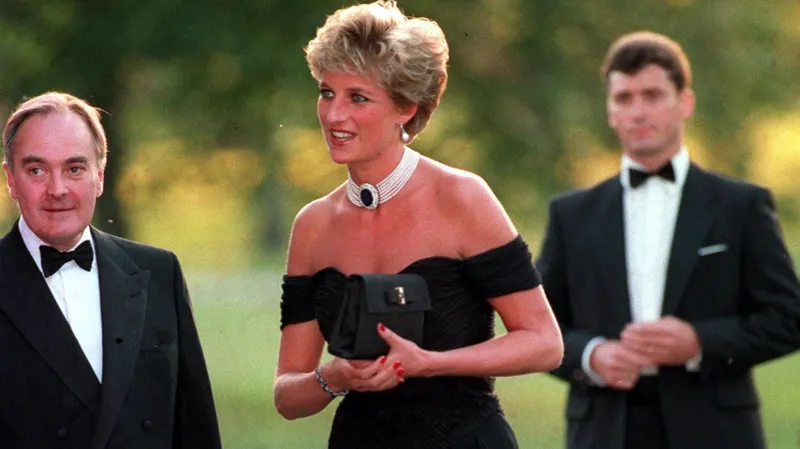
A dress worn by Princess Diana to a party in London hours after a documentary was televised in which the then-Prince Charles admitted to committing adultery during their marriage is going up for auction.
Her dramatic arrival at the Serpentine Gallery in 1994 in a custom-made black silk evening dress by designer Christina Stambolian became an iconic pop-culture moment.
The media dubbed her outfit the “revenge dress”.
Auction house Sotheby’s expects the dress to sell for up to £220,000 ($300,000) when it goes under the hammer on 9 December.
A press release from Sotheby’s said it is the first time the dress has been offered at auction since 1997, when the late princess sold 79 of her dresses to raise money for charities.
Morgane Halimi, Sotheby’s Global Head of Handbags and Fashion, said in a statement that Princess Diana “understood instinctively” that fashion can be a language in its own right.
“On her own terms, Princess Diana turned the dress into one of the most powerful messages she ever made, during one of the most scrutinised and emotionally charged episodes of her life,” Halimi said.
“She walked into a moment in which so much of her story was being told for her and, through what she chose to wear, reclaimed the narrative for herself.”

According to Sotheby’s, Anna Harvey, her stylist at the time, said Diana “wanted to look a million dollars”.
The princess made a last-minute wardrobe change for the fundraising dinner and chose the strapless evening dress by the Greek designer Christina Stambolian – which she accessorised with a royal jewel, a black clutch and black heels.
The vintage Jaguar XJ40 car that Diana arrived in at the event was sold at auction earlier this year for £66,250.
The revenge dress is expected to fetch a considerably higher price.
If it does, it will not be the first time an item from the princess’s wardrobe has sold for a significant sum.
Princess Diana’s sweater featuring a black sheep among rows of white ones was sold for £920,000 at an auction by Sotheby’s in New York in 2023.
[BBC]

Flood warning issued to the Divisional Secretariat Divisions of Ganga Ihala Korale, Udapalatha, Doluwa, Udunuwara, Yatinuwara, Gangawata Korale, Harispattuwa, and Pathadumbara

Landslide Red Alerts issued to the districts of Kandy, Kegalle and Nuwara Eliya

Shafali dazzles with 49-ball unbeaten 100 and India march into Asian Games final

Development projects can deliver results to the people more quickly when the political authority and the public service work together towards a common goal – PM

Landslide Early Warnings issued to the Districts of Colombo, Galle, Kalutara, Kandy, Kegalle, Matara, Nuwara Eliya and Ratnapura

Chamari Athapaththu’s unbeaten 83 leads Sri Lanka into final

‘Dates have the highest sugar content to fight Coronavirus’

Sunday Island 27 December – Headlines

#SundayIsland 17th December – Headlines

Sunday Island – 28th March

Sunday Island Headlines – 21 March

Sunday Island – 21st February – Headlines
-

 Opinion7 days ago
From Galkissa (Mount Lavinia) to Tambuttegama
-

 News4 days ago
US embassy won’t comment on IGP’s probe into joint drug raid
-

 Features6 days ago
The emptying university: why are academics leaving?
-

 Features7 days ago
Sri Lanka’s university crisis: Brain drain and union action demand urgent reform
-

 News3 days ago
Bid for Basil’s extradition nears final stage: Police
-

 Opinion7 days ago
Ashraff: From the SLMC towards the National Unity Alliance
-

 Business4 days ago
All-new Bolero MaXX unveiled in Sri Lanka
-

 Editorial7 days ago
Muscle flexing, astroturfing and dog-and-pony shows