
Features
PCR and eccentric genius who invented it

By Prof Kirthi Tennakone
(Email: ktenna@yahoo.co.uk )
Hardly a day passes without the letters, PCR, – the acronym for polymerase chain reaction — being mentioned. To most of us PCR sounds just a test for knowing whether someone has contracted COVID-19 or not.
The polymerase chain reaction is a game changing technique offering diverse and far reaching applications beyond a gold standard for COVID-19 detection.
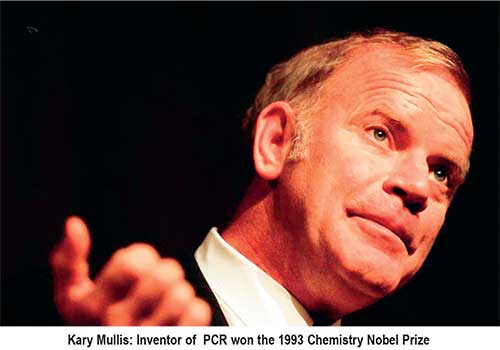
It is fascinating and entertaining to learn about polymerase chain reaction and its discoverer Kary Mullis, nicknamed untamed genius.
The invention of PCR is intimately connected to our understanding of the cause of biological inheritance. The reason why we have features resembling our parents. A mystery that lead to the discovery of DNA and development of the science of life thereafter. Brief digression into this subject helps to fathom what PCR really means.
Understanding the cause of biological
inheritance and discovery of DNA
Humans have wondered why progeny resemble parents and have some physical and mental traits of the latter. A sprout from a minuscule banyan seed always grows into a gigantus of the same kind but never a tender mustard plant. The ancient Greeks believed that a creature to be born or a plant to germinate subsisted inside the sperm and the seed respectively in their miniature forms. A different idea gained ground later and lasted for more than 2,000 years that physical traits acquired by parents indirectly pass to the offspring. A proponent of this hypothesis in recent times was the French naturalist Lamarck. If Lamarckism were true, amputation of the tails of successive offspring of mice would eventually lead to a generation of tailless rodents. All such experiments failed.
Lamarckism did not confront creationism and intelligent design to the hurt religious establishment. It attracted communists as a way of improving the society to meet ideological aspirations and enhance crop production. The infamous agronomist Lysenko mistrusting proven science attempted to reform Soviet agriculture believing Lamarckian ideals. He probably faked experimental results to justify his thesis and advised famers to abandon use of fertilizers and grow of each crop intensely segregated in order to increase the yield. The result was a famine that starved millions – a good lesson for those who advocate pseudoscience promoting quackeries as remedies for COVID-19 or recommend withdrawal of fertilizer on basis of unreliable claims.
When the world was deluded by Lamarckism, definitive clues as to what really causes inheritance followed from the seminal works two revolutionaries, Charles Darwin and Gregor Mendel.
Darwin in his presentation of the theory of evolution noted that the decedents of a given species, sometimes include one’s with distinct variations in their characteristics, referred to as mutants. If the new qualities acquired by the mutants fits the environment, they survived and continuation of evolution via natural selection led to the emergence of new species.
Another question crucial to understand the cause of inheritance has been how the traits of male and female sexual partners were represented in the offspring? Without resorting to experiment and careful analysis, the conservative stream of biologists continued to believe it should be a blend of the maternal and paternal traits. In late 1890s, the work of the Austrian monk Gregor Mendel, a mathematician and a botanist as well, provided a conflicting answer. In an experiment lasting for eight years Mendel planted different strains peas, cross-pollinated them and germinated the seeds brought forth to see features of the of linage such as the height to which they grew and the colour of flowers. His results did not indicate blending of traits, instead the original attributes appeared in each generation with different probabilities. Crossing tall and dwarf varieties never procreated medium size plants; instead, they were either tall or dwarf. Mendel concluded that traits were passed to the progeny as distinct qualities – what we refer to as genes today.
The work of Darwin and Mendel compounded by subsequent findings, pinpointed the inescapable conclusion that a chemical substance transmitted inheritance. Many believed it should be a protein. In 1942, the prescient Austrian physicist Erwin Schrodinger, famous for the quantum theory, expressed an alternative opinion. He hypothesized that the heredity determining entity, needed to be a molecule capable of encoding information and replication. Aroused by Schrodinger’s proposition, chemists all over the world competitively researched to identify the causative agent. In early 1950s, American biologist Watson and British physicist Crick, showed that the genetic material found in cells of animals and plants was deoxyribonucleic acid DNA – a lengthy molecule constituted basically of two strands of four different repeated subunits. Molecules of DNA encode information using these units as a four letter alphabet.
Cells of every organism contain DNA characteristic to the species and unique to each individual. The order in which millions of these units sequentially are arranged in a helical chain, is analogous to an instruction manual detailing the development of the organism. Short sequences of the four units in the chain represent genes, dictating special instructions, just like a sentence or a paragraph in the manual.
Polymerase chain reaction (PCR) and its uses
PCR is a technique of amplifying million-fold a tiny quantity of DNA representing a sequence of interest in minutes so that it could be detected even in minutest quantities – justifying the use of the term chain reaction with polymerase as the catalyst ensuing the reaction. In the analogy of DNA to an instruction manual, PCR would be like inserting a book mark to fix a certain page and copying that page many times.
In finest detail DNA is unique to each individual, whether it is a human or a bacterium. The difference between DNAs of individuals in a given species is minuscule. Yet, the identity of a person can be established from DNA in the smear of saliva over a stamp by PCR. Again just like finding a needle in a hay stack, minute quantities of a specific type of DNA in a sample containing excessive quantities of DNAs from background sources, can be selectively ascertained by running a PCR. The technique finds wide range of applications in medical diagnostics, forensics and criminology, archaeology and paleontology, phylogenetics, cloning, gene editing etc.
How is PCR detecting corona virus?
The genetic material of the corona virus is RNA – a single strand of DNA. The test first converts RNA into DNA making it double stranded and then selectively amplify a fragment of DNA covering a specific sequence using special reagents. The amplification enables detection by a screening system. Test is extremely sensitive; in fact, too sensitive, responding to even the dead fragments of the virus.
The impact of PCR on forensics and criminology is unprecedented. The technique has enabled not only identification of criminals but also the exoneration of innocent. A man on death row for eight years has been released and compensated as PCR became available.
Kary Mullis: The man who discovered PCR
Kary Mullis born in Southern United States 1944 was exceptional and radical. As a high schooler he meddled with chemicals at home and created an ingenious technique for making rocket fuels. His homemade rockets propelled miles into the sky frightening pilots maneuvering airplanes to land. Having earned a bachelor’s degree in chemistry from Georgia Institute of Technology he moved to University of California, Berkeley to pursue studies towards a doctoral degree in chemistry. A fashionable field of study at that time was chemistry of DNA or molecular biology. Instead of following courses in biochemistry needed for the thesis, he opted for astrophysics, saying he could learn the former discipline talking to colleagues. He wrote an article on a fundamental problem in astrophysics and succeeded getting it printed in the prestigious journal Nature. He was a surfing enthusiast and guitarist.
At the oral examination for qualifying to register as a doctoral candidate, Mullis was found to be unprepared and weak in conventional biochemistry. However, his paper on an astrophysical subject rather than biochemistry saved him from disqualification. The committee decided despite odd behaviour and unpreparedness, the man was talented and granted him approval for registration. Mullis earned a Ph.D. in 1973 and decided to give up research to become a writer and worked in a restaurant. Later, one of his friends persuaded him to a job in a biochemical company, at least to earn a living. There, he worked in a laboratory devoted to DNA chemistry, often quarrelling with coworkers. In early 1980s, he came up with the idea of PCR, but no one took him seriously. The paper he wrote was rejected twice and finally published in a less acclaimed journal. Soon the world acknowledged the utmost significance of his work and Mullis shared 1993 chemistry Nobel Prize. He resorted to eccentric behaviour criticizing the establishment and mainstream thinking, earning reputation as the untamed genius. When he was invited to a high-standing conference on molecular biology, he projected three slides of female nudes, lambasted the way of funding research and vanished! In an interview, Mullis has said Nobel Prize serves as a licence to do things unacceptable.
Kary Mullis, who passed away in 2019, will be remembered as a demarcater of biology into two epochs – before PCR and after PCR. Fortunately, the pandemic is post – PCR. Otherwise the situation would have taken a more deadly and devastating turn.
The invention of PCR stands as a prime example to highlight how fundamental studies motivating creativity, foresight and hard work can pay off unexpectedly. A constant reminder to research and academic institutions to retain this spirit of accommodating the most talented and not the mediocre who entertain trivialities for the shake of survival. The latter even amend (adulterate) the established mandates for fostering advanced studies to suit them. And deceiving the policymaker and general public, stating the amendments (adulterations) were affected to meet national interest (self-interest).
Would a man of the calibre of Kary Mullis be considered for employment or allowed to continue in our institutions? Will a committee here act with the same altruism and consideration as the one that endorsed the candidature of Kary Mullis?


 Going forward, it is hoped that a reported ceasefire agreement between the US and Iran would provide a basis for a degree of stability in the Middle East and pave the way for substantive peace talks between the powers concerned. The world is compelled to fall back on hope because there is never knowing when President Donald Trump would change his mind and plans on matters of the first importance. So erratic has he been.
Yet, confusion abounds on who has agreed to what. The US President is on record that a number of conditions put forward by him to Iran to deescalate tensions have been accepted by the latter, whereas Iran is yet to state unambiguously that this is so. For instance, the US side claims that Iran has come clear on the point that it would not work towards acquiring a nuclear weapons capability, but there is no official confirmation by Iran that this is so. The same goes for the rest of the conditions.
Accordingly, the peace process between the US and Iran, if such a thing solidly exists, could be said to be mired in uncertainty. Nevertheless, the wider publics of the world are bound to welcome the prospects of some sort of ceasing of hostilities because it would have the effect of improving their economic and material well being which is today under a cloud.
However, questions of the first magnitude would continue to bedevil international politics and provide the breeding ground for continued tensions between East and West. Iran-US hostilities helped highlight some of these divisive issues and a deescalation of these tensions would not inevitably translate into even a temporary resolution of these questions. The world community would have no choice but to take them up and work towards comprehending them better and managing them more effectively.
For example, there are thorny questions arising from the Treaty on the Non-Proliferation of Nuclear Weapons (NPT). Essentially, this treaty bans the processing and use of nuclear weapons by states but some of the foremost powers are not signatories to it.
Moreover, the NPT does not provide for the destroying of nuclear arsenals by those signatory states which are already in possession of these WMDs. Consequently, there would be a glaring power imbalance between the latter nuclear-armed states and others which possess only conventional weapons.
Such a situation has grave implications for Iran’s security, for instance. The latter could argue, in view of the NPT restrictions, that the US poses a security threat to it but that it is debarred by the Treaty from developing a nuclear arms capability of its own to enable it to match the nuclear capability of the US. Moreover, its regional rival Israel is believed to possess a nuclear weapons capability.
Accordingly, a case could be made that the NPT is inherently unfair. The US would need to help resolve this vexatious matter going forward. But if it remains, US-Iran tensions would not prove easy to resolve. The same goes for Iran-Israeli tensions. Consequently, the Middle East would remain the proverbial ‘powder keg’.
Besides the above issues, the world has ample evidence that it could no longer speak in terms of a united NATO or West. Apparently, there could be no guarantee that US-NATO relations would remain untroubled in future, even if the current Iran-US standoff is peacefully resolved. US-NATO ties almost reached breaking point in the current crisis when the US President called on its NATO partners, particularly Britain, to help keep open the Hormuz Straits for easy navigation by commercial vessels, militarily, on seeing that such help was not forthcoming. Such questions are bound to remain sore points in intra-Western ties.
In other words, it would be imperative for the US’ NATO partners to help pull the US’ ‘chestnuts out of the fire’ going ahead. The question is, would NATO be willing to thus toe the US line even at the cost of its best interests.
For the West, these fractious issues are coming to the fore at a most unpropitious moment. The reality that could faze the West at present is the strong opposition shown to its efforts to bolster its power and influence by China and Russia. Right through the present crisis, the latter have stood by Iran, materially and morally. For instance, the most recent Security Council resolution spearheaded by the US which was strongly critical of Iran, was vetoed by China and Russia.
Accordingly, we have in the latter developments some marked polarities in international politics that could stand in the way of the West advancing its interests unchallenged. They point to progressively intensifying East-West tensions in international relations in the absence of consensuality.
It is only to be expected that given the substance of international politics that the West would be opposed by the East, read China and Russia, in any of the former’s efforts to advance its self interests unilaterally in ways that could be seen as illegitimate, but what is sorely needed at present is consensuality among the foremost powers if the world is to be ‘a less dangerous place to live in.’ Minus a focus on the latter, it would be a ‘no-win’ situation for all concerned.
It would be central to world stability for International Law to be upheld by all states and international actors. Military intervention by major powers in the internal affairs of other countries remains a principal cause of international mayhem. Both East and West are obliged to abide scrupulously with this principle.
From the latter viewpoint, not only did the West err in recent times, but the East did so as well. Iran, for instance, acted in gross violation of International Law when it attacked neighbouring Gulf states which are seen as US allies. Neither Iran nor the US-Israel combine have helped in advancing international law and order by thus taking the law into their own hands.
Unfortunately, the UN has been a passive spectator to these disruptive developments. It needs to play a more robust role in promoting world peace and in furthering consensual understanding among the principal powers in particular. The need is also urgent to advance UN reform and render the UN a vital instrument in furthering world peace. The East and West need to think alike and quickly on this urgent undertaking.
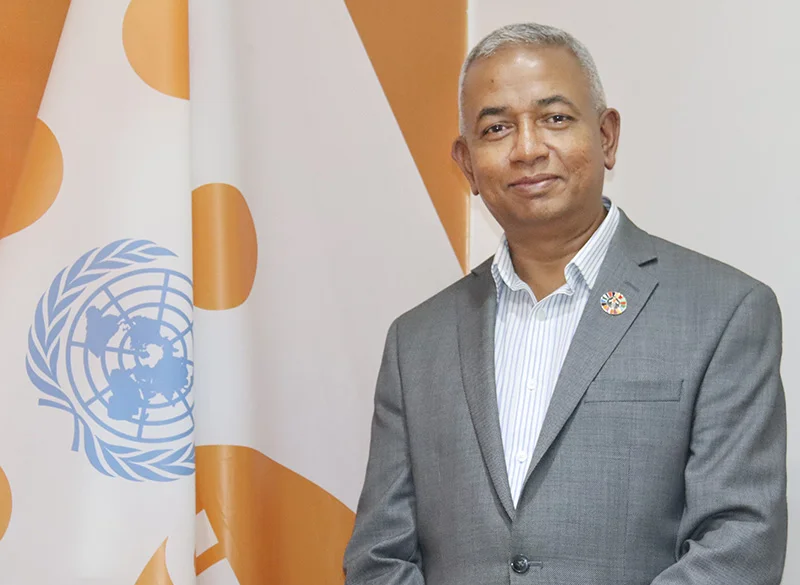
Marking World Health Day on April 7, health experts have called for a stronger commitment to science-based decision-making to address increasingly complex and evolving health challenges in Sri Lanka and beyond.
Dr. Dayanath Ranatunga, Assistant Representative of the United Nations Population Fund, stressed that health is no longer confined to hospitals or traditional medical systems, but is shaped by a broad spectrum of social, environmental, and technological factors.
“This year’s theme, ‘Together for Health. Stand with Science,’ reminds us that science is not only for laboratories or policymakers. It is a way of thinking and a tool that shapes everyday decisions,” he said.
Dr. Ranatunga noted that modern health challenges are increasingly interconnected, ranging from infectious diseases such as COVID-19 to climate-related risks, demographic shifts, and emerging forms of online violence.
He warned that maternal and newborn health continues to demand urgent attention despite progress. Globally, an estimated 260,000 women died from pregnancy and childbirth-related causes in 2023 alone—many of them preventable through timely, science-based interventions.
“In countries like Sri Lanka, where fertility rates are declining and survival rates improving, every pregnancy carries greater significance—not just for families, but for the future of communities and economies,” he said.
The UNFPA official also highlighted the growing threat of Technology Facilitated Gender-Based Violence (TFGBV), including cyber harassment and online abuse, noting that these forms of violence can have deep psychological consequences despite lacking visible physical harm.
He emphasised the need for multidisciplinary, science-informed approaches that integrate mental health, digital safety, and survivor-centered care.
Turning to demographic trends, Dr. Ranatunga pointed out that increasing life expectancy is bringing new challenges, particularly the rise of non-communicable diseases such as diabetes, cardiovascular illnesses, and cancers.
In Sri Lanka, nearly 13.9% of mothers develop diabetes during pregnancy, a trend attributed to obesity and unhealthy lifestyles, underscoring the urgent need for preventive healthcare strategies.
“Are we investing enough in prevention?” he asked, noting that early intervention and healthier lifestyles could significantly reduce long-term healthcare costs, especially in a country with a free public healthcare system.
He underscored the importance of data-driven policymaking, stating that scientific research and analytics enable governments to identify gaps, anticipate future needs, and allocate resources more effectively.
The UNFPA, he said, is already leveraging tools such as Geographic Information Systems (GIS) to improve access to maternal healthcare, including mapping travel times for pregnant women to reach health facilities.
Digital innovation is also transforming healthcare delivery, from telemedicine to real-time data systems, improving efficiency and ensuring continuity of care even during emergencies.
In Sri Lanka, partnerships between the government and development agencies are helping to modernise training institutions, including facilities in Batticaloa, equipping healthcare workers with both clinical and digital skills.
However, Dr. Ranatunga cautioned that technology alone is not a solution.
“It must be guided by evidence and grounded in equity,” he said, pointing out that women’s health remains significantly underfunded, with only about 7% of global healthcare research focusing on conditions specific to women.
He also drew attention to the growing health impacts of climate change, including extreme weather, food insecurity, and displacement, describing it as an emerging public health crisis.
“Health does not begin in hospitals. It is shaped by the environments we live in, the choices we make, and the systems we build,” he said.
Calling for renewed commitment, Dr. Ranatunga urged stakeholders to invest in prevention, embrace innovation, and ensure that science remains central to policy and practice.
“Science is not just about knowledge—it is about ensuring that everyone has the opportunity to live healthy, dignified lives, and that no one is left behind,” he added.
By Ifham Nizam

 Melantha Perera is well known as a very versatile musician.
He was involved with the band Mirage, as their keyboardist/vocalist, and was also seen in action with other outfits, as well, before embarking on a trip to Australia, as a solo artiste.
I now hear that he has plans to operate as a trio.
However, what has got many talking about Melantha, these days, is his awesome work with the visually impaired Bright Light Band.
They have worked out a special song for the Sinhala and Tamil New Year, aptly titled ‘Awurudu Kaale.’
Says Melantha: “This song has been created to celebrate the spirit of the Sinhala and Tamil New Year and to share the joy of the Awurudu season with all Sri Lankans”.
Yes, of course, Melantha composed the song, with the lyrics written collaboratively by Melantha, Badra, and the parents of the talented performers, whose creative input brought the song to life during moments of inspiration.
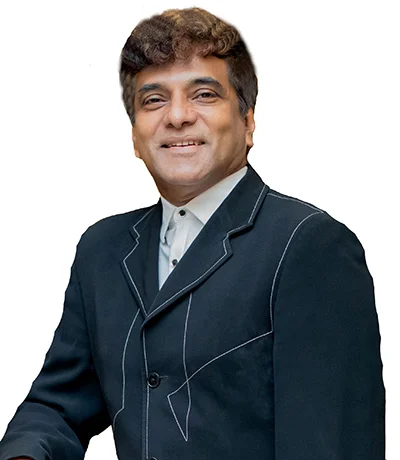
Melantha Perera: Awesome work with Bright Light Band
This meaningful collaboration reflects the strong community behind the Bright Light Band.
According to Melantha, accompaning the song is a vibrant video production that also features the involvement of the parents, highlighting unity, joy, and togetherness.
Beyond showcasing their musical talents, the visually impaired members of Bright Light Band deliver a powerful message, through this project, that their abilities extend beyond singing, as they also express themselves through movement and dance.
Melantha expressed his satisfaction with the outcome of the project and looks forward to sharing it with audiences across the country during this festive season.
He went on to say that Bright Light Band extends its sincere gratitude to Bcert Australia for their generous Mian sponsorship, the CEO of the company, Samath Fernando, for his continuous support in making such initiatives possible, and Rukshan Perera for his personal support and encouragement in bringing this project to completion.
The band also acknowledges Udara Fernando for his invaluable contribution, generously providing studio space and accommodating extended recording sessions to suit the children’s availability.
Appreciation is warmly extended to the parents, whose unwavering commitment from ensuring attendance at rehearsals to supporting the video production has been instrumental in the success of this project.
Through ‘Awurudu Kaale’, Bright Light Band hopes to spread festive cheer and inspire audiences, proving that passion and talent know no boundaries.

Israeli attack on Lebanon triggers local stock market volatility

HNB Assurance marks 25 years with strategic transformation to ‘HNB Life’

Dimantha anchors Trinity after Royal post 439/9

Fairfax Financial Holdings empowers Sri Lanka’s children

Large groups of farmers from Europe and Germany visit Ambewela Farms

Chevron Lanka exceeds LKR 4 billion in earnings for the first time in 32-year history

‘Dates have the highest sugar content to fight Coronavirus’

Sunday Island 27 December – Headlines

#SundayIsland 17th December – Headlines

Sunday Island – 28th March

Sunday Island Headlines – 21 March

Sunday Island – 21st February – Headlines
-

 Features5 days ago
Ranjith Siyambalapitiya turns custodian of a rare living collection
-

 News5 days ago
Global ‘Walk for Peace’ to be held in Lanka
-

 News3 days ago
Lankan-origin actress Subashini found dead in India
-

 Features5 days ago
Beyond the Blue Skies: A Tribute to Captain Elmo Jayawardena
-
 Opinion7 days ago
Hidden truth of Sri Lanka’s debt story: The untold narrative behind the report
-

 Features5 days ago
Aspects of Ceylon/Sri Lanka Foreign Relations – 1948 to 1976
-

 Business24 hours ago
Hayleys Mobility introduces Premium OMODA C9 PHEV
-

 News24 hours ago
AG: Coal procurement full of irregularities