
News
PCoI recommendations will marginalise, ostracise radicalise and counter-radicalise communities – Muslim civil society

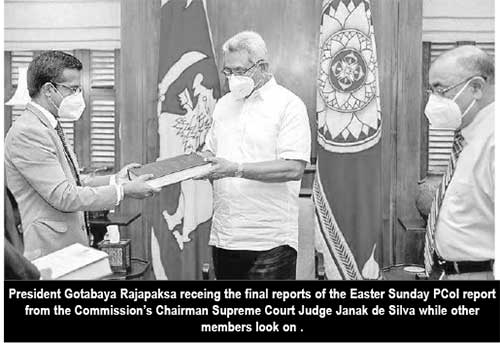
Several of the measures recommended in the report of the Commission of Inquiry into the Easter Sunday attack will put the majority community on a confrontational course with ethno-religious minorities, specially the Muslims, a group of Muslim civil society activists alleged yesterday (10).
Instead of winning over the Muslim community and establishing unity and peaceful co-existence with all others, most of the recommendations will marginalize, ostracise, radicalise and counter-radicalise communities. Implementation of some of the recommendations will create an unacceptable situation worse than the presently reversed enforced cremation policy implemented for nearly one year, the group alleged. The following is the text of statement issued by M.M. Zuhair, PC former MP, Latheef Farook, Journalist and Author, Mass L Usuf, Attorney-at- Law and Advocacy Columnist and Mansoor Dahlan, Theology Scholar: “The problem is primarily because the report is inspired by unsubstantiated and unproven speculative narratives, which the right wing extremists in the West, at war with Islam, had been marketing since 1992 and not based on critically evaluated evidence led before the Commission taking the Sri Lankan situation into consideration. Sri Lanka will become trapped further in communal confrontations that will be to the detriment of the economic advancement of the country. Of course the Commission has also made some positive recommendations. We will refer to some of them in another discourse.
“But it will not be acceptable to punish the Muslim community, or Islam, or its time-tested institutions, for the crimes committed by NTJ’s deviant terrorists. Such extended assault on the community will be similar to the US government penalizing Sri Lanka’s Army Commander’s family for the Commander’s alleged wrongs or US indiscriminately bombing Afghanistan for the 9/11 attacks committed allegedly by the Saudis.
“We need to draw attention to some instances amongst several in the report. The report recommends “preventive detention” (page 454) of persons alleged to be “religious extremists”. The country’s criminal law provides for the preventive detention of Island Reconvicted Criminals (IRCs) at times of visits of foreign dignitaries and serious emergencies. Can we treat religious dignitaries or intensely religious persons on par with IRCs possibly on someone’s allegation that some amongst them are extremists? Unlike violent extremism, it is not an offence to have extreme views because that is a universally recognized limb of the freedom of expression! In a country which gives ‘foremost place’ to Buddhism, sadly liquor bars, night clubs, gambling dens proliferate without any objection while those engaged in religious activities and invite people to desist from wrong doings are recommended to be possibly detained like IRCs! This may lead to open conflicts and must be avoided.
“The report wrongfully attempts to blame Islam (at page 18- “threat posed by Islam”) for the Easter Sunday attacks. It is a shocking accusation that will inevitably be firmly resisted. There is no credible evidence before the Commission to make such a serious, unacceptable and flawed insinuation on Islam with a 1,500 year history. Such recommendations will only lead to conflicts and not solve even existing problems! It will be used as cannon fodder in international fora. The Archbishop of Colombo in a globally quoted speech on 21/07/2019 at Katuwapitiya said that the Easter Sunday attacks were an international conspiracy and not merely the work of Islamic extremists. He said Islamic ideology was being used to create mayhem all over the globe.
“Blaming Islam is undoubtedly a travesty of justice. Was the Commission regrettably misled by years of malicious propaganda against Islam by the world’s notorious war mongers and its agents supported by sections of the international media?
“The Commission has also referred to “exclusivism” as the first step to terrorism (page 11). Questions will naturally arise whether priesthood, monkhood, abandoning worldly life, celebacy or even meditation are also evidence of the bizarre theory of ‘exclusivism’? Of course there is no priesthood in Islam. These new dimensions laid through agents of the Western arms industry are in conflict with Asian historical norms. They are aimed at conflict creation.
It has also referred to ‘Sufism’ and its ‘meditation centre’ at Kattankudy being attacked (page13) quoting journalists. Sufism is a well- recognized facet of Islam as much as ‘monotheism’ or ‘thowheed’ or ‘oneness’ of Allah as distinguished from the Christian concept of ‘Trinity’. Any attack on Sufism or Thowheed is an attack on Islam. The attempt to lump the Muslims with terrorists while seeking to divide the Muslims as Sufis, Thowheeds, Thablighs and Jamaaths or more importantly from the other communities in Sri Lanka will be seen only as an extension of the West’s war on Islam. It will end as a costly exercise that can destructively contribute to the dismemberment of Sri Lanka on ethno-religious lines that might soon be exploited by the West. Sri Lankans should read in this regard the many great works and speeches of Sri Lanka’s eminent jurist Dr C.G. Weeramantry of International Court of Justice (ICJ) fame or John Perkins (US) “Confessions of an Economic Hit Man”.


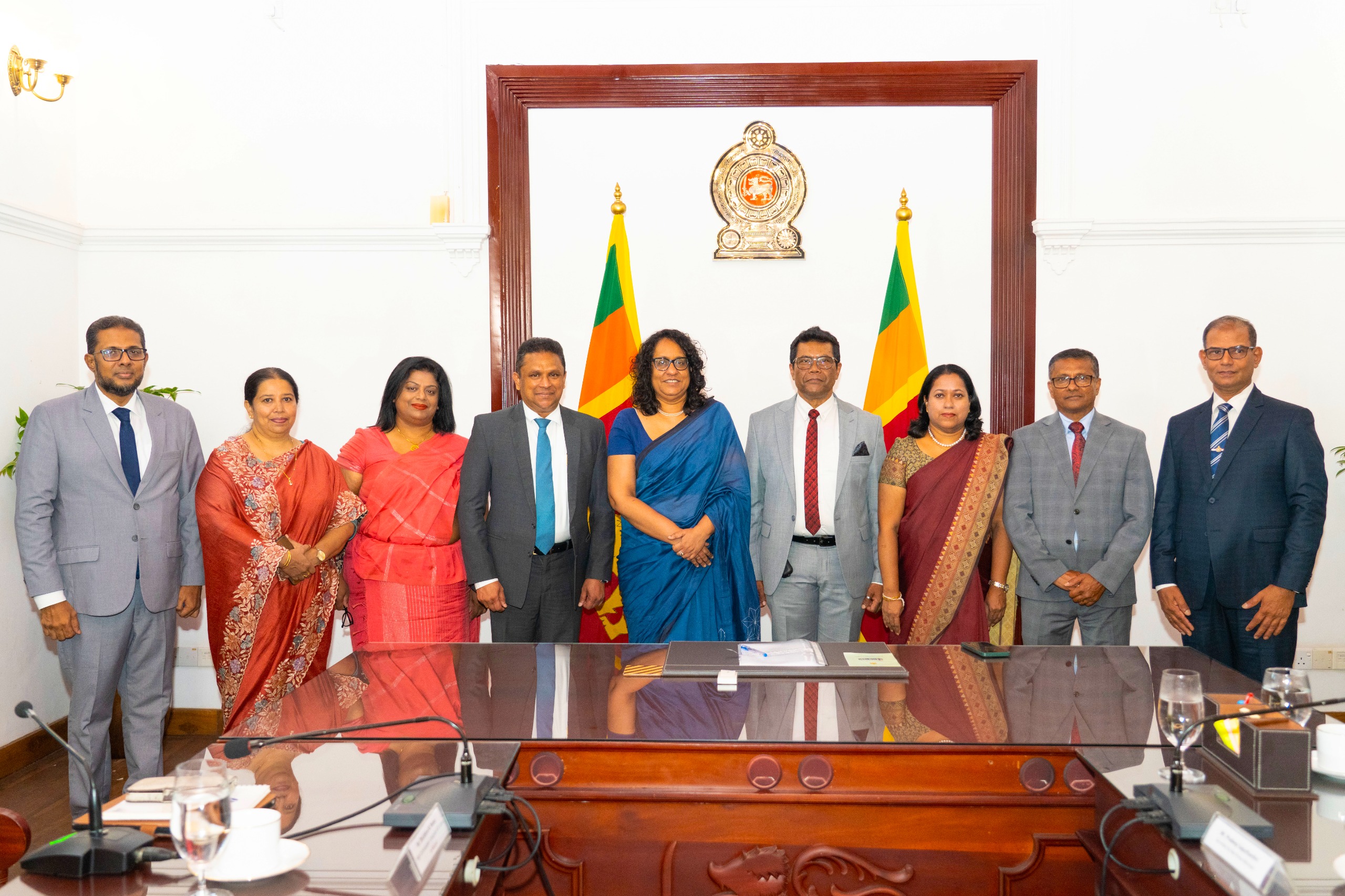
The heads of mission designate to Sri Lanka paid a courtesy call on Prime Minister Dr. Harini Amarasuriya on 26th of March at the Prime Minister’s office.
The delegation comprised Dharshana M. Perera, High Commissioner – designate of Sri Lanka to Malaysia, Ms. Dayani Mendis, Ambassador and PRUN – designate of Sri Lanka to Austria, Ms. N.I.D. Paranavitana, Ambassador – designate of Sri Lanka to Ethiopia & African Union, Prof. (Ms.) M.I. Fazeeha Azmi,Ambassador – designate of Sri Lanka to Iran, Saman Kumara Chandrasiri, Ambassador – designate of Sri Lanka to Israel, and M. Farook M. Fawzer, Representative – designate of Sri Lanka to Palestine.
The Prime Minister, Dr. Harini Amarasuriya, extended her best wishes to the Heads of Mission–designate and underscored the importance of their forthcoming assignments in advancing Sri Lanka’s national interests emphasizing their collective role in contributing towards the socio-economic upliftment of Sri Lanka.
The Prime Minister further highlighted the importance of projecting a positive and credible image of Sri Lanka internationally, through consistent, professional, and strategic engagement in their respective host countries and multilateral platforms.
She encouraged the Heads of Mission to actively identify and facilitate high-quality investment opportunities, particularly in sectors aligned with Sri Lanka’s development priorities, with a focus on sustainability, innovation, and long-term value addition.
Particular emphasis was placed on the promotion and diversification of Sri Lanka’s exports, including the exploration of new markets and strengthening trade linkages.
The meeting was attended by the Secretary to the Prime Minister, Additional Secretary to the Prime Minister Ms. Sagarika Bogahawatta and heads of mission-designate.
[Prime Minister’s Media Division]
News
SC finds Keheliya, others, guilty of violating FRs of public through corrupt drug procurement deal

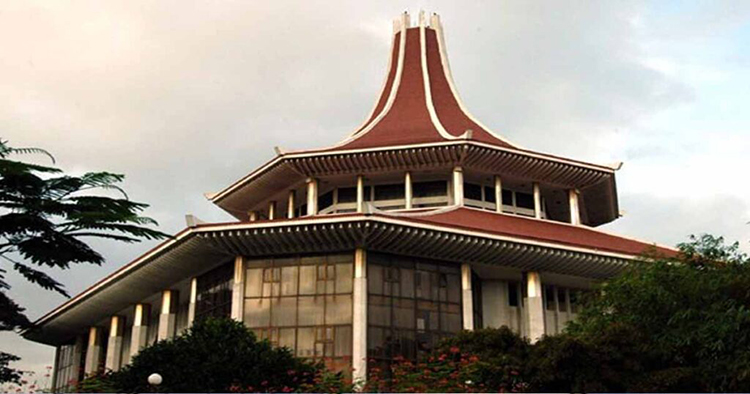
The Supreme Court yesterday held former Health Minister Keheliya Rambukwella and several senior health officials liable for violating the fundamental rights of the public over a controversial drug procurement carried out under the 2022 Indian Credit Line.
Delivering the judgment, a three-judge bench, headed by Chief Justice Preethi Padman Surasena, and comprising Justice Kumudini Wickremasinghe and Justice Janak de Silva, found that the procurement of medical supplies from an unregistered company, in breach of established procedures, had resulted in a serious infringement of public rights.
The Court ruled that the granting of a Waiver of Registration by the authorities was “wrongful, arbitrary and capricious,” and held that the direct procurement carried out on an unsolicited basis was unlawful. The transaction was accordingly declared null and void.
In a significant order, the Court directed Rambukwella to pay Rs. 75 million in compensation to the State from his personal funds.
The then Health Ministry Secretary Janaka Chandragupta and former Chairman of the National Medicines Regulatory Authority (NMRA), Prof. S. D. Jayaratne, were each ordered to pay Rs. 50 million.
The Court further directed NMRA Chief Executive Officer Dr. Wijith Gunasekara and former Director of the Medical Supplies Division Dr. Thusitha Sudarshana to pay Rs. 50 million each as compensation.
The ruling followed the hearing of a fundamental rights petition filed by Transparency International Sri Lanka and two other parties.
The Court also instructed the Commission to Investigate Allegations of Bribery or Corruption to initiate appropriate action under the Anti-Corruption Act against those found responsible.
Senior Counsel Senany Dayaratne, with Nishadi Wickramasinghe, Lasanthika Hettiarachchi, Janani Abeywickrema and Maheshika Bandara, appeared for the petitioners.
News
Sajith nudges govt. to follow India’s example in giving relief to consumers by slashing taxes on fuel
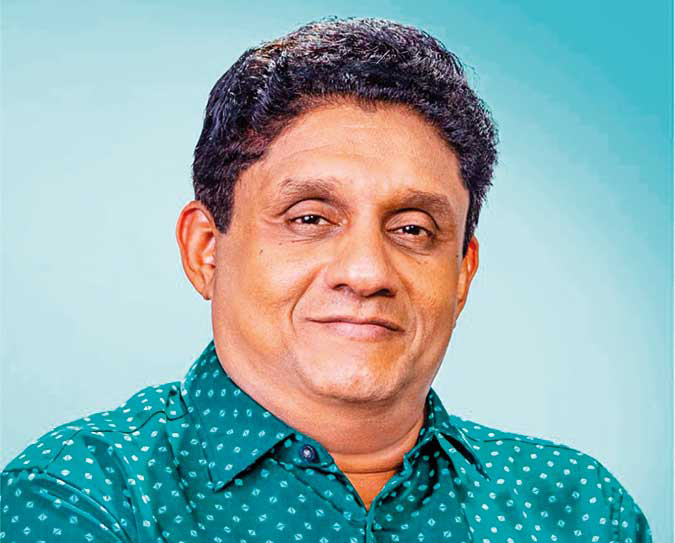
Opposition and SJB Leader Sajith Premadasa yesterday urged President Anura Kumara Dissanayake to reduce taxes on fuel, just as the Indian government has done.
He said in a post on X that “Modi government has decided to reduce the Special Additional Excise Duty on petrol and completely remove it for diesel in order to cushion the hardship on the Indian consumer. High time for Anura Kumara Dissanayake to keep up to his election promise and follow suit.”
Meanwhile foreign media reported that India has slashed excise duties on petrol and diesel to protect consumers and rein in a potential spike in inflation, while imposing windfall taxes on aviation fuel and diesel exports, amid volatile global oil markets, as a result of the Iran war.
Global oil prices have surged past $100 per barrel after the near closure of the Strait of Hormuz, which serves as a conduit for 40% of India’s crude oil imports, since the US and Israel first struck Iran on February 28.
In a government order, released late on Thursday, India’s Finance Ministry reduced the special excise duty on petrol to three Indian rupees ($0.0318) per litre from 13 Indian rupees earlier. It also cut the duty on diesel to zero from INR 10 rupees per litre.
The government did not say how much the duty cuts would cost. The move comes ahead of elections next month in four Indian states and one federal territory, with Indian voters known to be extremely sensitive to higher prices.
“Government has taken a huge hit on its taxation revenues to ensure very high losses of oil companies, approximately 24 rupees a litre for petrol and 30 rupees a litre for diesel, at this time of sky high international prices, are reduced,” Indian Oil Minister Hardeep Singh Puri said in a post on X.

Courtesy call by the Heads of Mission- Designate on Prime Minister

Three dead after helicopter crash in Hawaii

Woods charged with driving under influence after crash

Showers may occur at a few places in the Rathnapura, Kaluthara, Galle, and Matara districts during the evening or night

SC finds Keheliya, others, guilty of violating FRs of public through corrupt drug procurement deal

Sajith nudges govt. to follow India’s example in giving relief to consumers by slashing taxes on fuel

‘Dates have the highest sugar content to fight Coronavirus’

Sunday Island 27 December – Headlines

#SundayIsland 17th December – Headlines

Sunday Island – 28th March

Sunday Island Headlines – 21 March

Sunday Island – 21st February – Headlines
-

 News3 days ago
Senior citizens above 70 years to receive March allowances on Thursday (26)
-

 Features5 days ago
Trincomalee oil tank farm: An engineering marvel
-

 News1 day ago
Energy Minister indicted on corruption charges ahead of no-faith motion against him
-

 News2 days ago
US dodges question on AKD’s claim SL denied permission for military aircraft to land
-

 Features5 days ago
The scientist who was finally heard
-

 Business2 days ago
Dialog Unveils Dialog Play Mini with Netflix and Apple TV
-

 Sports1 day ago
SLC to hold EGM in April
-

 News3 days ago
CEB Engineers warn public to be prepared for power cuts after New Year