
Business
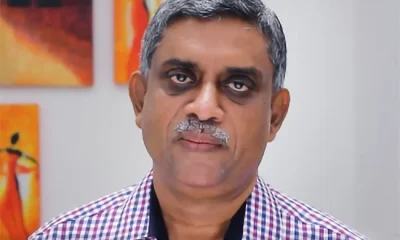
PayMedia appoints former CBSL Asst Governor Dr. Dharmasri Kumaratunge as Chairman


In a strategic move to further strengthen its leadership and drive continued innovation in Sri Lanka’s fintech sector, PayMedia (Pvt) Ltd., a leading digital financial solutions provider, has announced the appointment of Dr. Dharmasri Kumaratunge as its new Chairman.
The company’s board now includes two directors: Kanishka Weeramunda, the visionary founder of PayMedia, and Rohan Muttiah, a well-known leader in banking and technology.
Dr. Kumaratunge, a respected economist and senior figure in the financial services industry, brings over 35 years of extensive experience across banking and finance, financial technology, international trade, payment processing, ICT, and digital transformation. He previously served as Assistant Governor of the Central Bank of Sri Lanka (CBSL) and was Director of the Payments and Settlements Department from 2016 to 2022. He also held the position of Secretary to the Ministry of Technology.
His appointment signals PayMedia’s renewed commitment to aligning its growth strategy with global best practices and long-term sustainability.



Economic pressure likely to push already-strained businesses into a liquidity crunch
By Sanath Nanayakkare
Sri Lanka is slowing to a midweek halt as a deepening fuel shortage has compelled the government to suspend most public sector operations every Wednesday, while courts have been advised to take a lenient view of attendance requirements amid transportation difficulties caused by fuel rationing.
The directive, issued by the Commissioner General of Essential Services, suspends most state functions one day a week until further notice in an attempt to conserve scarce fuel reserves. Authorities have also urged the private sector to adopt a similar arrangement.
Officials say the measure is aimed at reducing commuter traffic into major cities, particularly Colombo, where thousands of public servants travel daily from suburban areas.
Explaining the decision to select Wednesday, officials said declaring Friday a holiday could have effectively denied the public access to government services for three consecutive days when combined with the weekend.
However, the development underscores the fragility of Sri Lanka’s economic recovery as households continue to grapple with rising prices of essential goods.
The impact is already visible on the streets. Long queues have formed outside fuel stations while public buses have been seen overcrowded, with passengers clinging to footboards. Many commuters were also seen attempting to secure rides through the ride-hailing platforms Uber and PickMe, where drivers were demanding higher fares as demand surged.
Recognising these difficulties, the Judicial Service Commission (JSC) has issued a circular instructing judges to take transportation constraints caused by fuel rationing into consideration when making legal determinations.
Judges have been advised to consider the possibility that lawyers, litigants, witnesses and even suspects may be unable to attend court due to limited fuel availability.
While court proceedings are expected to continue, judicial officers have been asked to assess such situations on a case-by-case basis.
The JSC has also directed courts to make greater use of virtual platforms whenever possible. This is expected to apply particularly to proceedings such as extending remand orders, thereby avoiding the need to transport prisoners physically to court.
Authorities believe that conducting such hearings online could significantly reduce fuel consumption associated with prison transport. The temporary measures will remain in effect until further notice.
Meanwhile, officials say special fuel allocations may be considered for critical sectors including tourism, the Colombo Port, agriculture, health services, the plantation industry and public transportation in order to sustain essential services and economic activity.
However, the broader economic outlook remains uncertain. Business leaders warn that companies already burdened with higher taxes, rising operational costs and thin margins could face severe liquidity pressures if global oil prices remain elevated.
Industry observers say some firms may be compelled to seek loan moratoria if the disruption linked to the conflict involving Iran continues for another month.
Public concern has also been heightened by recent comments from Iranian officials indicating that Tehran has not sought a ceasefire in the ongoing conflict.
For President Anura Kumara Dissanayake, the unfolding fuel shortage is emerging as one of the most serious challenges facing his administration. Although the government has been holding internal consultations, critics say an all-party conference has yet to be convened to formulate a unified national response to the crisis.
Within business circles and sections of the public, questions are increasingly being raised about whether the government possesses the institutional capacity and experience required to manage a prolonged energy shock.

The evolving global situation and the escalating conflict in the Middle East requires coordinated measures to safeguard economic stability. The Ceylon Chamber remains ready to work with the Government in addressing potential economic risks and has outlined detailed policy recommendations.
The Chamber, in its submission of 11 March 2026, recommended a number of policy measures aimed at mitigating potential economic risks. These included prioritizing the continuation of the IMF programme and the timely receipt of upcoming tranches, as well as the introduction of a more dynamic fuel pricing mechanism and the re-introduction of the QR system for fuel distribution. The Chamber is pleased to note that steps have already been taken towards implementing these fuel-related measures.
The submission also recommended expediting fuel procurement, ensuring adequate fertilizer stocks for the upcoming cultivation season, and strengthening tourism promotion efforts, particularly targeting markets such as India and East Asia. In addition, the Chamber highlighted the need to accelerate port clearance processes to improve trade efficiency and review policies that may place additional pressure on foreign exchange reserves, particularly in the current environment of global uncertainty.
Building on these recommendations, the Chamber has this week proposed several additional measures aimed at ensuring the continuity of economic activity while prioritizing critical sectors.
The Chamber recommended that the Government designate a clear list of essential services and priority economic sectors to guide the allocation of key resources including fuel and foreign exchange in the event of supply disruptions.
Recommend to adopt a strategic approach to fuel procurement, including exploring supply arrangements with a broader pool of international suppliers. Ensuring the availability of aviation fuel was also highlighted as critical to sustaining inbound tourism.
The Chamber further proposed allowing licensed local bunkering companies to procure fuel independently for supply to export-oriented industries and tourism operators, potentially on a foreign currency basis. Similar arrangements were successfully utilized during the recent economic crisis to sustain key sectors without adding pressure on domestic fuel supplies.
To help reduce fuel consumption while maintaining economic activity, the Chamber also suggested that public and private sector institutions consider flexible work arrangements, including work-from-home options where feasible. Additionally, the Government may consider bringing forward the closure of schools and universities ahead of the upcoming Awurudu holidays, while temporarily utilizing online learning options where possible.
The Chamber also recommended that non-essential foreign currency outflows be temporarily limited, while prioritizing foreign exchange for critical imports such as fuel, food, pharmaceuticals, and inputs required for export industries.
The Ceylon Chamber emphasized that close coordination between the Government and the private sector will be critical in navigating potential global shocks and maintaining economic stability.
The Chamber stands ready to support the Government and relevant authorities in further refining these measures and facilitating dialogue with the private sector, while also noting the importance of keeping businesses informed of policy measures under consideration to enable effective planning and response.

Siyapatha Finance PLC, the largest subsidiary of Sampath Bank PLC and a prominent leader distinguished in Sri Lanka’s non-bank financial sector, announced its decision to raise a maximum of Rs. 3.75 billion through its debenture issue. The Board of Directors approved the decision to raise funds through the issuance on the 26th August, 2025 and on the 28th October,2025.
Fitch Ratings has assigned Siyapatha Finance PLC ‘s (A (lka)/Stable) proposed Sri Lankan rupee -denominated subordinated debentures up to LKR 3.75 billion a final National Long-Term Rating of “BBB+(lka).”
The initial offering stands at Rs. 2 billion, with an option to extend by an additional Rs. 1.75 billion, bringing the total potential issuance to a maximum of Rs. 3.75 billion. With a five-year tenure, these debentures are poised to offer investors at a fixed interest of 11.50% p.a payable annually (AER 11.50%). .
The proceeds from this issuance are apportioned for the expansion of Siyapatha Financ PLC ‘s lending portfolio, highlighting the company’s commitment to fostering sustainable growth and strategic investment opportunities in alignment with its long-term vision.
“As Siyapatha Finance PLC reaffirms its commitment to fostering financial inclusivity and driving economic growth in Sri Lanka, we’re confident that this will enable us to continue providing innovative and sustainable financial solutions to our valued customers,” stated Mr. Mathisha Hewavitharana, Chief Executive Officer of Siyapatha Finance PLC.
Established in 2005 and regulated by the Central Bank of Sri Lanka (CBSL), Siyapatha Finance PLC has garnered and secured a reputation as a premier finance company, renowned for its commitment to excellence and customer-centric financial solutions. With a dedicated team of over 1,200 professionals, the company has expanded its footprint to encompass 61 branches strategically located across the island.

Families search for loved ones after deadly Pakistan strike on Kabul rehab

CAF strips Senegal of AFCON title, Morocco declared African champions

Heat Index at Caution Level at some places in the Western, Sabaragamuwa, Southern and North-western provinces and in Monaragala, Mannar, Vavuniya and Anuradhapura districts

Showers above 50 mm can be expected at some places in the Central, Sabaragamuwa, Southern and Uva provinces and in Anuradhapura district

CIABOC questions Ex-President GR on house for CJ’s maid

Post-Ditwah Indian recovery assistance to SL: health experts from here visited India

‘Dates have the highest sugar content to fight Coronavirus’

Sunday Island 27 December – Headlines

#SundayIsland 17th December – Headlines

Sunday Island – 28th March

Sunday Island Headlines – 21 March

Sunday Island – 21st February – Headlines
-

 News6 days ago
Historic address by BASL President at the Supreme Court of India
-

 Sports6 days ago
The 147th Royal–Thomian and 175 Years of the School by the Sea
-

 Life style3 days ago
From culture to empowerment: Indonesia’s vision for Sri Lanka
-

 Business2 days ago
Browns EV launches fast-charging BAW E7 Pro at Rs. 5.8 million
-
 News6 days ago
Power sector reforms jolted by 40% pay hike demand
-

 Latest News3 days ago
QR code system will be implemented for fuel with effect from 06.00 a.m. today (15th)
-

 News4 days ago
Crypto loopholes funnel Lankan funds abroad
-

 Sports3 days ago
Kirsten brings pedigree, but Sri Lanka must fix the system