
News
Parliamentary groups call for sensitivity training for staff at public places

ECONOMYNEXT – Two parliamentary groups have called for sensitivity training for staff at public spaces after a woman with disabilities was harassed at a government office, adding that the Government is obliged to ensure persons with disabilities have comfortable access to all public buildings.
“We strongly condemn the incident that took place on 5th April 2024 at the Sethsiripaya where a woman with disabilities was obstructed from utilising her transportation services to leave the premises,” the Women Parliamentarians’ Caucus (WPC) and the Parliamentary Caucus for the Inclusion of Persons with Disabilities (PCIPD) said in a joint statement.
“It has been brought to our notice that the language used by the relevant Security Officers has been highly insensitive, disrespectful and hurtful.”
The two groups strongly urged “that the staff of Sethsiripaya (and other public spaces) be appropriately sensitised and informed about the rights of persons with disabilities.”
“Ironically, the aforementioned incident occurred while she was an invited speaker in a workshop aimed at raising awareness about the inclusion of persons with disabilities, which was organised by the Ministry of Buddhasasana, Religious and Cultural Affairs.”
Joint Statement by the Women Parliamentarians’ Caucus (WPC) and the Parliamentary Caucus for the Inclusion of Persons with Disabilities (PCIPD)
As the Women Parliamentarians’ Caucus (WPC) and the Parliamentary Caucus for the Inclusion of Persons with Disabilities (PCIPD), we strongly condemn the incident that took place on 5th April 2024 at the Sethsiripaya where a woman with disabilities was obstructed from utilising her transportation services to leave the premises and was informed that vehicle access was exclusively reserved for VIPs.
It has been brought to our notice that the language used by the relevant Security Officers has been highly insensitive, disrespectful and hurtful.
Ironically, the aforementioned incident occurred while she was an invited speaker in a workshop aimed at raising awareness about the inclusion of persons with disabilities, which was organised by the Ministry of Buddhasasana, Religious and Cultural Affairs.
Persons with disabilities makeup 9% of Sri Lanka’s population and often face discrimination and harassment in various spheres when they access different services, carry out their activities of daily living, and participate in their communities.
Persons with disabilities also often experience difficulties due to the lack of necessary infrastructure and necessary provisions such as sign language interpretation, disability-friendly educational and employment facilities, and accessible transport.
Sri Lanka ratified the United Nations Convention on the Rights of Persons with Disabilities (UNCRPD) in 2016, undertaking the responsibility to “promote, protect and ensure the full and equal enjoyment of all human rights and fundamental freedoms by all persons with disabilities (people living with disabilities), and to promote respect for their inherent dignity”.
The Sri Lankan Constitution also guarantees the right to equal access to shops, public restaurants, hotels, places of public entertainment and places of public worship of his own religion, regardless of race, religion, language, caste, sex or disability (Article 12 (3)).
Therefore, the Government of Sri Lanka is obliged to ensure that persons with disabilities have comfortable access to all public buildings.
Moreover, the Constitution further states that special provisions can be made by law, subordinate legislation or executive action, for the advancement of women, children or disabled persons (Article 12 (4)).
As such, Sri Lanka must uphold her promises for the advancement of the welfare of persons with disabilities, and strive to ensure that their rights are protected.
This incident highlights the intersectionality of discrimination and obstacles encountered by persons due to multiple identities. The individual concerned here is a woman with a disability rendering her particularly vulnerable to daily challenges.
Therefore, it is incumbent upon the Government to factor in all these circumstances and strive to alleviate some of their burdens.The National Secretariat for Persons with Disabilities, the Passport Office and many more Government services are regularly accessed by persons with disabilities.
Since the security services to the Government offices in Battaramulla are the primary responsibility of the Urban Development Authority (UDA), we also urge the UDA to take necessary action to, inter alia, sensitise and educate the Security Officers on inclusive treatment and the use of inclusive language when dealing with women and persons with disabilities.
It is our responsibility as Sri Lankan citizens to ensure incidents like this do not occur in the future.As the WPC and the PCIPD, we strongly urge that the staff of Sethsiripaya (and other public spaces) be appropriately sensitised and informed about the rights of persons with disabilities.
Moreover, we particularly urge Government officers to be aware and informed of the needs of persons with disabilities and to anticipate and make necessary provisions when conducting any future programs.



The Sail Training Ship of the Indian Navy, INS TARANGINI arrived at the Port of Trincomalee on a formal training visit on 27 Feb 26. The visiting ship was welcomed by the Sri Lanka Navy (SLN) in compliance with time-honoured naval traditions.
INS TARANGINI is a 54m long platform which is manned by a crew of 36 and is commanded by Commander Nitin Gajjar.
Meanwhile, Officer Under-trainees and Sea Cadets are expected to participate in sail training familiarization programmes aboard the ship and observe its operational functions during its stay in the island.
Furthermore, the ship’s crew is scheduled to take part in programmes organized by the Sri Lanka Navy to enhance camaraderie between the two navies, as well as visit several tourist attractions in the country.
News
Renewed Lanka’s Easter Bombing probe puts NTJ’s South India radicalisation network back under lens
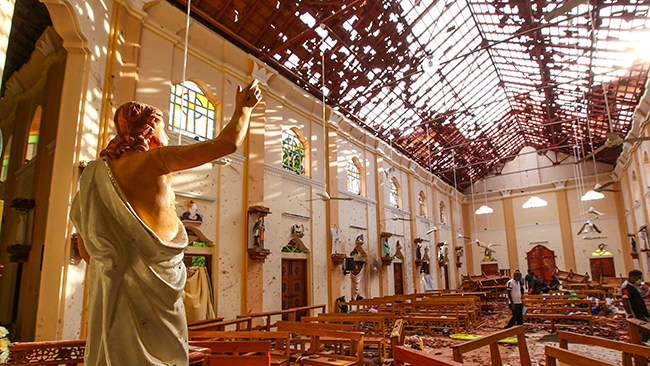
New Delhi (IANS):The arrest of Sri Lanka’s former Intelligence chief, Retired Major-General Suresh Sallay is a turning point in the investigations into the 2019 Easter Sunday bombings that killed 279 people.
The move was a bold one taken by President Anura Kumara Dissanayake who won the presidency in 2024.
He had promised that all persons involved in the attack would be brought to justice.
Sallay was made State Intelligence Service (SIS) chief in 2019 after Gotabaya Rajapaksa became President.
The allegation against Sallay was that he had permitted the attack to take place with the intention of influencing that year’s presidential election, which was eventually won by Rajapaksa.
Sallay had become a prominent figure in Sri Lanka and was widely credited with dismantling the LTTE. His arrest has led to a political storm and many state that it could revive tensions relating to the LTTE.
Ali Sabry, former Sri Lankan Minister for Foreign Affairs said that the developments are deeply troubling.
An Indian official said that the developments in Sri Lanka are being monitored closely.
On the question whether the LTTE issue would come back into the picture following the arrest of Sallay, the officer said that attempts are being made, but it would be very tough.
There have been several cases that the National Investigation Agency (NIA) has been probing concerning the revival of the LTTE.
The ISI, too, has tried its hand in ensuring the revival of the LTTE, but has not been successful so far.
To prevent the revival of the LTTE, both India and Sri Lanka have been working very closely.
Another official explained that the current ties with Sri Lanka have gone from ideological to an investment-led partnership.
Prime Minister Narendra Modi and President Dissanayake share a pragmatic relationship and this has gone a long way in ensuring cooperation on all fields including security, the official explained.
While some in Sri Lanka do not subscribe to Dissanayake’s decision on Sallay, the fact is that the Easter Bombing case has to be probed from every possible angle.
An Intelligence Bureau official says that a major concern today are the activities of the National Thowheeth Jama’ath (NTJ) and Jamathei Millathu Ibrahim (JMI), the two outfits responsible for this attack.
The NTJ in particular has a vast presence in South India and has managed to radicalise a large number of youth in Tamil Nadu and Kerala.
The mastermind of the attack, Mohammad Zahran Hashim was a frequent visitor to Tamil Nadu. He was also responsible for the radicalisation of Jamesha Mubeen who carried out an unsuccessful attempt to bomb a temple in Coimbatore in 2022.
The Indian agencies have been actively pursuing the role played by Hashim. A probe by the NIA in the South India radicalisation case revealed that the entire plot was being run by Hashim from Sri Lanka.
At least 50 of the 100 radicalisation videos seized by the agency were discourses by Hashim, who had close links with the Islamic State.
Officials say that Sallay could provide details to investigators about the module that Hashim ran.
This would come in handy for the Indian agencies who are probing cases directly linked to the NTJ in South India.
Hashim, who was the ring leader for the suicide bombers during the Easter Bombing had spent a considerable amount of time in India.
The Indian agencies would want to learn if any of the locals that Hashim interacted with had any idea about the Easter Bombings.
While in India, Hashim had focussed his radicalisation programmes mainly at Mallapuram, Coimbatore, Nagapattinam, Kanyakumari, Ramnathpuram, Vellore, Trichy and Thirunelveli, the NIA probe found.
Pallay has for now denied any links to the Easter Bombings.
Indian officials say that they do not want to comment on Pallay and his alleged links.However, it is important that the bombings are probed thoroughly since the activities of the NTJ have a direct bearing on India, particularly the southern states, the official also added.
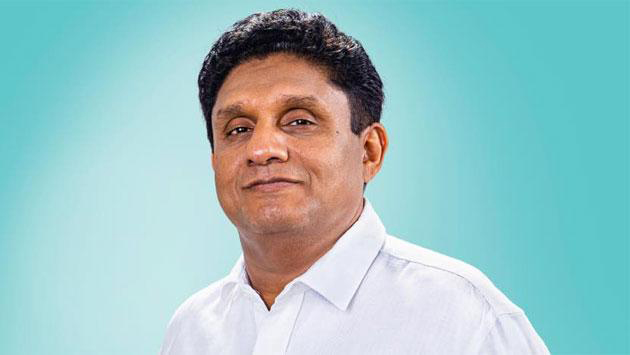
Opposition and SJB Leader Sajith Premadasa on Friday stressed that relief efforts for communities affected by Cyclone Ditwah must not be derailed by internal disputes, as several trade unions announced plans to withdraw from disaster relief duties.
Taking to ‘X’, Premadasa called on the Government to prioritise coordination and ensure uninterrupted assistance to families still awaiting aid.
“The Government must work closely with officers on the ground to ensure coordination and uninterrupted support. When families are still waiting, how can we allow for this confusion?” he questioned, emphasising that relief measures should not be delayed under any circumstances.
His remarks follow the decision by several trade unions representing Government officers engaged in disaster relief operations to launch trade union action beginning from Friday (27 February).
The unions announced their withdrawal from relief-related duties, citing unresolved issues affecting officers involved in post-disaster operations.
According to the unions, more than 93 days have elapsed since the widespread destruction caused by Cyclone Ditwah. During this period, disaster relief officers and Grama Niladharis have worked continuously, day and night, acting as key coordinators between the Government and affected communities. However, they claim that authorities have failed to adequately address longstanding concerns relating to officers engaged in relief work.
Meanwhile, Secretary to the President Nandika Sanath Kumanayake yesterday underscored the need to expedite relief and recovery initiatives.
Chairing a progress review meeting of the National Council for Disaster Management, he called for strengthened coordination among State institutions responsible for disaster response, noting that effective inter-agency collaboration is critical to delivering timely assistance to affected communities.
Efforts to accelerate recovery and maintain continuity in relief operations are ongoing.

Zimbabwe elect to bat

Iran begins 40-day mourning after Khamenei killed in US-Israeli attack

INS TARANGINI makes port call in Trincomalee

Iran’s Supreme Leader Ayatollah Ali Khamenei has been killed, state media says

Can West Indies make up for bowling gulf in virtual quarter-final against India?

Flights cancelled as travel warnings issued after strikes on Iran

‘Dates have the highest sugar content to fight Coronavirus’

Sunday Island 27 December – Headlines

#SundayIsland 17th December – Headlines

Sunday Island – 28th March

Sunday Island Headlines – 21 March

Sunday Island – 21st February – Headlines
-

 Features6 days ago
LOVEABLE BUT LETHAL: When four-legged stars remind us of a silent killer
-

 Business6 days ago
Bathiya & Santhush make a strategic bet on Colombo
-
 Business6 days ago
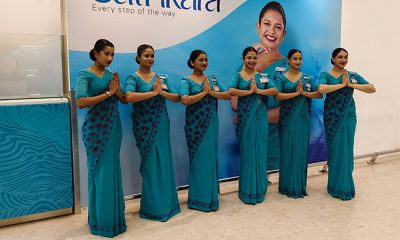
Seeing is believing – the silent scale behind SriLankan’s ground operation
-

 Features6 days ago
Protection of Occupants Bill: Good, Bad and Ugly
-
 News6 days ago
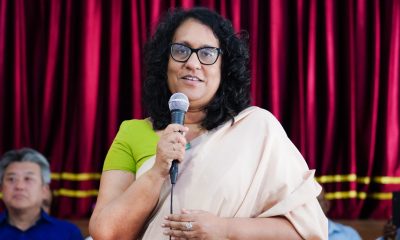
Prime Minister Attends the 40th Anniversary of the Sri Lanka Nippon Educational and Cultural Centre
-

 News6 days ago
Coal ash surge at N’cholai power plant raises fresh environmental concerns
-

 Business6 days ago
Huawei unveils Top 10 Smart PV & ESS Trends for 2026
-

 Opinion2 days ago
Jamming and re-setting the world: What is the role of Donald Trump?