
Business
Parliament must decidedly act as biggest enabler of country’s progressive policies: Opposition MP

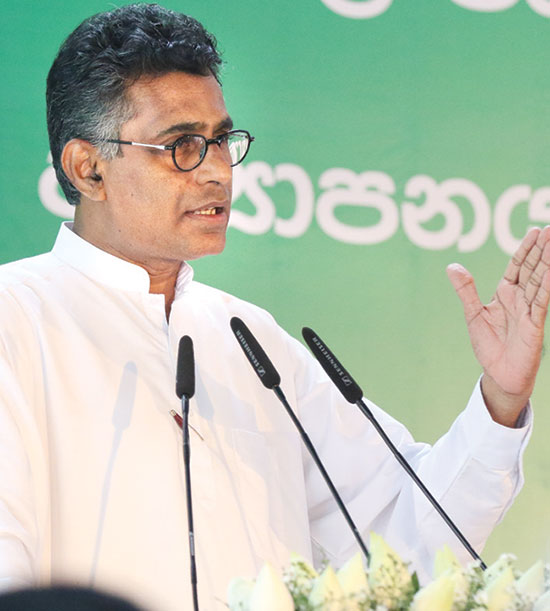
by Sanath Nanayakkare
All political parties in parliament must work together to approve progressive political reforms within a month in order to swiftly pave the way for economic stability, Opposition MP Patali Champika Ranawaka said last week.”Political stability will be a collaborative effort based on the belief in the independence of the Police, the Judiciary, the Public Service, the Elections Commission etc. We have to find a realistic solution to the current economic crisis by properly utilising the limited foreign exchange earnings we get from our commodity exports, service exports, workers’ remittances and also by restricting our imports to bare essentials. Thus we should be able to trudge back to economic stability in the next 10 years and enable ourselves to repay our loans and restore the international confidence in Sri Lanka. However, the country requires political stability as a prior condition for that to happen. Although we won’t accept Cabinet portfolios, we will support such progressive transformation, and such laws need to be approved and enforced within a month. In case of any attempts to sabotage such democratic moves through unsavoury acts of politics behind the scenes, we will have to act decidedly to defeat those forces because it’s vital to respect public opinion and not to generate resentment among the general public.”
“The foreign media has widely published about Sri Lanka defaulting on its debt for the first time in its history post-independence. A 30-day grace period to come up with $78m of unpaid debt interest payments on two of its sovereign bonds expired. And we can’t meet the dollar bonds maturing in July 2022. Accordingly, it’s going to be difficult for us to borrow from the international capital market for another 10 years or so.”
“Further, the Central Bank has now proposed to repay Sri Lanka Development Bonds (SLDBs) in LKR or defer payments. Litro Gas Plc., invested USD 50 million in SLDBs via the Bank of Ceylon. If they had that money, Litro would have paid not for just one shipload of LP gas, but six or seven shiploads. We can see that Litro Plc’s money won’t be repaid. This goes to show that many key sectors of the economy has been brought to a state of bankruptcy because of the economic mismanagement over the last couple of years. There’s some hope in the society about Prime Minister Ranil Wickremasinghe handling the economy. They hope that he would get the support of foreign countries; especially the West and Japan. We have to realistically look at it. If he can obtain funding from Japan or the West without political conditions, it is going to be very valuable given the situation. There’s no issue about it. But Sri Lanka has announced that it won’t repay its bilateral loans until its debt is restructured. We have told Japan that we won’t repay loans of more than USD 3 billion. We have told China that we won’t repay loans of more than USD 7 billion. We have told India that we won’t repay loans of more than USD 4 billion. So, it would be immensely difficult to get new loans without settling existing loans. China has already expressed their strong opposition about our non-commitment to repay their loans. We have to pay USD 920 million to China this year. We might get some more support from India in addition to the credit line it has given to Sri Lanka. We can see that there are some political and economic conditions along with them. So, it’s far from reality to think that foreign funds would flow in amid the bankruptcy to end long queues for fuel, LP gas and shortages of drugs and food items. We can pin some realistic hope on the development loans already given to Sri Lanka by the World Bank and the Asian Development Bank. There is a balance of USD 1,900 million received in this manner for development projects which have not been used as these projects have come to a halt. If we can negotiate a loan re-purposing process, then we should be able to get through this year amid the difficulties. The World Bank has already pledged to re-purpose about USD 400 million to utilise for drugs, infants’ milk food and a small portion of it for fuel and LP gas. However, this won’t be sufficient and there will be a bigger crisis by June. The current circumstances have affected all sectors of the economy and we can see a gradual weakening of the economy in general.”
“There is no point in accusing the IGP or the Army Commander. People in the police and the forces are also people of this country who are exhausted by the ensuing events. So are the people of this country and the business community. In the next three months, hundreds of thousands of people may face layoffs. The shortage of infants’ food could lead to their malnutrition. We are entering a frightful future where the old and the kids are at the risk of death owing to the burgeoning nutrition and health crisis.”
“What’s the solution? We can’t find a solution by obtaining bridge financing from some country or another and prolong the crisis through short term measures. If we want to have sustainable economic stability, it has to be founded on political stability. For that an all-party representation is needed. But the Rajapaksa family is still manoeuvering their operations through their majority stake in parliament. We thought they would learn their lessons from the incidents that happened on May 9. But it doesn’t appear to be so. We can see that the prime minister is not in a position to get state affairs conducted as he pledged. That was clear at the election of the deputy speaker of parliament. In such a context, the window of opportunity for far reaching democratic reforms getting approved by parliament is very small.”
“So, if they don’t give up, the government has to make them give up or otherwise the country will stagnate. There is no difference in their influence or their representatives’ influence in government. If friendly countries won’t help us and aid won’t flow from an international aid forum, and if we don’t receive bridge financing either, then there’s one thing for us to do. We will have to forget growth and contract our economic needs and wants by 25%. We need to tell that to the public honestly and openly.”
“According to reports, 28%-30% households in the country completely depend on LP gas for cooking, mainly in Colombo, Gampaha and urban areas. 7%-10% depends on firewood. The balance uses a mix of furnace oil, firewood and LP gas for the purpose. So we have to have a mechanism to provide them with LP gas without keeping them in queues for days. There are 4 million empty gas cylinders in the country. There is no point in distributing 50,000 cylinders per day; that stock will just disappear. So we must devise a proper plan to distribute without inconveniencing the people.”
“It is the same with fuel. The problem won’t fix itself as a shipload of diesel or petrol comes in. On the front of coal too, a crisis is looming as coal stocks will finish after June because the rough seas will impede the unloading operations of coal. So priority has to be given to providing electricity and fuel where they are critically needed. Public transport is one such key area. Train services consume 1% of the fuel supply and 5% of commuters travel on it. Buses consume 19% of fuel and transport 47% commuters. Agriculture related vehicles, machines, equipment should also be given priority. The limited USD resources need to be used to buy drugs required for infants and children as well as essential life-saving drugs. Another key concern is allocating funds for fertilizer and resurrecting the ailing agriculture as soon as possible.”
“The next rebellion will be caused by famine and hunger crisis. It will be an insurrection not only against the politicians but against any individual or family seen to be resilient against the crisis. If we don’t take collective action now to resolve these crises, it won’t be a one-day incident like on May 9. Instead, a series of incidents will unfold before us over the next 10 years or so. That will become the ‘new normal’ of the country. So we must act to create the opportunity to create two million home gardens where possible to grow fresh produce.”
“It was manifest that security forces and the police can’t quell rebellions. Security forces and police consist of people of this country. So we must move beyond finding bridge financing from various sources. An agreement is needed to have a sustainable solution. Some politicians talked about ending queues in 48 hours. Some said problems could be resolved in 100 days. There are some who say that they can get fuel from friendly countries when they come to power. These comments are detached from the realities on the ground.”
“There is an Aragalaya out there and we must pay close attention to it. They also need to be actively involved in the governance of the country. After that we can hold elections. Lebanon became bankrupt in 2019. By 2022, the traditional political parties lost their power in parliament. When they hold the next election, completely new members will come to Lebanese parliament. It happened in Greece, Argentina, in some African countries, Italy and France. So we must bear in mind that Sri Lanka critically needs political transformation in order to be inclusive of representation at all levels for decision making.”


11 March 2026; Colombo – SriLankan Airlines is set to increase its weekly service between Colombo and Melbourne to 10 flights, effective from 2 August 2026, with the addition of three more scheduled flights in response to growing demand and evolving market dynamics. The expansion reinforces the airline’s commitment to strengthening its footprint in Australia, recently identified as one of the fastest-growing inbound tourism markets to Sri Lanka, driven by leisure travel and a rising volume of visits by family and friends.
The newly added flights will operate every Tuesday, Thursday and Sunday, departing Colombo as UL608 at 14:10 hrs and arriving in Melbourne at 04:30 hrs the following day. The return service, UL609, will depart Melbourne every Wednesday, Friday and Monday at 06:00 hrs, arriving in Colombo at 12:15 hrs the same day, offering convenient onward connections across the airline’s network. The schedule is designed to maximise time spent in Sri Lanka for leisure travellers while enhancing connectivity for passengers travelling onwards to India via Colombo.
In addition to the new frequencies, the airline will continue operating its daily service, UL604, departing Colombo at 00:20 hrs and arriving in Melbourne at 14:40 hrs, with the return service UL605 departing Melbourne at 16:10 hrs and arriving in Colombo at 22:25 hrs. These services provide seamless connectivity to key destinations across India and beyond.
This addition of flights will provide Sri Lankans with better options when choosing flights between the two countries and enable them to plan their travel more conveniently. The increased frequency will be especially beneficial for the Sri Lankan diaspora living in Australia, providing greater flexibility to visit family and friends while maintaining strong connections with their homeland.
Additionally, Sri Lankan students studying in Australia will find these enhanced services advantageous, as the expanded schedule accommodates academic calendars and holiday breaks, making it easier to travel home and return to their studies. Overall, improved connectivity supports both the expatriate community and students by offering more convenient and accessible travel options tailored to their needs.
The increased frequencies will further strengthen Colombo’s role as a regional hub, enabling Indian travellers to seamlessly connect via Sri Lanka to Melbourne, with convenient schedules and efficient onward connections. For more information and bookings, visit www.srilankan.com or follow us on our social media.

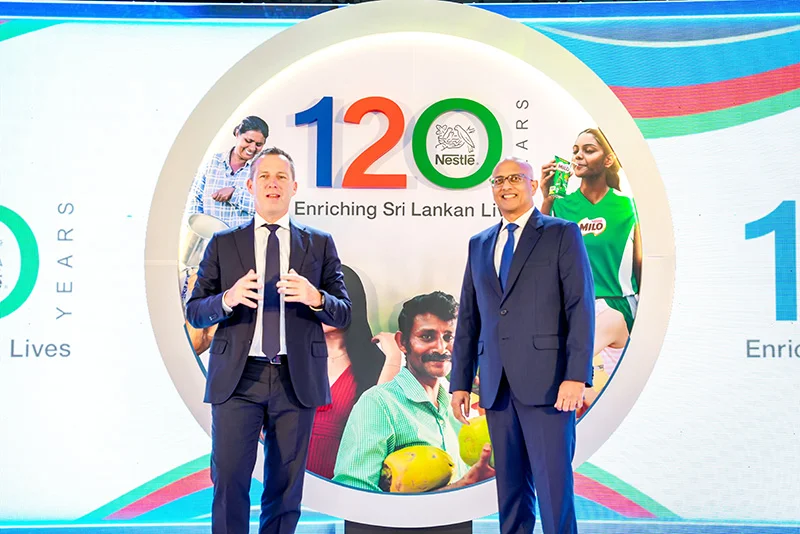
Nestlé Lanka Limited this year marks 120 years of operations in Sri Lanka, highlighting a century-long presence that has extended beyond food manufacturing to supporting farmers, communities, youth employment and environmental sustainability.
Established in 1906, the company has grown into one of Sri Lanka’s leading food and beverage manufacturers, today producing more than 90% of the products it sells locally. Over the decades, Nestlé Lanka has built a strong domestic footprint through local sourcing, long-term farmer partnerships and continued investment in manufacturing.
Through widely recognised brands such as Nestomalt, Milo and Maggi, the company has become a familiar presence in Sri Lankan households, offering products designed to meet local nutritional needs. Many of its products are fortified with micronutrients aimed at improving dietary intake, while brands such as Milo and Nestomalt have also supported youth sports and active lifestyles in the country.

Nestlé Lanka’s engagement with local agriculture has also played a role in strengthening rural livelihoods. The company works closely with dairy and coconut farmers, providing technical assistance, skills development and reliable market access as part of its responsible sourcing efforts.
The company has also expanded programmes aimed at improving youth employability. Through the “Nestlé Needs YOUth” initiative, young Sri Lankans are provided with access to training, learning and career opportunities. Partnerships with organisations such as BConnected have also helped promote inclusive employment opportunities for people with disabilities.
Sustainability has become an increasingly central focus of the company’s operations. Nestlé Lanka’s manufacturing facility in Kurunegala operates on 100% renewable electricity, while a biomass boiler commissioned in 2024 has helped reduce carbon emissions from manufacturing. The company aims to achieve net-zero carbon emissions by 2050.
Efforts to reduce environmental impact have also extended to packaging. Nestlé Lanka pioneered the shift from plastic to paper straws in aseptic beverage cartons in 2019 and supported the establishment of Sri Lanka’s first recycling plant for such cartons. The company aims to become fully plastic neutral by 2026.
Chairman and Managing Director Bernie Stefan said the milestone reflects the long-standing trust Sri Lankan consumers have placed in the company and the partnerships it has built across the country over generations.
By Sanath Nanayakkare
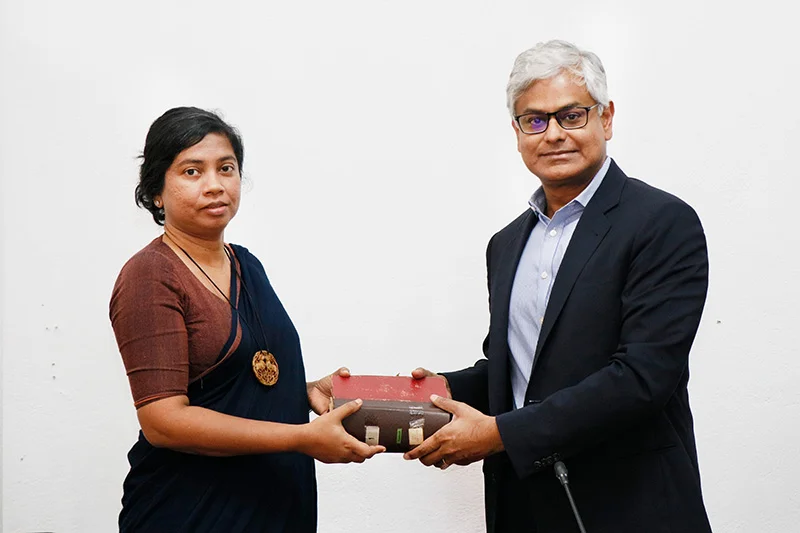
The Ceylon Chamber of Commerce has formally handed over its historical records to the National Archives Department of Sri Lanka, placing over a century of the nation’s commercial history into the care of the country’s official custodians of heritage.
The historical archive being handed over spans from the Chamber’s founding in 1839 to 1973, and includes correspondence, meeting minutes, reports, ledgers, and publications that chronicle the development of trade, enterprise, and industry in Sri Lanka. Together, these records provide a rare and detailed account of how the island’s economy evolved and how its business community helped shape national progress.
The Ceylon Chamber of Commerce was established on 25 March 1839 on the principle that the interests of commerce and trade are best advanced when merchants unite and cooperate in matters affecting the common good. At the time, Ceylon was among the earliest regions in Asia to establish a chamber of commerce, alongside counterparts in Bengal, Bombay, Madras, Canton, Penang, and Singapore.
From its earliest years, the Chamber played a central role in organising and guiding trade. It played a central role in establishing and growing the export economy built on commodities such as coffee, cinnamon, coconut oil, tea, and rubber, and hosted the island’s renowned tea and rubber auctions. It also developed rules and standards for trading practices, helping create an environment of trust and reliability that enabled Sri Lanka’s commerce to thrive.

Advisory for Severe Lightning issued to the Western and Sabaragamuwa provinces and Galle and Matara districts

Jemimah Rodrigues, Harmanpreet Kaur, Mitchell Starc and Kuldeep Yadav among ESPNcricinfo award winners for 2025

China approves ‘ethnic unity’ law requiring minorities to learn Mandarin

Nasa spacecraft weighing 1,300lb due to re-enter Earth’s atmosphere

Chinese national arrested over attempt to smuggle 2,000 queen ants from Kenya

Attacks reported on three more cargo ships in Gulf, with oil price back near $100

‘Dates have the highest sugar content to fight Coronavirus’

Sunday Island 27 December – Headlines

#SundayIsland 17th December – Headlines

Sunday Island – 28th March

Sunday Island Headlines – 21 March

Sunday Island – 21st February – Headlines
-

 News7 days ago
University of Wolverhampton confirms Ranil was officially invited
-

 News7 days ago
Female lawyer given 12 years RI for preparing forged deeds for Borella land
-

 News6 days ago
Peradeniya Uni issues alert over leopards in its premises
-

 News4 days ago
Repatriation of Iranian naval personnel Sri Lanka’s call: Washington
-

 News7 days ago
Library crisis hits Pera university
-

 News6 days ago
Wife raises alarm over Sallay’s detention under PTA
-

 News7 days ago
‘IRIS Dena was Indian Navy guest, hit without warning’, Iran warns US of bitter regret
-
 Latest News7 days ago
Sri Lanka evacuates crew of second Iranian vessel after US sunk IRIS Dena