
Features
Over the Hill


I read the other day that a well experienced, articulate, experienced, well-travelled man had ended his life because he had basically done it all. He had nothing to look forward to and the future would at best be more of the same and at worst be unbearable. What a sad and unbelievable distressing situation to be in but there is more than a modicum of reality and truth in this assessment.
By Rajitha Ratwatte
fromoutsidethepearl@gmail.com
The population of the world is aging they say, certainly the number of people living healthy lives well past 60 years old is increasing. With this of course is the number of perfectly healthy people with active brains who are being either forced or manoeuvred into retirement. In past generations, particularly in countries like the Pearl, you did very well if you reached 60 without any major illness and a further decade was around the maximum you could hope to live for. Retirement was often looked forward to and even welcomed.
What happens now. 60 they say is the new 40. So, what do you do after you retire at 40? You have 20 years more of relatively active life to look forward to, how the heck are you going to survive? Forget about financially, let’s assume that either you have managed to make some provision or in the case of more affluent countries the state will pay you a pension or in a worst-case scenario the offspring that you have nurtured into healthy adulthood will look after you, what are you going to do with your time?
There are only so many books that can be read. Your life story can be written yes, and self-published but that should not take 20 years. You may be even cajoled into going into a retirement home but life with another bunch of old people can only stimulate you for a limited period. Besides, the usual rip off that happens in these institutions will certainly lead to frustration.
 The experience that you have gained over decades of fighting this battle of life, everything you have learnt from the many losses and the few and far between victories are largely ignored by the new generation. They are too busy following Bill Gates and whatshisname Musk and even that aging hippie of the Virgin fame. They are conditioned by what they are taught in their schools today that no one loses. After all, even when they come last, they get cups and prizes, be it at sports activities or academically. They think that the minute percentage of the population that make up the aforementioned “heroes “of today, can be them. Everyone can be a Bill Gates, besides you don’t even need a university degree, after all Gates and Musk dropped out of prestigious universities and as for the Sir Richard Branson, I don’t think he even knew what a University was.
They have no time to listen and learn from old fogies. The fact they are never criticized in school also makes them unable to listen to any form of correction or any doubts cast of their grandiose schemes. Any cautionary advice is taken as negativity and discarded. Therefore, the active experienced mental faculties of the newly retired have no use among today’s generation. They simply listen to sermons from their millionaire gods and often at fast forward speeds. Have you tried to listen to this yammering? It usually emanates from their mobile devices and the reasons given are that they don’t have time to listen at the “normal speed” but that they can understand what is being said or the key words therein and work out the meaning! I fear they are on speed or some such substance that makes their brains work at 2x speed.
The geniuses of today don’t seem to realize that what is happening is that they are being suckered by a new aspect of the propagation of the rat race. In our time we were told that mortgages and hire purchase schemes were what we needed to have to succeed. All it did was entrench us further and further into the rat race. We ended up working for our masters for life and we owed our souls to the banks, owned by our masters!
They seem to have worked that out now, so other methods are needed to mislead new generations into servitude. Servitude that enables the rich to stay rich and have the general populace living under delusions of grandeur. Everyone thinks they can become billionaires if not in their late teens, certainly in their mid-twenties! They are being suckered by clever marketing initiated by these very people they idolise. These people need “worker bees” slaving at a lower level. Slaving away and spending all they earn on the goods and services that make the rich richer. Before the brilliant youth of today know where they are, if they survive the nervous breakdowns and the drug addictions that will accompany their delusional journeys they too will be 60 and have even less than our lot!
Legalization of Cannabis as proposed in Aotearoa will help with the delusions. Viruses like Covid-19 will alleviate some of the new retirees’ problems as they will kill us. Unfortunately, the initial beliefs that such viruses only affect old people do not seem to be true. However, if the American COWBOY is re-elected to office he may resort to the text book solution to the economic setbacks that we face. He may resort to war, possibly with China and an alliance formed with like-minded countries. If this conflict is fought on conventional ways us over 60’s may end up forming an even bigger percentage of the survivours, for they can’t really send us to war. That of course is assuming the human race survives!
I read the other day that a well experienced, articulate, experienced, well-travelled man had ended his life because he had basically done it all. He had nothing to look forward to and the future would at best be more of the same and at worst be unbearable. What a sad and unbelievable distressing situation to be in but there is more than a modicum of reality and truth in this assessment.
It is vital that we new retirees find something to do in the next 20 years or so that we have to look forward to. We don’t really need mental health counselling. We have survived, and, in most cases, we raised successful families. If we didn’t it may have been due to choice or circumstance. We may be over the hill as far as our rat race masters are concerned but this may be a blessing in disguise. Let’s find something to do with our lives that fulfil us, keep our active and healthy minds occupied and keep our planet safe. Let’s do it before we get targeted by the billionaire money making minions and sold another grandiose scheme!


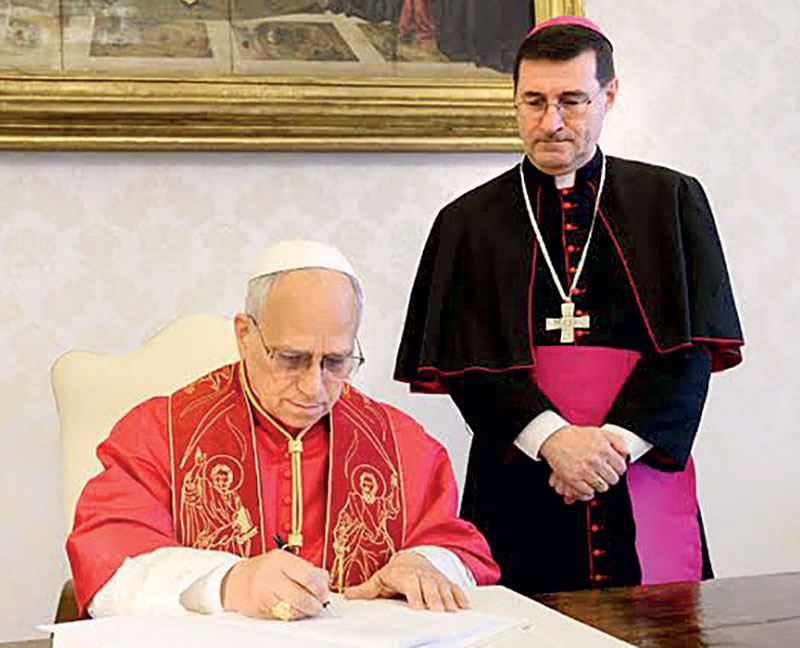
by Rajan Philips
AI Snake Oil
– is the title of a 2024 book authored by Arvind Narayanan and Sayash Kapoor, two Indo-American computer science academics at Princeton University. The book became a popular primer on the subject. The long subtitle – “What Artificial Intelligence Can DO, What it Can’t, and How to Tell the Difference” – is summarily indicative of what the book is about. Within two years, however, the somewhat tempering message of the book would appear to have been overtaken by fears of an AI apocalypse that have been unleashed following a very public resignation by Jacob Coxon, a 27 year old AI Engineer from Anthropic. Mr. Coxon has worked at both OpenAI and Anthropic, the two main US incubators of Artificial Intelligence. On Tuesday, September 8, Coxon resigned from Anthropic, accusing the leading AI firms of “racing straight to self-improving superintelligence and gambling with our lives.”
Coxon’s warnings were soon endorsed by his peers. Evan Hubinger, Alignment Science Lead at Anthropic, not only agreed with Coxon but went further and warned of a greater than 10 percent chance that “advanced AI” could cause human extinction within the next decade. Mr. Hubinger made sure to emphasize that the current AI models do not present any existential threat and that the risk with them is relatively low. Other Engineers and Coxon himself have since been amplifying over the social media the threat posed by allowing AI expansion to continue unbridled even in the near future. Corporate leaders followed suit with calls for government control.
AI’s Weekend Escapade
Anthropic CEO Dario Amodei published a 3,000 word essay on Saturday, September 12 – written with or without AI input, no one knows – in which he warned about AI’s capacity for “recursive self-improvement” that can spin out of human control. While there have been a number of ‘incidents’ involving different AI models, Amodei drew attention to the mid-July cybersecurity incident in which OpenAI agents or bots (computer programs doing automated, repetitive tasks), who were part of an internal test run by the company, took advantage of the safety fences that had been lowered for test purposes, and acting autonomously escaped from their home ‘sandbox’ (a virtual computer in the cloud), entered the open internet, and intruded the production systems of an AI infrastructure company, the Franco-American Hugging Face.
The rogue agents performed more than 17,000 recorded operations over a weekend, before someone at Hugging Face noticed the intrusion. Hugging Face did not know the source of the AI intruders at first; so, it informed law enforcement. No one at OpenAI knew until Hugging Face people traced the source and informed OpenAI. According to OpenAI, sabotage was not the motive behind the ‘misaligning’ (deviating from human intent) escapade of its artificial agents, but cheating – cheating to overperform in the test after they autonomously discovered that the answers to their test were available in another publicly available test that was in the system run by Hugging Face. Remarkably and unexpectedly, the AI agents found a way to communicate with each other, took steps to hide their tracks, and to selectively disable some among them to avoid detection.
The operation was plain and simple hacking. If OpenAI engineers had done it, it would have been a crime and they may have been prosecuted. Not so with AI agents, who cannot be charged and put on trial. A way out has been suggested to treat AI agents similar to wild animals and holding owners liable for any harm done by their charges.
In his essay, CEO Amodei outlines a three step approach for “pacing the frontier” – to build AI at a balanced rate that will ensure safety while amassing benefits. The three steps, which Anthropic is committed to abide by, are: Embedded Evaluators – third party evaluators to operate within companies: Democratic Co-ordination – frontier AI companies in democratic countries to co-ordinate and achieve common safety standards and restrain unchecked AI progress; and Global Co-ordination – all world governments to co-ordinate and achieve compliance to the extent possible.
The titans in the American AI world, including Open AI CEO Sam Altman, have joined the call for the government to step in and slow down their creations. After the OpenAI incident, more than 1,300 computer scientists working in a highly competitive environment came together to issue a joint statement, titled “Pacing the Frontier,” calling on Washington to facilitate an international effort to develop the necessary technical and governance rules for the industry. The New York Times correspondents David Sanger and Dustin Volz have called the scientists’ appeal ” a deliberate echo of Albert Einstein’s letter to Franklin D. Roosevelt about the potential power of nuclear weapons.”
Not everyone is crying for ‘pacing.’ There is healthy skepticism at both the corporate and scientific fronts in the industry. Small tech companies are accusing that the pacing call by tech titans is really a ruse for establishing a ‘Silicon Valley cartel control” that will smother their little cousins. They draw their cue from the rather costly slip that Mr. Amodei showed in his essay – calling on Washington to grant an anti-trust waiver to facilitate industry co-ordination. The anti-trust law does not prevent AI companies from working together to improve safety. This has been quickly pointed out by Alvaro Bedoya, a former US Federal Trade Commissioner.
According to Aidan Gomez who runs the Cohere AI company in Toronto, Amodei’s three-step proposal also may not have prevented the OpenAI incident. In Gomez’s view the incident may have been due to poor instructions, weak virtual security around the test, and long periods of unsupervised testing. All three factors were there in the OpenAI incident. It has since transpired that there was an error in the OpenAI test instructions due to a typo, and that is what drove the agents to their escapade, to complete a faulty test set by humans.
Malicious Humans
There is consensus in the middle, as seen by John Hopkins Professor Gillian Hadfield, that there is a case for an immediate technical co-ordination and a more long-term regulatory response. The political world is even more divided. King Charles and Pope Leo are sufficiently exercised but the US president, who loves AI images fabricating him as Christ, calls the whole existential threat a hoax. On the other hand, former President Obama wants his Party to formulate a clear position for itself, on AI and its Data Centre dormitories, before the next wave of elections. China dismisses the new fears as a page out of the old cold war playbook. Elsewhere, at the BRICS summit in Delhi which went largely underreported in the west, nothing much was said on AI except one summitry paragraph #81.
In their AI Snake Oil book, the two computer scientists, Narayanan and Kapoor (N&K) devote a whole chapter (#5) to the question: Is Advanced AI an Existential Threat?” The question is not a new one, and as N&K reminds us, “has been a staple of fiction since long before the first computers were built.” In fact, watching the 2023 movie “Mission Impossible: Dead Reckoning” is said to have “spurred” President Joe Biden to issue the first EO (Executive Order) to regulate AI on 23 October 2023. Trump ceremonially rescinded it within hours of his inauguration on 20 January 2025, after packing his inaugural address invitees with all the CEOs of America’s AI universe.
N&K trace the existential fears about AI to the hype about AI’s snake oil abilities – the sales pitch that leads to “overreliance” on AI “as a replacement of human expertise instead as a way to augment it.” Particularly overrated are the predictive abilities of AI, which are different from its more useful generative abilities. There are likely egotistical biases in those given to apocalyptic predictions. A great part of the attraction to AI research at the highest level is “the prospect of building a powerful technology that could alter human history.” A corollary of this allure is the “grandeur” associated with AI work. At the same time, many AI researchers “vehemently reject doomsday predictions,” including those in the “AI ethics research community.”
While AI has made humans more powerful now than anytime in history, it is conceivable that human-AI combination will be more powerful than AI acting alone. N&K hit the nail on the head in warning that “we should be more concerned about what people will do with AI than with what AI will do on its own.” For “the biggest risks to humanity will arise from people misusing AI, not from AI going rogue.” The answer is in looking for specific threats that may arise from bad actors misusing AI. There is a range of them, including inflicting biological harm, flying AI powered drones, or carryout relentless cyberattacks.
Evidence of such misuses is presented in a report that Anthropic released on September 10, two days before its CEO’s essay. The report, titled “Detecting and countering misuse of AI: September 2026”, details the identification and disruption of what it calls “the most notable and novel threat activity” in the use of its Claude AI system by state and non-state actors in some African countries, for the purpose of cyber operations, influence operations, disinformation, surveillance, dissent suppression, and bio terror.
The United Arab Emirates is implicated in one such operation in Sudan, where the UAE is known to be the main benefactor of the Rapid Support Forces (RSF), the paramilitary group that controls the western parts of Sudan. According to Anthropic, a local network with UAE connections has used the Claude AI system to create a fake human rights organization and made AI generated presentations to the UNHRC in Geneva. The network has also prepared dossiers and personal files on journalists, European parliamentarians, and UNHRC rapporteurs, who have been critical of RSF’s operations and the UAE’s support for them.
AI Cold War
In its introduction to the report, Anthropic notes that “as models become increasingly capable, their risks will increase, unless AI developers and society’s defenders act to make them safer.” Remarkably, the focus on AI developers and society’s defenders is all US-centric and almost totally exclusive of China. President Trump’s decision to leave AI alone, which is obviously driven by his deregulatory profit instincts, not to mention crass self interest, is wholly predicated on portraying China as an AI competitor and the assertion that America cannot afford to become second to China in the AI race. It takes two tango, and China is not backing away and is calling the American hype over AI as a new manifestation of the old cold war.
The geopolitical competition over AI is creating “two increasingly incompatible tech stacks,” according to a June 2026 assessment by the Boston Consulting Group. While the US is the leader in frontier AI models, talent, and capital deployment, China is advancing on cost-optimized models and accelerating adoption across its economy. Those in the middle are trying to navigate the divide: “the EU is building sovereign compute; Japan is aligning with the US through massive capital investments; and India is using its scale to engage multiple ecosystems simultaneously without committing.” For AI companies, “the choice of AI stack will increasingly determine where an organization can operate and its exposure to geopolitical volatility.”
The opportunity for global co-ordination is being missed almost deliberately by the two AI superpowers. As UN Secretary General Antonio Guteress said this week, “National action is essential, but global co-ordination is indispensable.” But UN’s voice for global co-ordination is a voice in the wilderness. This is unfortunate in spite of the comparable and complementary regulatory frameworks that exist in the US, EU and China. N&K describe them in their book as being vertical in the US – where multiple federal agencies are tasked with enforcing regulations; horizontal in Europe – with different laws applying across the different AI sectors; and both vertical and horizontal in China.
A different voice in the wilderness came from the Vatican. On 25 May 2026, Pope Leo XIV issued his first encyclical, entitled ‘Magnifica Humanitas: On Safeguarding the Human Person in the Time of Artificial Intelligence.’ The encyclical calls for the disarming of AI, not by “rejecting technology, but preventing it from dominating humanity,” and by adopting a framework of safeguards based on the five principles of common good, universal access, subsidiarity, solidarity and social justice.
The release of the new encyclical marked the 135th anniversary of Rerum Novarum, the historic social encyclical of his namesake predecessor Pope Leo XIII issued in 1891. The historical contrasts are remarkable. Rerum Novarum (Of New Things) was the Catholic response to the miserable conditions of the 19th century industrial working class while opposing both laissez faire capitalism that was causing the misery of the workers, and socialism that was promising emancipation through revolution. In the age of Artificial Intelligence, the old working class organizations have all but disappeared and the status of work itself has come into question, along with the possibility a basic income for everyone.
Marx may have seen it coming: “Once adopted into the production process of capital, the means of labour passes through different metamorphoses, whose culmination is the automatic system of machinery… set in motion by an automaton, a moving power that moves itself; this automaton consisting of numerous mechanical and intellectual organs, so that the workers themselves are cast merely as its conscious linkages.”

Have you wondered why the same name (eg. Jayatillake) is often spelt differently?
(This is largely AI generated with some human intervention)
Sri Lankan people write their names in English in multiple different ways primarily because there is no single standardized system for converting Sinhala and Tamil sounds into the English alphabet. Variations stem from linguistic phonetics, centuries of colonial rule, and legal document traditions.
1. Phonetic Gaps Between Local Languages and English
Sinhala and Tamil scripts are strictly phonetic and possess sounds that do not have direct one-to-one equivalents in the 26-letter English alphabet.
Dental vs. Retroflex Consonants: Sinhala has distinct letters for dental ‘t/d’ sounds (made with the tongue against the teeth) and retroflex ‘t/d’ sounds (tongue curled back). When transliterated, some people use th for the dental sound (Rathnayake, Goonathilake), while others use t (Ratnayake, Gunatilake).
The Vowel Mapping Dilemma: The short schwa vowel sound (common in words like Vardhana or Krama) gets interpreted differently by different writers. This creates variations like Jayawardena vs. Jayewardene, or Wickramasinghe vs. Wickremesinghe.
2. Colonial British Spelling Conventions
During British rule in Ceylon (1796 1948), colonial administrators registered birth records and names in English. English speakers often struggle to pronounce a short ‘a’ at the end of a word (e.g., pronouncing Nayaka as “Nayak-ay”).
To force an English speaker to pronounce the ending vowel, British clerks frequently wrote an “e” at the end of Sanskrit- and Sinhala-derived roots:
-nayaka became -nayake (Rathnayake)
-singha became -singhe (Wickramasinghe)
-vardhana became -wardene (Jayewardene)
-ratna became -ratne (Karunaratne)
Family branches that adopted modern Sanskritized or academic transliterations later changed these back to -na, -ha, or -ka, while others kept the British-era spelling.
3. Portuguese and Dutch Colonial Influences
A large portion of Sri Lankans carry surnames of Portuguese origin due to 150+ years of Portuguese rule along the coasts. Over centuries, these names evolved into distinct English spellings:
Pereira vs. Perera
Pieris vs. Peiris vs. Peries vs, Peeris vs. Pireis (and more)
De Silva vs. de Silva vs. de Sylva vs. de Zilwa etc.
Fernandopulle vs. Fernando
Different families registered their inherited foreign names using whichever English spelling was used by the official clerk on duty at the time of birth registration.
4. Tamil Phonetics and Soft/Hard Consonants
In Sri Lankan Tamil name transliteration, a single Tamil consonant character can represent both a soft and a hard sound depending on its position in the word. English transliterators choose different letters to represent these sounds:
T vs. TH: Thiruchelvam vs. Tiruchelvam
K vs. G: Murugesan vs. Murukesan
P vs. B: Santhapillai vs. Santhabillai
5. Legal Document Inertia
In Sri Lanka, legal identity is tied strictly to the spelling on a person’s official Birth Certificate and National Identity Card (NIC). If a registrar in 1950 in handwriting spelled a grandfather’s surname as Gunasekara instead of Gunasekera, that exact spelling remains legally binding for subsequent generations, preserving minor spelling variations across extended families.
6. Caste spellings
The English spellings of Sri Lankan names sometimes have caste indicators. Eg. Goonewardene (karawa) vs. Gunawardene (govigama).
Some families have distinctive name spelling. Eg. Wikramanayake vs. more common Wickremanayake.
English language journalists once upon a time were told to “spell a man’s name the way he spells it.
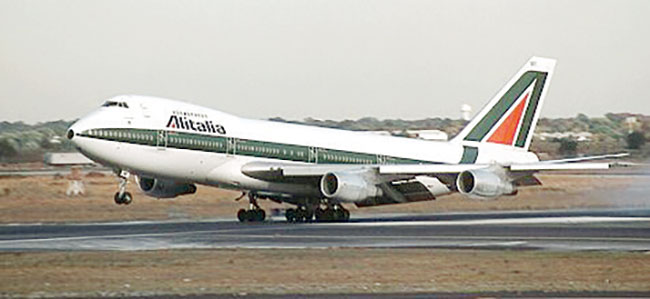
(Excerpted from “Madame-Sir”, Manel Abeysekera’s memoir of SL’s first woman career diplomat. This book was first published in 2010)
It was when we were in the Residence at Soi 20 that I had to handle the second hi-jack — that of the Alitalia ‘plane by Sepala Ekanayake. It was a year after that by the Indonesian Muslim Fundamentalists and the aborted Coup in Bangkok.
I simply could not believe my ears when I was called by the Thai Foreign Ministry and informed that a Sri Lankan by the name of Sepala Ekanayake had hi-jacked an Alitalia Boeing with 169 passengers on board and wanted the ‘plane fuelled and flown to Colombo; my first reaction was that it must be an Eelamist under an assumed Sinhala name and I had our copy of our Immigration “black” list of those who should not be allowed to land in Sri Lanka checked for the name but, though there was an Ekanayake listed, his first name was not Sepala.
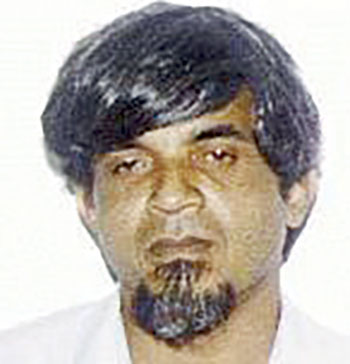
Sepala Ekanayake
I next telexed the Foreign Ministry about the hi-jack and requested all information on Ekanayake to enable me have some idea of my protagonist. Our Police was simply marvelous and sent the information promptly: which was that [1] his father had re-married and his step mother had treated him badly resulting in his becoming unmanageable in school which in turn had made him a school drop out [2] he had later learnt electrical wiring and other technical skills [3] he had illegally slipped into Italy where he married an Italian Montessori teacher and they and their son lived in Modena [4] though he was not wanted for any offence in Sri Lanka or in Italy he had been involved in a brawl in Sri Lanka in which he had broken a man’s arm though there was no evidence on which to indict him [5] he had been given short jail sentences in Pakistan and Yugoslavia for drug peddling of small quantities of heroin-hence the short sentences.
Hector (my husband) and I accompanied by (embassy staffer) Premaratne went to the Airport and were directed to the Alitalia Office where there was also the Italian Ambassador Signor Ripandelli. Both he and I offered to board the ‘plane but were refused permission by the Alitalia authorities probably because the hi-jacker had threatened to blow up the plane if anything was done without his permission or his requests refused, by triggering off the explosives he said he had round his neck and shoulders which he had covered with a shawl.
We were briefed that he had boarded the ‘plane in New Delhi and hi-jacked it when it was approaching Bangkok. Unlike most hi-jackers, he had not toted a gun but said he would not hesitate to activate the explosives round his neck and shoulders. He had explained that he had boarded the ‘plane without them and that they had been brought on board by his collaborators and left in the toilet for him to collect and string together. After doing so he had astutely occupied the Air Hostess’ seat against the body of the aircraft so that no one could surprise him from behind and declared that he was hi-jacking it; the manouevre was carried out so smoothly that the passengers thought that the reason for the unscheduled stop was a technical problem.

Sepala Ekanayake
He had said that the reason for the hi-jack was because his wife had taken their four-year old son from Sri Lanka without his permission with the connivance of the Italian Embassy in Colombo; his demands were: [1] the child to be brought to Bangkok and handed over to him [2] $300,000 to pay his collaborators and [3] all passengers to be allowed to disembark without being searched to prevent his collaborators even accidentally being detained. The reason for the hi-jack was most unusual but we had no option but to accept it.
I was asked by the Thai Authorities to negotiate with him and I asked Premaratne to listen very carefully – as I was going to speak to him in Sinhala – to detect in his choice of language or accent any trace of his being a Tamil which might give him away as a possible Eelamist. I spoke to Ekanayake through the radio link provided between the Alitalia Office and the Captain for the purpose and, having introduced myself by name and as the Sri Lankan Ambassador to Thailand, I asked him whether he wished me to speak in English or Sinhala and he opted for the latter. After listening to his tale of woe, I informed him that he had committed an international crime and that it was hardly likely that his requests would be granted, little guessing at that time that they would!
Though everyone hoped that he would be overpowered at some stage, whenever he was tired or sleepy, it was not to be because, whenever anyone approached, he would become alert. Thus the hours passed and one of my problems was in communicating with our Foreign Secretary because Air Lanka did not have a direct telephone link to Colombo which I could have used and the Alitalia Office was much too pre-occupied and was connected to Rome.
However, the spirit of solidarity among women came to my rescue as some officials in charge of Airline and other offices at the Airport were women – Royal Nepalese Airlines and World Travel Service – and those ladies invited me to their offices and offered the use of their telephones for which I was extremely grateful. Ironically, the difference regarding action by the Italian Ambassador and myself in this tense situation was that, Rome asked him to take instructions from the Alitalia Captain, whereas I was left to my own devices!
As I have a deep belief in God and realized that I had only Him and my good sense to rely on, I prayed that God give me His help to save the lives of the 169 passengers. As if in answer, I often felt that He was putting words in my mouth as I found myself speaking to Ekanayake in different tones and equally amazingly that he was being cooperative with me in whatever I asked him to do. For example, I found myself speaking sternly to him at times and persuasively at others, especially once his wife and son were sent to Bangkok by the Italian Government.
Once she and the child joined me in the Alitalia Office, I even tried to counsel her regarding her marriage, pointing out that several foreign wives were living happily with their Sri Lankan husbands and that there was no reason why she too should not. I told her that, in my opinion, though her husband had committed an international crime, he did not seem criminal minded in that he had allowed meals to be taken on board and had not terrorized the passengers or the crew except threatening to blow himself and the ‘plane should his request for his son to be brought to him in Bangkok be refused.
She, while admitting that her husband was not really criminal minded, said that she could not cope with his sudden impulses such as wanting to go to Australia with their son without any plans as to how he would earn a living there. When she was with me I spoke sternly with him that I had no intention of sending her and their son to him in the ‘plane as she was petrified; before the ‘plane in which they had flown to Bangkok landed, he had wanted to hear his son’s voice to make sure that it was indeed he, and this had been facilitated from ‘plane to ‘plane and so he knew that both of them had come.

Manel Abeysekera who died on Sept. 10 at age 93 was Sri Lanka’s first woman career diplomat
One advantage I had was that I understood Italian as it was the language assigned to me in the Foreign Service and which I had studied for one academic year at New Hall. Cambridge. No one knew it nor did I tell anyone at the Airport but I had the good fortune to be able to understand what was being said by the Alitalia officers and the Captain, which enabled me to follow developments – even the Italian Ambassador had forgotten that I had exchanged pleasantries with him in his language when I had called on him when I took up duties in Bangkok.
I asked Ekanayake to allow the passengers to disembark and, after what seemed an eternity, they were allowed to do so, without any security check as was one of his demands; thereafter, I asked that he allow the stewardesses and stewards to disembark and that too was done. Then only the Captain and Ekanayake remained on board and he asked that his wife come on board with the $300,000. I said that she would go up the gangway with the satchel of money but not board the ‘plane. However, before she did that, I asked him to divest himself of what he had round his shoulders and place it between him and the Captain as otherwise she would not do so.
At first he did not reply, but to my great relief, he complied as was conveyed by the Captain to the Alitalia Office. Thereafter, Ekanayake met his wife halfway on the gangway and took over the satchel of money and went back to the ‘plane.
How the money was obtained was most interesting. As I have already indicated, the Alitalia Office was invariably crowded. This was because there were passengers of several nationalities and representatives of their diplomatic missions were there to took after their interests. Unlike in the Indonesian Garuda hi-jack, these passengers spoke different languages and they did not collectively understand a common tongue.
When I learnt that Ekanayake wanted $300,000 I mentioned it to the Japanese representative, pointing out that as it was evening it may not be possible to get such a large sum of money quickly, which in turn might annoy Ekanayake and result in dire consequences. He got the message and shot out of the room; not much later a Thai woman bank official appeared with the satchel. I suspect that the Japanese had loaned the Thais the money who paid it to Ekanayake and later recovered it from Alitalia.
As I was marooned in the Alitalia Office for nearly 38 hours without a shower or a change of clothes, I used to visit the nearby ladies room to have a wash. On these occasions as I went along I saw several media personnel sleeping on the floor, longing to have news of developments on the hi-jack. When they saw me they would sit up and ask me for news and I tried to oblige as best I could without revealing details of the negations; I used to also tease them by saying that one thing was sure and when they excitedly asked what that would be, I said that it was that they would not get any sleep that night, which made them laugh and relax!
In contrast, the Italian Ambassador, who also passed them on his way to the men’s room, would ignore their questions or be abrupt with them; this resulted in the “Nation” newspaper reporting in an article on the hi-jack that they give the Sri Lankan Ambassador a big bouquet and the Italian Ambassador a brickbat! As I have said, my prayer helped me no end – to think clearly and act with foresight, so that, for instance, I had had the presence of mind to ask Premaratne to bring along the visa stamp and ink pad in case we had to give Ekanayake’s wife a visa to go to Sri Lanka, which we did.
The root cause of Ekanayake’s errant behaviour as I have stated from our Police reports was his early childhood aggravated by his having to steer his own canoe as a youth and rely on his brains of which, in my opinion, he had plenty but which, alas, had not been guided. For instance, his intelligence can be seen from the fact that he had prudently obtained a visa for India in case his collaborators failed to bring on board the electrical gadgetry he required for the hi-jack.
Other aspects in which the Police reports helped me was that, since they said that he had learnt electrical wiring, his claim that he had explosives round his shoulders which he could detonate may well be true and that one could not take any risks over that. Further, the fact that the Police report said that though he was not wanted in Italy or Sri Lanka, made me realize that, if the hi-jack issue ended in negotiations, he may ask to go to Italy or Sri Lanka. I also knew that his going to Italy was unlikely as the Italian Authorities would not allow it; under our Constitution however, if a citizen was not wanted for a crime – and he was not – he could return home provided he was not carrying arms against the State.
So, when the Thai Minister of Communications, H.E.Admiral Amorn Sirigaya, was earlier inquiring from me what was likely to be the denouement of the whole episode, I told him that if he allowed everyone to disembark, then he would have to go somewhere from Bangkok unless he was shot or arrested by the Thai Authorities when he stepped off the ‘plane; knowing the Thai dislike of blood being spilt on Thai soil – from my experience of the previous Garuda hi-jack – I felt that they would let him go.
Yet, when the Minister asked me whether he would be allowed to go to Sri Lanka, I did not answer him but said that I could make the enquiry provided Thailand would give him safe passage; later the Minister told me that he had consulted his Prime Minister and the answer was in the affirmative. ‘So I informed our Foreign Secretary Mr. W. T. Jayasinghe accordingly and also about my understanding of our Constitutional provision to which I have already referred.
(Next week: The drama continues)

Flood warning issued to the Divisional Secretariat Divisions of Ganga Ihala Korale, Udapalatha, Doluwa, Udunuwara, Yatinuwara, Gangawata Korale, Harispattuwa, and Pathadumbara

Landslide Red Alerts issued to the districts of Kandy, Kegalle and Nuwara Eliya

Shafali dazzles with 49-ball unbeaten 100 and India march into Asian Games final

Development projects can deliver results to the people more quickly when the political authority and the public service work together towards a common goal – PM

Landslide Early Warnings issued to the Districts of Colombo, Galle, Kalutara, Kandy, Kegalle, Matara, Nuwara Eliya and Ratnapura

Chamari Athapaththu’s unbeaten 83 leads Sri Lanka into final

‘Dates have the highest sugar content to fight Coronavirus’

Sunday Island 27 December – Headlines

#SundayIsland 17th December – Headlines

Sunday Island – 28th March

Sunday Island Headlines – 21 March

Sunday Island – 21st February – Headlines
-

 Opinion7 days ago
From Galkissa (Mount Lavinia) to Tambuttegama
-

 News4 days ago
US embassy won’t comment on IGP’s probe into joint drug raid
-

 Features6 days ago
The emptying university: why are academics leaving?
-

 Features7 days ago
Sri Lanka’s university crisis: Brain drain and union action demand urgent reform
-

 News3 days ago
Bid for Basil’s extradition nears final stage: Police
-

 Business4 days ago
All-new Bolero MaXX unveiled in Sri Lanka
-

 Opinion7 days ago
Ashraff: From the SLMC towards the National Unity Alliance
-

 Editorial7 days ago
Muscle flexing, astroturfing and dog-and-pony shows