
Sports
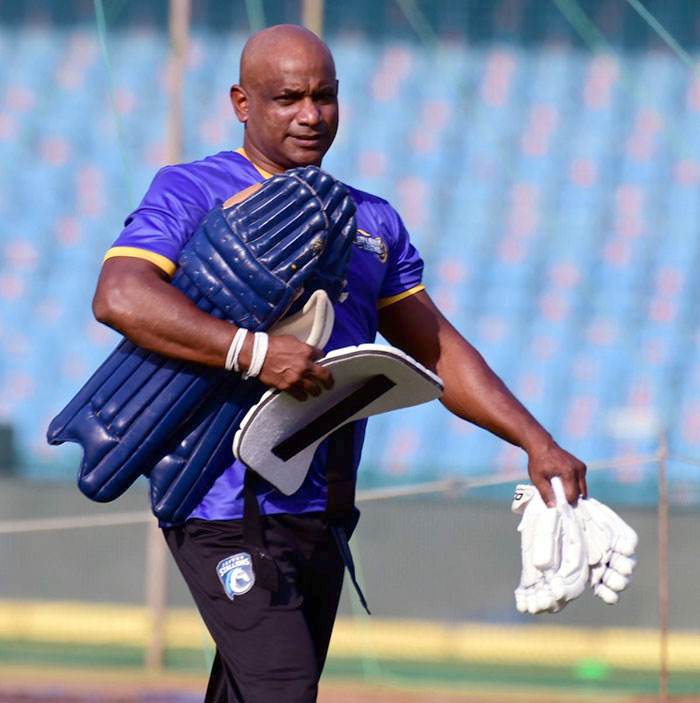
Our secret for success in World Cups is absorbing pressure well – Sanath

by Rex Clementine
Sri Lanka’s success in T-20 World Cups is tremendous. Since the new format was introduced in 2005, there have been seven T-20 World Cups and Sri Lanka have reached the finals on three occasions while on another occasion they were losing semi-finalists. No other team has featured in three finals with West Indies, India, Pakistan, Australia and England appearing in two finals each.
One of the team’s key figures during the early success was former captain Sanath Jayasuriya, who played in the first three tournaments – in South Africa, England and West Indies. He was Chairman of Selectors when Sri Lanka won the title in 2014 in Bangladesh.
“I don’t think a lot of people gave us a chance ahead of these World Cups. True, on paper, we didn’t have the best team compared to some of the other sides. But our greatest strength was that we absorbed pressure well. When we are put under pressure, we hang in there and someone gets us out of trouble. We may not have posted big totals. But we fight hard. We stop every run on the field and play an aggressive brand of cricket challenging the opposition to take chances. That’s very important in any form of cricket. To be positive and take away the fear of failure. I guess that’s been our key to success,” Jayasuriya told The Island.
The 2009 World Cup campaign saw Sri Lanka beating some formidable sides. West Indies were favourites and Kumar Sangakkara’s side beat them twice, in the second round and in the semis. They also beat New Zealand, Pakistan and Australia in the competition before going down to Younis Khan’s side in the final at Lord’s. The opening partnership of Jayasuriya and T.M. Dilshan was key in that tournament. Jayasuriya not only came up with match winning knocks with the bat, but picked up wickets at crucial junctures with his left-arm spin.
“I enjoyed playing in England. At that stage, we had not played much T-20 cricket. There were a lot suggestions that we had to improvise. I am not a player who reverse sweeps a lot or plays the scoop shot. I have my strengths and I stuck to my game plan. With my ability to clear the boundary, it was important that I batted deep and when I do that, the team wins. It was disappointing to lose that final. We had played so well until that game. We were unbeaten in the tournament winning six games before the final. But unfortunately in the big game, we didn’t score enough runs.”
“I know I have to do a job for the team with the ball as well. I study the opposition. I have a fair idea of what variation I need to do. My game plan is to bowl as many dot balls as possible. Not to take wickets. You need to be a bit cunning and read the batsmen’s mind. When you have played the game as long as I have, you know what the batsmen is thinking. It’s an instinctive thing.”
Sri Lanka entered the 2014 final against India having lost four World Cup finals in a row – 2007 to Australia in Barbados (50 overs), 2009 to Pakistan at Lord’s (20 overs), 2011 to India in Bombay (50 overs) and 2012 to West Indies at RPS (20 overs). Fifth time they were lucky winning a World Cup for the first time since 1996.
“That was a tournament where we had to do a lot of planning. It all came off and after losing four World Cup finals it was a relief to win that one. That too against India. I had to take some tough decisions. Had to leave out Dinesh Chandimal, who was our captain. That was a massive call. When we called Chandimal and explained the decision to him, he accepted it. Man management is an important aspect when you are managing a team,” recalled Jayasuriya.






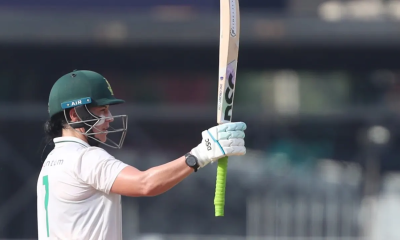

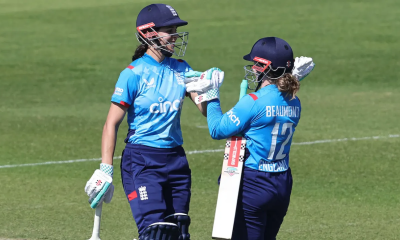


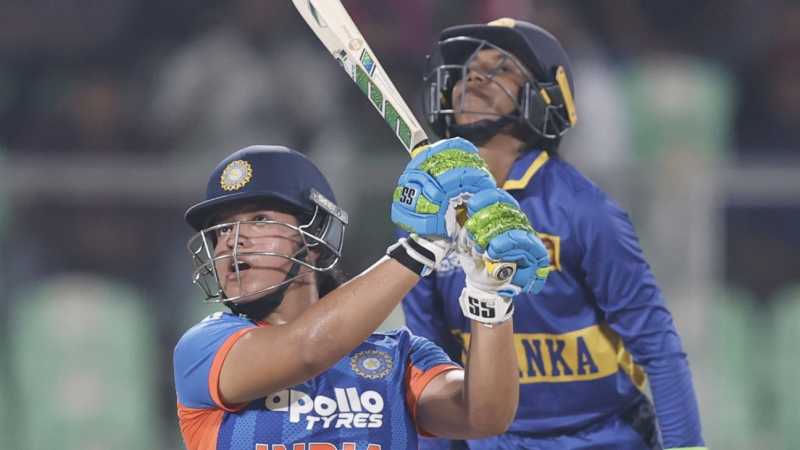
The inaugural Women’s Champions Trophy, scheduled for February 2027, will be moved out of Sri Lanka with the SLC set to be stripped of hosting rights. Cricinfo has confirmed that the six-team event will be played at a different venue in the same window, and it is likely to be held in India. The new hosts will be confirmed at the next ICC board meeting in October.
Sri Lanka have lost the right to stage the tournament, which was due to be their second ICC event in a year after they also co-hosted the 2026 men’s T20 World Cup, because of government interference in their board. The SLC has an interim administration, called the Transformation Committee, which was put in place by the Sri Lankan government and will oversee major board changes including to the constitution.
The ICC does not recognise politically appointed administrations and SLC representatives have not been at ICC board meetings since the Transformation Committee was put in place.
The change in venue could significantly impact the Sri Lanka side, who only qualified for the event by virtue of it being held in their country. The competition is limited to the top six teams on the ICC rankings and, as of the rankings update on Saturday, Sri Lanka are currently seventh. Australia, England, India, New Zealand and South Africa make up the top five. West Indies are sixth and would have originally missed out but if Sri Lanka do not qualify, then the Caribbean could sneak in.
This will be the second time in three years that Sri Lanka have lost out on an ICC event. In 2023, the 2024 men’s Under-19 World Cup was taken away from them for the same reasons and moved to South Africa.
In any case, while the Transformation Committee is in charge, SLC’s electoral processes stand suspended. The Transformation Committee’s official task is to reform that very electoral system, and the Sri Lanka Cricket constitution in general. According to the country’s laws, this can only be done through parliament.
The Transformation Committee has said it has produced a fresh constitution which is expected to be taken up in parliament over the next few weeks. Members of that Transformation Committee told Cricinfo that it expects for SLC elections to take place before the end of 2026, so long as the parliamentary process runs smoothly.
(Cricinfo)
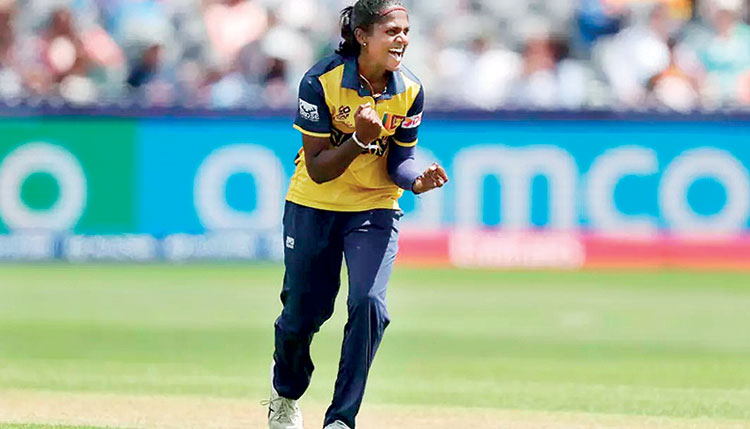
Sri Lanka began their Women’s Asia Cup campaign in emphatic fashion, cruising to a nine-wicket win over the UAE after bowling them out for just 79. Mithali Ayodhya and Chethana Vimukthi led the way with three wickets apiece, while Sugandika Kumari took two, before Chamari Athapaththu’s unbeaten 48 off 25 balls and Imesha Dulani’s 25 off 18 powered the defending champions to the target in just 7.5 overs. The victory, completed with 73 balls to spare, was Sri Lanka’s biggest in T20Is in terms of balls remaining.
Sri Lanka made an ideal start after opting to bowl, with Mithali Ayodhya striking in the fourth ball of the innings to bowl Theertha Satish for a duck. Chethana Vimukthi then joined in, bowling a disciplined spell and removing Lavanya Keny in the fourth over to leave UAE at 8 for 2. Esha Oza and Heena Hotchandani tried to rebuild, but scoring remained difficult, with Sri Lanka’s bowlers giving little away. Oza’s first boundary, which was also the first of the innings, did not come until the 4.1 over, and UAE reached only 16 for 2 at the end of the Powerplay.
The pressure continued after the field spread, and Oza was eventually dismissed for 18 off 24 by Sugandika Kumari. By the halfway stage, they had crawled to 31 for 3, having played out 37 dot balls. Hotchandani fell for 10 off 18 to Chamari Athapaththu soon after, and although Rinitha Rajith provided some impetus with 15 off 16, wickets kept falling around her. Samaira Dharnidharka made 17 off 25 before Kavisha Dilhari had her caught and bowled in the 15th over, and Rajith followed in the 19th over. Ayodhya then returned to remove the final two batters, bowling UAE out for under 80.
In contrast to the first innings, Sri Lanka made a flying start to the chase, with Dulani and Athapaththu dealing in regular boundaries. Dulani was particularly fluent, striking five fours in her 18-ball 25, while Athapaththu became the first to reach 500 runs in Women’s Asia Cups, with a six off Esha Oza in the fourth over.
The pair raised a half-century stand inside the Powerplay before Dulani was run out for 25 when a drive from Athapaththu ricocheted off the bowler and hit the stumps at the non-striker’s end. Athapaththu, though, continued the assault with Sanjana Kavindi for company. Having struck two boundaries off Athige Silva, she hit a six off Oza before finishing off the chase with a couple as Sri Lanka began their Asia Cup campaign with a facile win.
Brief scores:
UAE 79 in 19.5 overs (Esha Oza 18; Mithali Ayodhya 3-14, Chethana Vimukthi 3-16, Sugandika Kumari 2-18)
Sri Lanka 80/1 in 7.5 overs
(Chamari Athapaththu 48, Imesha Dulani 25) (Cricbuzz)

The Sri Lanka Men’s National Basketball Team delivered a composed performance to defeat Kyrgyzstan 72-65 yesterday at the Baluan Sholak Sport Palace in Almaty, Kazakhstan, in the FIBA Asia Cup Pre-Qualifiers Group B.
In a tightly contested first half, Sri Lanka trailed narrowly at the break 31-33. Team Sri Lanka regrouped in the second half, outscoring Kyrgyzstan 20-16 in the third quarter and 21-16 in the fourth quarter to secure a crucial two points in the group standings.
Simron Yogananthan led the way with a game high 27 points and was instrumental in the fourth quarter comeback.
Praneeth Udumalagala also supported well with 22 points and a last moment match winning three pointer.
With this win, Sri Lanka took a massive step towards qualification for the next round of the FIBA Asia Cup Pre-Qualifiers.

Sri Lanka lose Women’s Champions Trophy hosting rights

Iran attacks US bases in Jordan after US strikes Larak Island

Showers will occur in the Western, North-western and Sabaragamuwa provinces and in Galle, Matara, Kandy and Nuwara-Eliya districts.

Sun directly overhead Neriyakulam, Punewa, Kebithigollewa, Pankulam and Sinhapura at about 12.10 noon today (31)

BASL takes exception to Justice Ganepola being denied a place in SC

Sajith challenges govt. to hold PC polls

‘Dates have the highest sugar content to fight Coronavirus’

Sunday Island 27 December – Headlines

#SundayIsland 17th December – Headlines

Sunday Island – 28th March

Sunday Island Headlines – 21 March

Sunday Island – 21st February – Headlines
-

 News6 days ago
Missing doctor’s body found in Mahiyanganaya
-
 News6 days ago
Australia declines to release Finance Secy Suriyapperuma’s citizenship details
-
 News6 days ago
22A: BASL suggests CJ recuse himself from hearing petitions
-

 News3 days ago
Eight politicians in drug kingpin probe
-

 Features1 day ago
“Wrap Me Up in My Blazer”— A Gentlemanly Bradby Reminiscence
-

 Business3 days ago
Sri Lanka opens up: A new season of direct connectivity
-

 Features3 days ago
Redefining ageing in Sri Lanka
-
 Features5 days ago
Insights from Chieftains of Uva: Genealogy of two Kandyan Families – Part II