
Sports
Our domestic trophy would be finished – Dravid on Indian players in overseas leagues

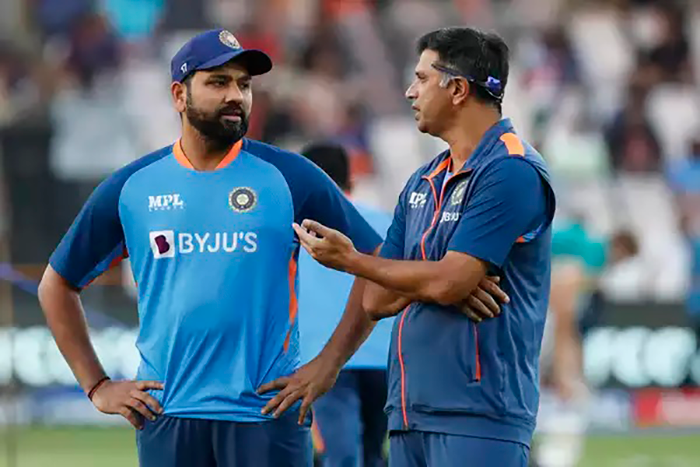
India head coach Rahul Dravid said the team’s timid 10-wicket defeat to England in the semifinal was disappointing but the T20 World Cup campaign as a whole was not a debacle. India were outplayed in all facets of the game by Jos Buttler’s side and finished an unpleasant second on a pleasant evening in Adelaide, taking their drought at ICC events into a 10th year.
Among questions posed about the immediate future of the Indian T20I side, which Dravid was non-committal about in the immediate aftermath of the defeat, the India head coach was asked if the team was disadvantaged by BCCI’s policy of not sending its players to play in other T20 leagues around the world. While the conditions in Australia for this early season World Cup haven’t been anywhere near to what they usually play like, the question was in reference to England’s BBL experience coming to the fore on the day with only Moeen Ali and Sam Curran from their XI on the day not having played in Australia’s domestic T20 league.
Dravid agreed that England’s experience showed on the day but stated that allowing Indian players to play the BBL was not a straightforward solution as it would spell the doom of India’s domestic cricket, especially the Ranji Trophy which would run parallely. “It’s tough. I think it’s very difficult for Indian cricket because a lot of these tournaments happen right in the peak of our season,” Dravid said.
“I think it’s a huge challenge for us. Yes, I think a lot of our boys maybe do miss out on the opportunities of playing in a lot of these leagues, but if you were to, it’s really up to the BCCI to make that decision, but the thing is it’s right in the middle of our season, and with the kind of demand there would be for Indian players, if you allowed all the Indian players to play in these leagues, we would not have domestic cricket. Our domestic trophy, our Ranji Trophy would be finished, and that would mean Test cricket would be finished.
“I know a lot of people talk about it, but we have to be very careful. We have to understand the challenges that Indian cricket faces or the BCCI would face in a situation like this. You’d see all our boys like a lot of boys being asked to play leagues right bang in the middle of our season. We’ve seen what that’s done to West Indian cricket, and I would definitely not want Indian cricket to go that way. It would certainly affect our Ranji Trophy; it would affect Test cricket. Indian boys playing Test cricket is pretty important for the Test game, as well, I would think.”
Dravid credited England’s opening pair of Jos Buttler and Alex Hales for the highest partnership in T20 World Cup history (170*) which put paid to the little hopes India held at the half-way point of the game. He also cited that the lack of swing up front with the new ball contributed to a negative match-up. “We knew the key to the game obviously was to try and take that opening partnership as early as we could. We tried to attack a little bit with our lengths up front. We thought that was a tactic. They played that really well,” Dravid said.
“The ball didn’t swing here probably as much as it has in other parts of Australia or in other conditions. Played a little bit into their hands, and class players like that, both Buttler and Hales, I thought their partnership was fantastic today. I think they just put the pressure on us, never let that go, and even when our spinners came on on a wicket that we thought we might be able to control the game, they really counterattacked our spinners, as well, and put our spinners under a lot of pressure.
“Once they got off to that kind of start, I think they could really sit back and control the run rate. We had 168. They brought that run rate down to six and a half I think by the time the sixth over was finished, or seven runs an over, and then on a small ground like that, they were always in control, so they were going to control that game.
“They didn’t really need to take too many risks. They could sit back and — not that they didn’t take them; they played some really good shots right through. But yeah, these things happen. Yeah, it’s disappointing. Debacle I’m not sure is the right word, but disappointing certainly.” (Cricbuzz)


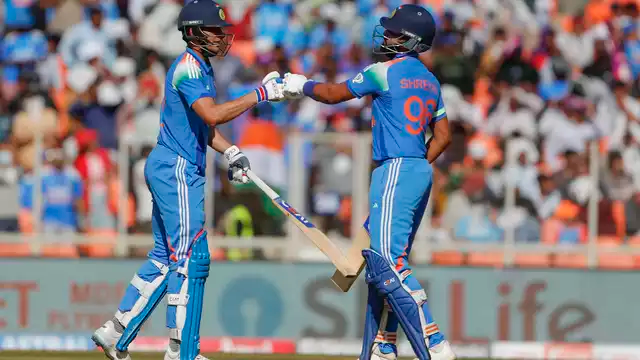
Squad for the first three ODIs: Shubman Gill [C], Rohit Sharma, Virat Kohli, Shreyas Iyer [VC], KL Rahul [WK], Nitish Kumar Reddy, Axar Patel, Naman Dhir, Anshul Kamboj, Gurnoor Brar, Ruturaj Gaikwad, Arshdeep Singh, Ishan Kishan [WK], Mohammed Siraj, Prasidh Krishna*, Kuldeep Yadav
Squad for fourth and fifth ODIs: Shreyas Iyer [C], Rohit Sharma, Virat Kohli, Tilak Varma, Ishan Kishan [WK, VC], Nitish Kumar Reddy, Axar Patel, Naman Dhir, Auqib Nabi, Gurnoor Brar, Ruturaj Gaikwad, Arshdeep Singh, Kumar Kushagra [WK], Mohammed Siraj, Yash Thakur, Kuldeep Yadav
[Cricbuzz]
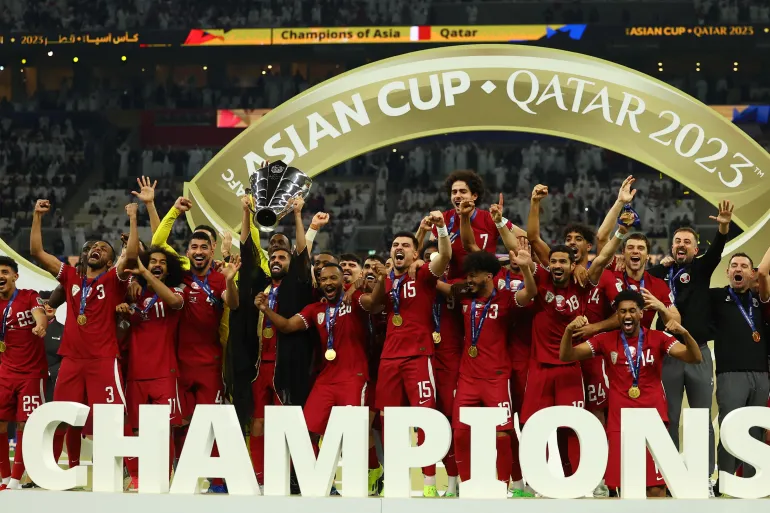
Football’s Asian Cup, hosted by Saudi Arabia, could be moved back a year to 2028 following a series of attacks on the country by Yemen’s Houthis.
The continental tournament will be rescheduled “if we need to” but the organisers are in “no hurry” to make a decision, Asian Football Confederation President Sheikh Salman bin Ebrahim Al Khalifa said on Thursday.
The 2027 Asian Cup is supposed to kick off on January 7 in the Saudi cities of Jeddah, Riyadh and al-Khobar.
The kingdom has in recent days come under sustained attack in a dramatic escalation from the Houthis.
“We can wait until the end of November,” Al Khalifa told reporters in Zurich on Wednesday about a decision on the fate of the Asian Cup.
“Things can change very quickly for better or worse in the region, and it is a question of seeing what happens,” he added.
“If we need to make a decision then we will, but we could move back a year to 2028 if we need to.
“But at the moment we are monitoring the situation and everything is on schedule.”
Cristiano Ronaldo’s Al-Nassr saw their Asian Champions League match delayed by an hour on Monday after Saudi Arabia’s Civil Defence said it had intercepted a missile fired towards Riyadh.
Three matches in Saudi domestic football, including one involving Al-Nassr, were postponed this week.
(Aljazeera)

All Island Schools Games Athletics Championships
by Reemus Fernando
The Under 18 boys’ shot put meet record will be under severe threat today, when the most talked-about thrower of the last All Island Schools Games Athletics Championships takes to the field on the opening day at Diyagama.
Mayon Rajasinghe, now competing for his third school in four years, has shown steady progress this season and appears to be peaking at the right time to attempt another record-breaking performance on the junior circuit.
Having recently set a new meet record of 17.31m at the Western Province Schools Games, Mayon will now try to surpass the All Island Schools Games Under 18 record of 17.15m.
The first two age-category records in the Games’ shot put event already bear his name. He set the current Under 14 record of 15.13m while representing Prince of Wales College, Moratuwa. Last year, while attending St. Joseph’s College, Darley Road, he shattered the Under 16 meet record with a throw of 18.57m using the 4kg shot. It is the furthest any Sri Lankan has thrown in the Under 16 category at any meet, from the Junior National Championships to the Sir John Tarbat Senior Championships to the Schools Games.
Yet the outstanding performance did not receive the recognition it deserved. His father, who also trains him, was adamant that the then 16-year-old deserved the meet’s Best Athlete title. The organisers disagreed, citing the differing weights of implements across age categories as their reason for setting the performance aside. No clear criteria had been announced before the meet, which made such disappointment all but inevitable. Senior Rajasinghe’s outburst after the presentation ceremony, and the social media backlash that followed, have had an effect: the Ministry of Education has now published criteria for selecting the meet’s best athlete. However, it remains doubtful whether the criteria in the competition manual can offer athletes in different age categories and disciplines an equal opportunity to have their performances assessed fairly.
This year Mayon represents Holy Cross College, Kalutara. He has picked up where he left off last year, breaking record after record, and is poised to make an impact once again.
The championship begins with a card of eight finals. Around 5,000 athletes in the Under 14, 16, 18 and 20 age categories, representing all nine provinces, will take part in the five-day event after qualifying through house, divisional, zonal and provincial competitions.

Iyer to lead in last two New Zealand ODIs, Kushagra earns maiden call-up

Pope pictured for first time since surgery and cancer diagnosis

Qatar announces ‘massive’ solar plant project in Lebanon

Samagi Spice Exports to launch Ceylon Cinnamon based beverage range

Asian Cup in Saudi Arabia could be postponed by a year amid Houthi attacks

Houthi missile attack on Yemeni presidential palace kills five, minister says

‘Dates have the highest sugar content to fight Coronavirus’

Sunday Island 27 December – Headlines

#SundayIsland 17th December – Headlines

Sunday Island – 28th March

Sunday Island Headlines – 21 March

Sunday Island – 21st February – Headlines
-

 News6 days ago
Sri Lanka escalates anti-graft drive with Shiranthi’s jailing
-

 News7 days ago
NPP govt. reminded of its responsibilities as US warship leaves Colombo
-

 Latest News5 days ago
Farhan and Sadaqat help Pakistan seal series in style
-

 News6 days ago
Iranian ships stranded, Lanka fears US sanctions
-

 Latest News4 days ago
Nissanka’s return headlines Sri Lanka’s Test squad against Pakistan
-
 News7 days ago
Interdicted top House official Kularatne receives special recognition in Mexican Parliament
-

 Features5 days ago
Intake 16: 45 years of duty and honour
-
 News5 days ago
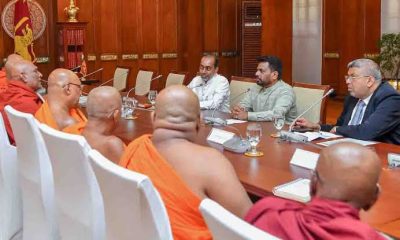
Malwathu Chapter issues statement on talks with President over Gnanasara Thera’s robes