
Midweek Review
Oslo pullout, new Geneva resolution and origins of terrorism (part 1)

” Norway will never forget how LTTE influenced the worst ever act of terrorism on its soil. Far right Norwegian Andres Breivik, 32, responsible for the July 22, 2011 massacre of 77 persons, mostly teenagers in two successive attacks in Norway was inspired by the LTTE. A few hours before, Breivik went on the rampage, he made reference to the LTTE’s eviction of the Muslim community from the Northern Province in Oct/Nov 1990, in his so-called manifesto released online. The following are the references (1) Pro-Sri Lanka (supports the deportation of all Muslims from Sri Lanka) (Page 1235) and (2) Fourth Generation War is normally characterized by a ‘stateless’ entity fighting a state or regime (the EUSSR). Fighting can be physically such as the Liberation Tigers of Tamil Eelam (LTTE) to use a modern example. (Page 1479). Perhaps, Sri Lanka should ask for an international inquiry. One of Sri Lanka’s foremost diplomats Jayantha Dhanapala appearing before the Lessons Learnt and Reconciliation Commission (LLRC) in 2010 stressed the accountability on the part of foreign governments. The then Mahinda Rajapaksa government probably blinded by unfathomable victory was not bothered. It only sought political advantage of the developments even at the expense of Sri Lanka.”
By Shamindra Ferdinando
Norway on Sept 09 announced that its diplomatic mission in Colombo will be closed at the end of July 2023. The Norwegian Embassy in Colombo declared that this would be among five diplomatic missions to be closed as part of the planned structural reforms in its network of diplomatic missions. The Embassy didn’t mention the other diplomatic missions facing closure.
Norway established a diplomatic mission here in 1996 during Chandrika Bandaranaike Kumaratunga’s presidency. The setting up of that mission was primarily to facilitate negotiations between Sri Lanka and the Liberation Tigers of Tamil Eelam (LTTE). The establishment of the Colombo mission took place in the wake of the military consolidating its position in the Jaffna peninsula. Jaffna town was brought under government control in early Dec 1995.
The signing of the one-sided Ceasefire Agreement (CFA) in Feb 2002 can be considered the highpoint of the Norwegian intervention here that allowed the LTTE to expand its sphere of influence. Who really drafted the CFA? Did the then top Norwegian negotiator Erik Solheim draft it as he claimed in an interview with the late Kumar Rupesinghe? Whatever the circumstances, the CFA certainly didn’t take into consideration concerns of the military.
However, the Norwegian Embassy made available the Norwegian Foreign Ministry press release that dealt with the proposed closure of some diplomatic missions. Accordingly, the diplomatic missions in Slovakia, Kosovo and Sri Lanka and the Embassy office in Madagascar and the Consulate General in Houston, Texas, are to be closed. It would be pertinent to mention that Norway established a diplomatic mission in Slovakia in Sept. 2004, just a year after Slovakia moved out of the Czechoslovakian Federation and in Kosovo four years later. NATO member Norway participated in large scale air offensive to drive out Serbian forces from Kosovo-Norway set up Embassy office in Madagascar in 2004 and the Houston ‘mission’ back in 1977.
The closure of the Norwegian Embassy in Colombo should be also examined against the backdrop of cash- strapped Sri Lanka closing down our missions in Norway and Iraq and the Consulate General in Sydney, Australia, early this year.
Norway has thrown its weight behind a new six-page draft resolution before the Geneva-based United Nations Human Rights Council, (UNHRC) handed in by the UK. The UK leads Sri Lanka Core Chairs and the resolution is widely regarded as the strongest since the successful conclusion of the war against the LTTE in May 2009.
A vote on this new resolution is due before the sessions end on October 7. Sessions commenced on Sept 12.
The resolution is co-sponsored by the United States, Canada, Germany, Malawi, Montenegro, and North Macedonia. Sri Lanka’s rejection of the latest resolution is irrelevant. Therefore, another heavy defeat at the UNHRC is quite possible. But, Sri Lanka conveniently failed so far to set the record straight in Geneva and at the United Nations General Assembly in New York. Successive governments allowed Geneva to dictate terms by failing to present Sri Lanka’s case. The incumbent government is no exception.
Oslo has announced the termination of its mission here over a decade after the eradication of the LTTE’s conventional military capability. Had the Western sinister project succeeded, Sri Lanka would have been divided on ethnic lines. The CFA allowed the LTTE freedom to operate in the Northern and Eastern Province as it did away with restrictions placed on Tiger armed cadres entering government-held areas. The Norwegian led Sri Lanka Monitoring Mission (SLMM) that was empowered to oversee the Ceasefire Agreement, continued to mollycoddle the LTTE in spite of a spate of blatant CFA violations by the Tigers.
In the wake of the then treacherous UNP government exposing the covert intelligence operation carried out by the Directorate of Military Intelligence (DMI) behind enemy lines, the LTTE went after its operatives with a vengeance. The Norwegians went to the extent of providing funding to the LTTE and its front organizations, much to the dismay of those who really believed in a genuine effort to bring peace.
The Norwegian funding continued even after the LTTE quit the negotiating table in late April 2003. There had never been a proper examination of the Norwegian intervention here though Norway funded the costly joint study undertaken by Gunnar Sorbo of the Chr. Michelsens Institute (CMI) and Jonathan Goodhand of the School of Oriental and African Studies (SOAS). Their report titled Pawns of Peace: Evaluation of Norwegian peace efforts in Sri Lanka 1997-2009, released in September 2011 made specific reference to the SLMM, having accessibility to best possible intelligence.
High profile Oslo project
According to the report, the SLMM received intelligence from both the North Atlantic Treaty Organization (NATO) and India’s premier intelligence agency, the Research and Analysis Wing (RAW).
Thanks to NATO and India, those running the peace process couldn’t have been unaware of the LTTE’s rapid preparations for war. Norway received NATO support as a member of the military alliance (Pawns of Peace: Evaluation of Norwegian peace efforts in Sri Lanka 1997-2009, page 100).
The Norwegian study quoted the then SLMM head as having said that RAW only reached them through informal channels, therefore they couldn’t be fully trusted. “They weren’t giving it to us to be nice. We would always ask ourselves why they want us to know this. Intelligence provided by NATO only confirmed what they already knew”, the SLMM chief was quoted as having said.
The RAW destabilized Sri Lanka to such an extent, beginning with the election of J.R. Jayewardene, because of his overt tilt to the West, Sri Lanka was compelled to transform its ceremonial army into a lethal fighting force.
But, those who had been pursuing hostile agenda against us in Geneva quite conveniently forget how major powers ruined Sri Lanka by sponsoring, particularly the LTTE terrorism, and also giving them a free hand. Can the so-called leader of the Core Group, the UK, absolve itself of the responsibility for promoting terrorism here? The UK allowed LTTE’s International Secretariat to propagate the war against a Commonwealth country from London, granted citizenship to the late Anton Balasingham who advised Prabhakaran on terror project and even allowed secret talks therein between the LTTE theoretician and top Norwegian diplomats in the wake of the then Foreign Minister Lakshman Kadirgamar’s assassination by the Tigers. The UK has also given refuge to his wife Adele despite her having nourished Tamil young girls to take up violence. She was photographed donning cyanide capsules around the necks of such girls as they passed out after training.
The LTTE assassinated Kadirgamar on Aug 12, 2005, while the CFA, supervised by Scandinavian countries, was in operation. On April 25, 2006, the LTTE almost succeeded in assassinating Lt. Gen. Sarath Fonseka at the Army headquarters. On Oct 01, 2006, the LTTE made an abortive bid to assassinate Defence Secretary Gotabaya Rajapaksa near Piththala junction, Kollupitiya. The Norwegians and Peace Co-Chairs comprising the US, Japan and the EU remained inactive. The LTTE continued to advance its project. The CFA didn’t prevent the LTTE from unloading ship loads of armaments or carrying out high profile assassinations.
The Norwegian role should be examined taking into consideration the Japanese involvement in the peace initiative.
Dr. John Gooneratne, who had been with the government Peace Secretariat from its inception in January 2002 to May 2006, explained serious shortcomings in the CFA over a year after the conclusion of the conflict in May 2009. Appearing before the Lessons Learnt and Reconciliation Commission (LLRC) on September 15, 2010, Dr. Gooneratne revealed that four key matters proposed by the government weren’t included in the CFA. (A) There had been no reference to the requirement to use the CFA to pave the way for talks to find a negotiated settlement. (B) Specific reference to the prohibition of unlawful importation of arms, ammunition and equipment was not included. (C) Although the LTTE was allowed to engage in ‘political work’ in government controlled areas, other political parties weren’t given access to areas under the LTTE control (D) Forcible conscription of personnel to the LTTE’s fighting cadre, too, was not added to the list of prohibited activities.
Dr. Gooneratne, a veteran career diplomat, faulted the then UNP government as well as the Norwegians for being hasty in their approach. Dr. Gooneratne said: “What lessons can we learn from this experience? Firstly, negotiating on such security and military matters should have been a more inclusive format than by just the party in power. Secondly, in negotiating documents, such as the CFA, thoroughness should be the standard, and not just the speed.”
The CFA created an environment that allowed the LTTE to exploit the situation. Defence Secretary General Kamal Gunaratne in his book ‘Road to Nanthikadal’ launched in 2016 dealt with the CFA and how the LTTE abused and misused it. Sri Lanka’s Permanent Representative in Geneva, former The Island columnist and prolific writer C.A. Chandraprema, in his book ‘Gota’s War’, too, dealt with the Norwegian role here. But, those who really desired to know about the Norwegian project should definitely peruse ‘Peaceful Intervention in Intra-State Conflicts: Norwegian Involvement in the Sri Lankan Peace Process.’
Career diplomat Dr. Chanaka Thalpahewa had dared to go the whole hog and lucidly explain the Oslo initiative harmful to Sri Lanka.
The Norwegians had been careless, extremely reckless. There cannot be a better example than importing radio equipment in agreement with the then government that bent backwards to appease the LTTE. The then Norwegian Ambassador Jon Westborg earned the wrath of some Opposition political parties as well as Sinhala nationalist groups for directly playing a role. The political leadership tried to underscore the importation of state-of-the-art radio equipment by the Norwegian Embassy in agreement with the Peace Secretariat though all knew it was a political decision. CFA time Defence Secretary and one of those who negotiated with the LTTE Austin Fernando’s ‘My Belly is White’ launched in January 2008 at the height of the war, too, is a must read.
UNHRC, GTF silent on India’s accountability
The Island in its Sept 19, 2022 edition (both print and online) carried a statement issued by the UK-based Global Tamil Forum (GTF). The TNA’s partner called for a strong new resolution on Sri Lanka that reflected the recommendations of the High Commissioner’s Report. Having demanded punitive action against Sri Lanka, the GTF thanked India for backing their cause at the UNHRC. The GTF and the UNHRC owed an explanation whether they wanted to leave India out of the proposed investigations.
Can accountability pertaining to the Sri Lanka conflict be examined by turning a blind eye to Indian intervention here, ranging from sponsoring of terrorist groups, atrocities perpetrated by the Indian Army that prompted the LTTE to assassinate former Indian PM Rajiv Gandhi and the sea borne raid on the Maldives carried out by Indian trained PLOTE terrorists and the killing of TULF’s Jaffna MPs by TELO at the behest of RAW?
The UN Human Rights High Commissioner’s report called on Sri Lanka to ‘re-launch a comprehensive, victim-centred strategy on Transitional Justice and accountability, to establish credible truth seeking mechanism and ad hoc special court’. Obviously, UNHRC and GTF are in a dilemma. India lost well over 1,000 officers and men here while approximately 3,000 others received injuries, some maimed for life.
Instead of opposing Geneva led investigations, Sri Lanka should request for a wider probe to establish how foreign support allowed the LTTE to wage war for nearly three decades and to ascertain the origins of terrorism.
The incumbent government should publicly ask those demanding accountability on Sri Lanka’s part to explain why the predominantly Tamil speaking northern and eastern electorates overwhelmingly voted for General Sarath Fonseka at the 2010 presidential poll after repeatedly accusing he and his Army of committing war crimes and how the TNA should be dealt with for recognizing the LTTE in late 2001 as the sole representatives of the Tamil speaking people. Those who are skeptical about alleged TNA-LTTE links should peruse the European Union Election Observation Mission report on the April 2004 general election. The EU explained how the TNA secured 22 seats at that poll with the direct help from the LTTE by stuffing ballot boxes in areas controlled by it. For some strange reason, Sri Lanka never bothered to raise these issues thereby allowed those pursuing extremely hostile agenda to humiliate the country.
Should the TNA be accountable for atrocities committed by the LTTE after their recognition of the organization as the sole representative of the Tamil speaking people? Perhaps, the TNA and the very vociferous Tamil Diaspora should be asked to prove that they at least requested the LTTE not to take cover behind civilians and hold them as a human shield after the combined armed forces pushed the LTTE fighting forces across the A9 to the Mullaitivu coast by April- May 2009.
The role of the Sri Lankan Church, too, should be probed. There cannot be any justification in leaving the Church out if Geneva wants to establish the truth.
Can the proposed Truth Seeking Mechanism refrain from inquiring into the deaths of Sri Lankan Tamils in the hands of Indian law enforcement authorities in the aftermath of Rajiv Gandhi’s assassination? How many died? What were their identities? Do they still remain in the missing persons lists? Perhaps, the female LTTE cadre who committed suicide in the process of blowing up Gandhi may still be categorized as a missing person. Would it be possible to identify those PLOTE cadres killed by the Indian Navy on the high seas as they fled the Maldives in early Nov 1989 following the abortive bid to assassinate the then President of that island nation?
However, the writer has no dispute with the GTF’s call for thorough investigation into corruption accusations and action against all those responsible regardless of their standing in society.
Foreign passport holders
For want of Western governments’ support, thousands of people, categorized as dead/missing, live abroad under assumed identities. Sri Lanka never succeeded in securing their cooperation as they hid the real identities of thousands of Sri Lankans issued with new passports. How many Sri Lankans have received foreign passports over the past 30 years, particularly since 2009? The missing persons issue must be examined taking into consideration the rapid expansion of the Tamil Diaspora and their capacity to influence major political parties in Western countries, where they now reside.
Take the case of newly elected Norwegian lawmaker of Sri Lankan origin Khamshajiny (Kamzy) Gunaratnam, who reached Norway in 1991. Her family fled Sri Lanka in the wake of the Indian Army withdrawal and was lucky to end up in Norway. India ended itse military mission in March 1990 with then President Ranasinghe Premadasa showing them the door. The LTTE assassinated Gandhi just over a year later. Another high profile case is the ex-LTTE terrorist Antonythasan Jesuthasan receiving an opportunity to play the lead role in notable French Director Jacques Audiard’s award-winning Dheepan (2015). Jesuthasan, too, may be on some missing persons list.
The much-touted Geneva investigation should ascertain the actual number of Sri Lankans living abroad under assumed names. No less a person than Ranil Wickremesinghe when he served as the Premier of a previous government denied the state holding any Tamils in any secret location other than those held officially in jails.


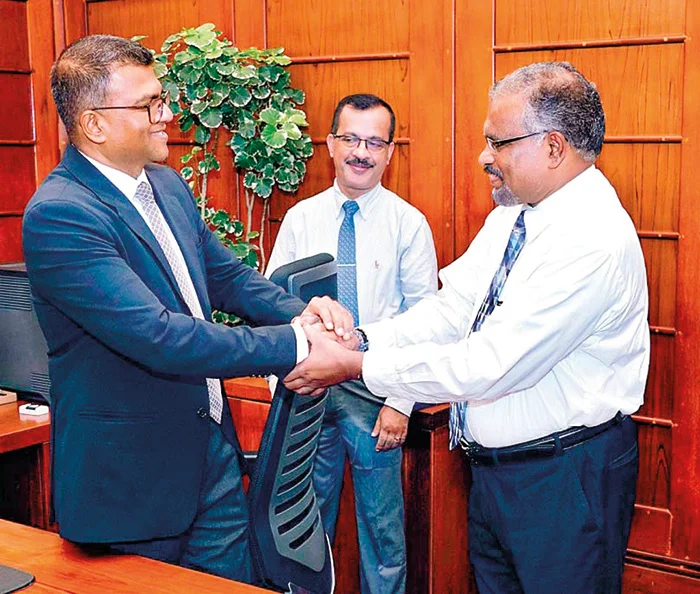
The Opposition is pressing for a one-day debate on USD 2.5 mn Treasury theft, which is more like a daylight robbery that had been kept under wraps by Treasury mandarins till ‘Free Lawyers’ made it public. However, the government is strongly opposed to the Opposition proposal. The Opposition is seeking consensus among
different parties to intensify the campaign against the government, struggling to cope up with a spate of controversies. Against the backdrop of the devastating debate on the coal scam, the NPP seems reluctant to face another over the theft of Treasury funds.
By Shamindra Ferdinando
USD 2.5 mn brazen heist at the Treasury several months ago and the bigwigs there obviously dragging their feet over the matter till it was brought to light recently, thanks to the Free Lawyers movement, which has dampened the NPP’s enthusiasm for May Day. The Treasury fiasco humiliated the cocky NPP leadership against the backdrop of damning report issued by the National Audit Office (NAO) that found fault with the government for awarding the coal tender for 2025/2026 period to Trident Champhar Limited of India in violation of tender procedures. The NAO emphasised that the Indian company shouldn’t have even been considered for the tender.
Even after the exposure of the scandalous handling of the coal tender, the NPP, in spite of some rumblings within the party, remained confident of overcoming the growing accusations regarding governance issues. But, the sudden revelation of the loss suffered by the Treasury, and pathetic efforts made by the NPP to suppress the truth, has caused irreparable harm to the ruling party. The arrogant NPP will have to use May Day to defend the government. Instead of preaching to the masses ad nauseum the corruption allegations against previous administrations, the NPP would have to explain such massive failures/corruption, particularly the loss of USD 2.5 mn.
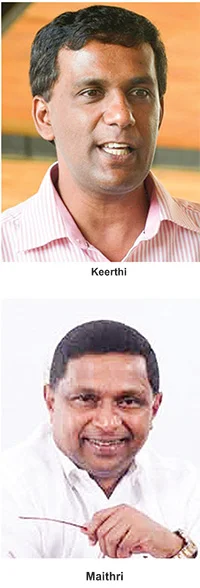
There hadn’t been a previous instance of such an incident at the Treasury. The NPP will have to answer questions posed by ‘Free Lawyers,’ a civil society group that first raised the Treasury issue. On behalf of ‘Free Lawyers,’ its President Maithri Gunaratne, PC, former Governor of several provinces Rajith Keerthi Tennakoon, and Attorney-at-Law Shiral Lakthikala, targeted the government over the unprecedented Treasury heist. The Opposition, too, censured the NPP, with SJB leader Sajith Premadasa, MP, Chairman of Public Finance Committee (CoPF) Dr. Harsha de Silva, MP, and United Republican Front (URF) taking the lead.
The NPP’s excuses, based on claimed raids carried out by hacker/hackers targeting the Treasury, are untenable. The NPP’s position cannot be defended or supported against growing criticism. The coal scam and Treasury fiasco dominated social media, with the Opposition, as well as ordinary citizens, having a field day at the expense of the NPP, a political party that accused its opponents of waste, corruption, irregularities and mismanagement. Its successful propaganda campaigns, at the presidential and parliamentary polls, in September and November, 2024, respectively, were centered on fighting corruption.
Their anti-corruption platform appealed to the people for obvious reasons. Against the backdrop of bankruptcy, declared in May, 2022, after failing to meet debt commitments, the electorate rallied around the NPP that thrived on waste, corruption, irregularities and mismanagement, perpetrated by previous governments. Having bagged the executive presidency in September, 2024, the NPP assured the electorate that the Parliament would be cleansed of evils at the general election. President Anura Kumara Dissanayake declared that the people have been vested with the responsibility of cleansing the Parliament. Dissanayake went a step further when he addressed a public gathering at the 18th mile post on the Negombo-Colombo road. The NPP leader, who also leads the JVP, asserted that there was no need for an Opposition in Parliament and the House should be filled with NPPers.
Dissanayake based his assertion essentially on two failed No-Confidence Motions (NCMs) moved against Ravi Karunanayake and Keheliya Rambukwella in 2016 and 2023, respectively. The NPP/JVP leader found fault with Yahapalanaya and the Wickremesinghe-Rajapaksa government for protecting the two wrongdoers, hence the call to cleanse Parliament.
The results of the parliamentary election proved that the electorate responded very favourably to Dissanayake’s call. Of the 225-seat Parliament, the NPP secured 159 seats, including 18 National List slots. Having accused previous governments of shielding wrongdoers, Dissanayake easily directed the NPP’s steamroller parliamentary group to defeat the NCM moved against Energy Minister Punyakumara Dissanayake (National List) on 10 April, just a few days after the NAO report exposed the coal scam.
First ex-MP as Treasury Secy.
If its own hands are clean, there is no doubt that the NPP now deeply regrets the appointment of ex-NPP National List MP Harshana Suriyapperuma as the Secretary to the Treasury and the Finance Ministry. That appointment was made in June 2025 to fill the vacancy created by the retirement of Mahinda Siriwardana who, along with Governor of the Central Bank Dr. Nandalal Weerasinghe, played a significant role in the country’s post-Aragalaya recovery programme.
Suriyapperuma, who had served as Deputy Minister of Finance and Planning for just seven months, before being appointed the Treasury Secretary/Finance Ministry Secretary, is under heavy fire for suppressing the truth. No less a person than CoPF Chairman Dr. de Silva publicly accused Suriyapperuma of trying to undermine his committee. The SJB has demanded Suriyapperuma’s immediate resignation. Dr. Anil Jayantha succeeded as Deputy Minister of Finance and Planning.
Those who inquired into the crisis-hit Treasury are of the belief that 53-year-old Suriyapperuma lacked the much required experience to fill the shoes of Mahinda Siriwardana. Perhaps, the breach at the Treasury could have been averted if an outsider was not brought in place of Siriwardena. The recent reportage of the incident revealed that Suriyapperuma had been aware of the breach and sought to avoid appearing before the CoPF. The NPP could have responded to the developing situation differently if an ex-MP hadn’t been entrusted with the task of steering the Treasury/Finance Ministry. To make matters worse, President Dissanayake holds the Finance portfolio.
Although the government declared that the theft of USD 2.5 mn had been reported to the Criminal Investigation Department (CID) after initial detection made in January this year, controversy surrounds the failure on the part of law enforcement authorities to bring it to the notice of the courts. Maithri Gunaratne, appearing in Hiru last Saturday (25), questioned why the police failed to inform the relevant Magistrate if the government lodged a complaint in that regard.
Australia has confirmed irregularities in payments owed to their government. Regardless of NPP efforts to blame it on hacker/hackers, the truth is clear. Payments have been made to an account that hadn’t been in the original agreement between the governments of Sri Lanka and Australia. That is the undeniable truth that the NPP cannot suppress by propaganda.
The NPP should be ashamed that such a fraud had been perpetrated on a country still struggling to cope up with the economic destruction caused by the UNP- and the SLFP-led governments with the help of “mission impossible” type roles played by outside interests, especially during Gotabaya Rajapaksa’s tenure using the JVP/Aragalaya.
The world knows how the UNP perpetrated the Treasury bond scams with the direct involvement of the then Governor of the Central Bank Arjuna Mahendran, in February 2015 and March 2016. Regardless of that intolerable scam, the UNP made a desperate attempt to retain the services of the Singaporean as the Governor of the Central Bank. Party leader and the then Prime Minister Ranil Wickremesinghe demanded the re-appointment of Mahendran. That despicable move had to be dropped due to massive Opposition protests and growing public discontent over the Treasury bond scams.
The first Treasury bond scam carried out on 27 February, 2015 caused a direct loss of approximately Rs. 2 billion. On the instructions of Mahendran, the Treasury suddenly and arbitrarily changed the process of issuing Treasury Bonds. According to media reports at that time, higher interest payments, over the next 30 years, caused a further loss of around Rs. 145 billion.
Then Mahendran struck again. Caused further direct losses of more than Rs. 4 billion to the government through the fraudulent increase in interest rates as a result of the Treasury Bond issues on 27th March, 2016 ,and 29th March, 2016, in order to provide an undue advantage to connected primary dealers by indulging in further pre-meditated bond scams.
NPP on back foot
 The ruling party put on a brave face with lawmakers and various others trying to play down the incident at the Treasury. Some pathetically tried to compare various accusations directed at the Rajapaksas with the incident at the Treasury which they conveniently blamed on hacker/hackers.
The NPP is facing an explosive mixture of issues. Both the coal and Treasury scams have brought immense pressure on the national economy and caused automatic deterioration. The resignation of Punyakumara aka Kumara Jayakody over the coal scam indicated that defeating the NCM moved against him was a strategic political blunder. Had the NPP asked the tainted first time Minister to step down and appoint a Presidential Commission to go into the coal scam, the NPP could have averted a major disaster. However, the Energy Minister and the Energy Secretary Udayanga Hemapala had to resign before the Parliament took up the NCM. Had the top NPP leadership bothered to peruse the executive summary of the NAO presented to Parliament on 7 April, the Party wouldn’t have tried to defend the minister.
Having championed a corruption-free political party system and then won both the presidential and parliamentary polls on that platform, the NPP executed the shocking move to move 323 containers out of the Colombo Port, in January 2025, without even any cursory checks. Those who perpetrated that operation used continuing port congestion as an excuse to clear red-flagged containers without mandatory physical checking. The NPP recently thwarted a bid by Opposition lawmakers, representing a parliamentary committee inquiring into the illegal release of containers, to summon President Dissanayake.
That committee, headed by Justice Minister Attorney-at-Law Harshana Nanayakkara, owed an explanation as to why President Dissanayake, in his capacity as the Finance Minister, shouldn’t appear before a House committee. President Dissanayake very often addresses Parliament on crucial issues. As the Minister in charge of Finance, the President should offer an explanation regarding the high profile container issue that tarnished the NPP’s image.
Three major issues in hand, namely the release of 323 containers, coal scam and theft at the Treasury, regardless of what various apologists say on mainstream and social media, have caused irrevocable damage to the party, let alone escapades involving the likes of Speaker Jagath Wickramaratne, Minister Lal Kantha, etc. The impact on the NPP can be ascertained only at an election. With the public increasingly aware of the growing accusations against it, the ruling party will do whatever possible to put off long delayed Provincial Council elections. Facing the electorate against deepening discontent among the public seems to be a frightening situation. It would be interesting to observe how a House committee, headed by Foreign Minister Vijitha Herath, appointed to explore ways and means to conduct Provincial Council polls, address the issue at hand.
When compared with the three major issues, the resignation of Asoka Ranwala, as the Speaker, in December, 2024, over his failure to produce the much-touted educational qualifications, seems unnecessary. Of course, Ranwala’s case attracted tremendous public attention at that time as the public really believed the NPP wouldn’t deceive them. Ranwala’s lie shocked the public. NPP theoretician Prof. Ranjith Nirmal Dewasiri had no qualms in publicly attacking Ranwala in the wake of the NPP defending the Speaker. But, subsequent NPP actions revealed massive manipulations that shamed the first post-Aragalaya government.
Having accused Ranil Wickremesinghe of squandering as much as Rs 16 mn to join his wife Prof. Maithree in the UK in September, 2023, the NPP has ended up facing far more serious accusations. The incident at the Treasury should be sufficient for the Opposition to move NCM against the government. Of course, the NPP got the numbers in Parliament to easily defeat the NCM but the consequences would be devastating. Those who still talk of recovering the missing USD 2.5 mn must be living in a dreamland. The UNP is labelled with Treasury bond scams (2015 and 2016) and the SLPP faulted with tax cuts (2019) and sugar tax scam (2020). The NPP will have to live with the coal scam and Treasury theft. The NPP will no longer be able to parade on political platforms as paragons of virtue. It would be pertinent to mention that the Presidential Commission appointed to probe the procurement of coal, since 2009, would be able to produce a report to meet the NPP’s expectations. All indications point to that and 2026 is going to be far more challenging, both in and outside Parliament, than the previous year.
NDB fraud
Examined together, the massive fraud at the National Development Bank (NDB), perpetrated during the 2024-2026 period, and the Treasury incident, they underscore the vulnerability of the entire banking system. The 13.2 bn NDB fraud and theft of USD 2.5 mn from the Treasury exposed the regulator, the Central Bank of Sri Lanka, in respect of the NDB. The situation at the NDB cannot be examined without taking into consideration that Ernst & Young is the external auditors of the NDB and its Managing Partner Duminda Hulangamuwa functions as Senior Economic Adviser to President Dissanayake. People haven’t forgotten that Hulangamuwa had been mentioned as the possible successor of Mahinda Siriwardena before the NPP brought in Suriyapperuma. The Central Bank and Securities Exchange Commission (SEC) come under the purview of the Finance Ministry now embroiled in the expanding Treasury fiasco.
The Board of Directors at the NDB consists of Sriyan Cooray (Chairman), Kelum Edirisinghe (Director / Chief Executive Officer (Executive), Bernard Sinniah (Director /Non-Independent), Sujeewa Mudalige (Director /Independent), Kushan D’Alwis (Director/Independent), Kasturi Chellaraja (Director/Independent), Shweta Pandey (Director /Independent), Hasitha Premaratne (Director/Independent), Sanjaya Mohottala (Director (Non-Independent) and Shanil Fernando Director (Independent).
The issue at hand is how such a fraud went unnoticed for a considerable period of time and whether the top management simply ignored warning signs and the failure on the part of the regulator to intervene. Those who have read Mahinda Siriwardana’s ‘Sri Lanka’s Economic Revival: Reflections on the Journey from Crisis to Recovery’ would know the circumstances leading to the 2022 economic collapse. Soft spoken Siriwardana meticulously discussed how the then Central Bank leadership as well as the so-called economic leadership of the Pohottuwa party deliberately deceived President Gotabaya Rajapaksa. Siriwardena’s narrative is explosive. The book, launched before his retirement, with the participation of President Dissanayake, underscored the responsibility on the part of the political leadership and those running the banking system. Obviously Siriwardena’s work had no impact on the current dispensation as well as the top banking management.
The Opposition sees an apparent opportunity to heap pressure on the NPP as it contemplates counter measures. Their challenge is how to take remedial measures without jeopardizing the government. The IMF declaration that it is closely watching the theft of USD 2.5 mn from the Treasury must have added pressure on the government, ripped apart by the situation at the Treasury. Let us hope the government and the Opposition reach consensus on ways and means to improve financial discipline. Overall, the Parliament cannot absolve itself of the responsibility for enactment of laws and ensuring financial discipline and the fact that Sri Lanka needs to start repayment of debt in 2028.
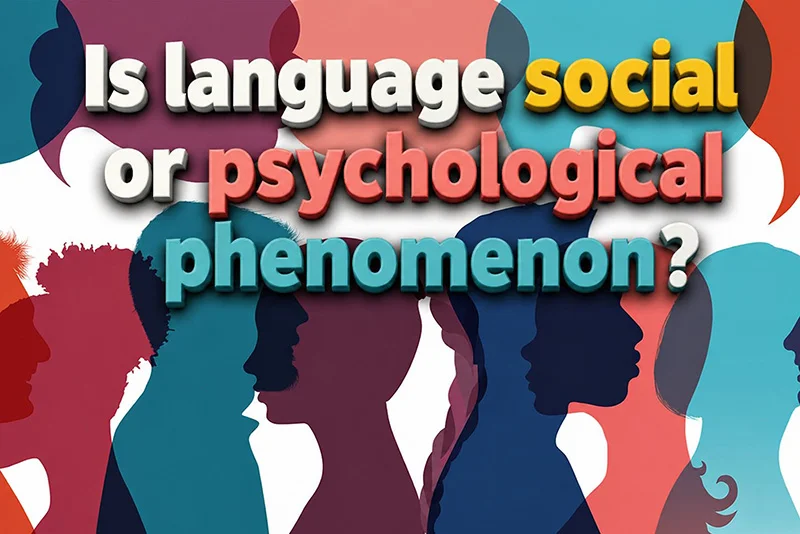
This essay was presented at The Philosophy Group of the University of London about 20 years ago. The thought provoking essay published in The Island on 22 April by Usvwatte-aratchi- Some languages confine you; some languages free you prompted me to try to get this essay published if possible. It may help the readers to further their ideas about the importance of usage of language.
Personally, I have firsthand experience in this subject. I was exposed to two different cultures and two languages. In my formative years I was brought up in a certain culture and spoke the language pertaining to that culture/language (Sinhalese -Sri Lanka). I spent all my studying and working life (55 years) using a different language in a different culture (English -England). I must mention that this was not recently. It was the early 1960’s. I can claim that I have enough knowledge and experience to justify this essay topic. In this essay I shall be investigating some of the social aspects of language with the aid of some opinions put forward by some philosophers. Then I shall be making an attempt to see what psychology has to offer before I draw my own conclusions. I am treating social aspects as part and parcel of the culture. In my view these are inseparable entities, unless one chooses to forget his or her cultural upbringing to suit a particular society.
Adoption of different culture
Socially, learning a different language and adopting a different culture is quite possible. In this case what dominates is one’s attitude or the circumstances. Attitude is psychological. I am convinced that circumstances may lead to a change of attitudes. Having said that, we must not forget that there are individuals who have not taken the trouble to learn the language of the culture in which they live. This has created a lot of socio-psychological problems in the community in which they live. It is obvious that the problem is one of communication. The main tool of communication is language. Philosophers and psychologists have spent many years investigating how language helps us to communicate and also how it may lead us to misunderstand our own fellow human beings. Understanding others (family members, members of the community in which we live, and the strangers we meet) is one of the most important aspects of living.
An awareness of the problem of language goes back to the early Greek philosophers. Parmenides gave us the first example of an argument from language to the world, saying that if we speak of a thing it must exist, since we speak of a thing at various times, it must continue to exist in a particular form. It is recently that language itself has come to be studied in a systematic way. The two landmarks in this respect were the development of Linguistics and the philosophy of language in the 20th century. The great philosopher Bertrand Russell (1872-1970) has admitted that until he became a middle-aged man, he did not think about language per se, but regarded it as ‘transparent’. I am sure this is true with most of us although we are not of Russell’s caliber when it comes to philosophy. And one may not have to wait until one reaches one’s middle age.
Linguistics and philosophy of language
It will help us if we understand the difference between Linguistics and philosophy of Language. What linguists discover may be applied to philosophy, sociology, psychology, anthropology or physiology. But as a discipline of study, it remains independent of them. The philosophy of language is different. One of the modern philosophers John Searle (1932-2025) thought, by contrast to linguistics, philosophy tries to solve philosophical problems by analyzing the ordinary use, meaning and relations of words in a particular language. Searle goes on to say that language is crucial to understand human experience. In my opinion this is a very valid comment. At a very practical level we spend a lot of time sharing our experiences. Verbal communication is vital in this area. According to Canadian philosopher Ian Hacking(1936-2023) the influence of language on philosophy has been profound and almost unrecognized. He indicates, if we are not to be misled by this influence, it is necessary to become conscious of it, and to ask ourselves deliberately how far it is legitimate.
It is appropriate to bring in Ludwig Wittgenstein(1889-1951) at this point. He brought in the subject predicate theory of language. For example, if we say “John is king”. Where John is the subject and king is the predicate. Here existence requires substance. For Aristotle, forms do not exist independently of things—every form is the form of something. A “substantial” form is a kind that is attributed to a thing, without which that thing would be of a different kind or would cease to exist altogether. Wittgenstein supports Saint Augustine’s view that words are names of objects and that combinations of words have the sole function of describing reality. For example, if we point at a certain object, say a table and try to say to a child “this is a table”, the child will be confused as to what we are pointing at. Is it the colour, the tabletop or one or more of its legs This is called the ostensive definition method of teaching. Ostensive definitions lead to a variety of interpretations. The child may understand a particular case of this definition but there is no guarantee that she will be able to make a transition from one case to others like it.
Plato’s theory
J G Herder (1744-1803) pointed out the object to which we make reference may be defined by numerous different terms. How then can we justify direct, one to one correspondence-either of so many to one, or of one to so many? How are we going to deal with situations where a term describes something non-existent or only possible? Plato’s “Forms” theory cannot be applied here as anything that we can speak of already exists as a Form. Critics of this theory ask the question: “how can the world be crowded with so many imaginary objects?” We use words to describe and define. Is there any room for slang language? This comes in handy in our day to day social communication. Ostensive definition raises the questions that require a constant selection of what counts as relevant. In Aldous Huxley’s novel Chrome Yellow, the character Old Rowley is confused as to: Does ‘pig’ refer to the quality of having a curly tail? Or standing in rows to eat? Or being pink skinned and fat? Or wearing no clothes? When we use the word “piggishness” is it something inherent to pigs, or simply, a matter of how we choose to describe them?
How can we relate the above ideas and theories of language to our daily living? Daily living is a psychosocial activity.
Perceptions
The nature of language reflects the nature of our perceptions, and these are far from straight forward. Franz Brentano (1838-1917) developed his theory of intentionality: that every mental phenomenon has a relation of direction to its object, i.e. perceptions, desires, imagination etc. are related to what is perceived, desired or imagined. I presume this can be applied to any language irrespective of the culture (our social conditioning). Say for instance the images of art and the writings are given the ability to represent objects by imposing the intentionality on the object. Thus, when we assert that we see or believe something, we impose, by convention and intention, (that is true if and only if it is the case) on the statement, and these conditions are not contained intrinsically in the sounds that make it up, but in our perception of belief about the fact. I begin to wonder how this can be applied to non-physical and unseen situations. Sometimes our feelings and attitudes are unknown to the observer. A person may shout because he is angry but you cannot see the anger, only its physical expression. We will not be able to see the prior event that has led to the anger and the utterance. This shows that there is a limit to how much is revealed simply by observing a word and its context; there is often more than that can be said.
How can we account for unexpected linguistic behaviour? This has both social and psychological implications.
For a long time behavioural theorists believed that every development of the human being was controlled by environmental and social factors. This is similar to an ostensive explanation of meaning. It implied that everything was learnt through training and association. But Noam Chomsky (b.1928) was not happy with this idea. He thought language is a complex phenomenon and which is not taught bit by bit or systematically to infants. It is successfully acquired by (almost) everybody. From my own experience it is true to say that the difficulty in learning a second language is a very different process from that experienced with the first language. Chomsky argued that the first language is not in fact learned, but rather acquired through exposure to a particular language. According to him all languages share the same basic structure, and he called this “deep structure”, which may be expressed as surface structures through a process called ‘transformation’. Chomsky’s theory helps us to assume a universal system of grammar, which may generate an infinite number of particular sentences within a language. This explains how we may create sentences within a language we have never encountered before from a limited set of grammatical rules and this appears to be a rational scientific approach.
Social or psychological phenomenon
The argument/discussion whether language is a social or a psychological phenomenon requires much more investigation than this essay warrants. I have briefly brought in various philosophers’ work, which are invaluable to this topic in terms of philosophy of language. In conclusion I am tempted to state my own experiences as a bi-lingual person. When it comes to my first language, which is Sinhalese I don’t think I learned it. I heard my parents speaking it and I picked up a few words and I constructed my own sentences and gradually became proficient by accumulating more words. Of course, the proper grammatical use of even my own language was taught in school and not by my parents. Learning my second language i.e. English took a different form. I was taught to speak, read, and write English at school and I had to work harder at this than my first language, because my English was confined to the classroom situation only, i. e. I learnt English in a non- English environment. First language came naturally and the second one I had to learn to fit into the social and the education structure that prevailed at that time. Compulsion can motivate us to learn!I had no choice but to adopt myself culturally and linguistically as a university student in England and then as a university teacher in England. Apart from the native English students, I have taught students from different countries. European, African and Asian. I had the opportunity to intermingle with them and learned various different cultural and linguistic aspects. After almost a half a century in England, I am back to my own culture (language, customs, food etc) where I was born and started my life. I am still proficient in my own language Sinhalese. No conscious effort needed.
After all the foregoing arguments and philosophy that I have put forward, my own conclusion is Chomsky’s theories are more plausible to me than other theories on this issue. It is difficult to be exact and say whether language is a social or psychological phenomenon. From the above arguments, we can see that culture and language of a given society are tightly bound. This leads us to psychological adjustments in order to fit into a society. Who can deny that even the philosophers mentioned above have not been subjected to their own cultural environment?
by Prof. Sampath
Anson Fernando
Formerly University of
The Arts London
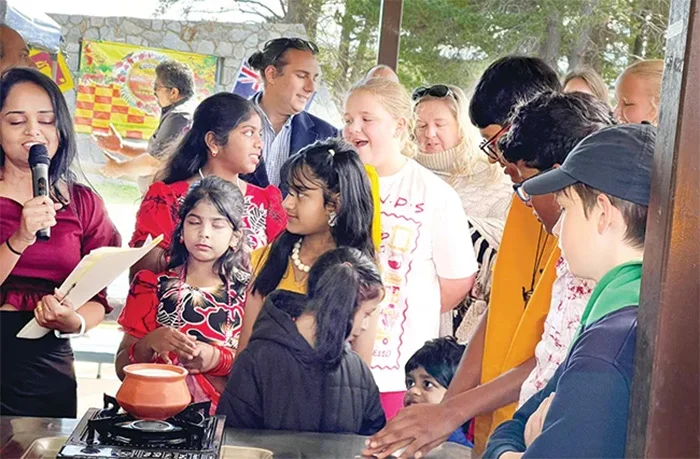
Thanks to community centres,
Taking root and flowering Down-Under,
Sri Lankans have finally given shape,
To a truly National New Year,
Where communities meet and greet,
Partake of the same bubbly pot of rice,
Spread cheer under the same banner,
And end the ‘Us’ and the ‘Other’ fixation.
By Lynn Ockersz

‘Dates have the highest sugar content to fight Coronavirus’

Sunday Island 27 December – Headlines

#SundayIsland 17th December – Headlines

Sunday Island – 28th March

Sunday Island Headlines – 21 March

Sunday Island – 21st February – Headlines
-
 News4 days ago
Treasury chief’s citizenship details sought from Australia
-

 News6 days ago
BIA drug bust: 25 monks including three masterminds arrested
-

 News3 days ago
Rooftop Solar at Crossroads as Sri Lanka Shifts to Distributed Energy Future
-

 News6 days ago
Banks alert customers to phishing attacks
-
 News5 days ago
Govt. assures UN of readiness to introduce ‘vetting process’ for troops on overseas missions
-
 News2 days ago
“Three-in-one blood pressure pill can significantly reduce risk of recurrent strokes”
-

 Business5 days ago
ADB-backed grid upgrade tender signals next phase of Sri Lanka’s energy transition
-

 News4 days ago
Central Province one before last in AL results