
News
Opposition consensus on root cause of issues affecting Sri Lanka


General Secretaries of the Samagi Jana Balawegaya (SJB), Sri Lanka Freedom Party (SLFP), United National Party (UNP) and the spokesperson of the Tamil National Alliance (TNA) have identified the 20th Amendment to the Constitution as the root cause of the issues faced by the country, during a webinar organised by the National Movement for Social Justice (NMSJ) recently.
The NMSJ has in a media statement, said that all political forces must work together to fulfil aspirations of the people.
The NMSJ has said that all parties agreed that the 20th Amendment to the Constitution is the root cause of the issues faced by the country. It has there been proposed to repeal the 20th Amendment and to assign full powers to the Parliament to resolve many of the issues the country is faced with.
The NMSJ says: “Speaking at the webinar, SLFP General Secretary Dayasiri Jayasekera said that the government has clearly failed and as a result, the country has also suffered dire consequences. He said that all political forces in the country should arrive at a national consensus which is why they requested to convene an All-Party Conference.
“We presented 22 proposals to the President to get the country out of this crisis. Also, the leaders of 11 political parties affiliated to the government came together to discuss this. The whole country knows what happened after that. Two ministers were removed from their ministerial posts. However, the President decided to convene an All-Party Conference because he thought it would be possible to resolve the issues with the assistance of the SLFP in such a situation. However, we do not think so. The Governor of the Central Bank made a political statement at that conference which was ill advised. That is why an argument arose with Ranil Wickremesinghe. That should not be the case. Therefore, the time has come for us to work together. We have no issues with political parties pursuing their own agendas but if we are to come out of this crisis unscathed, we must have a national consensus.”
“TNA spokesperson parliamentarian M.A. Sumanthiran said that Sri Lanka must seek assistance from experts if we are to find solutions to end the crisis. Considering the depth of the crisis, the TNA is prepared to extend its full support to all endeavours that aim to resolve the crisis.
“That is why we attended the All-Party Conference. We stressed that the parliament should have full control over public finance. We can have a national consensus only if that happens,” he said.
“SJB General Secretary Ranjith Manduma Bandara said the country is undergoing the worst crisis in recent history. Commenting on why the SJB abstained from participating at the All-Party Conference, he said that the lack of consensus within the government compelled the party to boycott the conference.
“If the government is on the same page, then we can share our views. We do not stand by the government. We stand by the people and the country. We will work with all forces to arrive at a common programme. The parliament should take the lead in this. However, the government led by the President seems to bypass the Parliament. They do not inform the House of international agreements they enter into. They act in an arbitrary manner while trying to suppress opposition activists. In this backdrop, how do you expect us to work the government?
“At the same time, we will never hesitate to work with all political forces not associated with the government today. As such, we are prepared to come into a common agreement with all parties to resolve the crisis,” Madduma Bandara said.
“General Secretary of the United National Party Palitha Ranga Bandara stated that the need of the hour was to unite all potent forces to reach a common consensus to save the country from the present crisis.
“The government is conducting affairs in an arbitrary manner. The people of the country are suffering the most as a result. That is why we participated in the All-Party Conference and tried to show what needs to be done for the country. But even there, they acted in a very arbitrary manner. This was evident from the responses from the government. Our position is that all should unite to save the country from this crisis. We have always called for a common consensus. The first move should be to allow the Parliament to have full control over public finance.”
“Commenting on the crisis, the Leader of the 43 Brigade parliamentarian Patali Champika Ranawaka stressed that although it is not difficult to overthrow this government today, a mere change of government alone will not provide solutions to the crisis. He also said that all potent forces in the country should move towards a common programme with a clear vision.
“We have to act responsibly within a democratic framework to end the Rajapaksa family rule. We must move towards a common programme that unites all political leaders except the Rajapaksa family. If we fail to do so, this country will inevitably face catastrophic consequences.”
“The Chairman of the National Movement for Social Justice Karu Jayasuriya stressed that Sri Lanka could overcome this crisis. Pointing out that India too had faced a similar crisis, he noted that India was able to resolve it through collective and inclusive leadership.
“We too must tread on a similar path. The Parliament should bear the main responsibility in this regard. We are in such a situation because the government bypassed the Parliament in the decision making process. Therefore, the aim of all political forces in this country should be to stop the concentration of power on a single individual and return back to parliamentary traditions. We need a common consensus on a clear programme to resolve the crisis,” the former Speaker said.
“Senior journalist Victor Ivan said the crisis the country was facing today is not limited to the economy alone. While stressing that the crisis was a “serious blow to the economy”, he said that it was only a part of the larger socio-political crisis in the country. He also warned of serious consequences if we failed to find answers through a clear programme.
“The government has failed to state their stance on the current crisis or how they see it. Furthermore, opposition parties have also not presented their plan individually or collectively. However, only the government can provide solutions to this crisis. If the opposition parties want to execute that task, they will have to get into power. However, constitutional restraints have limited the possibility of such a move from taking place.
“This crisis was created by the political system in our country. Therefore, there is no simple answer to this crisis without a comprehensive political reform process. For that, it is vital to reach an agreement between all political parties in the country. If not, the country could fall into anarchy. If the country finds itself in such a situation, it will plunge into a constitutional crisis that couldn’t be resolved within the existing political structure. It should not be forgotten that anarchy can have far more devastating consequences than a dictatorship in a country.”
MP Ashok Abeysinghe and former MPs Navin Dissanayake and Ranaweera Pathirana also addressed the webinar.

Latest News
Cabinet approves relief meaures to persons affected due to the War situation in the Middle East

Approval has been granted at the Cabinet Meeting held on 30-03-2026 to provide relief by granting up to rupees 20/- per litre of 92 Octane Petrol, and up to rupees 100/- per litre of Auto Diesel utilized for public transport to minimize the impact on the day today life of the people and the entire economy as a result of escalation of fuel prices due to the war situation in the Middle East region.
Apart from that, the Cabinet of Ministers approved the resolution furnished by the President in his capacity as the Minister of Finance, Planning and Economic Development to grant the following relief for low – income generators, electricity consumers, farmers, fisheries community, and small tea planters who have been exposed to the direct impact of the energy price hike:
(i) Provision of an additional special allowance for April 2026 to low-income generating categories registered under the ‘Aswesuma’ Programme, irrespective of family size: • Providing rupees 7,500/- to a family in the extremely poor category
Providing rupees 5,000/- to a family in the poor category
Providing rupees 2,500/- to a family in the transitional category
(ii) Instead of transferring the additional cost borne for engaging thermal power plants for generating electricity due to the fuel price hike and prevailing dry weather circumstances to the electricity consumers, the additional cost is to be borne by the Government for a period of 03 months so that a relief can be provided to the electricity consumers utilizing below 90 units.
(iii) Increasing the fertilizer subsidiary of rupees 25,000/- per hectare given at present up to rupees 30,000/- per hectare for the Yala season and increasing the fertilizer subsidiary of rupees 15,000/- per hectare given for additional crops that are cultivated in the paddy fields up to rupees 18,000/- per hectare for the Yala season.
(iv) Provide a 50 kg sack of Urea required for the Yala season at a fixed price of Rupees 10,200/- for farmers through Agrarian Services Centres.
(v) Provide a subsidiary of Rupees 50/- per liter for up to 25 liters per day per single-day fishing vessel, for a maximum of 25 days per month, for a period of three (3) months.
(vi) Provide a one-time payment of Rupees 150,000/- per multi-day fishing vessel engaged in fishing activities during the next three (3) months.
(vii) Provide an additional one-time fertilizer allowance of Rs. 5,000 per 50 kg bag of fertilizer to small tea cultivators, in addition to the existing Rs. 4,000 fertilizer subsidy provided by the Sri Lanka Tea Board.
Under the Finance Act No. 35 of 2018 a tax has been imposed on the telecommunication towers and accordingly an annual tax amount of Rs. 200,000/- is levied from mobile network operators who possess telecommunication towers. However, it has been proposed in the Budget for 2026 that the said tax shall not be levied for a period of five (5) years in respect of telecommunication towers newly erected on or after 2026-01-01.
Accordingly, the Legal Draftsman has formulated a draft bill to amend the Finance Act No. 35 of 2018 including the provisions for taking necessary action, and the Attorney General has granted the clearance in the regard.
Hence, the Cabinet of Ministers approved the resolution furnished by the President in his capacity as the Minister of Finance, Planning and Economic Development to publish the said draft bill in the Government Gazette Notification and thereafter submit the same to the Parliament for its concurrence.
The cabinet of Ministers has approved the resolution furnished by the President in his capacity as the Minister of Finance, Planning, and Economic Development to publish the Value Added Tax (Amendment) Bill in the Government Gazette and thereafter submit it for the concurrence of the Parliament.

Cabinet approves relief meaures to persons affected due to the War situation in the Middle East

Amendments to the Finance Act No. 35 of 2018 to be Gazetted

Value Added Tax (Amendment) Bill to be Gazetted

H.M.J.M.Herath appointed Commissioner General of Registration of Persons

Water Resources Board Act, No. 29 of 1964, to be amended

Securing public sector employment opportunities for Athletes demonstrating National-Level sporting excellence

‘Dates have the highest sugar content to fight Coronavirus’

Sunday Island 27 December – Headlines

#SundayIsland 17th December – Headlines

Sunday Island – 28th March

Sunday Island Headlines – 21 March

Sunday Island – 21st February – Headlines
-

 Features3 days ago
Ranjith Siyambalapitiya turns custodian of a rare living collection
-

 News6 days ago
2025 GCE AL: 62% qualify for Uni entrance; results of 111 suspended
-

 News3 days ago
Global ‘Walk for Peace’ to be held in Lanka
-

 Business7 days ago
Hour of reckoning comes for SL’s power sector
-

 Editorial6 days ago
Search for Easter Sunday terror mastermind
-
 Opinion5 days ago
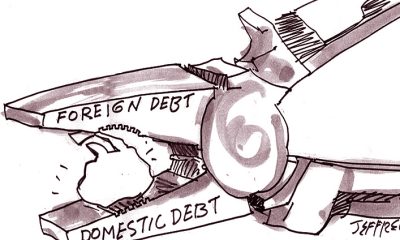
Hidden truth of Sri Lanka’s debt story: The untold narrative behind the report
-
Editorial7 days ago
Ideological confusion and identity crisis
-

 Opinion6 days ago
Is there hope for Palestine?