
News
Operation Flycatcher: disrupting Lanka’s terror networks


Boosting the ability of frontline border officers to detect travelers as potential terrorists was the focus of a counter- terrorism (CT) and border management operation led by INTERPOL across Sri Lanka, the INTERPOL said.
It said: Codenamed Operation Flycatcher II, the five-day (8 – 12 November) operation saw the arrest of six suspects linked to terrorism, with further arrests and prosecutions foreseen globally as investigations continue to unfold.
The operation saw Sri Lanka’s police, border and immigration agencies undertake specialized INTERPOL training on forensic identification techniques, CT investigative skills and INTERPOL’s data sharing mechanisms before carrying out tactical operations in the field.
“Access to information in our databases is at the heart of INTERPOL’S counter-terrorism operations, especially those that can prevent travel,” said INTERPOL’s Director of Counter-Terrorism, Gregory Hinds.
“Operation Flycatcher demonstrates the importance for countries to use INTERPOL’s wide range of criminal databases in strategic places like border crossings,” added Hinds.
With biometric data playing a growing role in tackling crime and terrorism, officers worked together using INTERPOL’s biometric identification capabilities to identify potential terrorism suspects.
The operation saw more than 800 hits and new uploads to INTERPOL’s wide range of criminal databases, particularly its stolen travel documents database with more than 100 million documents reported stolen from all over the world.
Stolen passports are a key asset for terrorist mobility, particularly for foreign terrorist fighters returning from conflict zones.
INTERPOL’s databases contain details on around 135,000 foreign terrorist fighters, with data collected from hotspots such as borders, battlefields and prisons.
Highlighting how terrorist activity is often linked to other crime areas, more than 200,000 checks on INTERPOL’s wanted persons database led not only to the identification of potential terrorists but also men and women wanted for forging travel documents, fraud and financial crime, weapons smuggling and human trafficking.
The financing of terrorism is a core component of INTERPOL’s strategy in the fight against terrorism.
Traveler’s names were checked against INTERPOL’s databases of suspicious financial transaction in the framework of INTERPOL’s Financial-to-Law Enforcement exercise (FINLEX).
Seven suspects and five suspicious monetary transactions were detected, prompting investigations in associated countries.
“Boosting the way we work nationally to detect terror suspects travelling in Sri Lanka means making sure all our police agencies have the necessary capabilities, skillsets and mechanisms in place to prevent and investigate the crime area holistically,” said Chief Inspector Lakshman Rajakaruna who heads operations at the INTERPOL National Central Bureau in Colombo.
‘This is why such a wide range of Sri Lankan agencies took part in this important operation, coming together with the common goal of tackling terrorism from all angles, together with INTERPOL,’’ added Rajakaruna.
INTERPOL coordinated the cooperative action of nine national law enforcement agencies working together across Sri Lanka and at Bandaranayaka International Airport using INTERPOL capabilities to detect potential terrorists: INTERPOL National Central Bureau for Sri Lanka in Colombo, Counter Terrorism and Investigation Division, Criminal Investigation Department (CID), Criminal Records Department (CRD), Financial Investigation Unit of CID, Financial Intelligence Unit Central Bank of Sri Lanka, Immigration and Emigration Department, Special Task Force and State Intelligence Service (SIS).
Ahead of operations, Sri Lankan agencies received and analysed INTERPOL-sourced intelligence on transnational terrorist networks to better understand their methods, motives and financing and – ultimately – to identify and arrest suspects.
Operations in the field enabled investigators to link a number of suspects to terrorist organizations active in Sri Lanka, including the LTTE, the Islamic State (IS), and the National Thowheeth Jama’ath which was the terrorist group responsible for the 2019 Easter Bombings attack in Sri Lanka.
In April 2019, nine suicide bombers simultaneously detonated their devices in seven locations around Sri Lanka killing 269 people and leaving 500 injured.
Whereas domestic terrorism – principally from LTTE – represented Sri Lanka’s main terrorist threat for decades, the attack illustrated escalating IS-inspired religious extremism.
Cooperation between the Sri Lankan authorities and INTERPOL resulted in a number of strong leads and arrests. One of the alleged ringleaders behind the bomb attacks, Ahamed Milhan Hayathu Mohamed, was arrested in the Middle East following the publication of an INTERPOL Red Notice. He was later extradited back to Sri Lanka, along with four other suspects, following their arrest in the Middle East.
Flycatcher is a CT operation carried out in the framework of INTERPOL’s CT programme for Sri Lanka and Maldives (CT-SLaM) funded by the European Union and jointly implemented with the United Nations Office on Drugs and Crime.
The first Flycatcher operation was conducted with the Maldives in July 2021 and involved officers from several national law enforcement agencies. Results included some 1,000 hits against INTERPOL’s databases, one arrest for a firearms-related crime, and intelligence gathering to feed associated investigations worldwide.


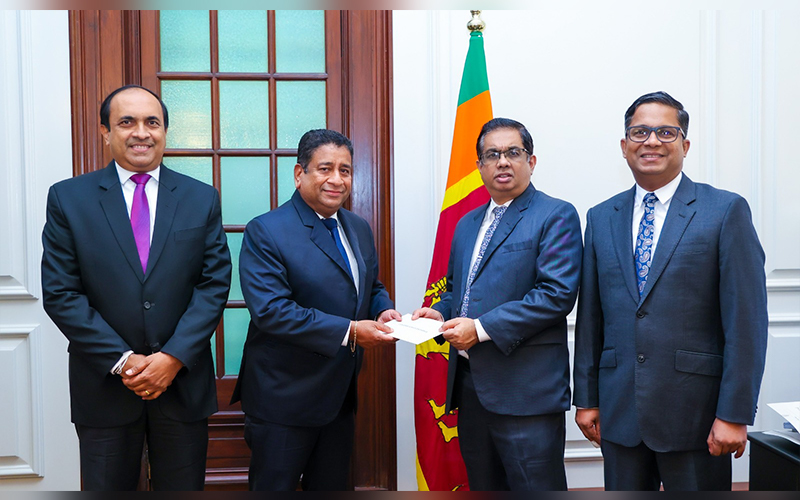
The Colombo Stock Exchange (GL 12) has contributed LKR 25 million to the Rebuilding Sri Lanka Fund.
The cheque was handed over to the Secretary to the President Dr. Nandika Sanath Kumanayake by the Chairman of the Colombo Stock Exchange, Dimuthu Abeyesekera, the Chief Executive Officer Rajeeva Bandaranaike and Senior Vice Chairman Kusal Nissanka at the Presidential Secretariat.
News
Karu argues against scrapping MPs’ pension as many less fortunate members entered Parliament after ’56

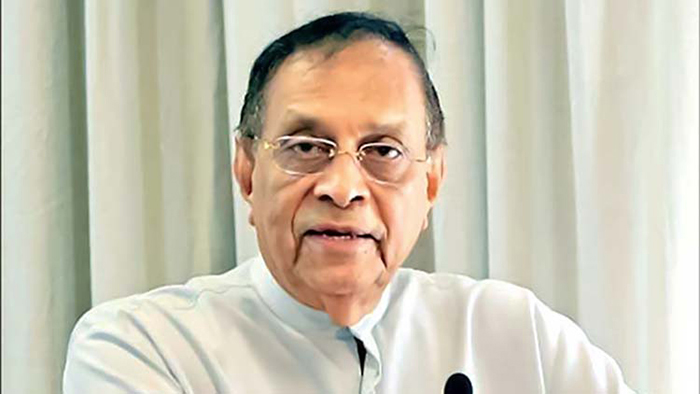
Former Speaker of Parliament Karu Jayasuriya has written to President Anura Kumara Dissanayake expressing concerns over the proposed abolition of MPs’ pensions.The letter was sent in his capacity as Patron of the Former Parliamentarians’ Caucus.
In his letter, Jayasuriya noted that at the time of Sri Lanka’s independence, political participation was largely limited to an educated, affluent land-owning elite. However, he said a significant social transformation took place after 1956, enabling ordinary citizens to enter politics.
He warned that under current conditions, removing parliamentary pensions would effectively confine politics to the wealthy, business interests, individuals engaged in illicit income-generating activities, and well-funded political parties. Such a move, he said, would discourage honest social workers and individuals of modest means from entering public life.
Jayasuriya also pointed out that while a small number of former MPs, including himself, use their pensions for social and charitable purposes, the majority rely on the pension as a primary source of income.
He urged the President to give due consideration to the matter and take appropriate action, particularly as the government prepares to draft a new constitution.The Bill seeking to abolish pensions for Members of Parliament was presented to Parliament on 07 January by Minister of Justice and National Integration Dr. Harshana Nanayakkara.
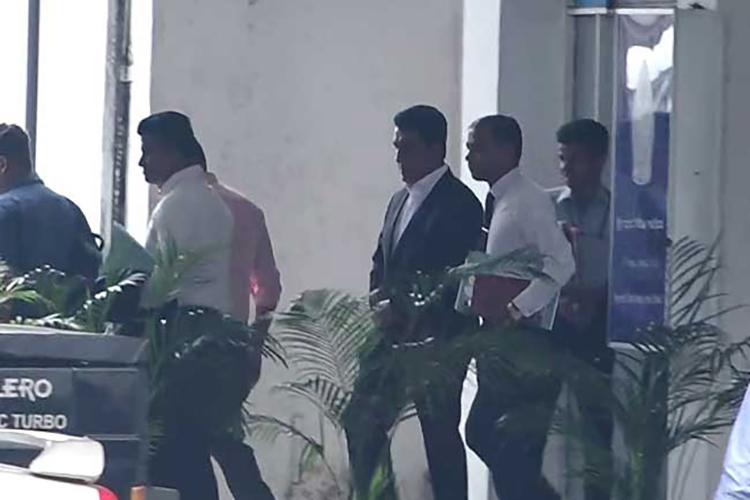
Five suspects, including former Minister Johnston Fernando and his two sons, who were arrested by the Financial Crimes Investigation Division (FCID), were further remanded until 30 January by the Wattala Magistrate’s Court yesterday.
The former Minister’s , sons Johan Fernando and Jerome Kenneth Fernando, and two others, were arrested in connection with the alleged misuse of a Sathosa vehicle during Fernando’s tenure as Minister.
Investigations are currently underway into the alleged misuse of state property, including a lorry belonging to Lanka Sathosa, which reportedly caused a significant financial loss to the state.
In connection with the same incident, Indika Ratnamalala, who served as the Transport Manager of Sathosa during
Fernando’s tenure as Minister of Co-operatives and Internal Trade, was arrested on 04 January.
After being produced before the Wattala Magistrate’s Court, he was ordered to be remanded in custody until 09 January.The former Sathosa Transport Manager was remanded on charges of falsifying documents.

Indonesia landslide kills 7, dozens more missing

Ukraine condemns ‘brutal’ Russian strikes ahead of second day of peace talks

Sri Lanka bat first in second ODI

Colombo Stock Exchange (GL 12) donates LKR 25 million to the “Rebuilding Sri Lanka” Fund

Tanzid Hasan’s ton, Binura Fernando’s four-for power Rajshahi Warriors to BPL title

U – 19 World Cup: Bangladesh ease past USA

‘Dates have the highest sugar content to fight Coronavirus’

Sunday Island 27 December – Headlines

#SundayIsland 17th December – Headlines

Sunday Island – 28th March

Sunday Island Headlines – 21 March

Sunday Island – 21st February – Headlines
-

 Editorial6 days ago
Illusory rule of law
-

 Features6 days ago
Daydreams on a winter’s day
-
 Features6 days ago
Surprise move of both the Minister and myself from Agriculture to Education
-

 Features5 days ago
Extended mind thesis:A Buddhist perspective
-

 Features6 days ago
The Story of Furniture in Sri Lanka
-

 Opinion4 days ago
American rulers’ hatred for Venezuela and its leaders
-
 Features6 days ago
Writing a Sunday Column for the Island in the Sun
-
 Business2 days ago
CORALL Conservation Trust Fund – a historic first for SL