
Latest News
Opening ceremony lights up Paris in unique style


The 2024 Olympics opened in Paris in spectacular style with thousands of athletes sailing along the River Seine past lively performers on bridges, banks and rooftops in an ambitious take on an opening ceremony.
Swapping a stadium for a waterway for the first time to open the ‘greatest show on earth’, the near four-hour spectacle culminated in French judo great Teddy Riner and sprinter Marie-Jose Perec lighting a cauldron shaped like a hot air balloon that rose high above the Parisian sky.
Red, white and blue fireworks had raised the Tricolore above Austerlitz Bridge before 6,800 athletes from 205 delegations travelled on 85 boats and barges past some of the French capital’s most famous landmarks.
There were surprise performances through the ceremony, including a cabaret number from American singer-songwriter Lady Gaga, as well as an emotional return of Canadian icon Celine Dion.
The day had started with major disruption when the French train network was hit by arson attacks and heavy rain in the evening put paid to the original plan by artistic director Thomas Jolly to use the Parisian sun to “make the water sparkle”.
The lashing rain may have forced athletes to add rain ponchos and umbrellas to their planned outfits but it did not detract from the lively journey through French history, art and sport told by some 2,000 musicians, dancers and other artists.
The last two boats to parade – first the United States as the next hosts for Los Angeles 2028 and then France – had the largest numbers of athletes on board, while other barges carried several delegations together.
Rower Helen Glover and diver Tom Daley were Great Britain’s flagbearers in Paris, which is hosting the summer Games for a third time and the first time in 100 years.
In opening the 33rd summer Olympics, which are taking part against a difficult international and domestic political backdrop, International Olympic Committee (IOC) president Thomas Bach told athletes they were now “part of an event that unites the world in peace”.
More than 10,500 athletes will compete across 32 sports at the Games, which will close on 11 August.
(BBC)

by Reemus Fernando
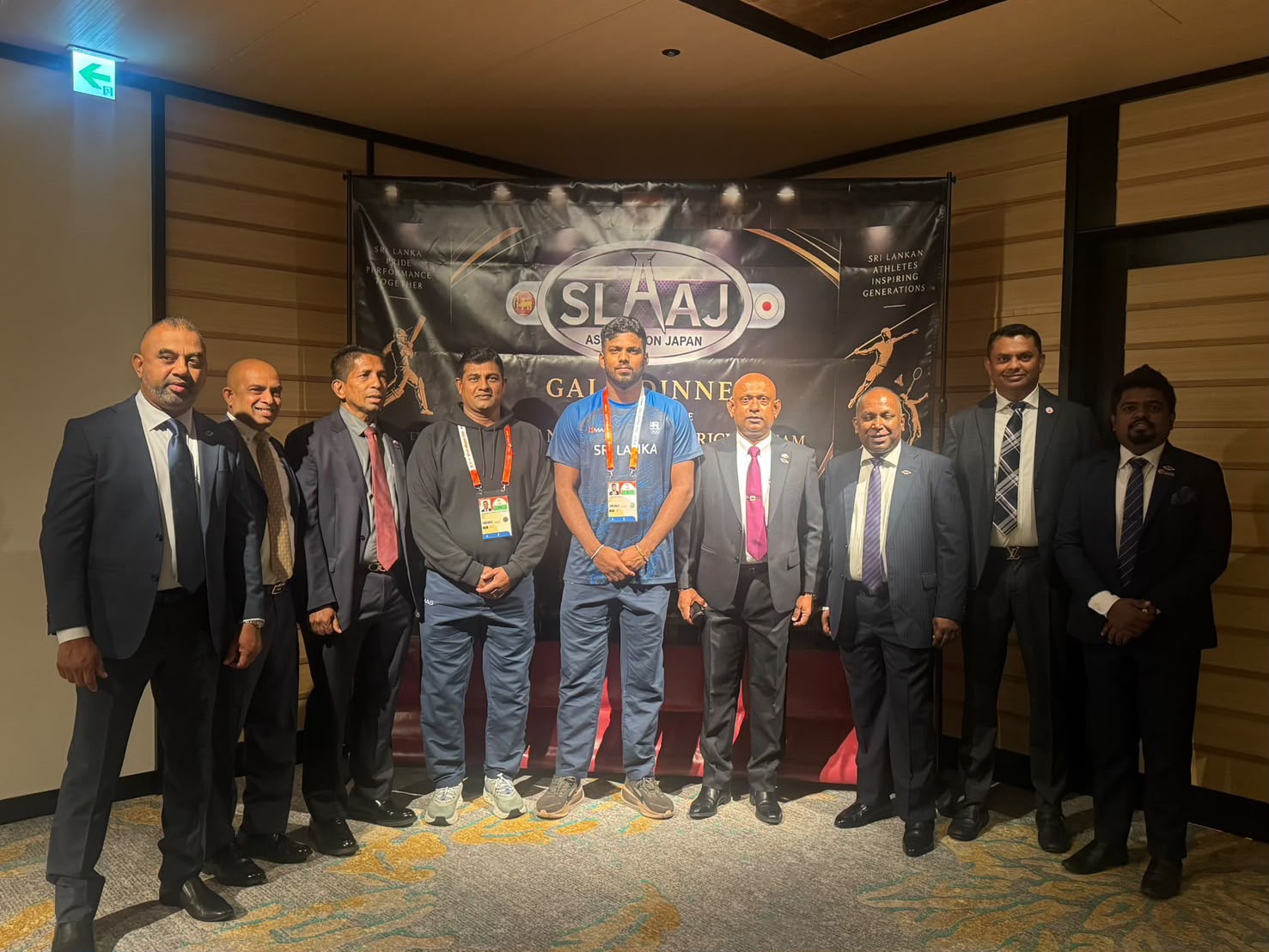
The Sri Lanka Automobile Association in Japan (SLAAJ) has awarded a brand-new Honda Vezel to gold medallist Rumesh Tharanga at a felicitation ceremony for the Sri Lankan team that competed at the Asian Games in Nagoya, Japan.
The gift was announced at the ceremony, held on the eve of the team’s departure from Nagoya.
”We decided to reward every Sri Lankan athlete who wins a gold medal with a brand-new vehicle. We invited all the Sri Lankan athletes taking part in the Games to the felicitation, and at the time of the event, only Tharanga had won gold,”
Nishantha Meegalla, Vice President of the Nagoya Prefecture of the Sri Lanka Business Council of Japan, told ‘The Island’.
Tharanga, the world’s top-ranked javelin thrower this season, won Sri Lanka’s first-ever javelin medal at the Asian Games on Monday, sealing the historic victory with a throw of 88.55 metres.
Approval has been granted at the cabinet meeting held on 01-03-2023 for the National Curriculum Framework and the methodology for implementing the aforementioned framework, which was initiated by the National Institute of Education in 2019 under the education reform process.
However, considering the modules relevant to Grades 1, 6, and 10 that have been prepared by the National Institute of Education for the implementation of the new education reforms by the time the new government comes into power in 2024, it was planned to implement the new National Curriculum Framework only for Grades 1 and 6 in 2026, ensuring appropriate adjustments to the new government’s policies.
Further, it has also been planned to introduce vocational subjects from grade 10 onwards.
Accordingly, the concept paper required for ‘Transformational Change in Sri Lanka’s General Education’, which has been prepared to inform and make relevant parties aware of the proposed adjustments, has also been submitted to the Parliamentary Subcommittee on Education Reforms on 22-10-2025.
Subsequently, as decided at the Cabinet Meeting held on 13-01-2026, steps have been taken to postpone the implementation of education reforms for grade 6, which had been planned under the first phase of the comprehensive reform agenda for general
education, up to the year 2027, and only to implement new curriculum reforms for grade 1 in the year 2026.
Subsequently, the Ministry of Education, Higher Education, and Vocational Education has followed these steps.
• preparing a new concept paper with policy recommendations after reviewing the concept paper prepared related to bringing about transformational change in Sri Lanka’s general education
by the National Education Commission.
• Having reviewed the revised concept paper by the National Steering Committee established as per the cabinet decision dated 23-03-2026 and subcommittees established under 5 pillars
relevant to the education reforms-namely Curriculum Reform, Human Resource Development, Education Administrative Reforms & Infrastructure Development, Evaluation & Assessment, and Public Awareness & Promotion-and obtaining further observations and recommendations.
• Based on those observations and recommendations, further revising the National Curriculum Framework prepared by the National Institute of Education in 2023 and obtaining approval
from the Academic Affairs Board of the National Institute of Education.
• Obtaining approval from the Council of the National Institute of Education for the National Curriculum Framework approved by its Academic Affairs Board.
• Obtaining concurrence from the National Steering Committee for New Education Reforms on 2026-08-13 for the National Curriculum Framework approved by the Council of the National Institute of Education.
• Printing and preparing activity books and teacher guides for all 3 terms of Grade 1 and Grade 2 for the year 2027, so as to continue carrying forward the primary education reforms
commenced in the year 2026.
• Preparing Grade 6 modules for Terms I, II, and III, as well as teacher guides for all 3 terms.
• Master trainers have been trained by the National Institute of Education for all primary and secondary subjects, and all plans related to teacher training at the provincial level have been
prepared.
• Formulating the policy guidelines on school-based evaluation and assessment—prepared for practical implementation while managing available resources within the school system by the
Evaluation and Assessment Sub-Committee and obtaining the approval of the National Steering Committee.
Accordingly, the Cabinet of Ministers has approved the resolution furnished by the Hon. Prime Minister in her capacity as the Minister of Education, Higher Education, and Vocational Education to further implement the education reform process for grade 1, which has been initiated in the year 2026,
and to further initiate the education reform process for grade 2 and grade 6 in the year 2027, based on the concept paper prepared by the National Education Commission, the National Curriculum Framework approved by the National Steering Committee for New Education Reforms, and the School-Based
Evaluation and Assessment Guideline.
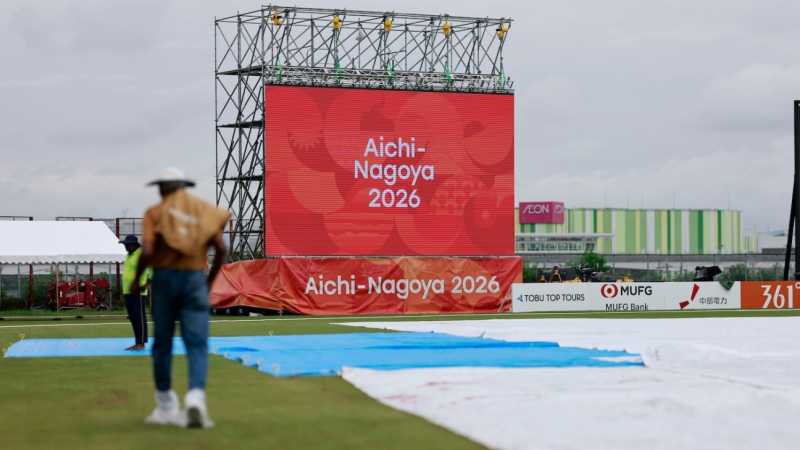
Sri Lanka will face India in the semi-finals of Asian Games men’s tournament after their quarter-final clash against Nepal was abandoned without a ball being bowled in Nisshin, Japan. The game was called off prior to the toss, with rain having begun hours prior to the scheduled 9am local start and not looking like abating.
Sri Lanka’s progression was assured by virtue of their higher seeding in terms of the ICC T20I rankings – Sri Lanka, alongside India, Pakistan and Bangladesh are the four seeded teams in the tournament. On Monday, India had qualified over Afghanistan after another washout, again by virtue of their higher. Similarly, Pakistan’s qualification was assured following a rain abandonment in their quarter-final against Hong Kong.
In the 2022 Asian Games, Sri Lanka had been eliminated at the quarter fial stages by Afghanistan. Another washout in the semis against, India though, will see the latter qualify for the final.
A few hours later, the fourth quarter-final between Bangladesh and Malaysia was also washed out. Bangladesh will now face Pakistan in the first semi-final on October 1, followed by India vs Sri Lanka later on the same day
(Cricinfo)

Gold winner Tharanga gets brand-new Honda Vezel from SLAAJ

Showers above 50 mm are likely at some places inthe Uva, Eastern and Central provinces and in Polonnaruwa and Mullaittivu districts after 1.00 p.m.

Civil society activist accuses govt. of favouring Ven. Gnanasara

More cops than cones

Sajith accuses govt. of using data selectively in crucial report

75 new inmates sent to Bogambara re-establishing it as a correctional facility

‘Dates have the highest sugar content to fight Coronavirus’

Sunday Island 27 December – Headlines

#SundayIsland 17th December – Headlines

Sunday Island – 28th March

Sunday Island Headlines – 21 March

Sunday Island – 21st February – Headlines
-
 Latest News6 days ago
Showers above 100 mm are likely at some places in the Western, Sabaragamuwa, Central and North-western provinces and in Galle and Matara Districts
-

 Editorial6 days ago
Crimes punished and unpunished
-

 Features5 days ago
Beyond traditional jobs: Why Sri Lanka needs to facilitate the gig economy
-

 Editorial4 days ago
Birth of a bad law
-
 Latest News5 days ago
Kusal, Wellalage star as Sri Lanka defend 322 in Headingley thriller
-

 News2 days ago
Police remove Thileepan statue in Jaffna
-

 News6 days ago
IMF: Sri Lanka on course for 2027 market return
-

 News4 days ago
TIN mandatory for key transactions from Nov. 1