
Sports
Onus is on Tissa to break four decades old hoodoo

by Reemus Fernando
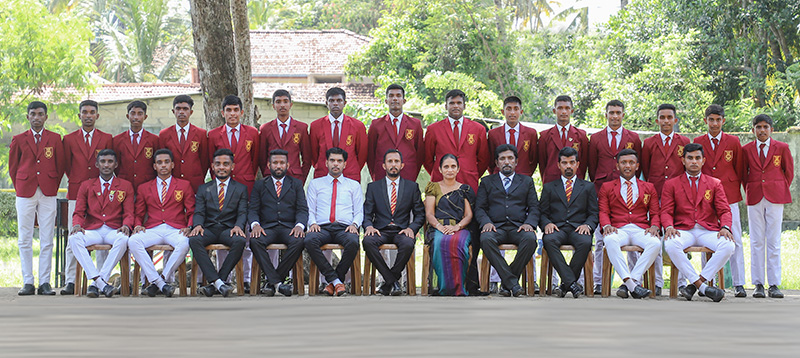
Tissa Central, Kalutara have not won the annual Big Match for more than four decades but this time they are in contention to break the hoodoo when they meet arch rivals Kalutara Vidyalaya in the 64th Battle of Mangosteens today and tomorrow at the De Soysa Stadium, Moratuwa.
Tissa Central captained by Hirusha Nethsara have concluded probably their best season in recent history after having earned a well deserving promotion to the top Division in the country’s premier Under 19 schools cricket tournament. In contrast former Division I team, Kalutara Vidyalaya have experienced fluctuating fortunes and were demoted to Tier ‘B’ of the Division II tournament.
That does not mean the team captained by Yuthika Dilruk are a weak outfit. They recorded three outright victories during the tournament proper. What went against them were the four outright defeats they suffered in the tournament and the first innings defeat they suffered in the relegation match.
Skipper Dilruk is expected to hold their batting together with Liviru Senmith, Nithika Nadhawa and wicketkeeper batsman Pasindu Dulanjana. In the bowling department, Kalutara Vidyalaya had Udan Thejaka, skipper Dilruk, Nadhawa and Adeesha Pabasara doing well in recent matches.
Tissa Central will bank on off spinner Malindu Dilshan and 14-year-old Tharuka de Silva for wickets. Dilshan, with over 80 wickets, is the leading wicket taker of the Division II tournament. They also have a trio of speed bowlers, namely Aditha Buddila, Minusha Malith and Thivin Vishwika to choose from.
Skipper Nethsara, his deputy Ishara Malith, Hesitha Anuhas and Ashan Vishwa are expected to take the bulk of batting responsibilities.
The series which began in 1949 has seen Kalutara Vidyalaya recording 26 victories against Tissa’s six. The last victory of the series was recorded by Kalutara Vidyalaya under the captaincy of Kavindu Jayawickrama in 2019. Tissa has not recorded a victory since Ajith de Silva led outfit won way back in 1983.
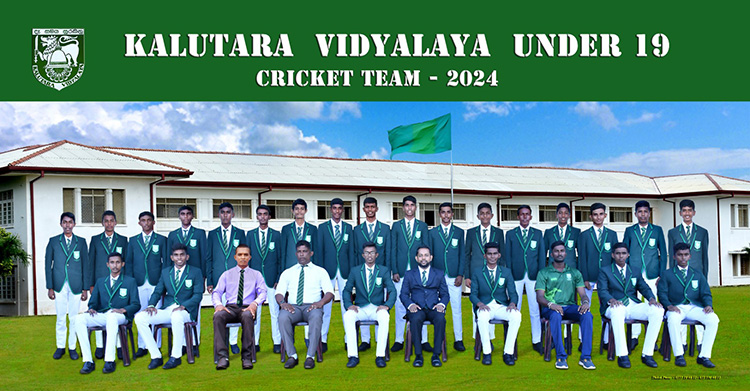
Kalutara Vidyalaya Team (Seated from left) Pamod Madubhashana, Lukindu Nimsara, Buddhika Madhshanka (Coach), Ishan Ratnayake (MiC), Yuthika Dilruk (Captain), Chaturanga Pradeep Leelarathna (Principal), Udan Thejaka (Vice Captain), Minuru Heshan (Asst. Coach), Pasindu Dulanjana, Warsha Hansajith. (Back row from left) Radeesh Theekshana, Ravindu Thathsara, Akesh Shaminda, Savindu Liyanage, Sachithra Liayanage, Kawshila Amodya, Shevon Malindu, Dinuka Kawshal, Achira Udantha, Adeesha Pambasara, Sheersha Tharaka, Uthum Vihanga, Liviru Senvith, Gayuka Dineth, Deshan Aloka, Vihanga Sapumal, Senehas Damsara.




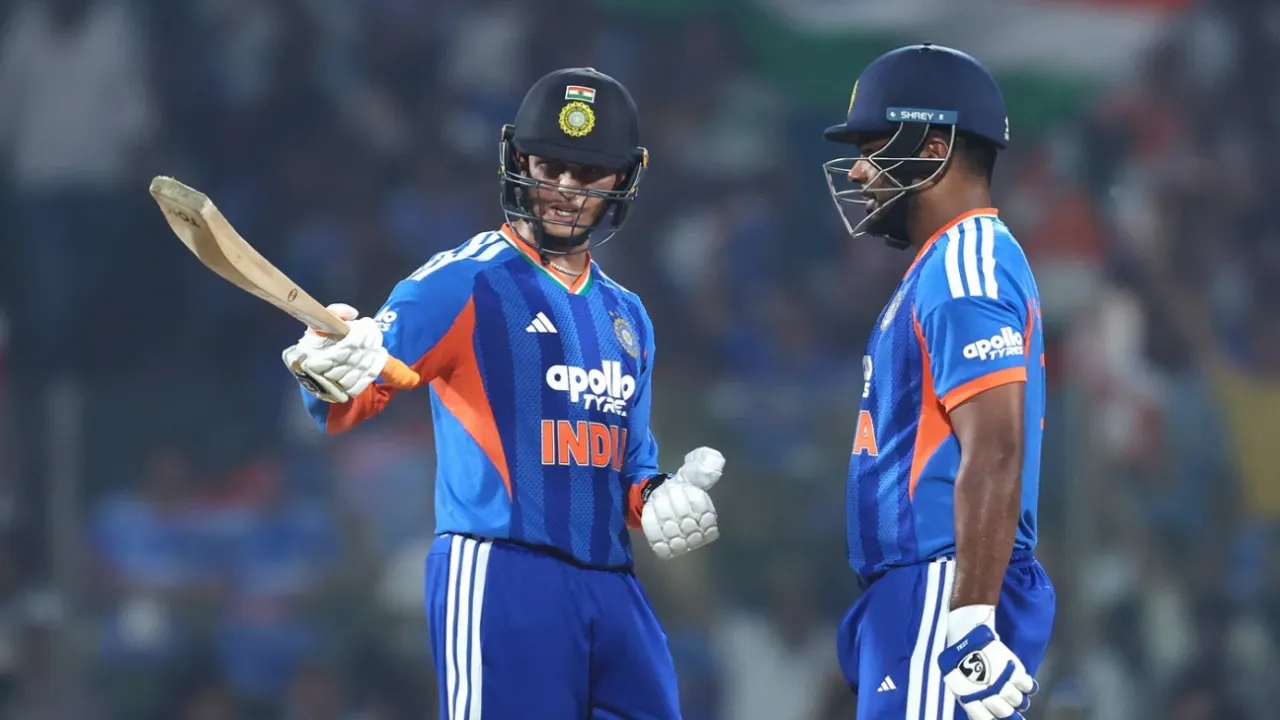
The gulf between India and Afghanistan during the recent bilateral T20I series – which India won 3-0 – was a further vindication of India’s dominance in the format and why they are world champions. It may not have reflected Afghanistan’s pedigree in the format, but it showed the gaps they still have to make up to match the top sides in the world, especially in terms of dot-ball percentage and their strike rate while batting.
Now Afghanistan, who have sent a second string side to the Asian Games, take on a full-strength India in the quarter-finals. Thirteen of the 15 players who toured India for the bilateral series are not in Afghanistan’s squad now, and the only two retained are Darwish Rasooli (the captain) and Abdollah Ahmadzai. Afghanistan’s squad of 15 is so raw that it features six uncapped players and five others who have fewer than ten international appearances. Their combined T20I experience of 262 matches is only a fraction (30%) of India’s 872 games.
There is no Rashid Khan, no Rahmanullah Gurbaz, no Mohammad Nabi, but Nabi’s genes are in the side, in his 20-year-old son Hassan Eisakhil.
India, despite a calendar clash with the home ODI’s against West Indies, which also start on Sunday, have sent their big guns to Japan in search of their second straight gold medal. If there is one team that can field multiple white-ball squads simultaneously, it is India, and they have done that. It is not officially known, however, why Afghanistan have sent such an inexperienced side when their next international fixture, a one-off Test against Bangladesh, only starts on October 9. Afghanistan aren’t alone in sending a second-string squad, perhaps to give their first-choice players some rest in an otherwise packed calendar.
The divide between the two sides is stark and even though they would want to take heart from the scare Japan handed India – even if in a rain-truncated game – recently, Afghanistan themselves lost to Nepal a couple of days ago. Now they have to compete against the world champions, a task they struggled with even at full strength earlier this month.
India have been plagued by injuries of late and one of the names on that list was of Washington Sundar, who returned to action in the Japan T20I last week. He didn’t get to bat and bowled two overs and took two wickets while playing his first game in two months. India would want to give him more game time before he heads back home for the West Indies T20Is that start on October 6 in Lucknow. Barring his niggles, Washington has otherwise had an impressive year across formats with an unbeaten 52in an ODI to give India their first win of their UK tour after he took a four-for in the Test against Afghanistan, during which he also scored 52*.
Pace-bowling allrounder Ismat Alam, 24, has played two Tests and one T20I so far, Afghanistan’s opening game against Japan. Alam was the Player of the Tournament in Afghanistan’s domestic T20s – Shpageeza Cricket League – for scoring 294 runs at a strike rate of 168, while also taking nine wickets. He had starred on his Test debut last year, scoring a century in the lower order that set up Afghanistan’s victory over Zimbabwe. Afghanistan may want to give him a game and hope he steps up again on the big stage.
India had rested Jasprit Bumrah in the one-off T20I against Japan and played Arshdeep Singh and Yash Thakur as their quick options apart from legspinner Ravi Bishnoi and spin-bowling allrounders Axar Patel and Washington Sundar. India will now have to decide whom to leave out for Bumrah. The other question will be if India want to give Vaibhav Sooryavanshi a game early in the tournament, although Abhishek Sharma and Sanju Samson look undroppable given the runs they scored in the series against Afghanistan.
India (probable): Abhishek Sharma, Sanju Samson (wk), Ishan Kishan, Shreyas Iyer (capt), Tilak Varma, Axar Patel, Shivam Dube, Washington Sundar, Ravi Bishnoi, Yash Thakur/Arshdeep Singh, Jasprit Bumrah.
Against Nepal, Afghanistan gave a T20I debut to Faisal Shinozada who top-scored along with the experienced Najibullah Zadran, the only batters who scored in double-digits in the game.
Afghanistan (probable): Mohammad Akram, Hassan Eisakhil, Karim Janat, Darwish Rasooli (capt), Najibullah Zadran, Mohammad Ishaq (wk), Ismat Alam, Nangeyalia Khan, Abdollah Ahmadzai, Faridoon Dawoodzai, Arab Gul.
[Cricinfo]
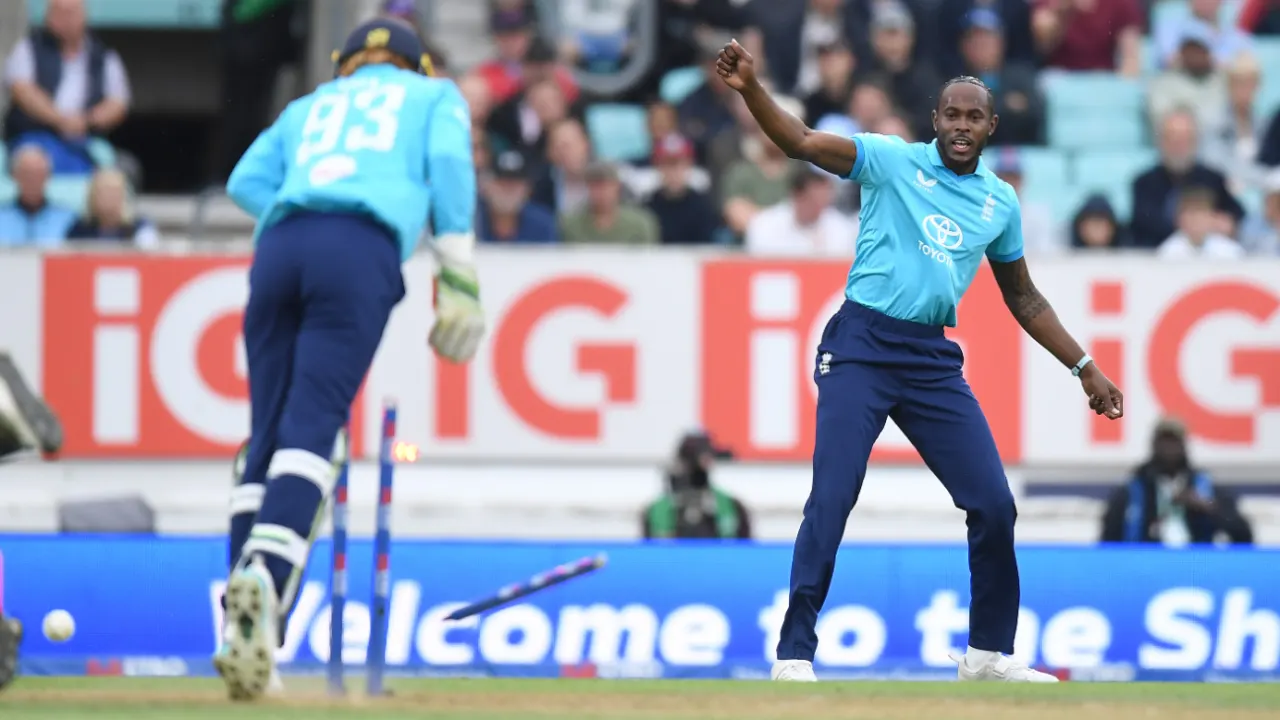
England were the beneficiaries of an unusual, but ultimately correct, umpiring decision during their series-clinching win against Sri Lanka in Sunday’s third ODI at the Oval as Pavan Rathnayake was given out, not out, and then out again.
The bizarre passage of play came in the 15th over of Sri Lanka’s run-chase, when Charith Asalanka steered Liam Dawson to short third man. Jofra Archer, the fielder, threw at the keeper’s end, and Rathnayake was a long way short of his ground as the LED lights on the stumps and the bails flashed.
Rob White, the square-leg umpire, initially gave him out on-field without deference to TV umpire Adrian Holdstock, but did refer the decision after consultation with standing umpire Wayne Knights. It became clear after a replay that Jordan Cox’s gloves had dislodged the bails just before the ball hit the stumps.
Holdstock appeared to overturn the initial decision after around two minutes of deliberation, with ‘not out’ flashing up on the big screen at The Oval, but continued to review his decision at the drinks break. After another 90 seconds of deliberation, he gave Rathnayake – who was clearly bemused – out for 18.
The decision took approximately four minutes to reach, but was ultimately correct. While Cox’s gloves had dislodged the bails, Archer’s throw uprooted the stump entirely and was thereby deemed to have broken the wicket.
The two relevant MCC Laws read as follows:
- 29.2.1.1: “The wicket is broken fairly if a bail is completely removed from the top of the stumps, or a stump is struck out of the ground by the ball.”
- 29.2.1.6: “The wicket is also broken fairly if a fielder strikes or pulls a stump out of the ground (as in 29.2.1.5).”
The circumstances were highly unusual, as the former England batter Mark Butcher outlined on Sky Sports. “What I find hard to believe is that in all the years I’ve either played or commentated on the game, I’ve never seen this before or heard that Law before,” Butcher said.
“Everybody knows that if you break the stumps and the bails come off, then you need to get the ball in your hand and take the stump out in order to affect the run-out. I’ve never heard the sub-Law about the throw knocking the stump out of the ground, and that counting as a dismissal.”
Tom Banton, Player of the Match after making his maiden international hundred during England’s innings, was similarly taken aback by the scenario. “I’ll be honest, I have never seen that before, so I actually don’t know,” he said afterwards. “But we take the mick out of Jamie Overton because he seems to know everything, and he said it was out straight away.”
MCC, who write and interpret the Laws of Cricket, are expected to clarify the decision in the coming days.
[Cricinfo]

Hurdler Ayomal Akalanka provided a glimmer of hope for Sri Lanka on a largely disappointing day for track and field at the Asian Games in Nagoya, Japan, securing his place in the men’s 400 metres hurdles final on Sunday.
Akalanka produced an impressive 49.78 seconds to book his berth in the final, keeping Sri Lanka’s hopes of a medal in the event alive.
The day, however, was marked by disappointing performances in the field events.
Gayan Sampath failed to register a single legal jump in the men’s long jump, bringing his campaign to an early end.
Madushani Herath also endured a difficult outing in the women’s long jump, finishing 12th with a below-par 5.91 metres.
In the men’s 800 metres heats, Harsha Karunaratne produced a sub-1:50 performance, clocking 1:49.90 seconds. He finished fourth in his heat, but the time was not sufficient to earn a place in the final.
With Akalanka advancing to the 400m hurdles final, Sri Lanka will look to the young hurdler to provide a stronger finish in the final.
The women’s javelin final was in progress when this edition went to press.

Rain threat looms over lopsided India vs Afghanistan quarter-final

Out, not-out, out: England secure bizarre run-out in Oval victory

Strait of Hormuz tensions linger as Iran and US move further from a deal

Showers will occur in the Western, Eastern, Uva and Sabaragamuwa provinces and in Galle, Matara, Kandy, Nuwara-Eliya, Polonnaruwa and Mullativu districts

Sajith rejects Jt. Opp. protest sabotage claim; SJB TU chief demands remedial action

Police remove Thileepan statue in Jaffna

‘Dates have the highest sugar content to fight Coronavirus’

Sunday Island 27 December – Headlines

#SundayIsland 17th December – Headlines

Sunday Island – 28th March

Sunday Island Headlines – 21 March

Sunday Island – 21st February – Headlines
-

 News5 days ago
Mastermind Naufer Moulavi among 15 found guilty
-

 Midweek Review5 days ago
Thileepan’s fast unto death: An authentic narrative that many missed
-

 News6 days ago
Protest against setting up of cement factory in highly populated area near BIA
-

 Editorial6 days ago
Trouble beginning in earnest
-
 Latest News4 days ago
Showers above 100 mm are likely at some places in the Western, Sabaragamuwa, Central and North-western provinces and in Galle and Matara Districts
-
Editorial5 days ago
Big Bad Bills
-

 News7 days ago
Police may seek clarification from US
-
 News6 days ago
Govt. confident of 2/3 majority despite NPP split speculation