
Editorial
Ominous signs on economic front

Monday 18th May, 2026
The government has realised the need for a decisive intervention to curtail the burgeoning import bill, which is a drain on the country’s foreign currency reserves. It has imposed a 50% surcharge on custom duty on vehicle imports for three months. Vehicle prices are bound to increase substantially.
Explaining why the government decided to impose a duty surcharge on imported vehicles, Deputy Minister of Finance and Planning Dr. Anil Jayantha Fernando has said import expenditure has increased sharply to USD 2 billion over the past two months. Letters of Credit for vehicle imports are also being opened rapidly, and therefore instead of banning vehicle imports, the government decided to impose a duty surcharge to manage the situation, he has stated, requesting that the importation of vehicles for personal use be postponed by three months.
It became clear a few months ago that the sheer volume of vehicle imports would pressure foreign currency reserves. The government moved to boost its tax revenue by lifting restrictions on vehicle imports in keeping with IMF conditions, but it apparently did not maintain a balance between higher taxes on imported vehicles and foreign currency reserves. Perhaps, having claimed that it strengthened the economy and built foreign currency reserves, the government did not want to restrict vehicle imports.
Oil accounts for about 20% of Sri Lanka’s import bill, and therefore a strategy to curtail the foreign exchange outflow consists in reducing fuel consumption. The West Asia crisis has driven the global oil prices up and left the developing economies struggling. President Anura Kumara Dissanayake has recently lamented that the national fuel bill increased steeply from USD 98 million in February to USD 368 in April, and the projected bill for May is USD 522 million. He has stressed the need to reduce fuel consumption. This situation has come about due to global oil price hikes caused by the Iran conflict rather than an increase in the fuel consumption by the public. However, there has been a massive increase in fuel imports for power generation.
What the President has left unsaid is that fuel imports have increased because oil-fired power plants have to operate to meet a generation shortfall at Norochcholai, caused by low-quality coal imports. Experts have pointed out that about 800,000 litres of diesel have to be burnt daily to compensate for the Norochcholai generation loss. Strangely, no one has been arrested over the fraudulent procurement of substandard coal, which has not only caused huge losses to the state coffers but also adversely impacted the country’s foreign currency reserves.
If the government hesitates to adopt drastic measures to restrict vehicle imports and shore up foreign currency reserves, it might be left without forex for fuel imports, and queues might return in such an eventuality, with newly imported vehicles waiting near filling stations for days on end, as in 2022. It must stop dilly-dallying and pluck up the courage to grasp the nettle. Most of all, it will have to bring the cost of power generation down.
It is high time the JVP-NPP government adopted austerity measures it promised and curtailed state expenditure while reducing the import bill. India has also experienced a decline in foreign currency reserves due to rising global oil prices, central bank interventions to defend the rupee, foreign investor outflows and global uncertainty arising from the West Asia conflict. Although India’s foreign currency reserves have shown some signs of recovery recently, Prime Minister Narendra Modi has called for austerity measures. They include postponing gold imports, curtailing travel, both foreign and domestic, carpooling, reducing the consumption of imported goods and promoting import substitution. PM Modi has requested the centre and the states to reduce ceremonial expenditure, ensure a reduction in fuel use by ministers, shift more meetings online and reduce the size of official motorcades. Sri Lanka should learn from India.
In 2022, Sri Lanka faced a double whammy—a rupee crisis and an unprecedented depletion of foreign currency reserves. It had to opt for a soft sovereign default and seek IMF assistance because the then SLPP government had played politics with the economy and closed the stable door only after the horse had bolted. Those blunders must not be repeated. The restive horse is snorting, stamping the ground and straining against the halter, again. The time for closing the stable door is now. Otherwise, the current leaders, too, will have to bolt with the horse, the way their immediate predecessors did in 2022, with irate protesters in close pursuit.

Friday 24th July, 2026
Sri Lanka has succeeded in defeating terrorism but failed to neutralise the netherworld of drugs and crime. Successive governments have launched ambitious operations against the underworld but crime syndicates are still going strong as evident from frequent incidents violence and drug detections. Now, a notorious drug dealer, Mohamed Imran aka Kanjipani Imran, has reportedly threatened to attack the Devinuwara Sri Vishnu Maha Devalaya perahera over a dispute between two kavadi dance groups.
The underworld has emerged so powerful as to pose threats to a perahera held in honour of God Vishnu, one of Sri Lanka’s four guardian deities, and therefore the vulnerability of the mere mortals vis-a-vis crime syndicates goes without saying. Underworld threats to the Devinuwara perahera remind us of the Sura-Asura war, a legendary, cosmic conflict in mythology between deities and demons.
Basnayake Nilame of the Vishnu Devalaya is reported to have lodged a complaint with the police about underworld threats. An investigation has got underway, and the police say they will intensify the security cordon during the Devinuwara festival. The police must not leave anything to chance in making security arrangements to ensure the safety of the public, the participants in the Perahera and the Devalaya officials. It may be recalled that there was a devastating attack on a religious ceremony 17 years ago in the Matara District, where the Devinuwara shrine is located.
An LTTE suicide bomber attacked a religious event at a mosque in Akuressa, in 2009, killing about 15 people and injuring another 60, including the then Minister Mahinda Wijesekera, a former Basnayake Nilame of the Devinuwara Vishnu Devalaya. Wijesekera, who suffered permanent injury and left politics, died a few months ago at the age of 83. One can only hope that nothing untoward will happen in Devinuwara.
Terrorism and other forms of violence have not spared all four major religions in this country. Mobs who carried out the 1983 anti-Tamil pogrom, looted and torched Hindu temples besides the houses and business places of their victims. The LTTE attacked Buddhist temples, massacred Buddhists including monks and Muslims inside mosques as part of its ethnic cleansing campaign. The National Thowheed Jamaath (NTJ) attacked churches, killing Christians. Now, an organised criminal gang is threatening one of Sri Lanka’s oldest shrines venerated by Buddhists and Hindus alike.
Underworld threats to the Vishnu Devalaya perahera remind us of the NTJ’s original plan to attack the Dalada Perahera in Kandy. The Presidential Commission of Inquiry, which probed the Easter Sunday terror attacks (2019), revealed that NTJ’s plan had been to attack the Dalada Perahera, but it had been changed due the detection of explosives in Wanathawilluwa and external factors such as ISIS losing ground in Syria and Iraq. Subsequently, the NTJ attacked churches and hotels.
Interestingly, while underworld kingpins are instigating prison riots, carrying out narcotic operations and killings, and threatening to attack a holy festival, Deputy Minister of Defence Maj. Gen. (Retd.) Aruna Jayasekera has elevated himself to celestial heights, as it were. He is reported to have claimed at a public event that no one in the Opposition is capable of challenging President Anura Kumara Dissanayake in a future presidential contest effectively, and only those who have descended from heaven, like him (Jayasekera), are equal to such tasks. His speech was aired on television and a video of it has gone viral in the digital realm. We thought there were only fallible earthlings in the parliament of Sri Lanka, but now the Deputy Minister of Defence would have us believe that even celestial beings have representation in the JVP-led NPP government.
It is ironic that notorious criminals, released on bail, are carrying out various underworld operations and threatening to attack religious events, while former intelligence officers who were instrumental in defeating terrorism are being detained. Imran was arrested together with another underworld leader, Makandure Madush, in Dubai and extradited in 2019. He was released on bail in December 2022 although it was obvious that he would flee the country and operate from overseas, as we pointed out in an editorial comment on 02 Jan., 2023. A probe must be conducted to find out how Imran managed to obtain bail while everything possible is done to bring him to justice.


Thursday 23rd July, 2026
US President Donald Trump seems to think the world must do as he says and he is free to do anything. He now wants FIFA President Gianni Infantino, 56, to be the next UN Secretary General, according to internal media reports. Trump could not have found a better candidate for the job to further his own interests. None of the UN Secretaries-General have had the courage to stand up to the US, or to any other world power for that matter, but Infantino would be the most pro-American UN chief, if ever elected to the top post. Trump and Infantino have not commented on the media reports at issue. It is possible that the White House has leaked Trump’s plan to test the waters.
The New York Post has quoted an unnamed top Trump aide as saying that Trump wants the FIFA President as the next UN Chief because he firmly believes that Infantino is respected by everyone around the world, and recognises that he (Infantino) has a special ability to bring people together. But the truth is apparently otherwise. All leaders are fond of sycophants. Infantino is putty in Trump’s hands. Does the international community have a high opinion of the current FIFA chief?
The world must have lost whatever respect it may have had for Infantino when FIFA unashamedly gave in to Trump, who personally called Infantino and requested a review of a red card issued to US striker Folarin Balogun; FIFA subsequently suspended the player’s one-game ban and allowed him to play against Belgium, much to the resentment of the entire Europe. There have been calls for Infantino’s ouster for doing so. Most of all, FIFA incurred much international opprobrium by awarding its inaugural peace prize to Trump despite his military aggression.
How Infantino has ruined his reputation and that of FIFA by grovelling before Trump became evident on the day of the FIFA World Cup final match between Spain and Argentina last Sunday. There were scattered boos from the crowd when Trump was shown briefly on the jumbotron. But the stadium erupted in boos when he and his candidate for the post of UN chief entered the field for the presentation ceremony. That is the stigma of association Infantino has to bear for getting close to Trump.
The claim, attributed to Trump that the incumbent FIFA chief is capable of bringing nations together through football, and therefore he can lead the UN may be based on the belief that sports unite humanity. But it should be viewed against the central argument of George Orwell’s brilliant essay, The Sporting Spirit, which shatters the myth that international sports foster global goodwill. Orwell wrote it following the Dynamo Moscow football team’s tour of Britain in 1945. The matches were marred by disputed refereeing decisions, accusations of unfair play, violent incidents and intense nationalistic passions. Orwell’s arguments are still valid, the most famous one being that modern sports are essentially “war minus the shooting” driven by intense nationalism, a desire to humiliate the opponent, and a lust for victory rather than fair play. This was borne out by the Argentinian players’ deplorable behaviour during and after the recent FIFA World Cup final. Above all, the Iranian football team faced severe logistical hurdles, visa restrictions, and mandatory same-day travel policies at the hands of the US, prompting the head coach of Iran Amir Ghalenoei to say that his squad was the most oppressed due to those restrictions. FIFA lacked the courage to stand up for the Iranian team. How FIFA chief Infantino would behave if Trump succeeded in making him the UN Secretary General is not difficult to imagine.
The possibility of Trump going ahead with his plan to make Infantino the next UN Chief and even using US tariffs to pressure other countries into supporting his candidate cannot be ruled out. It is believed that none of the other prospective candidates has the backing of the permanent members of the Security Council, and this situation is expected to help Trump have the FIFA chief elevated to the top post. However, running the UN is a whole different ballgame. Perhaps, the only striking similarity between FIFA and the UN is that the latter’s mandate receives the same treatment as a football from the Permanent Five and their close allies.
There is one main dissimilarity between FIFA and the UN. FIFA, by and large, enforces the Laws of the Game, but the veto-wielding powers of the UN are guided by Rafferty’s rules, as can be seen from the way they are attacking other countries and committing blatant human rights violations with impunity. The US even abducts and assassinates the leaders of other nations openly.
The Trump administration called the UNHRC (United Nations Human Rights Council) a ‘cesspool’ before withdrawing from it in 2018. Going by the US contention, the UN can be considered a bigger version of what the Trump government called the UNHRC, in 2018, and therefore Infantino should not consider it an honour to be considered by Trump for the post of UN Secretary-General.
Wednesday 22nd July, 2026
Nicaragua’s long-serving President Daniel Ortega, 80, is always in the news for the wrong reasons. He has captured the headlines again by declaring that Nicaragua will not have elections hereafter as he wants to “build a wall” against the Opposition. A former Marxist guerrilla, he made this announcement during a recent ceremony to mark the 47th anniversary of the Sandinista revolution, which overthrew Anastasio Somoza’s dictatorship.
It is said that Russia got rid of the Tsar but had too many Commissars to contend with thereafter. The Nicaraguan people, who ousted the U.S.-backed right-wing dictator Somoza, hoping for liberation from the clutches of that dictator, have been languishing under the family dictatorship of Ortega and his wife, Murillo, who is the Co-President; they now face the threat of being deprived of their franchise.
Politicians may espouse different ideologies, but they behave similarly after savouring power, which drives them to act out of expediency rather than principle and do everything possible to perpetuate their hold on it. In Sri Lanka, a left-leaning government went to the extent of misusing its two-thirds majority to extend its parliamentary term by two years from 1975 to 1977. In doing so, the SLFP-led United Front cooked its own goose. The UNP, which came to power in 1977, made a general election disappear in 1982, and President J. R. Jayewardene, a full-blooded capitalist, even considered ‘rolling back electoral democracy’. Democracy has suffered at the hands of other Presidents as well.
The NPP government led by the JVP, a former ‘Marxist’ guerrilla outfit, too, has chosen to postpone elections as it is wary of facing an electoral contest any time soon. Some political commentators are of the view that the PC polls may not be held next year as well. More worryingly, some JVP leaders often quote the Chinese Communist Party leaders as having said that a government should be in power for about 15 to 20 years to develop a country. Their rhetoric and action lend credence to the Opposition’s claim that they are working towards establishing a one-party rule. They unleashed mindless terror in a bid to scuttle elections and capture power through extra-parliamentary means in the late 1980s and tried to storm the parliament complex in 2022.
In an interview with The Guardian, Tiziano Breda, Latin America senior analyst at the NGO, Armed Conflict Location and Event Data, has explained why the Ortega and Murillo regime is wary of facing elections: “Ortega and Murillo are evidently afraid of the idea that the slightest political opening could create the conditions for dissent to manifest and threaten their grip on power, possibly suggesting that their already feeble domestic support is further falling.” This is the predicament of a former Marxist rebel and his associates in Nicaragua.
Participation in democratic elections as well as gaining representation in political institutions is no guarantee of one’s commitment to democracy. Ortega returned to power in 2006 by winning a presidential election, 16 years after losing parliamentary polls. He has since retained power through successive elections that critics say have become increasingly undemocratic. Adolf Hitler employed a similar method. He exploited public anger over the Great Depression, unemployment and the Treaty of Versailles, enabling the Nazi Party to expand its support through relentless propaganda, mass rallies and appeals to German nationalism and capture power democratically. In the July 1932 parliamentary election, the Nazis emerged as the largest party in the Reichstag, although they never secured an outright majority. Hitler then passed the Enabling Act on March 23, 1933 by intimidating legislators and excluding many opposition deputies, allowing his government to enact legislation without parliamentary approval, effectively dismantling Germany’s constitutional democracy. All other political parties in Germany were banned and independent trade unions dissolved; the press was censored and political dissent ruthlessly crushed. The Nazis thus transformed Germany into a one-party dictatorship.
Eternal vigilance is said to be the price of liberty. Sri Lankan voters do not act rationally when they elect their representatives. They go to the polls in search of political messiahs and wish for governments with mammoth majorities to improve their lot. Be careful what you wish for.
Showers expected in the Western and North-western provinces and in Galle and Matara districts

Child abuse crisis: 108,000 complaints reported in 10 years

CA dismisses writ petition seeking postponement of A/L exam

Bimal’s remarks on MP’s conduct spark heated exchange in Parliament

SC rules fundamental rights of Aragalaya activist were violated

TRINEX-26 naval exercise begins off Trincomalee coast

‘Dates have the highest sugar content to fight Coronavirus’

Sunday Island 27 December – Headlines

#SundayIsland 17th December – Headlines

Sunday Island – 28th March

Sunday Island Headlines – 21 March

Sunday Island – 21st February – Headlines
-
 Features5 days ago
Two memorable excerpts from a former SLAF commander’s memoir
-
 Business5 days ago
‘Giving up was never an option’: The fisherman who fought back after losing millions in SL
-
 Latest News6 days ago
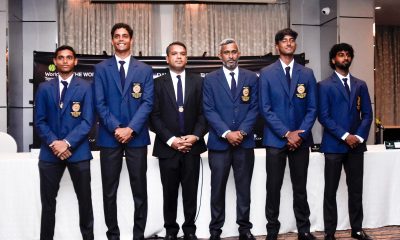
Davis cup Asia/Oceania Group IV 2026 to be held in Colombo from 20th to 25th July
-
 Features5 days ago
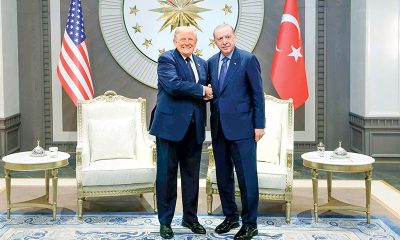
Erdoğan’s New Republic
-
 Life style5 days ago
Taste of the Swiss Alps comes to Colombo
-
 Midweek Review2 days ago
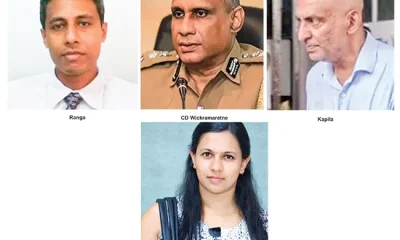
Three high-profile alleged suicides shaping key investigations
-
 News6 days ago
Evidence recorded in money laundering case against Yoshitha Rajapaksa
-
 News6 days ago
Dengue outbreak gallops ahead: Infections surpasses 73,455, leaving 50 dead