
Sports
Nurul Hasan, Shoriful Islam pull off tense chase as Bangladesh clinch series


Shoriful Islam produced a miserly spell with the ball and added crucial runs with the bat as Bangladesh secured a two-wicket win over Afghanistan in the second T20I in Sharjah. The result gave them an unassailable 2-0 lead in the three-match series.
Once again, Bangladesh had to recover from a collapse after a strong position in their chase, with Shamim Hossain, Jaker Ali and Nurul Hasan playing key roles in the middle order. Shoriful’s all-round contribution proved decisive in a tense finish.
Bangladesh slipped from 102 for 4 to 129 for 8 in the space of four overs. Noor Ahmad removed Shamim for 33, before Nasum Ahmed, who looked competent with the bat until he unnecessarily slogged at Rashid Khan, fell in the 16th over. Azmatullah Omarzai removed both Mohammad Saifuddin and Rishad Hossain in the 18th over.
Bangladesh needed 19 runs to win in 12 balls, with eight wickets gone, but Nurul Hasan kept them in the hunt. He started the 19th over with a six off Noor, before taking a single. At the time, it seemed like a dicey move. But with three runs coming off wides and seven off Shoriful’s bat – that included a straight boundary – it left Bangladesh with just two to win in the final over.
Shoriful had kept the strike for the last over, and crashed Omarzai’s first ball down the ground for the winning runs. Nurul remained unbeaten 31 off 21 balls, while Shoriful smashed a decisive 11* in six deliveries.
Omarzai gave Afghanistan the perfect start with the ball, removing openers Tanzid Hasan and Parvez Hossain. Rashid took a good tumbling catch at mid-off to get Tanzid in the second over, before Omarzai trapped Parvez lbw in his next over. Saif Hassan struck a couple of sixes on either side of the wicket, but became Mujeeb Ur Rahman’s victim in the fifth over. Sediqullah Atal took a catch running back from extra cover, as Bangladesh slipped to 24 for 3.
Shamim responded to the situation aggressively, hammering Rashid for a six to end the powerplay. Jaker then struck his first six in seven innings when he lofted Mohammad Nabi over long-on. It was followed by a flick over square leg off Abdollah Ahmadzai in the next over.
Shamim struck his second six, a huge hit over midwicket, off Noor, as Bangladesh looked on the path to recovery. Jaker, who reached double figures after four consecutive single-figure scores, fell lbw to his opposite number Rashid for the second game in a row, as the fourth-wicket stand between him and Shamim ended on 56.
Afghanistan started slowly, managing only 35 runs in the powerplay, but they did not lose a wicket. Atal tried to up the ante in the eighth over, hitting Rishad for a couple of sixes. But it was followed by his wicket next ball, as the left-hander was caught at long-on for 23. That broke the opening partnership on 55, before Nasum had Zadran caught at long-on, too, for 38 off 37 balls. When newcomer Wafiullah Tarakhil fell for 1, also taken at long-on, Afghanistan’s steady start had evaporated.
Nasum removed Darwish Rasooli after he had struck him for a six the previous ball. Rahmanullah Gurbaz struck Rishad for two sixes, but fell to Shoriful in the 17th over, having made 30. Afghanistan made just 40 runs in the last five overs, losing one wicket, and hitting just two sixes during this phase.
Brief scores:
Bangladesh 150 for 8 in 19.1 overs (Saif Hassan 18, Shamim Hossain 33, Jaker Ali 32, Nurul Hasan 31*, Nasum Ahmed 10, Shoriful Islam 11*; Mujeeb Ur Rahman 1-18, Azmatullah Omarzai 4-23, Rashid Khan 2-29, Noor Ahmad 1-40) beat Afghanistan 147 for 5 in 20 overs (Sediqullah Atel 23, Ibrahim Zadran 38, Rahmanullah Gurbaz 30, Darwish Rasooli 14, Azmatullah Omarzai 19*, Mohammad Nabi 20*; Shoriful Islam 1-13, Nasum Ahmed 2-25, Rishad Hossain 2-45) by two wickets
[Cricinfo]

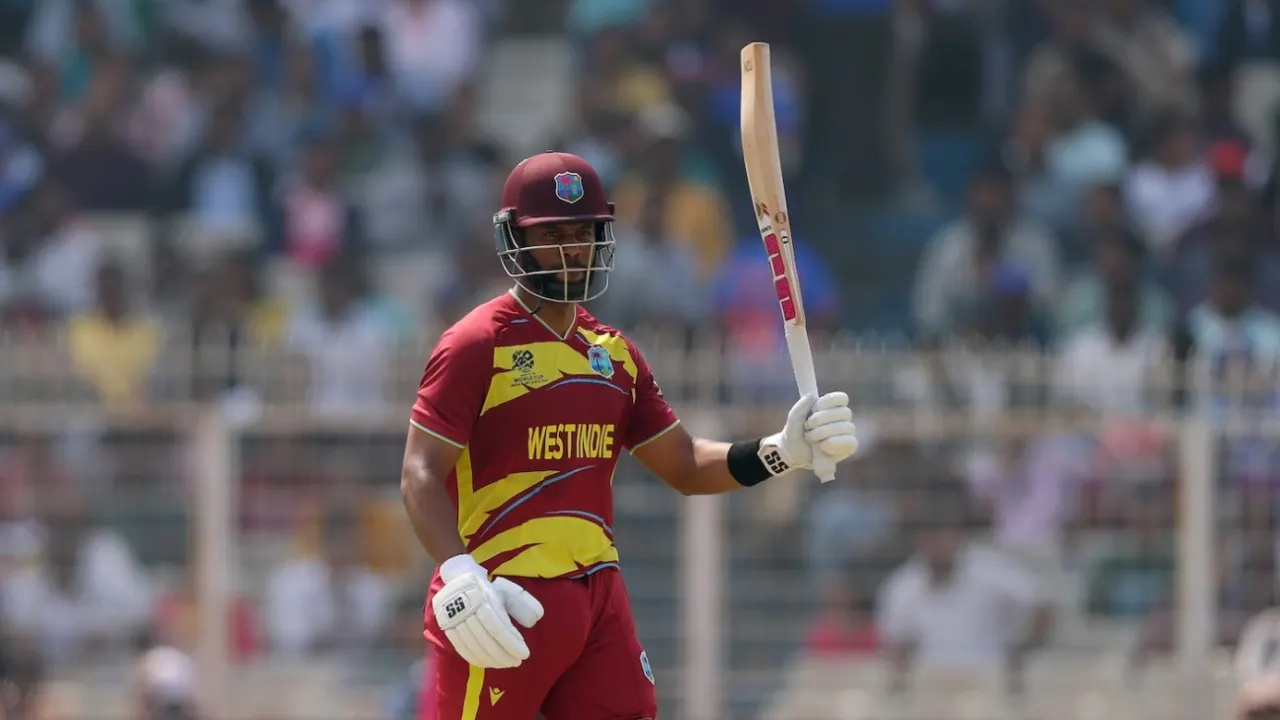
West Indies headed into the Super Eight of the T20 World Cup unbeaten after successfully defending 165 against Italy at Eden Gardens on Thursday. Spinners Chrishan Kalugamage and Ben Manenti impressed with the ball, and were backed up by some sharp fielding, but the batters couldn’t get the Italian job done.
While Italy exited their maiden World Cup with a win against Nepal and many memories to cherish, West Indies sealed their fourth successive win at the venue where they will face India in their final Super Eight fixture on March 1.
Italy may have sensed an opportunity for another win when they stifled West Indies’ power-packed middle order, but Marrhew Forde’s twin strikes in the powerplay decisively tilted the game in West Indies’ favour. Bowling three overs on the bounce, Forde dismissed both Justin Mosca and No. 3 Syed Naqvi, helping West Indies restrict Italy to 37 for 3 in six overs. Shamar Joseph then bagged four wickets to go with his four catches as Italy were bowled out for 123.
The win was set up by Shai Hope, who hit back-to-back half-centuries and dominated the early exchanges with an array of off-side drives. West Indies lost steam after Hope departed for 75 off 46 balls, but they regained it through their bowlers.
After West Indies were asked to bat first, they hit seven boundaries in the powerplay, and Hope was responsible for all of those. By the eighth over, the West Indies captain had zoomed to a 28-ball half-century. The first boundary by a West Indies player not named “Shai Hope” came in the tenth over when Roston Chase backed away and lifted left-arm spinner JJ Smuts over extra-cover.
Hope peppered the off side, scoring 46 of his 75 runs in that region. Anything that was remotely full and outside off was crashed in the arc between mid-off and point. When Italy dragged their lengths back, Hope was ready for it as well. Like when left-arm seamer Ali Hasan banged one into his upper body, Hope swatted him away over square leg for six in the fourth over. Hope was particularly severe on right-arm fast bowler Thomas Draca, taking him for 20 off nine balls.
Italy finally stopped him in the 16th over when legspinner Kalugagame bowled him with a tossed-up wrong’un.
Brief scores:
West Indies 165 for 6 in 20 overs (Shai Hope 75, Roston Chase 24, Sherfane Rutherford 24*, Matthew Forde 16*; Ali Hasan 1-24, Thomas Draca 1-22, Chrishan Kalugamage 2-25, Ben Manenti 2-37) beat Italy 123 in 18 overs (Anthony Mosca 19, JJ Smuts 24, Ben Manenti 26, Grant Stewart 12; Akeal Hosein 1-25, Shamar Joseph 4-30, Matthew Forde 3-19, Gudakesh Motie 2-24) by 42 runs
[Cricinfo]
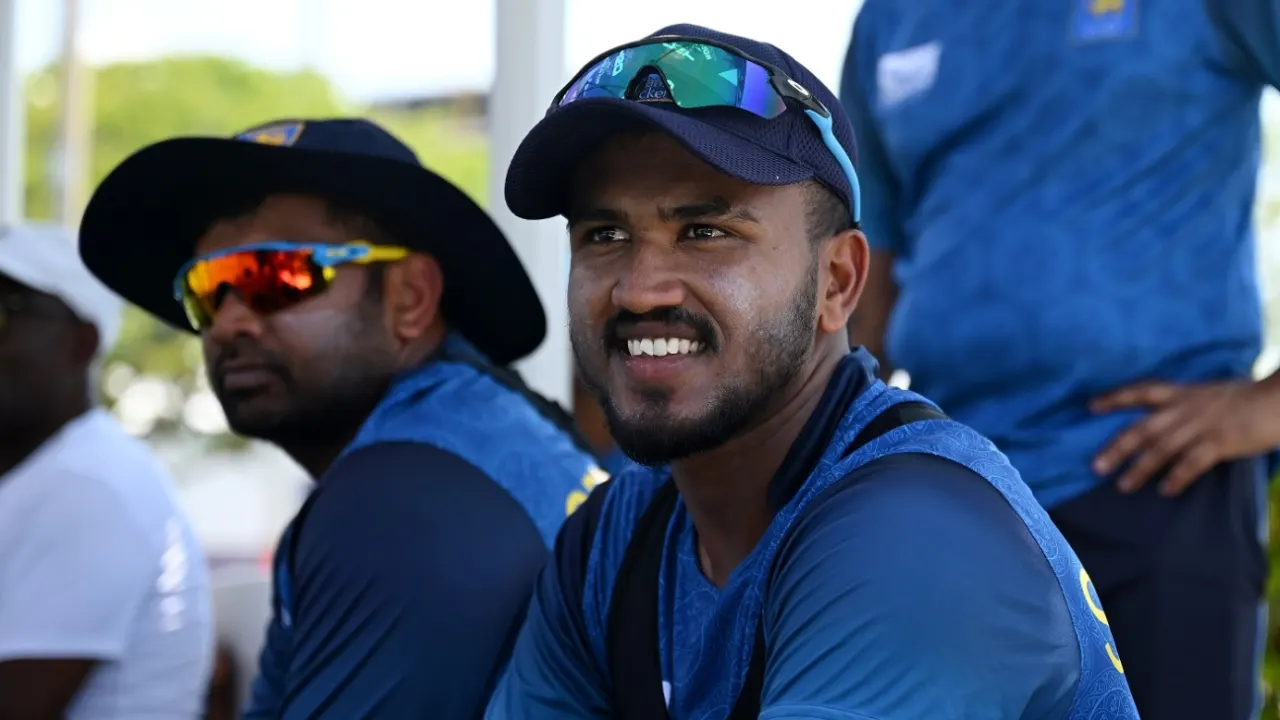
Sri Lanka won the toss at the party at Premadasa and decided to bat first. Both, the hosts and Zimbabwe, are through to the Super Eight already, but for Sri Lanka it was important to get in their injury replacements.
The big one, of course, was Matheesha Pathirana, whose tournament ended with a calf injury sustained during the match against Australia. His replacement in the squad, Dilshan Madushanka, came straight into the XI. Also given a look-in was Pramod Madushan, the fast bowler who was already in the squad. In order to organise this virtual bowl-off between Madushan and Madushanka, Sri Lanka rested their lead fast bowler Dushmantha Chameera.
Zimbabwe made no change to the XI that shocked Australia in this World Cup. They were looking to bowl first anyway because of the forecast for some drizzle later on, and hoping to bat in better batting conditions once the lights came on.
Sri Lanka: Pathum Nissanka, Kusal Perera, Kusal Mendis (wk), Pavan Rathnayake, Dasun Shanaka (capt), Kamindu Mendis, Dunith Wellalage, Dushan Hemantha, Maheesh Theekshana, Pramod Madushan, Dilshan Madushanka
Zimbabwe: Brian Bennett, Tadiwanashe Marumani (wk), Dion Myers, Sikandar Raza (capt), Ryan Burl, Tony Munyonga, Tashinga Musekiwa, Brad Evans, Wellington Masakadza, Graeme Cremer, Blessing Muzarabani
[Cricinfo]
[Cricbuzz]

Ex-UK Prince Andrew arrested on suspicion of misconduct in public office

Advisory for Severe Lightning issued to the Western and Sabaragamuwa provinces and Nuwara-Eliya, Galle and Matara districts

Navy and Coast Guard seize 04 Indian fishing vessels poaching in Sri Lankan waters

Hope’s 75, Forde and Joseph’s wickets help West Indies go into playoffs unconquered

Sri Lanka opt to bat against Zimbabwe, play Madushanka and Madushan

South Korea’s ex-president jailed for life for masterminding an insurrection

‘Dates have the highest sugar content to fight Coronavirus’

Sunday Island 27 December – Headlines

#SundayIsland 17th December – Headlines

Sunday Island – 28th March

Sunday Island Headlines – 21 March

Sunday Island – 21st February – Headlines
-

 Life style5 days ago
Marriot new GM Suranga
-

 Business4 days ago
Ministry of Brands to launch Sri Lanka’s first off-price retail destination
-

 Features5 days ago
Monks’ march, in America and Sri Lanka
-

 Features5 days ago
The Rise of Takaichi
-

 Features5 days ago
Wetlands of Sri Lanka:
-

 News5 days ago
Thailand to recruit 10,000 Lankans under new labour pact
-

 News5 days ago
Massive Sangha confab to address alleged injustices against monks
-

 News3 days ago
IMF MD here