
News
NPP govt. plans to expand economic ties with ASEAN countries

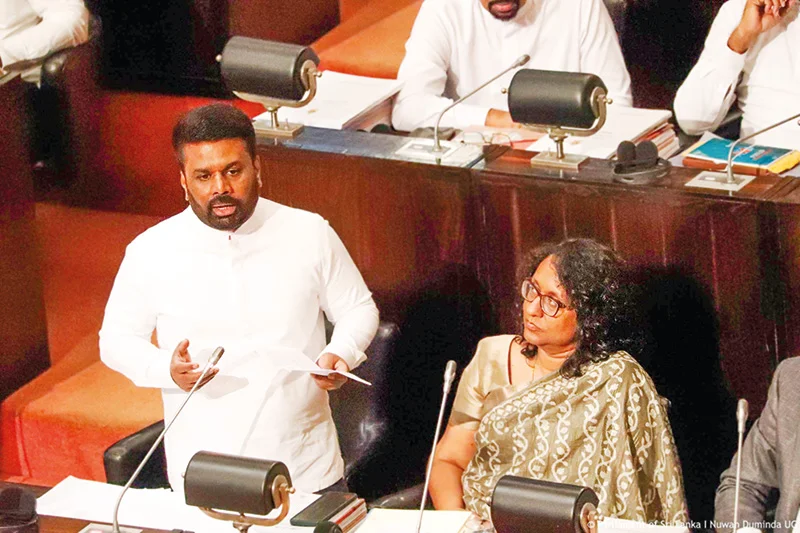
President Anura Kumara Dissanayake yesterday told Parliament that the network of Free Trade Agreements (FTAs) with strategic partners, particularly with a view to forging stronger economic ties with ASEAN nations, would be expanded through the Regional Comprehensive Economic Partnership (RCEP) and other agreements.
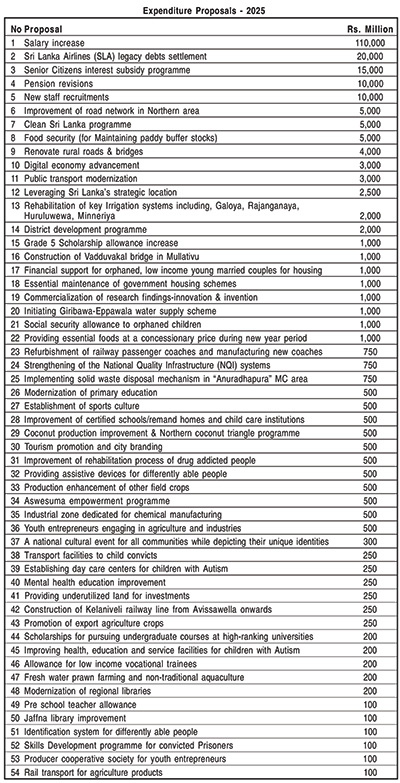
The following are some of the key 2025 Budget proposals
Expanding Exports of Goods and Services
Government will formulate the national export development plan (2025-2029) with a view to increasing Sri Lanka’s export of goods and services on an ambitious scale by enhancing Sri Lanka’s ability to export into global markets.
With the view of removing limitations in access to high quality, affordable raw materials, new Tariff rates will be based on a National Tariff policy to create a simple, transparent and predictable tariff framework.
Sri Lanka’s network of Free Trade Agreements (FTAs) with strategic partners, particularly with a view to greater economic ties with ASEAN nations, will be expanded through the Regional Comprehensive Economic Partnership (RCEP) and other agreements.
Key border agencies and exporter registration will be automated and integrated through implementation of the Trade National Single Window (TNSW).
The new Customs Law will be introduced to enhance trade facilitation and revenue collection.
Double Taxation Avoidance Agreements (DTAs) will be expanded beyond the existing 44 DTAs with priority given to countries with high trade and investment potential.
Investment Promotion and Facilitation
Government will support expansion of export-oriented investment, sector-specific zones, establishing eco-industrial parks which focus on sustainable practices, resource management, and green technology through Public Private Partnership (PPPs) and privately run zones.
The Government will revisit the Economic Transformation Act with appropriate revisions to suit the emerging developments.
Government will lease out under-utilised state-owned land for productive economic activities.
An Investment Protection Bill will be enacted to facilitate and protect investments.
Improvements in the country’s ease of doing business will be prioritised in key areas such as registering property, ease of paying taxes, trade facilitation, enforcement of contracts, and obtaining credit to attract foreign direct investments (FDI). Measures for digitisation of public services will play an important role in enabling this objective.
Government will introduce laws to ensure effective implementation of the one-stop-shop concept which consolidates all necessary approvals.
Barriers for local firms to invest overseas will be reviewed and gradually rationalised by establishing appropriate safeguards to track repatriation of earnings and dividends.
A Public Private Partnership (PPP) Bill will be introduced.
Bimsaviya programme will be expedited to develop good quality land titles for small scale land owners, which will increase the commercial usability of land.
A new Insolvency Law, already in the draft stages, will be expedited.
Government will call for foreign direct investments to optimize the utilization of Sri Lanka’s untapped potential in investment, industrial development, and value added exports of Sri Lanka’s mineral resources and marine economy.
Government will provide required technical and financial assistance for exporters and importers to obtain quality testing and certifications.
The testing and calibration labs, referral centres, the Referral Centre for health research on cancerous inputs, Universities and other conformity assessment bodies inclusive of Industrial Technology Institute will also be developed with an effective coordination mechanism to have efficient service delivery for clients. In order to fulfill the desired outcome of the NQI system in the country, we propose to allocate Rs.750 million for 2025.
Digital Economy Advancement
Accelerating the development of Sri Lanka’s Digital Economy is one of the most important pillars of our Economic Development strategy. Digital Transformation will uplift economic growth through enhancing productivity across industrial and service sectors, advancing economic opportunity, improving public service delivery and improving transparency in governance and public finance.
Introduction of Sri Lanka Unique Digital Identification (SL-UDI) for all citizens is a key priority. SL-UDI is a foundational Digital Public Infrastructure (DPI) essential for the development of a digital economy. Steps have already begun towards this process and it is expected that this process will be expedited.
Public and Institutional Trust in the Safety and Integrity of Digital Services and Systems is critical for the success and sustainability of Digital Transformation. Sri Lanka’s Digital Economy will be governed and protected through the creation of new legislation and the strengthening of existing legislation. We will also focus on strengthening the related institutional framework. We will enact new Legislation to further accelerate the Digital Economy and to empower an Apex Digital Economy Authority as well as other subject specific agencies in the Digital Eco-System. We will also strengthen legislation and institutions related to Cyber Security, Data Privacy and Data Protection.
Digital Payment Infrastructure is another foundational component of Sri Lanka’s Digital Economy Framework. The accelerated adoption of digital payments flowing between Government, Business and Citizens will be key accelerator of the Digital Economy. The recently launched GovPay system is an example of one such Digital Payment channel. It is necessary to gradually shift away from a cash-based economy. It would be implemented in a carefully phased process with clear communication.
The Government will facilitate a conducive investment environment to attract Private Capital and Partnerships across all segments of the Digital Economy. This will also support to attracting investments towards innovations in artificial intelligence, robotics, FinTech, and other emerging technologies.
Our aim is to grow Sri Lanka’s Digital Economy to a level in excess of USD 15 Bn or 12 percent of the National Economy over the next five years. In achieving this ambition, the Government aims to facilitate an increase in the ICT industry’s annual export revenue to USD 5 billion.
Accordingly, we propose to allocate Rs. 3,000 million to bolster the acceleration of Digital Economy Development through the initiatives described.
Tourism Sector
 It is necessary to ensure that we focus on the value generated from tourism instead of simply focusing on the number of arrivals.
Towards this end, steps will be taken to develop local destinations so as to optimize value generation from each destination with local branding of destinations to reflect the unique cultural value proposition of that destination with required infrastructure facilities. After identification, the required critical infrastructure development activities will be carried out on a priority basis during the two-year period, 2025-2026. This infrastructure development will be supported by an integrated city branding and promotion campaign for these developed destinations. For this purpose, we propose to allocate Rs. 500 million for year 2025.
The Government will facilitate training youth in communication and other skills, in the tourism sector.
Developing and promoting new tourist destinations to expand the moving capacity of tourists will be a priority agenda of the Government.
In parallel, a digital ticketing system will be introduced to address issues of over-crowding and improve capacity of the sector.
Bandaranaike International Airport Terminal 2 will be expanded with the support of Japanese investments.
The Government will improve tourist safety and facilities through a combination of technology-based solutions linking the tourist police, Government agencies and civic organizations to provide information on tourist attractions, receive security alerts, feedback on tourist experience and monitor complaints to law enforcement authorities.
Expenditure Management
The Government will continue efforts to streamline state expenditure. The entire ecosystem of allowances and benefits provided to public representatives is being reviewed. Through such interventions, it would be possible to free up valuable resources that are tied up in depreciating assets and deploy them in far more productive uses.
To set an example on the side of the political leadership on expenditure management, the number of Ministers is limited 21. Ministers’ and Deputy Ministers’ expenditure has been rationalized reducing the public expenditure for the Government.
Public resources, such as mansions allocated for the President, Prime Minister and Ministers, have been redirected to effective public use. A Committee is appointed to recommend the best use of such properties in economically viable projects and the public interest.
All luxury vehicles that require heavy running and maintenance expenses will be auctioned.
Minimizing state expenditure on vehicles
Vehicles assigned as official vehicles to Government officials have high fuel consumption and are of significant value. These vehicles incur high maintenance costs. Hence, the Government has decided to minimize heavy expenditure on vehicles by encouraging selected officers through an additional financial benefit.
Student Scholarships
We propose to increase the monthly scholarship amount from Rs. 750 to Rs. 1,500 to students who qualified Grade 5 scholarship examination in low-income families. Accordingly, we propose to allocate Rs. 1,000 million for this purpose.
Nutritious Food Allowance has been supported for students in sports schools to obtain a nutritious diet. Hence, we propose to double the monthly Nutritious Food Allowance from Rs. 5,000 to Rs. 10,000 per student. Budgetary provision has been already made in the 2025 Budget estimate for this purpose.
We propose to increase this stipend from Rs. 4,000 to Rs. 5,000 per month for students in vocational Education. Budgetary provision has already been made in the 2025 Budget estimate for this purpose, in addition to which we propose to allocate a further Rs. 200 million for the same.
We propose to increase the monthly Mahapola scholarship from Rs. 5,000 to Rs. 7,500 and the monthly Bursary payments from Rs. 4,000 to Rs 6,500. A provision of Rs. 4,600 million has already been made in the 2025 Budget estimates.
All of these payments will be made from April, 2025.
Scholarship for Pursuing Undergraduate Courses at High-ranking Universities
We propose to create a programme to offer scholarships for students who show outstanding performance in the G.C.E. A/L examination to study undergraduate degree programmes at high-ranking universities and return to Sri Lanka to apply their acquired knowledge and skills to the country. For this purpose, we propose to allocate Rs. 200 million to initiate this programme in 2025.
Energy Sector
The energy sector is vital for the country’s economic development. We will focus on diversifying energy sources with more weight on renewable energy and modernizing infrastructure. Government will continue to invest in the energy sector while welcoming local and foreign investors who could provide the best tariff advantage to Sri Lanka. Necessary reforms to the regulatory framework will be prioritized to facilitate internal restructuring with the new Act to be passed soon.
We awarded a tender to a 50MW wind power project at USD 4.65 cents for a unit of electricity. In that context, awarding projects at an excessive tariff around USD 8.26 cents cannot be justified. To provide energy at a competitive cost to industries, exporters, and consumers, we will welcome energy investments based on the lowest tariffs and we will not provide preferential treatment purely on the company or the country of origin.
When we exclude the oil tanks given to the CPC and IOC, there are 61 more oil tanks in the Trincomalee oil tank complex which has 99 tanks of 10,000 Metric Ton capacity. Considering the strategic location of these tanks, there is high potential to access international markets. We expect to develop these tanks collaborating with internationally recognized companies.
Other Export Crops – Spices
Measures will be taken to expand value addition in traditional exports, such as Cinnamon. Marketing and promotion of these products will be enhanced through Sri Lanka’s embassies. The Government will provide technical assistance to farmers in order to improve supply quality and facilitate linkage with value added exporters, including through international joint ventures.
In order to link to the global value chain, we propose to allocate Rs. 250 million to implement an integrated product development and trade promotion programme on Ceylon cinnamon and other export crops.
Fisheries and Aquaculture
Limited availability of freshwater prawn seeds is identified as a major constraint to further develop the freshwater prawn farming industry in Sri Lanka. In order to promote the stocking of freshwater prawn in tanks and non-traditional aquaculture, and enhance the future production towards export economy, we propose to empower farming community/fisheries societies and local communities and establishment of freshwater prawn hatcheries under Public Private Partnership (PPP) arrangements, farmer cooperatives and marketing networks and facilitate farmer societies to link with such marketing networks as well. For this purpose, we propose to allocate Rs. 200 million.
Increase of the Kidney Patients /Disability/ Elderly Allowance
We propose to increase the monthly allowances for kidney patients and people with disabilities from Rs. 7,500 to Rs. 10,000 and monthly allowances for elderly persons from Rs. 3,000 to Rs. 5,000 with effect from April 2025.
Special Interest Scheme for Senior Citizens
We propose to implement a Special Interest Scheme for Senior Citizens. Under this scheme, individuals, above 60 years of age, will be eligible for one-year fixed deposits of up to Rs. 1 million with an annual additional interest rate of three percent, above the prevailing interest rates in the market for ensuring their financial stability. To implement the scheme, we propose to allocate Rs. 15,000 million to subsidize the three percent additional interest to be paid for the senior citizens.
This scheme will be implemented from July 2025.






The National Building Research Organisation (NBRO) has issued Landslide Early Warnings to the Districts of Kurunegala and Ratnapura effective from 16:00 hrs on 23.04.2026 To 16:00 hrs on 24.04.2026
Accordingly,
Level 1 landslide early warnings have been issued to the Divisional Secretaries Divisions and surrounding areas of Rideegama in the Kurunegala district and Kuruwita, Kalawana, Ratnapura, Nivithigala, Pelmadulla and Eheliyagoda in the Ratnapura district.
Latest News
Advisory for Severe Lightning issued for the Western, Sabaragamuwa, Central, North-western, North-central, Southern, Uva provinces, and Ampara and Batticaloa districts

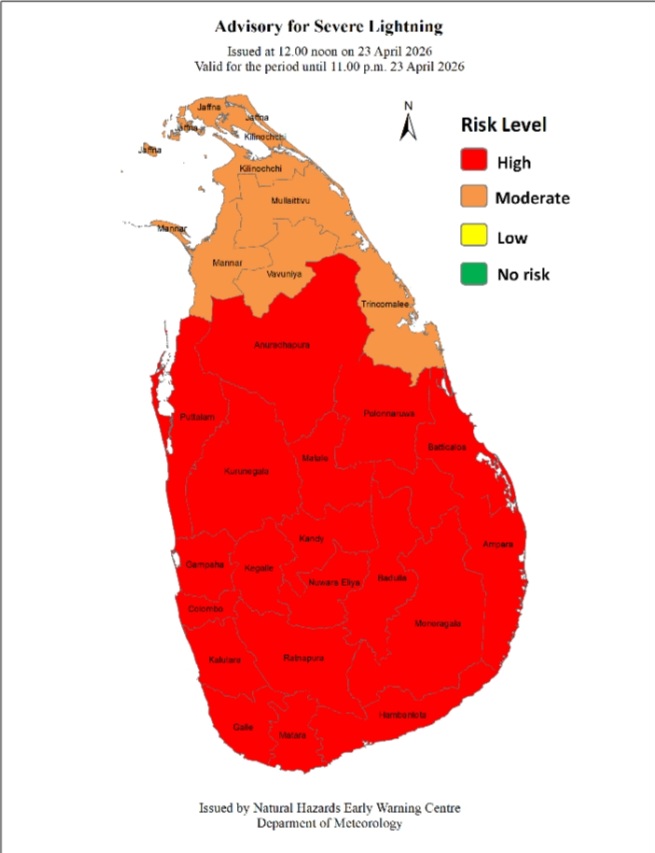
Advisory for Severe Lightning
Issued by the Natural Hazards Early Warning Centre of the Department of Meteorology
Issued at 12.00 noon 23 April 2026 valid for the period until 11.30 p.m. 23 April 2026
Thundershowers accompanied with severe lightning are likely to occur in the Western, Sabaragamuwa, Central, North-western, North-central, Southern, Uva provinces, and in Ampara and Batticaloa districts after 1.00 p.m.
There may be temporary localized strong winds during thundershowers. General public is kindly requested to take adequate precautions to minimize damages caused by lightning activity.
ACTION REQUIRED:
The Department of Meteorology advises that people should:
• Seek shelter, preferably indoors and never under trees.
• Avoid open areas such as paddy fields, tea plantations and open water bodies during thunderstorms.
• Avoid using wired telephones and connected electric appliances during thunderstorms.
• Avoid using open vehicles, such as bicycles, tractors and boats etc.
• Beware of fallen trees and power lines.
• For emergency assistance contact the local disaster management authorities.
News
Compensation payments and reconstruction activities related to the Ditwah relief measures must be expedited with special attention at the district level – PM
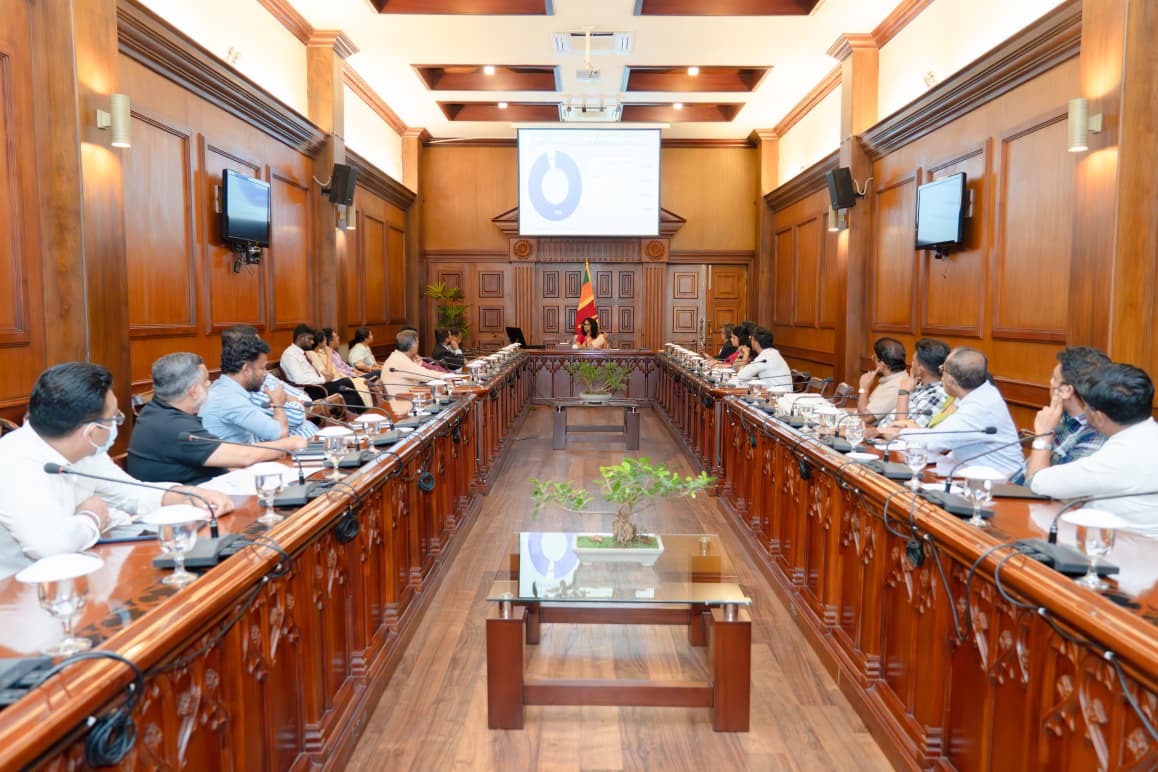
Prime Minister Dr. Harini Amarasuriya emphasized that compensation payments and reconstruction activities related to the Ditwah relief measures must be expedited with special attention at the district level. She further stated that all necessary allocations have already been made to Provincial Councils and instructed that the progress of disaster damage assessments and reconstruction efforts be closely monitored at the provincial level.
The Prime Minister made these remarks at a discussion held on Tuesday (21) at Temple Trees under her patronage, aimed at informing Chairpersons of District Coordination Committees and public representatives from disaster-affected districts, in order to accelerate the implementation of the “Rebuilding Sri Lanka” programme. The discussion focused on expediting disaster relief and compensation payments, as well as the swift restoration of infrastructure damaged by the disaster.
The Prime Minister emphasized that Rs. 500 billion has been allocated for damages caused by the Ditwah cyclone, and that all relevant development activities must be completed before the end of 2026. The Prime Minister also instructed officials to pay special attention to resolving issues at the local level that are causing delays in compensation payments.
Senior Additional Secretary to the President, G.M.R.D. Aponsu, stated that the estimated cost for reconstruction following the Ditwah cyclone is approximately USD 3.4 billion. Accordingly, funds have been allocated for compensation across several sectors including housing and social infrastructure, agriculture and livestock, fisheries, industry and livelihoods, and irrigation. He further noted that 99% of the Rs. 25,000 allowance has already been disbursed, while 95% of the Rs. 50,000 resettlement allowance has been paid. Compensation for fully and partially damaged houses is still ongoing, and 99% of temporary relief centres have been closed.
Additionally, attention was drawn to several other measures, including providing Rs. 25,000 to affected schoolchildren, paying Rs. 1 million as compensation for each deceased individual, compensation for children who lost one or both parents, support for persons with disabilities affected by the disaster, compensation for agricultural losses, and expediting resettlement of displaced families. Measures such as allocating land for new housing construction and accelerating the issuance of reports from the National Building Research Organization were also discussed.
Focus was also placed on the reconstruction of affected schools, hospitals, and daycare centres, improving the accuracy and speed of data collection at the local level, and accelerating infrastructure development.
The event was attended by Minister of Plantation and Community Infrastructure Samantha Vidyarathna, Minister of Public Administration, Provincial Councils and Local Government Dr. Chandana Abayarathna, Deputy Minister of Agriculture and Livestock Namal Karunaratne, Deputy Minister of Trade, Commerce, Food Security and Cooperatives R.M. Jayawardena, Deputy Minister of Education Dr. Madhura Senevirathna, Members of Parliament, Chairpersons of District Coordination Committees, Chief of Staff to the President and Commissioner General of Essential Services Prabath Chandrakeerthi, Additional Secretary to the President Jayantha Bandara; and officials of the Prime Minister’s Office.
[Prime Minister’s Media Division]

Landslide Early Warnings issued to the Districts of Kurunegala and Ratnapura

US boards ship carrying Iranian oil, as Iran MP says first Strait of Hormuz toll paid

Advisory for Severe Lightning issued for the Western, Sabaragamuwa, Central, North-western, North-central, Southern, Uva provinces, and Ampara and Batticaloa districts

Will another film star be able to sway the election in India’s Tamil Nadu?

‘Team audit’ done, Kirsten hopes Sri Lanka keep ‘progressing and improving’

Nuwan Thusara withdraws lawsuit against Sri Lanka Cricket

‘Dates have the highest sugar content to fight Coronavirus’

Sunday Island 27 December – Headlines

#SundayIsland 17th December – Headlines

Sunday Island – 28th March

Sunday Island Headlines – 21 March

Sunday Island – 21st February – Headlines
-
 News3 days ago
Rs 13 bn NDB fraud: Int’l forensic audit ordered
-

 Business6 days ago
Harnessing nature’s wisdom: Experts highlight “Resist–Align” path to resilience
-

 Opinion4 days ago
Shutting roof top solar panels – a crime
-

 News6 days ago
Gratiaen Trust announces longlist for the 33rd Annual Gratiaen Prize
-

 News5 days ago
From Nuwara Eliya to Dubai: Isha Holdings markets Agri products abroad
-
 News6 days ago
Heroin haul transported on 50-million-rupee contract
-

 News4 days ago
Church calls for Deputy Defence Minister’s removal, establishment of Independent Prosecutor’s Office
-

 News5 days ago
‘Agents of the devil’ seeking to block Easter probe, Cardinal warns