Connect with us

Latest News

Northern Japan hit by M7.5 earthquake, tsunami advisories lifted

Published

on

A magnitude 7.5 earthquake struck northern Japan on Monday. Tsunami advisories have been lifted for the Pacific coastline in northern Japan. But officials have issued an alert for a potential megaquake in northern Japan.

Strong tremors felt across the region

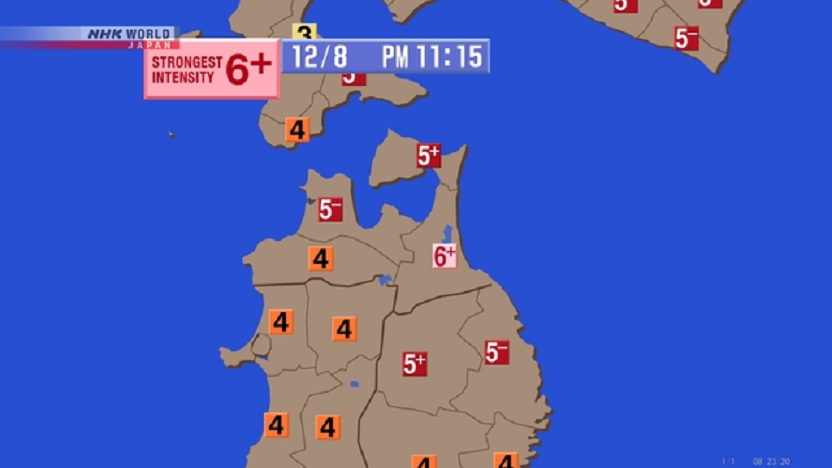
The earthquake struck off the eastern coast of Aomori Prefecture at 11:15 p.m. on Monday.

The Japan Meteorological Agency has downgraded the magnitude of the quake centered off the Pacific coast in Aomori Prefecture to 7.5 from 7.6.

The depth has also been adjusted to 54 kilometers, from an initial estimate of 50 kilometers.

Tremors with an intensity of upper 6 on the Japanese intensity scale of 0 to 7 were observed in the city of Hachinohe in Aomori Prefecture.

As of 1:00 a.m., six people in Aomori have been injured by either falling down or getting hit by falling objects at their homes.

Tsunami advisories lifted

Authorities had issued a tsunami warning for Iwate Prefecture and parts of Hokkaido and Aomori.

At Kuji Port in Iwate, a tsunami measuring 70 centimeters was observed. In Hokkaido, a 50-centimeter tsunami was seen in Urakawa Town and a 40-centimeter tsunami was observed at Mutsuogawara Port.

The Japan Meteorological Agency says: it is the first time the agency has issued a tsunami warning since July, when a powerful quake off Kamchatka, Russia, prompted it to issue one for Japan’s Pacific coastal areas.

Over 3 hours later, authorities downgraded the tsunami warning to advisories. And they lifted all tsunami advisories for the Pacific coastline of northern Japan at 6:20 a.m. on Tuesday.

‘Long-period ground motions’ recorded

According to authorities, long-period ground motions were recorded during the Monday earthquake.

The motions are slow, large-amplitude seismic waves with frequencies of 2 seconds or longer that occur during a large earthquake. Such motions are known to have a significant impact on high-rise buildings.

Strong long-period motions, classified class-3, the second highest in the 4-level scale were observed in the village of Rokkasho in Aomori Prefecture. Such class-3 waves are strong enough to make it difficult for people in a high-rise building to stand up.

‘An alert for a potential mega quake’ issued

Officials at Japan’s Meteorological Agency have issued an alert for a potential mega quake following Monday’s quake.

A mega quake could trigger tsunami along Japan’s Pacific coast from Hokkaido to Chiba Prefecture.

Officials are urging people to check evacuation routes, prepare emergency kits, secure home furniture and confirm backup food, water and portable toilets.

People along the Pacific coast in those areas should remain on the alert during the next week, even though an evacuation recommendation will not be issued.

The alert is the first since this category of warning was started in 2022.

Morikubo Tsukasa, Cabinet Office official for disaster preparedness, has held a news conference over a potential mega quake.

Morikubo: Based on the statistics of earthquakes that have occurred around the world so far, there is a possibility that a large-scale earthquake with a magnitude of 8 or higher could occur as a follow-up earthquake along the Japan Trench and the Chishima Trench off Hokkaido. It is unclear whether a large-scale earthquake will occur. But everyone should heed the call to take precaution to protect their own lives.

Residents ordered to evacuate

After tsunami warnings were issued, some municipalities in Hokkaido, and the Tohoku region issued evacuation orders to residents.

Traffic disrupted on Monday

East Japan Railway Company says that as of Tuesday, outbound trains on the Tohoku Shinkansen have been suspended between Fukushima and Shin-Aomori stations due to the earthquake. The company says three trains stopped in this section.

The company says that it is checking for any damage to railway tracks and that it remains unclear when services will resume.

The Morioka branch of East Japan Railway says that as of midnight on Tuesday, services on the Tohoku Main Line were suspended in Iwate Prefecture.

It says two trains made emergency stops. It remains unclear when services will resume. There are no reports of injuries.

As for Hokkaido, the operator of its busiest airport, New Chitose Airport near Sapporo, says that as of 11:40 p.m. on Monday, it was checking whether there are any abnormalities on two runways.

Highways have been affected. East Nippon Expressway Company says that as of 11:45 p.m. on Monday, traffic was completely stopped between the Shiraoi and Shinchitose Airport Interchanges and between the Tomakomai Higashi and Numanohata Nishi Interchanges.

Major traffic disorder unlikely on Tuesday

East Japan Railway Company says there has been no impact on its bullet train and regular train services after authorities issued the alert for potential megaquake following magnitude-7 or over quakes related to Monday’s quake. The operator, however, warns that delays or cancellations are still possible if damage to infrastructure is confirmed.

All Nippon Airways and Japan Airlines say they plan to operate as usual starting Tuesday.

According to Cabinet Office guidelines, no restrictions will be placed on railways, airports and roads, even after such an alert is issued. The authorities are supposed to provide the public with information about locations they consider being vulnerable to a possible major quake, as well as evacuation sites.

In August 2024, authorities issued a Nankai Trough megaquake advisory after a powerful earthquake struck in southern Japan. The operator of the Tokaido Shinkansen was forced to slow down its bullet trains in some sections over the ensuing one-week period.

Power Companies: No abnormalities at nuclear plants

Tokyo Electric Power Company says it has confirmed that there are no abnormalities at the Fukushima Daiichi and Daini nuclear plants.

The company says it halted the release of treated and diluted water from the Fukushima Daiichi nuclear power plant at 11:42 pm on Monday, as per predetermined procedures.

The facility suffered a triple meltdown during the March 2011 earthquake and tsunami. The water used to cool molten fuel has been mixing with rain and groundwater.

That has been treated to remove most radioactive substances, except tritium. It’s then diluted, reducing levels of tritium to well below the World Health Organization’s guidance for drinking water, before it is released into the ocean.

TEPCO also ordered some employees at the facility to evacuate. There have been no reports so far of injuries at the nuclear power plant.

Tohoku Electric Power Company says no abnormalities have been detected at the Higashidori nuclear power plant in Aomori Prefecture and the Onagawa plant in Miyagi Prefecture.

Hokkaido Electric Power Company says no problems have been found at the Tomari nuclear power plant in the prefecture.

Government bracing for damages

The Japanese government set up a task force at the crisis management center in the prime minister’s office at 11:16 p.m. on Monday in response to the earthquake.

Prime Minister Takaichi Sanae entered the prime minister’s office shortly after 11:50 p.m.

She instructed the government to immediately provide information on any tsunami and evacuation orders to the people in an appropriate manner, take thorough measures to prevent harm, such as evacuating residents, and get a grasp of the extent of damage as soon as possible.

Takaichi: The central government will work closely with local governments and make the utmost effort to carry out measures, such as emergency response, including rescue for the affected people.

Chief Cabinet Secretary Kihara Minoru held a news conference on Tuesday. Kihara said the government continues to assess the extent of the damage.

He added that the government is devoting all its efforts to disaster prevention measures, with rescue and relief efforts as its top priority, led by the police, fire departments, Self-Defense Forces, and Japan Coast Guard.

Expert view on the quake

Sakai Shinichi, professor at the Earthquake Research Institute of the University of Tokyo, says: If this was a shallow earthquake centered in the sea, there is a high possibility that a tsunami has already occurred. People should stay away from the coast. It is important to evacuate and to take measures to stay warm.

Sakai says: The epicenter may be north of the epicenter area of the 2011 Great East Japan Earthquake. This time, the earthquake is believed to have occurred at the plate boundary, so I think it was a slightly larger earthquake. The magnitude could be revised in the future.

[NHK]



Continue Reading
Advertisement
Click to comment

Leave a Reply

Your email address will not be published. Required fields are marked *

Latest News

Pope pictured for first time since surgery and cancer diagnosis

Published

on

By

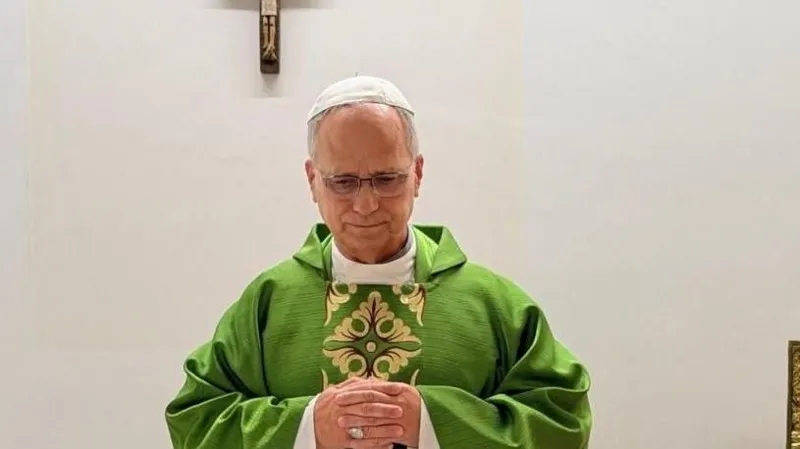
Pope Leo thanked medical staff as he was pictured for the first time since his lung surgery [BBC]

Pope Leo XIV has been pictured celebrating Mass from hospital, in the first images of him released by the Vatican since he underwent lung surgery.

The 71-year-old pontiff was diagnosed with lung cancer after the surgery at Rome’s Gemelli Hospital on Tuesday afternoon, which the Vatican said had been “successful” and proceeded without complications.

The images shared on Friday showed the Chicago-born Pope wearing a green robe while standing behind a makeshift altar on the tenth floor of the hospital.

Pope Leo “celebrated with the medical and nursing staff” and thanked workers for their service, the Vatican press office said.

On Friday, the Pope’s doctors said tests had shown “a steady improvement in his general condition” since his procedure.

His doctors said that a chest X-ray indicated “good recovery of the operated lung”.

The whole lower lobe of the Pope’s right lung was removed “to ensure the procedure was radical”, the Vatican said following the surgery.

“After the operation, the Pope awoke normally and returned after a brief period of observation to his room,” it said earlier, before he spent a “peaceful night” at the hospital.

Reuters Pope Leo celebrates mass from hospital, he is wearing a green robe and standing before a white wall adorned with a wooden crucifix. He is standing next to his personal secretary who holds a red book and his wearing white and green.
The pontiff is expected to remain at the hospital for about a week as he recovers [BBC]

Pope Leo first announced that he would be having the operation during his weekly Sunday prayers, telling the crowd in St Peter’s Square that doctors had found a “well-contained” nodule on his lung “at an early stage” and advised him to have it removed.

Nodules are quite common and not necessarily cancerous, but after it was examined the medical team confirmed it was, “as suspected by pre-operative tests”, the Vatican said. He was diagnosed with lung adenocarcinoma.

The Vatican has stressed that the Pope had shown no symptoms of infection or illness prior to the procedure.

[BBC]

Continue Reading

Latest News

Qatar announces ‘massive’ solar plant project in Lebanon

Published

on

By

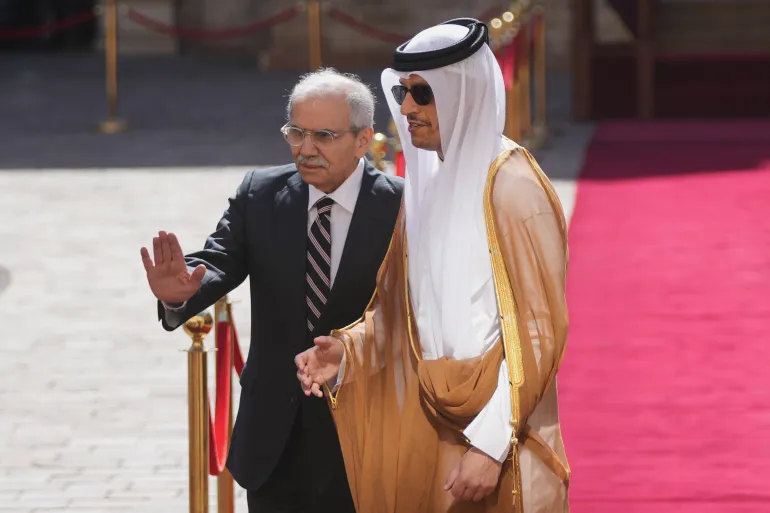
Lebanon's prime minister welcomed Qatar's PM in Beirut on Friday [Aljazeera]

Qatar’s prime minister has announced plans to set up what he described as a “massive” solar plant in Lebanon to help ease its energy crisis.

Sheikh Mohammed bin Abdulrahman bin Jassim Al Thani made the announcement during his visit to Beirut on Friday, after meeting his Lebanese counterpart, Nawaf Salam.

“We have agreed to establish a comprehensive framework for cooperation in the energy sector and to present viable solutions,” Sheikh Mohammed said.

QatarEnergy has reached an agreement with French company TotalEnergies to jointly develop a solar power plant in Lebanon as an initial project.

The aim is to develop a major investment project “that would benefit the Lebanese economy, as well as the Qatari companies and entities participating in it”, he added.

Prime Minister Salam said he would put the plans for Lebanon’s electricity sector to the Lebanese Cabinet soon.

“The Qatari side will fund, implement and activate the project without any cost on the Lebanese state,” Lebanon’s leader said, adding that such a move is important because of the country’s financial crisis.

Lebanon’s state electricity company is one of the biggest sources of debt, haemorrhaging about $40bn over past decades with a bloated workforce and outdated infrastructure. The company provides only a few hours of electricity a day and the state, until a year ago, took advances from the Central Bank when diesel fuel ran out.

Sheikh Mohammed said Doha stands in “solidarity with the Lebanese people” and the entire region “in this dire hour”. Lebanon has been struggling with multiple energy crises in recent years and the situation has been compounded by the country’s financial collapse and Israel’s ongoing assault.

Earlier in the day, the Qatari PM also met Lebanon’s president and parliament speaker.

Among the topics discussed was the situation in southern Lebanon, where Israel continues its assault, capturing dozens of towns and villages.

Sheikh Mohammed said “Israeli violations within the Lebanese territories” were a large part of his talks.

He said that Israel should withdraw from Lebanon and cease its attacks, adding that Qatar is working in coordination with the United States to help lay the groundwork for future reconstruction in southern Lebanon to allow displaced people to return to their homes.

Israeli attacks on southern Lebanon have continued despite a ceasefire agreed in June. Under the agreement brokered by the US, the Lebanese government is to disarm Iran-backed Hezbollah. In return, Israeli forces will gradually withdraw from southern areas that they occupy. However, Hezbollah is not part of the agreement and has refused to disarm until Israel withdraws from the country.

Lebanese authorities say Israeli attacks have killed more than 4,300 people in the country since March. About 1.2 million people were also displaced in Lebanon at the height of the war.

Although most have returned home since the June ceasefire, more than 300,000 people remain displaced, according to the International Organization for Migration.

Lebanon’s PM Salam thanked Qatar for its “continuous” support during some of Lebanon’s “darkest hours”.

[A;jazeera]

Continue Reading

Business

Samagi Spice Exports to launch Ceylon Cinnamon based beverage range

Published

on

By

The SPICEUP range of Cinnamon based beverages being launched by Samagi

Samagi Spice Exports (Pvt) Ltd is set to introduce SPICEUP, a new Sri Lankan  beverage brand, at its grand launch on Saturday 17 October 2026 at the University of Ruhuna, Matara.

With a history dating back to 1969, Samagi Spice is taking a new step in its business journey by  expanding beyond traditional spice exports into value added consumer products.

Through SPICEUP, the company aims to connect Sri Lanka’s internationally recognized cinnamon heritage with contemporary beverage innovation, creating a distinctive identity in the country’s beverage market.

The SPICEUP range will feature a variety of products, including Original, Cream Soda, Power, GO, Cool, Burn, Memo+ and Zingy. Designed to offer consumers a range of refreshment experiences, the products will be available in two packaging formats: cans and plastic bottles, catering to different consumer preferences and occasions.

At the heart of the initiative is the potential of true Ceylon cinnamon as a value-added ingredient in the beverage industry. Rather than limiting cinnamon to its traditional uses, SPICEUP seeks to explore new opportunities for bringing this iconic Sri Lankan spice into everyday consumer experiences.

 The initiative also highlights the broader potential of transforming the country’s agricultural resources into innovative products with commercial value.

The launch ceremony will be attended by legendary Sri Lankan cricketer Sanath Jayasuriya as the Chief Guest, alongside representatives from the Export Development Board (EDB), Industrial Development Board (IDB), Cinnamon Research Academy and other industry  stakeholders.

A major highlight of the occasion will be the official unveiling of the SPICEUP product range, followed by the launch of the brand’s official website. The event will also feature the signing of a Memorandum of Understanding (MoU) between Samagi Spice Exports and the University of Ruhuna, marking an important step towards strengthening collaboration between industry and academia.

The proposed collaboration will provide a platform for future research, product innovation and value addition involving true Ceylon cinnamon. By bringing together business expertise and university-based knowledge, the initiative aims to support the development of innovative, value-added products and contribute to Sri Lanka’s potential in international markets.

With its roots in the country’s spice industry and its ambitions in the beverage sector, SPICEUP is poised to begin a new chapter in Samagi Spice’s journey—one that seeks to bring the distinctive identity of Ceylon cinnamon to a new generation of consumers.

Continue Reading

Trending