
Business
Northern fishermen switch to China-backed sea cucumber boom

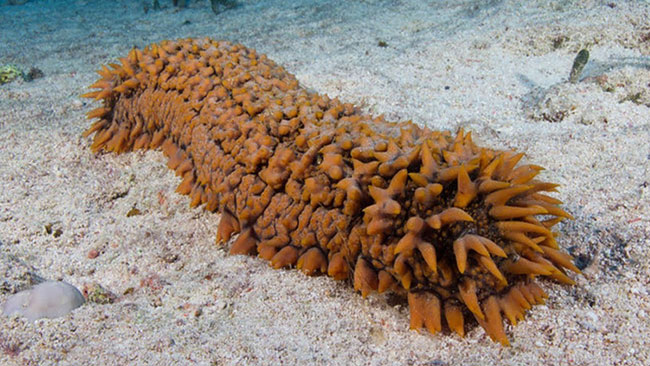
ECONOMYNEXT – Over 600 fishermen in Sri Lanka’s former northern war zone have switched to sea cucumber farming, a booming trade, in the coastal belt of Jaffna and Kilinochchi where a Chinese firm started a hatchery five years ago.
China’s joint venture Gui Lan hatchery in Jaffna’s coastal village of Ariyalai was started when many northern fishermen were finding it harder to catch large fish which is blamed on outlawed bottom trawling employed by Indian vessels.
The fishermen were given one-month-old small sea cucumbers from the hatchery, which were grown in their usual fishing spots in the sea.
N Dhivakaran, president of Jaffna District Sea Cucumber Association, told EconomyNext that over 600 fishermen have now started sea cucumber farming after they saw the potential for a steady income in the new venture.
“There are investors for sea cucumber farming. Now the fisheries ministry also promotes sea cucumber farming through incentives,” said Dhivakaran.
Dhivakaran maintains a 10-acre farm near the Gui Lan hatchery in Ariyalai. He now sells between 2,000 and 3,000 sea cucumbers a month, earning between 60,000 and 90,000 rupees in revenue.
“We sell a sea cucumber once it reaches 300 grams in weight,” he said. “I started the farm with 40,000 small sea cucumbers and now the hatchery’s production is not enough. So I try to get additional sea cucumbers from other sea areas.”
A 300 gram sea cucumber is sold for around 400 rupees to local agents who export them to countries like Singapore and Hong Kong.
“We do not have the proper certification process to export them directly to China. Our sea cucumbers go through that certification process in Singapore and Hong Kong before they are exported to China. So we are losing some foreign exchange because we do not have the certification process.”
China had been long awaiting an entry into Sri Lanka’s former northern war zone to strengthen its foothold in Sri Lanka, analysts and government officials have said.
Gui Lan Hatchery was its first project in the North, a project that’s being touted as assistance to revive the livelihoods of northern fishermen. Some legislators in the North, however, have raised concern over growing Chinese presence in the former war zones where India has historically had held more sway given in strong cultural and religious ties.
But fishermen now appreciate the Chinese move mainly because of a lingering Indian bottom trawling issue that has hit their livelihoods hard.
“We have provided over 170,000 small sea cucumbers to fishermen in both Jaffna and Kilinochchi district,” Sri Ganeshan, the officer in charge at the Gui Lan hatchery told EconomyNext.
“There is a huge demand now and many people are waiting to register companies and start sea cucumber farming. The Chinese have been educating us on the technology to produce sea cucumbers and it has been helping a lot of people now.”
Sea cucumbers are considered a delicacy in the Far East, with a majority of consumers in markets like China, Hong Kong, Taiwan, Singapore, Korea, Japan and Malaysia. In China, high quality specimens can occasionally fetch over 3,000 US dollars per kilogram after being cooked.
Demand for sea cucumber in the international market is growing even though it is only now being popularized among the Sri Lankan community. The price of one kilogram of sea cucumber in the international market garners a value of Rs 20,000 to 30,000.
Gui Lan is the first hatchery in Sri Lanka to mass-produce high value sandfish sea cucumber for commercial farming. Most sandfish sea cucumbers are depleting due to overexploitation, and hatchery bred juveniles are given to farmers to grow in their respective farms.
These factors have boosted the drive to grow more sea cucumbers and people like Dhivakaran want to expand their farming because of the return.
“I am going to start breeding sea cucumbers separately from next month,” he said.


The recent announcement of Wealth Trust Securities Ltd.’s Rs. 500.8 million Initial Public Offering -IPO- comes at a moment when Sri Lanka’s interest-rate environment is gradually easing, allowing well-capitalised primary dealers to expand their trading portfolios and secure long-term positions in government securities.
Company chairman Senaka Weerasooria told journalists in Colombo that the IPO is not merely a capital-raising exercise, but a reinforcement of the disciplined structure that has defined the company since its inception.
He noted that WTS enters the public market with what is already one of the most robust capital bases in the industry, and with “absolute confidence that investors are joining a journey that has consistently returned value.”
Weerasooria said the capital infusion will further solidify WTS’s ability to absorb volatility, particularly amid cyclical movements in Treasury yields.
Despite maintaining a conservative trading outlook, the company has managed to average a 31% ROE over the past twelve years — a figure management repeatedly highlighted as evidence of resilience across both tightening and loosening rate cycles.
Managing Director and CEO Romesh Gomez said that in recent months the direction of policy rates and market liquidity has begun shifting favourably, creating clear value-accretion opportunities for disciplined portfolio expansion. With additional capital, he noted, WTS has greater room to capture advantageous auction positions, broaden secondary market activity and align its investment scale to emerging market windows.
Gomez acknowledged that FY25 reflected compressed performance due to systemic realignment, with revenue at Rs. 4.6 billion and PAT at Rs. 1.2 billion. However, he pointed out that profit sustainability, even through a difficult cycle, speaks to strong operational controls. The A- rating with a Positive outlook continues to stand, reinforcing the company’s position as a stable counterparty in a specialised sector.
Asia Securities Advisors, managing the IPO, pointed out that the offer price of Rs. 7 presents meaningful upside when benchmarked against underlying valuation metrics. The move into the listed environment, they noted, enhances governance visibility — a point increasingly valued among institutional investors participating in the Government securities market.
By Ifham Nizam
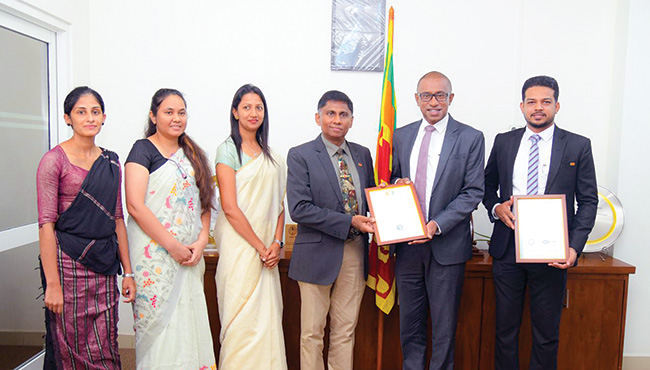
BoardPAC, the global leader in digital board meeting automation, has secured the Carbon Neutral Certification for 2024, marking the fourth consecutive year the company has achieved this milestone. The certification, awarded by the Sri Lanka Climate Fund (SLCF) under the Ministry of Environment in October 2025, underscores BoardPAC’s commitment to environmental sustainability and responsible corporate governance.
BoardPAC’s operations, spanning over 40 countries, were assessed against the ISO 14064 – 1:2018 standard, and the company’s organization-level Greenhouse Gas (GHG) emissions were successfully offset, reflecting its ongoing commitment to reducing its environmental impact.
Business
Uber marks 10 years in Sri Lanka: Moving People, Powering Livelihoods, Impacting Communities


Uber today marked ten years of operations in Sri Lanka, a decade in which the platform has reshaped how people commute, and how thousands of Sri Lankans earn a livelihood. Over the past decade, ride-hailing has become one of the most transformative shifts in Sri Lanka’s urban mobility landscape, providing safe, reliable and affordable transport at scale.
Chathuranga Abeysinghe, Deputy Minister for Entrepreneurship, Ministry of Industries and Entrepreneurship Development, Government of Sri Lanka, graced the milestone event as the Chief Guest. U.S. Ambassador Julie Chung attended as the Guest of Honor, joined by Akanksha Singh, Head – South Asia Markets, Uber, and Kaushalya Gunaratne, Country Manager – Mobility, Uber Sri Lanka.
As per the 2024 Sri Lanka Economic Impact Report, compiled by global policy research firm – Public First, Uber and Uber Eats together generated over LKR 160 billion in economic activity in Sri Lanka within a single year. Since its entry in Sri Lanka in 2015, Uber rides have covered over 1.15 billion kilometers – equivalent to nearly 3000 trips from Earth to the moon! Over 320,000 Sri Lankans have earned through the platform as drivers.
Uber has also supported the tourism ecosystem, enabling more than 700,000 airport trips, connecting visitors seamlessly to their destinations. Over the last year, we’ve further intensified our service in the Western and Central provinces and expanded our offerings in the Southern and Northern provinces – bringing its services closer to more communities across the country. Uber has emerged as one of the most preferred ride-hailing platforms across the island, offering affordable, reliable, and safer rides at different price points.
Deputy Minister for Entrepreneurship, Ministry of Industries and Entrepreneurship Development, Government of Sri Lanka, Chathuranga Abeysinghe, said, “Over the past decade, Uber has become part of the fabric of daily life in Sri Lanka – not only by helping people get where they need to go, but by enabling thousands to earn an income with dignity and flexibility.

Level III landslide early warnings issued to the Districts of Kandy, Kegalle, Kurunegala and Matale extended

“We cannot allow flooding to become a part of the daily lives of the people in the Colombo District” – PM

Russia gifts 35 tonnes of Humanitarian Aid to Sri Lanka

Sri Lanka squad named for ACC Men’s U19 Asia Cup

Hospital CCTV helps clear long jumper of doping

Tickner and Rae bowl West Indies out for 205 to give New Zealand the edge

‘Dates have the highest sugar content to fight Coronavirus’

Sunday Island 27 December – Headlines

#SundayIsland 17th December – Headlines

Sunday Island – 28th March

Sunday Island Headlines – 21 March

Sunday Island – 21st February – Headlines
-

 News3 days ago
Over 35,000 drug offenders nabbed in 36 days
-
 News7 days ago
Level III landslide early warning continue to be in force in the districts of Kandy, Kegalle, Kurunegala and Matale
-

 Business5 days ago
LOLC Finance Factoring powers business growth
-

 News5 days ago
CPC delegation meets JVP for talks on disaster response
-

 News5 days ago
A 6th Year Accolade: The Eternal Opulence of My Fair Lady
-

 News2 days ago
Cyclone Ditwah leaves Sri Lanka’s biodiversity in ruins: Top scientist warns of unseen ecological disaster
-

 News3 days ago
Rising water level in Malwathu Oya triggers alert in Thanthirimale
-
 Features4 days ago
The Catastrophic Impact of Tropical Cyclone Ditwah on Sri Lanka: