
Latest News
North Korea says rocket carrying satellite exploded mid-flight


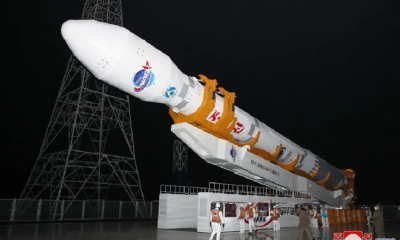
North Korea has said its attempt to put a second spy satellite into orbit failed when the rocket it was on exploded.
The admission came late on Monday after South Korea’s military reported the launch of an “unidentified projectile”.
“The launch of the new satellite carrier rocket failed when it exploded in mid-air during the flight of the first stage,” the deputy director general of North Korea’s National Aerospace Technology Administration said in a report carried by state media.
An initial analysis suggested that the cause was a newly developed liquid fuel rocket motor, but other possible causes were being investigated, the report said.
Officials in South Korea and Japan had said earlier that the launch appeared to have failed.
South Korea’s Joint Chiefs of Staff said North Korea fired an “unidentified projectile southwards” over the Yellow Sea and that several minutes afterwards many fragments were spotted in the sea.
In Japan, public broadcaster NHK reported a similar outcome.
A senior Japanese Ministry of Defence official told reporters: “The missile did not fly into the area that had been announced, and the situation is not as North Korea had intended. We are still analysing whether it is a satellite or not,” Japan’s Kyodo news agency reported.
Japan had issued an emergency alert ordering evacuations in southern Okinawa prefecture before lifting the warning and saying the rocket was not expected to fly over Japanese territory.
North Korea issued a notification of its launch plan earlier in the day, saying the launch window would last until June 4.
Nuclear-armed North Korea successfully launched its first spy satellite in November drawing international condemnation.
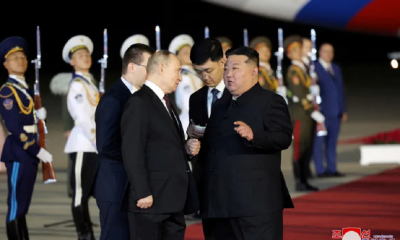
The US called the launch a “brazen violation” of UN sanctions, two months after Russian President Vladimir Putin met North Korean leader Kim Jong Un at the Vostochny Cosmodrome in eastern Russia and promised technical assistance to the isolated country.
Kim said at the end of last year that Pyongyang would launch three more military spy satellites in 2024 as he continues a military modernisation programme that saw a record number of weapons tests in 2023.
South Korean President Yoon Suk-yeol said another satellite launch – North Korea’s fourth attempt – would “undermine regional and global peace and stability” while the South Korean military conducted attack formation flight and strike training to demonstrate “the strong capabilities and will of our military”.
Experts said spy satellites could improve Pyongyang’s intelligence-gathering capabilities, particularly over South Korea, and provide crucial data in any military conflict.
Seoul and the United States accuse the North of sending Moscow weapons for use in its war in Ukraine in return for the technical assistance.
A group of Russian engineers entered North Korea to help with the launch preparations, South Korea’s Yonhap news agency reported on Sunday, quoting a government official.
(Aljazeera)









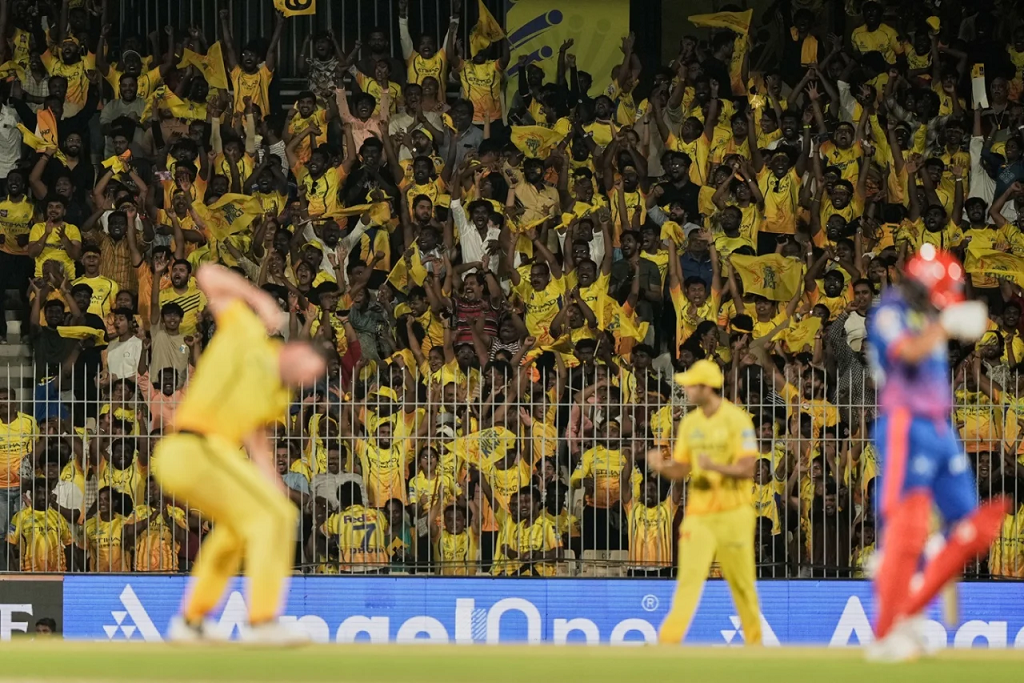
Sanju Samson’s first century for Chennai Super Kings (CSK) set up the team’s first win in IPL 2026 and their first win at home after six successive defeats, stretching back to the previous season.
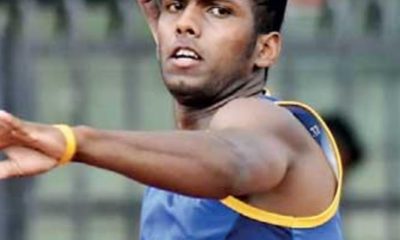
Samson flew out of the blocks in the powerplay, scoring 45 of CSK’s 61 runs, in the first six overs. He had over 32,000 fans whistling at Chepauk when he reached his half-century off 26 balls. He had those fans whistling louder and chanting his name when he converted it into a 52-ball century.
A fifty from Ayush Mhatre, before he was retired out, and a cameo from Shivam Dube took CSK up to 212 for 2. That total, however, appeared smaller when DC’s openers Pathum Nissanka and KL Rahul blazed past fifty in the fourth over of their chase. CSK then struck thrice in the next three overs to send the chase spiralling out of DC’s control.
Though Tristan Stubbs battled with 60 off 38 balls, the mounting asking rate was too much to overcome. Jamie Overton’s 4 for 18, which included the prized scalp of Stubbs, was central to CSK’s successful defence.
After CSK were asked to bat first, Samson scythed the second ball he faced from debutant Auqib Nabi for four. He never let his attacking intent or enterprise let up in the powerplay, crashing a total of nine fours in 19 balls in the powerplay. In stark contrast, Ruturaj Gaikwad managed to find the boundary just once in 17 balls during this phase.
Gaikwad’s first-15-ball strike rate of 104.54 in four innings this season is the lowest among 20 batters who have opened at least twice.
When Gaikwad was itching to break free after the powerplay, Axar Patel darted one into the red-soil pitch and cramped the batter on the pull, having him splice a catch to deep midwicket for 15 off 18 balls.
Lungi Ngidi’s slower ball, which he developed during his time at CSK under Dwayne Bravo, has made a number of batters look silly in this IPL and the T20 World Cup prior to it. But when Ngidi pulled out the variation for the first time on Saturday, Samson picked it, held his shape for long enough and flayed it away past sweeper cover. When Ngidi responded with an on-pace short ball outside off, Samson opened the face of the bat and dinked it between the keeper and short third for four more.
But it wasn’t until the 11th over that he hit a six, which was also CSK’s first six on the day. When T Natarajan missed a yorker and bowled a full-toss, Samson slugged him high and far over midwicket. In all, Samson took the left-arm seamer for 33 off 13 balls. It also included the edged four that brought him his hundred in the 18th over.
This was Samson’s fourth ton in the IPL. Only Virat Kohli (8), Jos Buttler (7), Chris Gayle (6) and KL Rahul (5) have hit more hundreds than Samson in the league. DC could’ve cut Samson’s knock short on 52 had Nissanka not dropped a catch at long-off.
Mhatre raised his fifty off 27 balls, but was retired out after he managed only eight off his last nine balls. Samson and Dube then combined to push CSK past 210.
The presence of three right-handers in DC’s top three encouraged CSK to bring in left-arm fingerspinner Akeal Hosein as their Impact Player. Hosein, though, showed signs of early nerves, bowling two front-foot no-balls in the first over of the chase. One of the resultant free hits was swiped over midwicket for four by Nissanka. Hosein ended up conceding 20 runs in his two powerplay overs and didn’t return to bowl.
Nissanka also lined up left-arm seamer Khaleel Ahmed for a pair of fours and a six in the second over. Rahul moved to 18 off 10 balls before Khaleel stopped him in his tracks with a short ball into the pitch. Despite that, DC scored 61 in their first five overs.
At the start of the final over of the powerplay, Anshul Kamboj had Nissanka glancing the ball to Khaleel at short fine leg, but he shelled the chance. It didn’t cost CSK anything as Kamboj had Nissanka chipping it to mid-on, where Dewald Brevis, who had recovered from a side injury, held onto the catch.
Left-arm quick Gurjapneet Singh then marked his IPL debut with a first-ball wicket. He darted one short and wide, having Axar slicing it to point, where Sarfaraz Khan dived to his right and plucked the ball out of thin air.
Overton then hit a hard length and had Sameer Rizvi holing out to deep midwicket for 6 off 19 balls. Overton kept hitting a hard length and made life harder for DC’s middle order.
Stubbs then mounted a late fightback with a half-century and narrowed the equation to 32 off 12 balls. Overton, though, cranked it up to nearly 145kph and had him splicing a catch to mid-off in the penultimate over. Kamboj then finished off DC in the final over, sending a packed weekend crowd into raptures.
Brief scores:
Chennai Super Kings 212 for 2 in 20 overs (Sanju Samson 115*, Rutraj Gaikwad 15, Ayush Mhatre 59 retired out, S hivam Dube 20*; Axar Patel 1-39) beat Delhi Capitals 189 in 20 overs (Pathum Nissanka 41, KL Rahul 18, David Miller 17, Tristan Stubbs 60, Ashutosh Sharma 19; Khaleel Ahmed 1-40, Jamie Overton 4-18, Gurjapneet Singh 1-39, Anshul Kamboj 3-35, Noor Ahmad 1-36) by 23 runs
[Cricinfo]
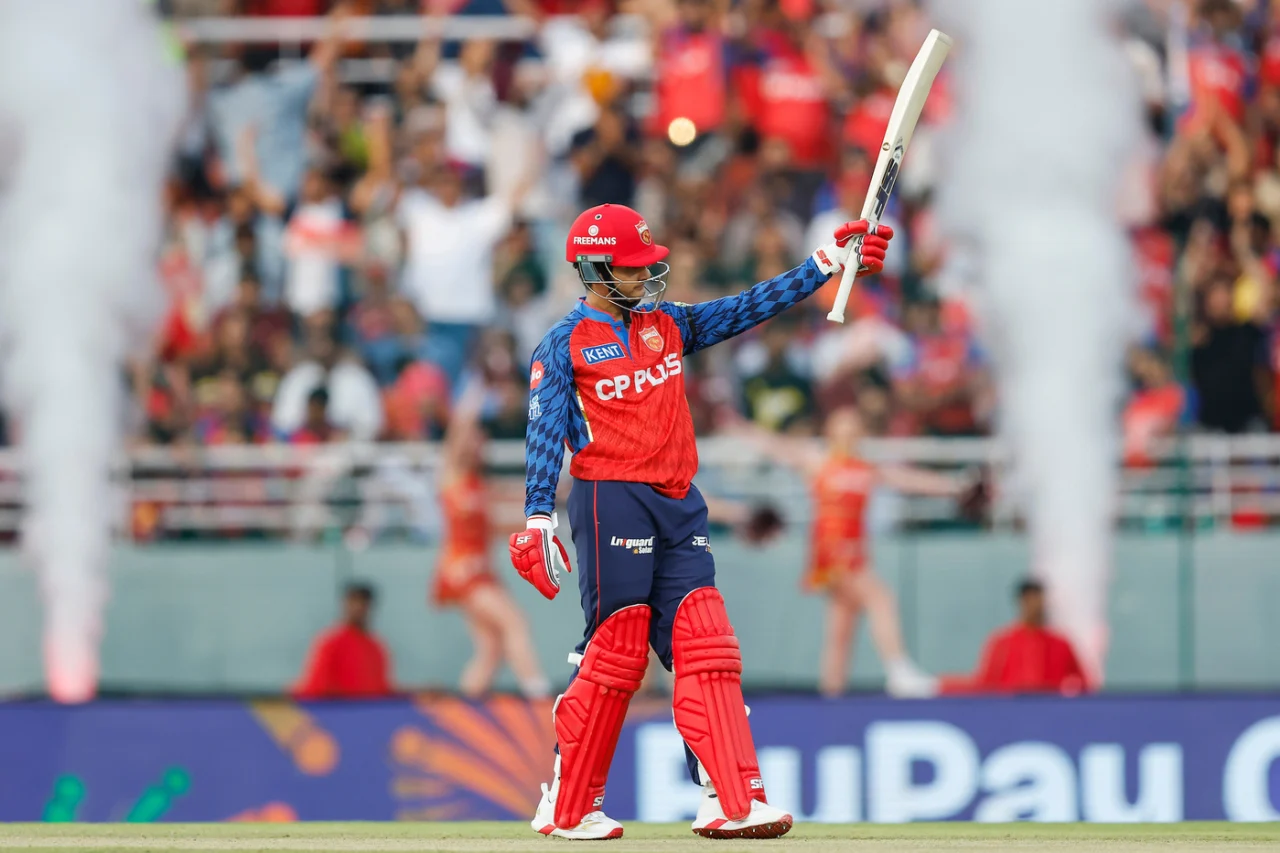
Punjab Kings trumped Sunrisers Hyderabad in a battle of explosive top orders, chasing down 220 with more than an an over to spare. Abhishek Sharma and Travis Head put on 120, and Prabhsimran Singh and Priyansh Arya responded with a 99-run partnership of their own before Shreyas Iyer ensured the rest of the chase went smoothly.
The winning runs were scored by Shashank Singh, who was more pivotal on the day with the ball, dismissing both SRH openers in a single over to begin a slowdown they couldn’t recover from. Having got to 120 for no loss in eight overs, SRH scored just 99 in their last 12.
Shashank took 2 for 20 in three overs, finishing with an economy rate of 6.66 in a game where 442 runs were scored.
This was the tenth time PBKS had chased down a 200-plus target, the most times by any team in the IPL.
They teased it against Kolkata Knight Riders, but in New Chandigarh, the Travishek show well and truly arrived at IPL 2026. Abhishek slapped the first legal delivery of the game over covers to lay down the marker. He drove Xavier Bartlett down the ground twice next up. And then in the third over, the fireworks really began.
Abhishek pulled a short ball from Arshdeep Singh over midwicket and then slapped a slower ball down the ground for back-to-back boundaries. Arshdeep went on to bowl four wides in his next five attempts to keep the ball out of Abhishek’s arc. Under pressure, he ended up bowling closer to off and was thumped down the ground for the first six of the game. When Arshdeep went around the wicket and bowled short and across the left-hander, Abhishek went up and over short third for another six.
Head, on 3 off 5 at this point, joined the party by taking down Marco Jansen for two fours and a six in the fourth over.
When PBKS turned to Vijaykumar Vyshak, Abhishek welcomed him with a six over cover and then hit him for three more for the second 24-run over of the powerplay, in the process bringing up an 18-ball fifty. Head followed up with a hat-trick of boundaries against compatriot Bartlett. One legal ball later, when Abhishek pulled a short ball in front of square for a six, SRH brought up their hundred in 35 balls, making it the fifth time a team had reached 100 inside the powerplay – three of them had come courtesy this opening pair. Their 105 for no loss at the end of the sixth over was the joint-third-highest powerplay score in the IPL.
With PBKS’ frontline bowlers getting hit around the park, Shreyas turned to Shashank’s medium-pace, and it turned out to be the turning point in the game.
He conceded just six runs off the first over after the powerplay, and off the first ball of his next over he foxed Head with a slower ball that he chipped tamely to long-off. A single and a wide later, he had Abhishek slicing to cover for 74 off 28. With that, Shashank had three IPL wickets, and they were of Abhishek, Head and Abhishek.
From there, the scoring rate dropped significantly. Ishan Kishan scored briskly, but Jansen took a screamer running from deep midwicket to end his cameo in the 14th over. Heinrich Klaasen, meanwhile, could never really get going, and fell as he tried to accelerate at the death, falling for 39 off 33. In the end, SRH finished on 219 for 6, the lowest first-innings total when an IPL team has scored 100 or more in the powerplay.
Chasing 220 can be daunting. But perhaps less so if you’re chasing 220 when you know your opponents left some runs out there, especially in the Impact Player era.
SRH opted for Harsh Dubey’s left-arm spin first up and Arya welcomed him with a sweep for four, before launching the last two balls of the over down the ground – once over the rope and once along the carpet – to knock 18 runs off the target.
Then Prabhsimran took over the scoring. The next three overs went for 37, to which Arya contributed just the one run. Prabhsimran took a special liking to Jaydev Unadkat, whom he hit for three sixes.
The fifth over by Eshan Malinga went for 17, and PBKS saved the best of the powerplay for the last over, with Arya going 6, 6, 4, 4 to bring up a 16-ball fifty and welcome Harshal Patel into the attack with a 21-run over.
Brief scores:
Punjab Kings 223 for 4 in 18.5 overs (Priyansh Arya 57, Prabhsimran Singh 51,Cooper Connolly 11, Shreyas Iyer 69*, Nehal Wadhera 14, Shashnak Singh 16*; Harsh Dubey 1-38, Shivang Kumar 3-33) beat Sunrisers Hyderabad 219 for 6 in 20 overs (Abhishek Sharma 74, Travis Head 38, Ishan Kishan 27, Heinrich Klaasen 39, Aniket Verma 18; Arshdeep Singh 2-50, Xavier Bartlett 1-42, Shashank Singh 2-20) by six wickets
[Cricinfo]
Latest News
Heat index likely to increase up to ‘Caution level’ at some places in the Northern, North-central, North-western, Western, Sabaragamuwa, Southern and Eastern provinces and Monaragala district

Warm Weather Advisory
Issued by the Natural Hazards Early Warning Centre at 3.30 p.m. on 11 April 2026, valid for 12 April 2026
The Heat index, the temperature felt on the human body is likely to increase up to ‘Caution level’ at some places in the Northern, North-central, North-western, Western, Sabaragamuwa, Southern and Eastern provinces and Monaragala district.
The Heat Index Forecast is calculated by using relative humidity and maximum temperature and this is the condition that is felt on your body. This is not the forecast of maximum temperature. It is generated by the Department of Meteorology for the next day period and prepared by using global numerical weather prediction model data.

Effect of the heat index on human body is mentioned in the above table and it is prepared on the advice of the Ministry of Health and Indigenous Medical Services.
ACTION REQUIRED
Job sites: Stay hydrated and takes breaks in the shade as often as possible.
Indoors: Check up on the elderly and the sick.
Vehicles: Never leave children unattended.
Outdoors: Limit strenuous outdoor activities, find shade and stay hydrated.
Dress: Wear lightweight and white or light-colored clothing.
Note: In addition, please refer to advisories issued by the Disaster Preparedness & Response Division, Ministry of Health in this regard as well. For further clarifications please contact 011-7446491.

Sanju Samson and Jamie Overton deliver first points for Chennai Super Kings

Arya, Prabhsimran and Shreyas help Punjab Kings ace another 200-plus chase

Beauty of Sri Lanka in focus: Global showcase blends art, diplomacy and conservation

Showers expected in the Western, Sabaragamuwa, Central, Southern, North-western and Uva provinces and in Ampara, Batticaloa and Polonnaruwa districts after 1.00 p.m.

Heat index likely to increase up to ‘Caution level’ at some places in the Northern, North-central, North-western, Western, Sabaragamuwa, Southern and Eastern provinces and Monaragala district

Sun directly overhead Cheddikulam, Kebithigollewa, Gomarankadawala and Nilaveli about 12:11 noon. today [12]

‘Dates have the highest sugar content to fight Coronavirus’

Sunday Island 27 December – Headlines

#SundayIsland 17th December – Headlines

Sunday Island – 28th March

Sunday Island Headlines – 21 March

Sunday Island – 21st February – Headlines
-

 News5 days ago
Lankan-origin actress Subashini found dead in India
-

 News3 days ago
AG: Coal procurement full of irregularities
-

 Business2 days ago
Israeli attack on Lebanon triggers local stock market volatility
-

 Business3 days ago
Hayleys Mobility introduces Premium OMODA C9 PHEV
-

 Business2 days ago
HNB Assurance marks 25 years with strategic transformation to ‘HNB Life’
-

 Sports3 days ago
DS to face St. Anthony’s in ‘Bridges of Brotherhood’ cricket encounter
-

 News5 days ago
UN Regional Director launches SL’s first Country Gender Equality Profile during official visit
-

 News4 days ago
AKD admits import of substandard coal, blames technicalities and supplier