
Foreign News
North Korea says it will launch three new spy satellites in 2024

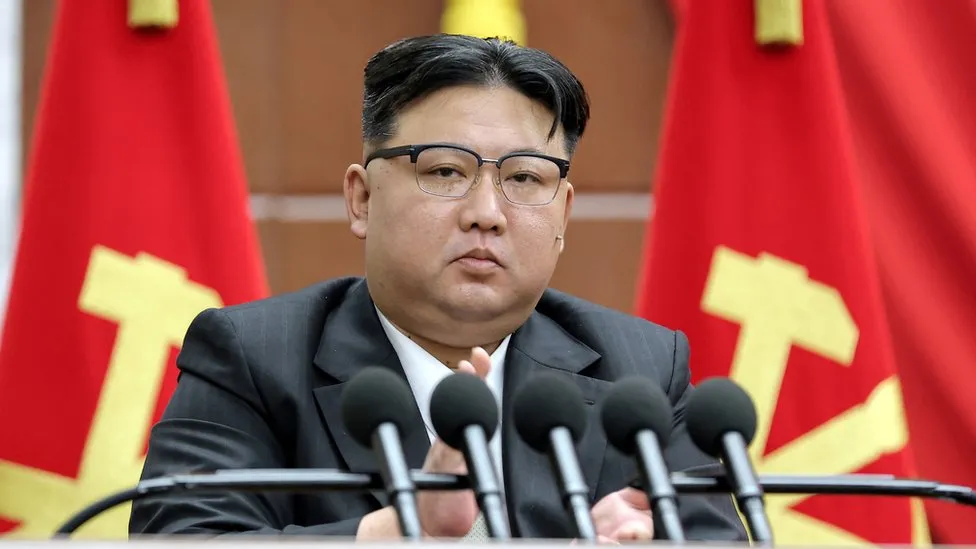
North Korea plans to launch three more spy satellites next year as part of efforts to ramp up its military, the country’s state media has said.
Last month Pyongyang put a spy satellite into space – and claims it has since photographed major US and South Korean military sites.
Setting out his aims for 2024, Kim Jong Un also said his dealings with South Korea would see “fundamental change” and said that he had no option but to press ahead with his nuclear ambitions.
Speaking at an end-of-year meeting of the ruling Workers’ Party of Korea, Mr Kim said unification with South Korea was now no longer possible as Seoul treats his country as an enemy.
It appears to be the first time Mr Kim has said such a thing and marks an official change in policy – although in practice there has been little prospect of unification for some years, with no progress and little effort being made. Relations between the two countries are in a poor state. Last month, following the spy satellite launch, Pyongyang ripped up a deal with Seoul that was aimed at lowering military tensions.
North Korea also continued regular tests of its missiles throughout 2023 – and earlier this month fired its most advanced long rnge missile, defying UN curbs. The launch of the intercontinental ballistic missile – which has the range to reach the North American continent – drew immediate condemnation from the West.
Meanwhile North Korea is unhappy over South Korea ramping up defence cooperation with the US, after a US submarine armed with nuclear weapons arrived in its waters.
Speaking on Sunday, Mr Kim hit out at the US, saying, according to state media: “Because of reckless moves by the enemies to invade us, it is a fait accompli that a war can break out at any time on the Korean peninsula.” He said South Korea had been transformed into a “forward military base and nuclear arsenal” of the US, and added: “If we look closely at the confrontational military actions by the enemy forces… the word ‘war’ has become a realistic reality and not an abstract concept.”
Mr Kim said 2024 would see more military development, including strengthening nuclear and missile forces and building drones. “We must respond quickly to a possible nuclear crisis and continue to accelerate preparations to pacify the entire territory of South Korea by mobilising all physical means and forces, including nuclear force, in case of emergency,” he said.
(BBC)












A drone attack on the town of Kalogi, in Sudan’s South Kordofan region, is said to have hit a kindergarten and killed at least 50 people, including 33 children.
The Rapid Support Forces (RSF), the paramilitary group battling the army in Sudan’s civil war, was accused of Thursday’s attack by a medical organisation, the Sudan Doctors’ Network, and the army.
There was no immediate comment from the RSF.
The RSF in turn accused the army of hitting a market on Friday in a drone attack in the Darfur region, on a fuel depot at the Adre border crossing with Chad.
Sudan has been ravaged by war since April 2023 when a power struggle broke out between the RSF and the army, who were formerly allies.
The reports could not be verified independently.
According to the army-aligned foreign ministry, the kindergarten was struck twice with missiles from drones.
Civilians and medics who rushed to the school were also attacked, it added.
Responding to reports of the attack in Kalogi, a spokesman for the UN children’s agency Unicef said: “Killing children in their school is a horrific violation of children’s rights.”
“Children should never pay the price of conflict,” Sheldon Yett added.
The agency, he said, urged “all parties to stop these attacks immediately and allow safe, unhindered access for humanitarian assistance to reach those in desperate need”.
The RSF accused the army of attacking the Adre crossing because it was used for the “delivery of aid and commercial supplies”.
According to the Sudan War Monitor, a group of researchers tracking the conflict, the attack caused civilian casualties and significant damage to a market.
The military did not immediately comment on the reports from Darfur.
Wedged between Sudan’s capital Khartoum and Darfur, the region made up of North Kordofan, South Kordofan and West Kordofan has been a frontline in the civil war.
The battle for the Kordofans – which have a population of almost eight million – has intensified as the army pushes towards Darfur.
[BBC]
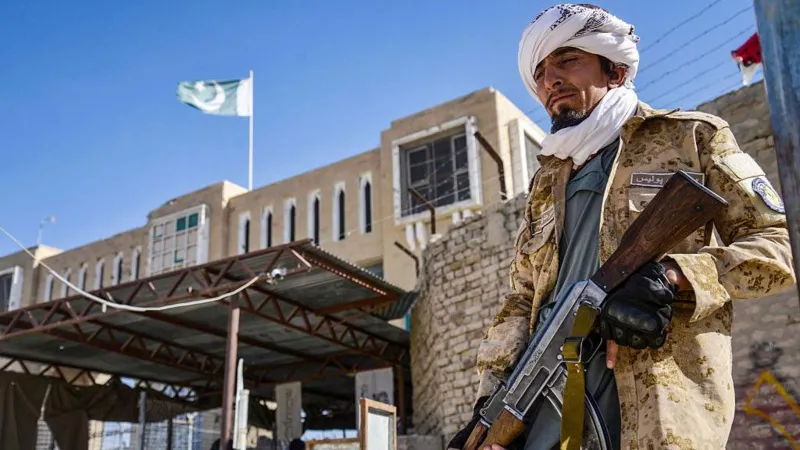
Border clashes have erupted again between Pakistan and Afghanistan’s Taliban forces, with each sides accusing the other of breaking a fragile ceasefire.
Residents fled the Afghan city of Spin Boldak overnight, which lies along the 1,600-mile (2,600 km) border between the two countries.
A medical worker in the nearby city of Kandahar told BBC Pashto that four bodies had been brought to a local hospital. Four other people were wounded. Three were reportedly wounded in Pakistan.
There has been sporadic fighting between the two countries in recent months, while Afghanistan’s Taliban government has also accused Pakistan of carrying out air strikes inside the country.
Both sides have confirmed they exchanged fire overnight but each blamed the other for initiating the four hours of fighting.
Mosharraf Zaidi, a spokesperson for Pakistan’s Prime Minister Shehbaz Sharif, accused the Taliban of “unprovoked firing”.
The statement continued: “An immediate, befitting & intense response has been given by our armed forces. Pakistan remains fully alert & committed to ensuring its territorial integrity & the safety our citizens.”
Meanwhile, a Taliban spokesperson said Pakistan had “once again initiated attacks” and said it was “forced to respond”.
Residents on the Afghan side of the border said the exchange of fire started at around 22:30 (18:00 GMT) on Friday.
Footage from the area showed a large number of Afghans fleeing on foot and in vehicles.
Ali Mohammed Haqmal, head of Kandahar’s information department, said Pakistan’s forces had attacked with “light and heavy artillery” and civilian homes had been hit by mortar fire.
The latest clashes came less than two months after both sides agreed to a ceasefire mediated by Qatar and Turkey.
It ended more than a week of fighting in which dozens were killed – the worst clashes between Pakistan and the Taliban since the group returned to power in 2021 – though tensions have remained high.
The government in Islamabad has long accused Afghanistan’s ruling Taliban of giving shelter to armed groups which carry out attacks in Pakistan.
The Taliban government denies the accusation and has accused Pakistan of blaming others for their “own security failures”.
The Pakistan Taliban have carried out at least 600 attacks on Pakistani forces over the past year, according to the Armed Conflict Location & Event Data Project.
Last week delegations from both sides met in Saudi Arabia for a fourth round of negotiations on a wider peace settlement, but did not reach an agreement.
Sources familiar with the talks told BBC News that both sides had agreed to continue with the ceasefire.
[BBC]

Ireland, Spain, the Netherlands and Slovenia will boycott the 2026 Eurovision Song Contest, after Israel was allowed to compete.
They were among a number of countries who had called for Israel to be excluded over the war in Gaza, as well as accusations of unfair voting practices.
Spanish broadcaster RTVE led calls for a secret ballot on the issue at a meeting in Geneva. It said organisers denied that request – a decision that “increased [our] distrust of the festival’s organisation”.
Ireland’s RTÉ said it felt that its “participation remains unconscionable given the appalling loss of lives in Gaza and the humanitarian crisis there which continues to put the lives of so many civilians at risk.”
Spain is one of Eurovision’s “Big Five” countries along with France, Germany, Italy and the UK.
Their artists are allowed straight into the final, as their broadcasters provide the largest financial contribution to the EBU.
Approximately 50 broadcasters, including the BBC, attended a meeting of the European Broadcasting Union (EBU) on Thursday to discuss the future of the contest, which is watched by more than 150 million people each year.
They were asked to back new rules intended to discourage governments and third parties from organising voting campaigns for their acts, after allegations that Israel unfairly boosted its entrant, Yuval Raphael, this year.
BBC News understands that voting to accept those measures was tied to a clause whereby members agreed not to proceed with a vote on Israel’s participation.
“This vote means that all EBU Members who wish to participate in the Eurovision Song Contest 2026 and agree to comply with the new rules are eligible to take part,” the EBU said.
[BBC]

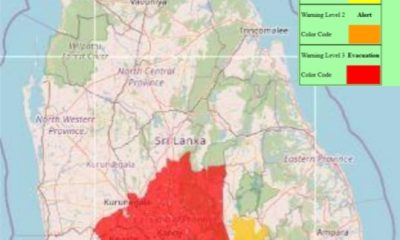
Landslide RED warnings issued to the districts of Kandy, Kegalle, Kurunegala, Matale and Nuwara Eliya extended up to 1600 hrs today [07]

Deadly attack on kindergarten reported in Sudan

618 dead, 209 missing as at 2000hrs on Saturday [06]

Showers will occur in the Northern, North-Central, Eastern Uva provinces and in Matale and Nuwara-Eliya districts.

Opposition blames govt. inaction for severity of disaster impact

National Archives seeks freezing capacity to ward off mould from vital water-damaged documents

‘Dates have the highest sugar content to fight Coronavirus’

Sunday Island 27 December – Headlines

#SundayIsland 17th December – Headlines

Sunday Island – 28th March

Sunday Island Headlines – 21 March

Sunday Island – 21st February – Headlines
-
News4 days ago
Lunuwila tragedy not caused by those videoing Bell 212: SLAF
-
 News3 days ago
Level III landslide early warning continue to be in force in the districts of Kandy, Kegalle, Kurunegala and Matale
-
 Latest News5 days ago
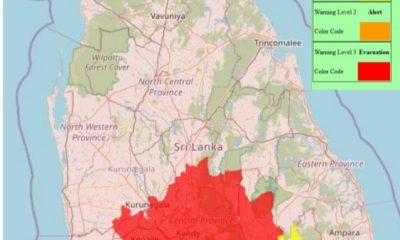
Level III landslide early warnings issued to the districts of Badulla, Kandy, Kegalle, Kurunegala, Matale and Nuwara-Eliya
-
 Features5 days ago
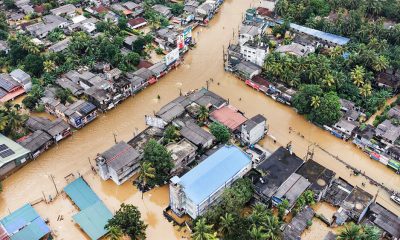
Ditwah: An unusual cyclone
-

 Latest News6 days ago
Updated Payment Instructions for Disaster Relief Contributions
-

 News1 day ago
CPC delegation meets JVP for talks on disaster response
-

 News1 day ago
A 6th Year Accolade: The Eternal Opulence of My Fair Lady
-

 Latest News6 days ago
Landslide Early Warnings issued to the Districts of Badulla, Colombo, Gampaha, Kalutara, Kandy, Kegalle, Kurunegala, Matale, Moneragala, Nuwara Eliya and Ratnapura