
Foreign News
Iran says it executed four people accused of links to Israel’s Mossad

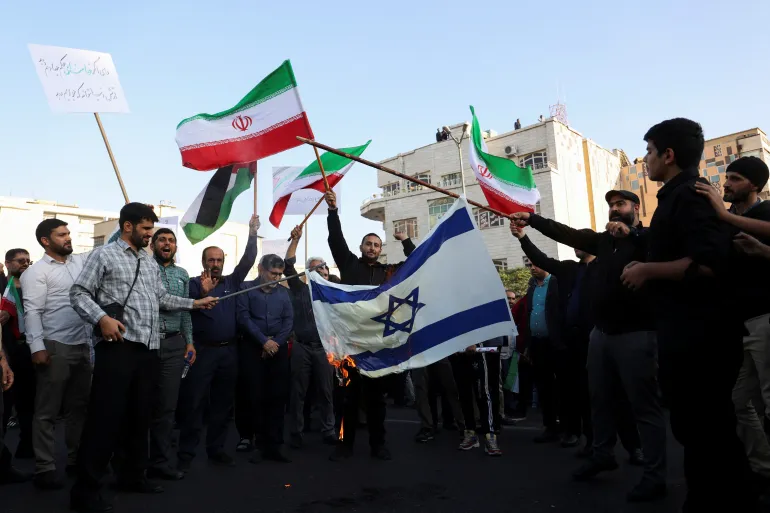
Iran has executed three men and one woman who were convicted for their alleged links to Israel’s Mossad spy agency, according to media affiliated with the judiciary.
“Four members of a sabotage group related to the Zionist regime were hanged this morning” in Iran’s northwestern province of West Azerbaijan, the judiciary’s Mizan news agency reported on Friday.
Mizan identified those executed as three men – Vafa Hanareh, Aram Omari and Rahman Parhazo – and one woman, Nasim Namazi, who were sentenced to death on charges of “moharebeh”, an Islamic legal term meaning “waging war against God”, and “corruption on Earth” through their “collaboration with the Zionist regime”, referring to Israel.
The group “committed extensive actions against the country’s security under the guidance of the Mossad”, Mizan reported.
The four were charged with kidnapping Iranian security forces to extract intelligence and were also accused of setting fire to the cars and apartments of some agents.
Several others working with the same group were each sentenced to 10 years in jail, Mizan said, without providing additional details.
Iranian intelligence put the group under surveillance for at least four months, starting in January 2022 until their arrest that May, when they were “transferred from a neighbouring country” to Iran, according to the state-run news agency IRNA.
Iran does not recognise Israel and the two countries have engaged in a shadow war for years.
On December 16, a man convicted of working for Mossad was executed in the southeastern province of Sistan-Baluchistan.
The Islamic republic hanged four people in December 2022 who had been convicted of collaborating with Israel’s intelligence services.
Iran accuses Israel of carrying out a wave of attacks and assassinations targeting its nuclear programme. In August, Iran accused Israel of being behind “one of the largest sabotage plots” targeting its defence industry and missile production.
According to rights groups, including Amnesty International, Iran executes more people per year than any other nation except China.
In May, United Nations human rights chief Volker Turk said Iran had an “abominable” track record of executions in 2023 with an average of more than 10 people hanged each week.
More than 600 people have been executed by Iran so far this year, already the highest figure in eight years, said the Norway-based Iran Human Rights group in a November report. In 2015, Iran carried out 972 death sentences, according to the UN.
Iran has issued death sentences and executed people detained during last year’s anti-government protests, which were triggered in September after the death of Mahsa Amini, a 22-year-old who was arrested by “morality police” in Tehran for allegedly not adhering to a mandatory dress code for women.
(Aljazeera)







Foreign News
‘Time for Ukraine to get new president,’ says Trump after Zelensky condemns diesel deal

US President Donald Trump has said he thinks “it’s time for Ukraine to get a new president” as he responded to Volodymyr Zelensky’s criticism of the US diesel deal with Russia.
The Ukrainian president warned a new deal to release millions of tonnes of Russian diesel into the US would provide Moscow with money to continue its war against his nation, calling it a gift to Russian President Vladimir Putin.
Trump told reporters outside the White House on Saturday that Zelensky “wants to make problems for the world” by continuing to authorise attacks on Russian refineries.
“He’d better damn well stop,” Trump said, before suggesting Ukraine should “get a new leader who can make a deal”.
Global fuel supplies, including diesel, have been severely limited by the war against Iran launched by the US and Israel, which led to the effective closure of the Strait of Hormuz, through which roughly a fifth of the world’s oil products usually flows.
Russia – a major producer – and Ukraine have recently intensified their strikes on each other’s energy infrastructure and transport facilities, further straining energy markets.
“We said, ‘you can do whatever you want to Russia, don’t hit the refineries’, because that’s a world problem that’s caused,” Trump continued.
“He could have made many deals and for some reason, he never does.”
Putin’s envoy Kirill Dmitriev described Trump’s intervention as “iconic and historic”, saying that Ukraine “needs leadership actually focused on peace”.
The US president confirmed on Friday that an agreement had been reached with Moscow to suspend sanctions on Russian diesel exports until 7 April.
Zelensky reacted by saying it would allow Moscow to raise new funds to source new military equipment to continue the war.
He also accused Moscow of taking the deal “to mean they can keep fighting, to mean they keep dropping bombs on cities” following deadly new strikes on Zaporizhzhia.
The Ukrainian president spoke to several allies on Saturday to discuss the latest developments, calling for “real decisions to protect lives in Ukraine” and to protect European security.
A Downing Street spokesperson said UK Prime Minister Andy Burnham had spoken to Zelensky and offered his “complete solidarity”.
The pair had agreed Russia should acquiesce to “an immediate energy ceasefire” and end its attacks on shipping in the Black Sea, the spokesperson said, as “this would immediately release more energy and food supplies into the global market”.
News of the US-Russia diesel deal was also met with criticism by EU’s foreign affairs chief Kaja Kallas, who echoed Zelensky in saying that suspending sanctions “provides Moscow with more revenues to wage war”, adding: “This is not the time to ease pressure on Russia, and Europe won’t.”
She said European foreign ministers intended to approve the biggest set of sanctions on Russia since the start of its full-scale invasion on Monday.
The deal with Russia is the latest effort from Trump to lower fuel prices in the US ahead of the midterm elections, after months spent grappling with the political consequences of the Iran war.
That conflict, which began in February, has sent the cost of petrol and in particular diesel skyrocketing, which has soured his standing with the American public who have been stung by the higher pump prices and knock-on effects that led to across-the-board inflation.
The average price of diesel is currently $6.28 (£4.74) a gallon, according to the AAA – up from last month’s $5.94 average, and $3.68 last year.
Under the deal, Russia would release an initial 300,000 tonnes of diesel “to the American and global marketplace” followed by an additional 500,000 tonnes in November.
A further million would follow, Trump wrote on Truth Social, and then another 3m tonnes “within a short period of time” – but he noted that this delivery will be “based on the condition of their diesel refineries”.
In the past 10 months, Russia experienced two waves of severe fuel shortages across the country due to Ukrainian drones strikes on its oil refineries.
Diesel production in Russia dropped by an estimated 30%, according to the International Energy Agency.
Trump had already called for new elections in Ukraine last December, saying Ukrainian voters should have the choice to replace Zelensky.
Since the war broke out in 2022 Ukraine has been under martial law, meaning elections are suspended.
[BBC]
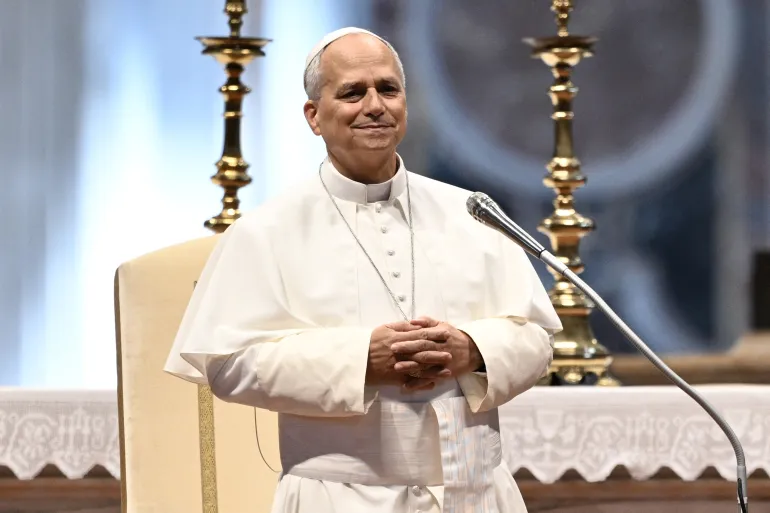
Pope Leo XIV has declared that the death penalty is “inadmissible” while his home country, the United States, announces plans to livestream an execution by firing squad.
Marking World Day Against the Death Penalty on Saturday, the pope reiterated the Catholic Church’s teaching on capital punishment, writing on X that it was “inadmissible because it is an attack on the inviolability and dignity of the person”.
“The common good can be safeguarded and the requirements of justice can be met without recourse to capital punishment,” his post said.
“Effective systems of detention have been developed that protect citizens while at the same time do not completely deprive those who are guilty of the possibility of redemption,” added the leader of the Catholic Church.
The American Pope’s comments come days after US Secretary of Defense Pete Hegseth said on Thursday that the firing squad execution of Nidal Malik Hasan on December 3 will be livestreamed.
Hasan was convicted of killing 13 people and wounding 32 others in a shooting at the Fort Hood military base in 2009.
Pope Leo did not specifically refer to the planned execution, or last month’s botched execution attempt on Christa Pike, who survived two doses of the lethal injection in Tennessee.
But his post came hours after his top deputy, Cardinal Pietro Parolin, the Vatican secretary of state, told Vatican News that the plan to livestream Hasan’s execution was “unacceptable”.
It was Leo’s predecessor, Pope Francis, in 2018 who first amended official Catholic teaching to declare capital punishment “inadmissible” in all circumstances.
[Aljazeera]
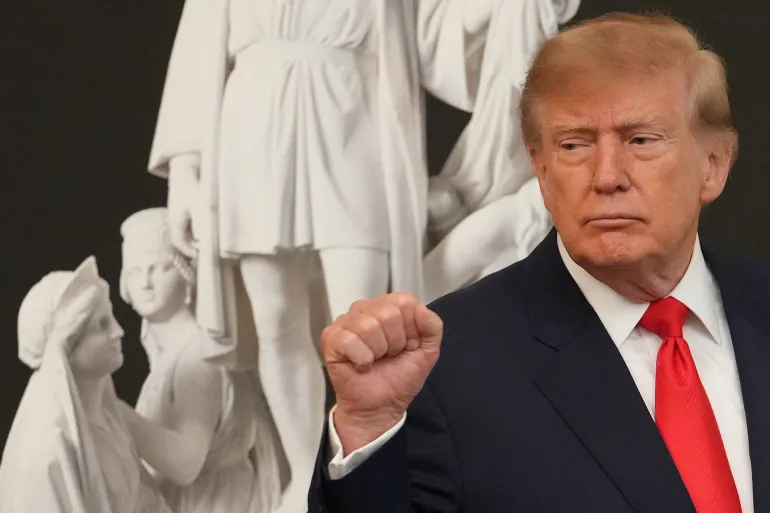
United States President Donald Trump said that Russia has agreed to supply 300,000 tonnes of diesel fuel to global markets amid discussions with Russian President Vladimir Putin.
“I have just concluded a highly successful discussion with President Vladimir Putin, of Russia, wherein it was agreed that Russia will immediately supply over 300,000 Tons of Diesel Fuel to the American and Global Marketplace, another 500,000 Tons during the month of November, and 1,000,000 Tons immediately thereafter,” Trump said in a post on his Truth Social platform.
The president added that Russia would deliver an additional 3 million tonnes of fuel “within a short period of time”. He said that the country would supply 500,000 tonnes in November.
An envoy for Russian President Vladimir Putin, Kirill Dmitriev, praised cooperation between Russia and the United States on diesel and energy in a post on X shortly after.
“Russia-US cooperation on diesel and energy will benefit the world,” Dmitriev wrote on X.
Petrol price pressures
The deal comes despite Ukrainian air strikes, which have taken more than half of the country’s oil refining capacity offline, according to claims made by Ukraine’s Ministry of Defence on Sunday.
The latest announcement comes a week after the G7 countries agreed to release 100 million barrels amid pressure from the White House.
Diesel prices have been elevated in recent months but have started to decline. The average price for a gallon is $6.27 ($1.66 per litre), according to the American Automobile Association (AAA), which tracks daily petrol prices. That’s down $0.10 from this time last week, but up $5.94 from this time one month ago.
[Aljazeera]

Showers above 75 mm are likely at some places in the Western, Sabaragamuwa, Central, Uva and North-Western provinces and in Galle, Matara, Anuradhapura and Mannar districts.

Iranian ships stranded, Lanka fears US sanctions

Sri Lanka CERT warns of overseas university admission scams

Navi Pillay’s Lankan affairs in focus as she wins 2026 Nobel Peace Prize

Lanka welcomes Indian SC remarks on Katchatheevu dispute

UN at Crossroads, Trump nearing End of the Road

‘Dates have the highest sugar content to fight Coronavirus’

Sunday Island 27 December – Headlines

#SundayIsland 17th December – Headlines

Sunday Island – 28th March

Sunday Island Headlines – 21 March

Sunday Island – 21st February – Headlines
-

 News6 days ago
Geneva takes up Sallay’s case and govt. ignores opportunity to answer accusations
-

 Features5 days ago
Preventing grievances from becoming communal
-

 Features3 days ago
The Sri Lankan who made Scottish history
-

 Sports3 days ago
Nissanka absence opens door for Sri Lanka’s young guns
-

 News4 days ago
Gnansara Thera to be assigned to prison printing section: Officials
-

 Features6 days ago
Sri Lanka Cricket Bill: Governance reform is not yet a cricket strategy
-

 News2 days ago
NDB fraud Rs 60mn more than reported
-

 Features3 days ago
Future of Sri Lanka’s state university system: Should it be shut down and reopened?