
Foreign News
Nobel Prize-winner to contest Democratic Republic of Congo presidency

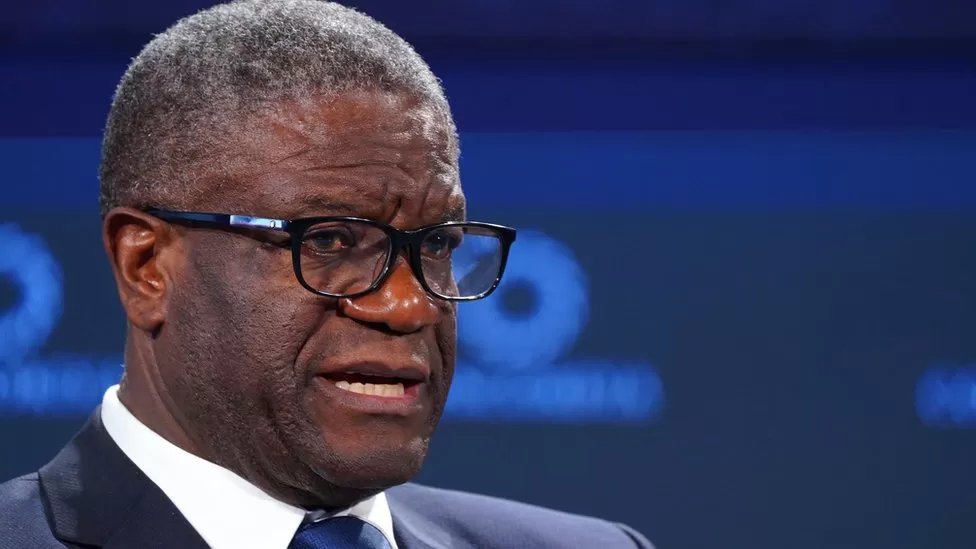
In 2012, Nobel Prize-winner Dr Denis Mukwege was attacked by gunmen – a consequence, he believes, of criticising the Democratic Republic of Congo government’s policies on gender-based violence.
A decade later, living under the protection of UN peacekeepers, Dr Mukwege has launched another challenge against the nation’s leadership. He will be running for president in elections due in December, he announced on Monday.
Known as “Dr Miracle”, the 63-year-old rose to global fame for performing reconstructive surgery on women who had been raped in the country’s war-torn east. His hospital has so far treated more than 50,000 survivors of sexual violence, while he has cemented himself as one of the world’s foremost experts in his field.
Dr Mukwege was born in 1955 in Bukavu, a city in eastern DR Congo. After numerous visits to see sick members of the community with his preacher father, he decided he wanted to become a doctor. He began his training at a medical school across the border in Burundi, later studying gynaecology and obstetrics at the University of Angers in France.
In 1998, he set up a clinic in his home city. The doctor intended Panzi hospital to be for maternal health, with his team treating new or expecting mothers. However, when war broke out, more and more women came to the clinic with gruesome injuries from sexual violence committed by various armed groups.
In 2013, Dr Mukwege told the BBC that rape in eastern DR Congo was part of a ‘stratergy’ to force communities away from their land and resources.
For three decades the region has been wracked by conflict, with numerous armed groups battling for gold and other valuable resources. Different militias have been accused of carrying out indiscriminate rape – tens of thousands of women are thought to have been attacked over the course of the conflict, Amnesty International has reported.
Dr Mukwege told the BBC about his first experience of treating a woman who had been raped and mutilated by armed men. “After being raped, bullets had been fired into her genitals and thighs,” Dr Mukwege said of the first rape survivor that came to his clinic. “The real shock came three months later. Forty-five women came to us with the same story.”
Along with his colleagues, Dr Mukwege has since treated tens of thousands of victims and become “the world’s leading specialist in the treatment of wartime sexual violence”, according to the Nobel Prize.
(BBC)



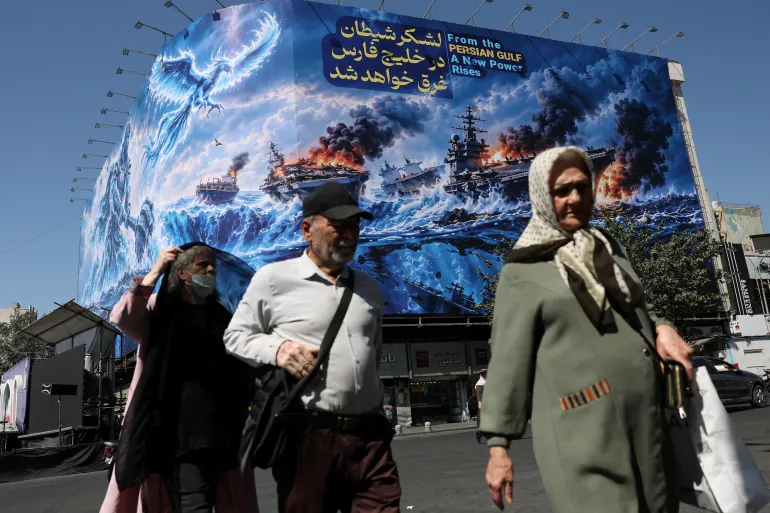
Hours after US President Donald Trump rejected a diplomatic solution put forward by Iran to reopen the Strait of Hormuz, explosions were heard in the waterway, according to Iranian media.
Reports of blasts near southern Iran’s Qeshm Island in the Strait of Hormuz suggested that multiple antiship missiles and drones were fired at vessels transiting the waterway against Tehran’s wishes.
While Iranian authorities did not confirm any attacks in the Strait of Hormuz that day, shipping continues to be attacked in the waters, including an Indian cargo ship last week which killed a sailor.
The Islamic Revolutionary Guard Corps (IRGC) maintains that the strait is closed to any ship that does not coordinate with Iranian authorities. On Sunday afternoon, it released video of what it said was a second US underwater drone seizd this month.
Tehran has issued instructions to shipping companies transiting the Strait of Hormuz to use a temporary route approved by Iranian authorities and pay relevant fees. But it has also said the strait will not fully reopen until the US blockade on Iranian ports ends.
Iran’s Persian Gulf Strait Authority announced on Saturday that it would blacklist any shipping charterer company which orders crews to use routes it considers to be unauthorised.
It also published what it described as an apology from an unnamed shipowner blaming commercial pressure from its charterer for trying to pass through the strait.
(Aljazeera
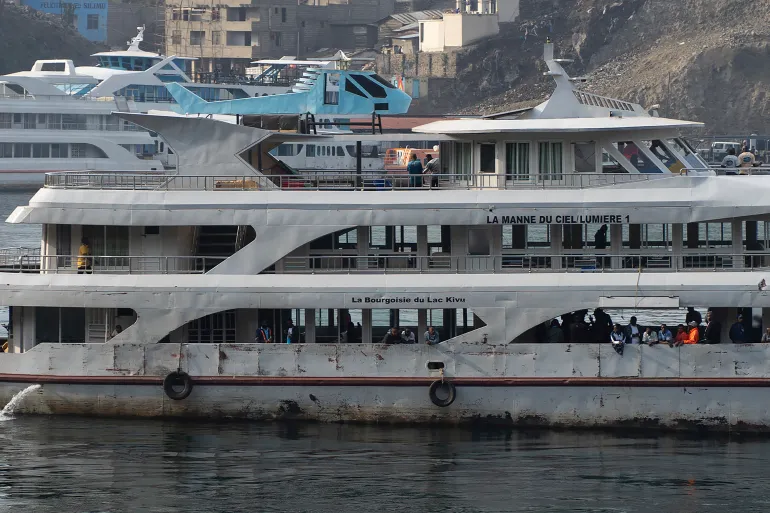
At least 41 people have died, and 49 others have been rescued, after a boat capsized on Lake Tanganyika in the Democratic Republic of the Congo (DRC).
Norris Mulongoyi, the provincial transport minister for DRC’s Tanganyika province, told The Associated Press news agency that search operations were under way to locate the remaining passengers
The boat was reportedly carrying about 100 people and cargo when it capsized near the Congolese village of Mapera.
The vessel was travelling from the port of Kigoma in Tanzania to the city of Kalemie in DRC when it sank on Thursday.
A survivor identified as Annie Moyoni told Radio Okapi, a UN-backed Congolese broadcaster, that passengers were awakened at about 1am and found the boat tilting to one side.
It is unclear what caused the vessel to capsize, but hundreds of people have been killed in boat disasters in the DRC in recent years, according to the AP. Vessels are often overloaded and lack life jackets.
For many in the DRC, travelling by boat is the cheapest and most affordable way to get around. The country is one of the poorest in the world and lacks sufficient infrastructure for its more than 100 million people.
The sinking was the second loss of a Congolese vessel on the Kigoma-Kalemie route in less than a month.
On August 28, the Congolese vessel MV Pacifique caught fire and exploded at the port of Kigoma while loading fuel, according to Radio Okapi.
Six crew members were killed, and a seventh was reported missing, Radio Okapi said, citing port authorities. The vessel operated between Kigoma and Kalemie and was used to transport fuel.
At least 20 people also died when a wooden boat carrying students returning from state exams sank in central DRC in July.
(Aljazeera)
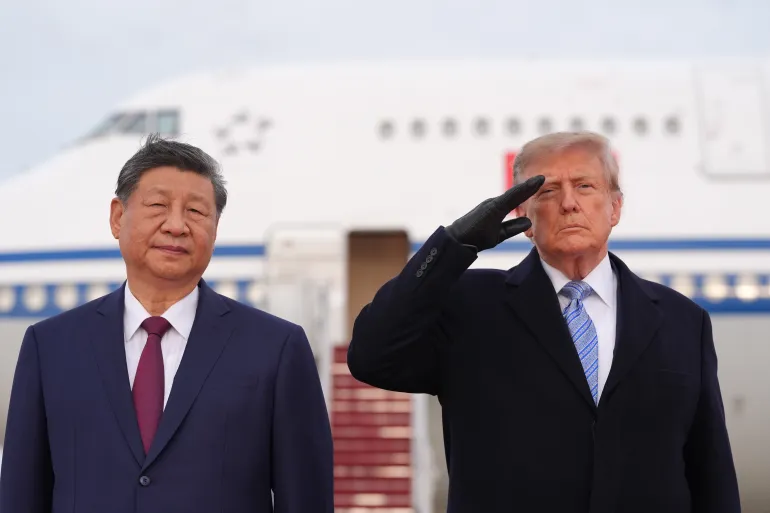
United States President Donald Trump has welcomed Chinese President Xi Jinping as he arrived in the US for a three-day trip focused on issues such as security, trade and technology.
Trump took the rare step of meeting the Chinese leader in person at Joint Base Andrews in the state of Maryland on Wednesday, the first president to do so in recent memory.
The US president and First Lady Melania Trump greeted Xi and his wife on the tarmac during a welcoming ceremony, where a red carpet was rolled out and the couples exchanged handshakes. Trump and Xi then walked side by side, flanked by US soldiers, before standing for a gunfire salute and the US national anthem
The in-person greeting is a sign of the significance that Washington ascribes to its relationship with Beijing, whose meteoric economic rise over the last several decades has transformed it into a global superpower capable of rivalling the United States.
Despite tense relations that worsened after the Trump administration placed high tariffs on Chinese goods – a move that was met with retaliatory measures from Beijing – Trump has expressed personal affinity for Xi and his desire for strong ties with China.
The Chinese president’s trip to the US will include a state dinner, attended by leaders of the country’s powerful tech industry, a military ceremony at the White House, and a visit to the National Archives, home to documents of historical and cultural significance such as the US Constitution and the Declaration of Independence
But both countries remain wary of the other as they compete for political and economic influence. The trip is likely to include discussion of issues such as the US war on Iran, trade, technology, rare-earth minerals and US ties to Taiwan, the self-governing island that China claims as part of its territory
(Aljazeera)

Rain threat looms over lopsided India vs Afghanistan quarter-final

Out, not-out, out: England secure bizarre run-out in Oval victory

Strait of Hormuz tensions linger as Iran and US move further from a deal

Showers will occur in the Western, Eastern, Uva and Sabaragamuwa provinces and in Galle, Matara, Kandy, Nuwara-Eliya, Polonnaruwa and Mullativu districts

Sajith rejects Jt. Opp. protest sabotage claim; SJB TU chief demands remedial action

Police remove Thileepan statue in Jaffna

‘Dates have the highest sugar content to fight Coronavirus’

Sunday Island 27 December – Headlines

#SundayIsland 17th December – Headlines

Sunday Island – 28th March

Sunday Island Headlines – 21 March

Sunday Island – 21st February – Headlines
-

 News5 days ago
Mastermind Naufer Moulavi among 15 found guilty
-
 Midweek Review5 days ago
Thileepan’s fast unto death: An authentic narrative that many missed
-
 News6 days ago
Protest against setting up of cement factory in highly populated area near BIA
-

 Editorial6 days ago
Trouble beginning in earnest
-
 Latest News4 days ago
Showers above 100 mm are likely at some places in the Western, Sabaragamuwa, Central and North-western provinces and in Galle and Matara Districts
-
Editorial5 days ago
Big Bad Bills
-

 News6 days ago
Police may seek clarification from US
-
 News6 days ago
Govt. confident of 2/3 majority despite NPP split speculation