
Latest News
Nobel Prize in Physiology or Medicine goes to microRNA researchers

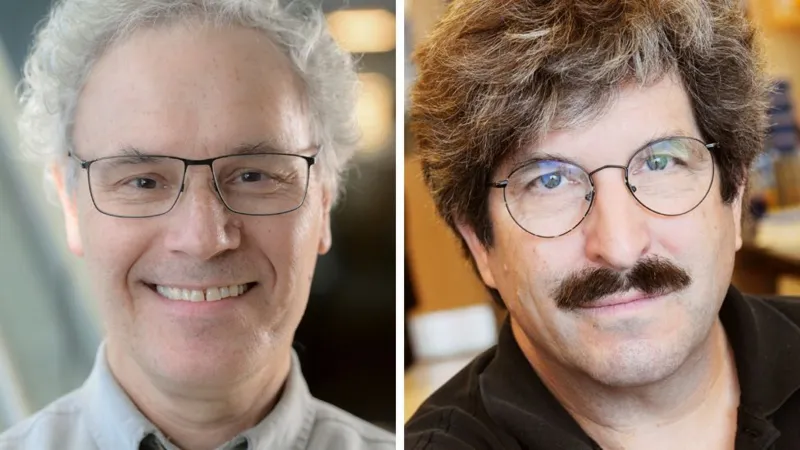
The Nobel Prize in Physiology or Medicine 2024 has been awarded to US scientists Victor Ambros and Gary Ruvkun for their work on microRNA.
Their discoveries help explain how complex life emerged on Earth and how the human body is made up of a wide variety of different tissues.
MicroRNAs influence how genes – the instructions for life – are controlled inside organisms, including us.
The winners share a prize fund worth 11m Swedish kronor (£810,000).
Every cell in the human body contains the same raw genetic information, locked in our DNA.
However, despite starting with the identical genetic information, the cells of the human body are wildly different in form and function.
The electrical impulses of nerve cells are distinct from the rhythmic beating of heart cells. The metabolic powerhouse that is a liver cell is distinct to a kidney cell, which filters urea out of the blood. The light-sensing abilities of cells in the retina are different in skillset to white blood cells that produce antibodies to fight infection.
So much variety can arise from the same starting material because of gene expression.
The US scientists were the first to discover microRNAs and how they exerted control on how genes are expressed differently in different tissues.
The medicine and physiology prize winners are selected by the Nobel Assembly of Sweden’s Karolinska Institute.
They said: “Their groundbreaking discovery revealed a completely new principle of gene regulation that turned out to be essential for multicellular organisms, including humans.
“It is now known that the human genome codes for over 1,000 microRNAs.”
Without the ability to control gene expression, every cell in an organism would be identical, so microRNAs helped enable the evolution of complex life forms.
Abnormal regulation by microRNAs can contribute to cancer and to some conditions, including congenital hearing loss and bone disorders.
A severe example is DICER1 syndrome, which leads to cancer in a variety of tissues, and is caused by mutations that affect microRNAs.
Prof Ambros, 70, works at the University of Massachusetts Medical School, and Prof Ruvkun, 72, is a professor at Harvard Medical School.
Both conducted their research on the nematode worm – C. elegans.
They experimented on a mutant form of the worm that failed to develop some cell types, and eventually homed in on tiny pieces of genetic material or microRNAs that were essential for the worms’ development.
This is how it works:
- A gene or genetic instruction is contained within our DNA
- Our cells make a copy, which is called messenger RNA or simply mRNA (you’ll remember this from Covid vaccines)
- This travels out of the cell’s nucleus and instructs the cell’s protein-making factories to start making a specific protein
- But microRNAs get in the way by sticking to the messenger RNA and stop it working
- In essence the mircoRNA has prevented the gene from being expressed in the cell
Further work showed this was not a process unique to worms, but was a core component of life on Earth.
Prof Janosch Heller, from Dublin City University, said he was “delighted” to hear the prize had gone to Profs Ambros and Ruvkun. “Their pioneering work into gene regulation by microRNAs paved the way for groundbreaking research into novel therapies for devastating diseases such as epilepsy, but also opened our eyes to the wonderful machinery that is tightly controlling what is happening in our cells.”
Previous winners
2023 – Katalin Kariko and Drew Weissman for developing the technology that led to the mRNA Covid vaccines.
2022 – Svante Paabo for his work on human evolution.
2021 – David Julius and Ardem Patapoutian for their work on how the body senses touch and temperature.
2020 – Michael Houghton, Harvey Alter and Charles Rice for the discovery of the virus Hepatitis C.
2019 – Sir Peter Ratcliffe, William Kaelin and Gregg Semenza for discovering how cells sense and adapt to oxygen levels.
2018 – James P Allison and Tasuku Honjo for discovering how to fight cancer using the body’s immune system.
2017- Jeffrey Hall, Michael Rosbash and Michael Young for unravelling how bodies keep a circadian rhythm on body clock.
2016 – Yoshinori Ohsumi for discovering how cells remain healthy by recycling waste.
[BBC]



“Obviously, it depends on the team management… what we plan to do in this match. That is a different thing. But I think it is a very thin line between trying to give somebody an opportunity and you being unfair to some other player.”

Seattle Orcas had won just one of their first three games in MLC 2026, but it all came together beautifully for them against Washington Freedom on Thursday. The 88-run win was enough for them to jump straight to No. 2 on the points table, behind the unbeaten Los Angeles Knight Riders.
Orcas got the sort of start they wanted, reaching 59 for no loss after the powerplay even as they slowed down to get to 79 for 2 at the halfway stage. But then they really turned in on thanks to Shimron Hetmyer and Marcus Stoinis. Matthew Breetzke had given the innings some momentum in partnership with Hetmyer, but when Breetzke got out in the 15th over, Orcas were solid without being spectacular at 138 for 3. Around 200 was expected, but not the 227 they got.
And that was down to Stoinis, their captain. Hetmyer was already on 44 off 20 balls and got to his half-century off 24 deliveries soon after, but Stoinis almost caught up with Hetmyer in a blaze of sixes. He hit five of them in one over, the 17th, bowled by medium pacer Ian Holland. From 4 off six balls, Stoinis was on 34 off 12, and though there was another big one in the next over, bowled by Marco Jansen, Stoinis fell for 42 off 16 deliveries the next ball.
Hetmyer, meanwhile, left it till the last over, which started with Orcas on 208 for 5. Jack Edwards was the bowler, and Hetmyer went 6, 6, 6 off the first three balls. That was enough to take Orcas to a huge total, and for Hetmyer to finish on 79 not out off 33 balls.
With that many runs to chase down, Freedom needed a solid start. Instead, they were 42 for 5 after the powerplay, having lost most of the big guns: Steven Smith, Mitchell Owen, Andries Gous, Glenn Maxwell and Edwards. Jasdeep Singh had four of the five wickets, including three in his second over – the fifth of the innings – where he got Gous first ball, Maxwell off the next, and Edwards off the fifth. Smith was already in the bag from his first over, and Jasdeep came back in the 14th to complete his five-for with Jansen’s wicket.
At one point, it looked like the record for the biggest victory margin (by runs) in MLC – currently 123 from when San Francisco Unicorns beat Freedom last season – would be broken. That it wasn’t was thanks to runs from Freedom’s Nos. 8, 9 and 10. Amila Aponso top-scored for Freedom with 31 not out from 13 balls from No. 10, and the men before him, Holland and Jansen, contributed 46 from 39 deliveries between them.
The latest defeat, their second in three games, left Freedom at the bottom of the table.
Scores:
Seattle Orcas 227 for 6 in 20 overs (Tim Seifert 37, Shayan Jahangir22, matthew Breetzket 32, Shimron Hetmyer 79*, Marcus Stoinis 42, Ali Sheikh 11; Marco Jansen 3-33, jack Edwards 1-56, Ian Holland 2-49) beat Washington Freedom 139 in 16.2 overs (Andries Gous 18.Obus Pienaar 10, Marco Jansen 20, Ian Holland 26, Amila Aponso 31*; Marcus Stoinis 1-20, Jasdeep Singh 5-24, ottneil Baartman 1-11, Cameron Gannon 2-16, Harmeet Singh 1-40) by 88 runs
[Cricinfo]

Over 40 persons have been injured (some critically) as two buses one travelling from Galle to Ampara and the other from Tangalle to Matara crashed head on at Talalla Matara this morning.
The injured have been admitted to the Matara General Hospital and Bathhegama District Hospital.

Should not drop someone just to give Sooryavanshi an opportunity: Sitanshu Kotak

Hetmyer, Stoinis and Jasdeep combine to hand Freedom 88-run defeat

Row over alleged theft of donations from India’s landmark Ram temple

Over 40 persons injured in head on crash at Talalla

Turkiye beat US 3-2 with stoppage-time goal in dead rubber

Japan draw 1-1 with Sweden at World Cup to finish second in Group F

‘Dates have the highest sugar content to fight Coronavirus’

Sunday Island 27 December – Headlines

#SundayIsland 17th December – Headlines

Sunday Island – 28th March

Sunday Island Headlines – 21 March

Sunday Island – 21st February – Headlines
-

 News7 days ago
Creditor not yet paid
-
 News7 days ago
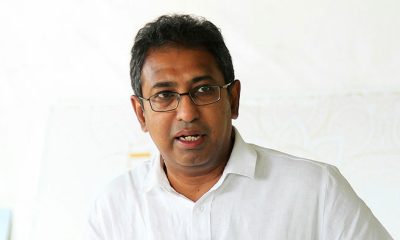
Consumers bearing 22% tax burden despite 18% VAT claim: Dr. Harsha de Silva
-

 Features6 days ago
Nanda Pethiyagoda Wanasundara as three generations of family saw her
-

 Features5 days ago
Sri Lanka developing independent hydrographic capabilities
-

 Editorial6 days ago
Fuel crisis: Beyond price debate
-

 Opinion4 days ago
Ranasinghe Premadasa: The man who would not take ‘No’ for an answer
-

 Latest News5 days ago
Sooryavanshi thumps fastest List A fifty as India A win tri-series
-

 News3 days ago
US Assistant Secretary of State for South and Central Asian Affairs meets President