
Features
No contaminated fertilizer please: Vroom vroom in Colombo


Headline in The Island of Friday October 29 gladdened Cass’ heart: “Unions threaten to cripple port to foil bid to bring in contaminated fertiliser.” Three hearty cheers! Congrats! So happy port workers at least realise the potential damage of unloading the Chinese organic fertiliser!
Readers would consider Cassandra fully deranged, in cuckoo land, when you read her cheering and congratulating a strike, a crippling one at that, within a vital entry point to the city. But what else to do, aney? The government is trembling at the wagged finger of the Chinese Ambassador pronouncing that the organic fertiliser determinedly shipped by them to this experimenting-with-vital-agriculture-country is good and to be trusted. The results of scientific tests conducted by our experts not to be trusted? So declared the Chinese ambassador. He wants a second opinion. The government may have taken the shipment in and even distributed it, since we seem to be beholden to China. Never mind that result would be disastrous and our land ‘infected’ forever. Our agricultural lands, already damaged by the hurried ban of inorganic fertilisers, would have been further damaged with dangerous Chinese microrganisms invading it. So, the people have taken it into their hands to defend the country. Shows people have no trust in decisions taken. It will finally fall on The People to save the country: us Ordinaries – the active.
The Chinese Ambassador has blacklisted a government bank too!
Dune racing
 It is sand racing, isn’t it? Good for the oil rich Middle East with its vast acres of sand. But it seems that it will become one of our sporting events. To participate in this desert recreational sport you need a dune buggy or beach buggy which is a ‘recreational motor vehicle with large wheels and wide tyres.’ Goes without saying that dune racing is a rich man’s sport as the buggies guzzle petrol. More pertinently, wise heads of government and institutions led by the UN are urgently trying to reduce greenhouse gases and thus global warming. And in this country with more beggars, the sport is being introduced by no less a person than the Minister of Sports. Venue? The Port City. It must be really large to have a race track too. Cass never looks that way on her infrequent forays to the Fort.
While the country is burning – economically, politically and with a certain rise in C19 infection, dune racing will be introduced. A picture of ‘dune racing’ enlivened the front page of The Island of October 29, with an apparently enjoying Namal Rajapaksa, Prassana Ranatunge spreading himself in a red buggy, Was the female buggy rider the Pot and Pavithra, who was present on the occasion as Minister of Transport? So bracing, so spirit uplifting, so giving of hope to have the youthful Minister promising the rich elite of this country fun on the dunes. We once upon a time heard racing cars whiz and vroom at night around Colombo Fort and Kollupitiya. Then daytime sports car races in Colombo Fort causing disruption to offices, and in Kandy against the Mahanayake’s advice. What Marie Antoinnete did not say but is ascribed to have, can be altered to suit our country situation: Thrill to racing on the sands if you have no money to take a bus nor strength to walk
Continuing love affair (read sycophantic adoration)
“PM expresses appreciation to China for its continued support” through its Ambassador for supporting Sri Lanka in the fight against Covid-19 by providing vaccine. What about other countries, and most importantly the WHO that helped immensely by sending us vaccines that have been tested and re-tested and passed as at least 90 percent effective against Covid 19.
Aluthgamage shares blame generously
Admitting on 28 October that “as a government they had failed to market the concept of organic fertiliser.” Minister of Agriculture, Mahindananda Aluthgamage (MA) apportioned blame on the Ministries of Health and Environment. “The Minister said the two crucial ministries had done virtually nothing to promote organic agriculture.” (Wise they were). He added that 70 percent of chemical fertiliser was wasted due to overuse. (As much as that? Unsubstantiated statistic?). A bad carpenter blames his tools; and in the kindergarten it’s always a case of “Miss, why catch me? Manel, Yoges and Fatima are also to be blamed.”
Though the Minister says this, the farmers do not agree. They viciously battered, bruised and burnt only his effigy. Once Cass spied another bobbing figure held aloft but it definitely was not of either of the two ministers MA points to as equally responsible for destroying the agriculture of the country – its backbone.
Other burning issues
Cass’ heart lies with the farmers. Her stomach too depends on them. However, her empathy for the plight of the farmers sans inorganic fertiliser and pesticides et all, is not dictated to by her stomach but by both her heart and mind. They have reason to be disheartened and gather in protests, turning more vituperative and cruel to the effigies they hold loft and vent their wrath on. One thing is certain. The Minister of Agriculture had better not go sightseeing in rural areas, especially in moonlight. He will not only see stars but fireworks too. Very probably explosive.
Global food is prophesied to be in short supply, or at least not abundant due to Covid related restrictions. In Sri Lanka this shortfall in agricultural produce has an added damaging impetus to it: shortage of inorganic fertilisers, weedicides etc., that farmers and our cultivated grounds have got accustomed to. So, we are going to be facing shortages; some unfortunates actual starvation. No imports possible since other countries too will be pinched for food. Even otherwise we have no money to import food. The Cassandra Cry of ‘I see starvation and death’ is not necessary since these two conditions stare everyone in the face excepting the biggest ones and their acolytes. Professed know-alls whispering in the Prez’ ears, contrary to scientific data, have driven us into the arms of greater poverty and worse – protests and probably them getting out of control. Of course, the army is ready to be called out. Is that what we want?
A Sunday newspaper writer gave voice to a doubt or suspicion that has been festering in non-sycophantic minds. Is the present farmers’ dilemma a maneuvered situation so they throw up their ploughs and seed and let money grabbers take over their land for cash crops like corn, haatha variya, to name but two?
What an unholy mess we are in!
Heat in the cool
The President was promised a strong taste of messiness in the city by the Clyde in the West Lowlands of Scotland: he was to be accorded a greatly (un)welcome reception when he landed in Glasgow for COPS 26. Cass means here the cries of the hordes of Tamil protesters who were supposed to have travelled from all over the UK to brandish Tiger Flags and hurl abuse at him.
A stunner
We the public of this Socialist, etc., Republic of (Un)Free Sri Lanka received a resounding presidential slap in the face, Cass here refers to the appointment of that controversial monk – twice convicted by courts of law and out of prison due to a presidential pardon – to head the 11th Presidential Task Force to study and report on making One Country One Law.
She will not only singe her fingers but burn herself too, including her boats if she comments on this issue. Mum’s the word is safest but she just have to speak up as a person descended from Kandyan Kingdom ancestors. Cass hopes very strongly that the enlightened Kandyan Laws of Marriage and Divorce giving due place to women’s rights, will not be struck off. Who knows what the lopsided task force with not one single woman to represent 52.1 percent of the population nor one Tamil to represent the Tamil population will report on? The TF under a yellow robe will render under Caesar what Caesar commands.
Media reports: “Sabry likely to quit justice portfolio” on account of the appointment. It should read not ‘likely’ but ‘will certainly’. The slap on his face is far more resounding and insulting than the slap the public received.
So, we Ordinaries will lumber along from one shock to another; from one setback to another. Only silver lining is the vaccination drive.



By Admiral Ravindra C Wijegunaratne
WV, RWP and Bar, RSP, VSV, USP, NI (M) (Pakistan), ndc, psn, Bsc
(Hons) (War Studies) (Karachi) MPhil (Madras)
Former Navy Commander and Former Chief of Defence Staff
Former Chairman, Trincomalee Petroleum Terminals Ltd
Former Managing Director Ceylon Petroleum Corporation
Former High Commissioner to Pakistan
The Digampathana suicide truck attack on 16th October 2006 remains the deadliest single strike in Sri Lanka Navy history, leaving scars that time cannot erase.
It was a seemingly ordinary Monday morning on 16 October 2006, but the calm of that day would soon be shattered in a way none of us could have imagined. As the Commandant of the Naval and Maritime Academy and Flag Officer Commanding Naval Fleet at Trincomalee, I was aware that a number of my cadets were travelling that morning, part of a convoy of fifteen buses carrying naval personnel from Trincomalee, Colombo, and other bases, heading toward Dambulla to rendezvous with another group. The convoy also included trucks and escort vehicles, a routine movement planned and coordinated with the army to ensure the roads were clear. The morning started quietly. Some personnel greeted friends, handed over their weapons, or strolled to a nearby tea shop. It all seemed so ordinary—too ordinary for what would come next.

Sri Lanka Navy sunk LTTE Ships carrying arms, ammunition and warlike materials thousand miles away from Sri Lanka in Indian Ocean in September and October 2007.
By late morning, both convoys had reached the small ground at Digampathana, near the Sigiriya junction, and personnel mingled briefly, unaware that a carefully orchestrated act of terror was waiting. Then, suddenly, an empty half-truck veered directly into the convoy. It exploded with a ferocity I can still recall as if it were yesterday. Nuts, bolts, and high explosives tore through the air. Pandemonium erupted instantly. I later learned that 107 of our naval personnel were killed on the spot and another 153 critically injured. The scene was indescribable—bodies scattered, vehicles mangled, personal effects strewn across the ground. I remember later hearing that the head of the suicide bomber was recovered more than 100 meters away from the blast, a grim testament to the sheer force of the explosion.
I was in my office at the Naval and Maritime Academy when my mobile phone rang. A young midshipman from the 21st intake called, his voice trembling: “Sir, there was a huge explosion at the convoy point! Many are dead … my batch mate Wijesundara is among them.” I immediately jumped into my jeep with my escort Chief Petty Officer and driver and rushed to Digampathana, relying on every ounce of my driving skill to reach the scene. The journey, which usually took little more than an hour, felt endless that day, each passing mile weighed down by dread.
When I arrived, I was confronted with a sight that no training can prepare you for. The injured were being rushed to Dambulla Hospital, where doctors and nurses worked tirelessly, improvising in ways that saved lives despite the overwhelming chaos. I went back to the site after visiting the hospital. The remains of our naval personnel were scattered across the ground, and someone had begun collecting weapons and protective gear. I immediately contacted Surgeon Rear Admiral Nico Jayasekara and received his instructions: collect all body parts in separate bags and transport them to the Trincomalee Naval Hospital mortuary. This gruesome work had to be done with care and dignity, and it filled the icebox in my vehicle. Through DNA testing initiated by Rear Admiral Nico, we were able to identify every naval personnel lost that day, bringing some closure to grieving families.
The Navy Commander at the time, Vice Admiral Wasantha Karannagoda, was devastated. I had worked closely with him and knew how deeply he cared for his men. He ensured that the fallen were honoured with full ceremonial naval funerals at Welisara Naval Base, attended by families and comrades. Sixty-seven funerals were conducted in a single day—a number that still haunts me.
The Digampathana attack remains the largest single loss of naval life in our history. It was a day of sorrow, but also a day that reinforced our resolve. The tragedy galvanized the Navy to target the LTTE Sea Tiger wing with renewed determination and reshaped our maritime operations forever. Every time I think of that day, I remember not just the lives lost, but the courage, professionalism, and dedication of those who survived, those who treated the injured, and those who ensured the fallen were honored properly. May the souls of our naval hero’s rest in peace, their sacrifice guiding us and inspiring generations of naval personnel to come.
Tales of Mystery and Suspense – 24
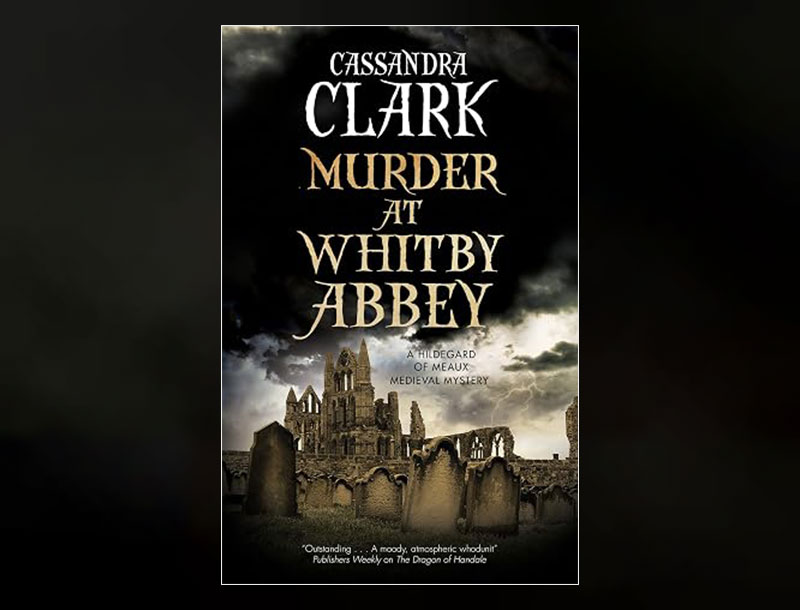
I was intrigued by the title of a book I found in a book drop at the condominium of a friend, Murder at Whitby Abbey, and I brought it home with me though I will not be able to return it in the near future. It was described on the cover page as ‘a standout in the crowded medieval mystery field’, though I fear I do not know of other books in this field, apart from the Cadfael series, which I have dealt with earlier.
The book, by Cassandra Clark, is set during the reign of Richard II and has as a backdrop his precarious position, which led to his being replaced, and murdered, by his cousin Henry, who reigned as Henry IV. It is a gloomy book, the action taking place in the twelve days of Christmas leading up to the Epiphany. And the gloom is pervasive, even though this is supposed to be a time of festivity, with mummers performing, and many of those in the guest house where the heroine stays going to town to enjoy themselves, with much drinking and much music, which also fills the guesthouse.
The heroine Hildegarde is a nun, sent to try to acquire a relic being sold by Whitby Abbey, though this was also a penance set by the Abbot of the monastery that governed her abbess because she had had sex with a man. Soon after she and her companions reach the Abbey set high on a cliff, she finds that there are other bidders, and soon suspects that the hierarchy, not perhaps the Abbot who seems a weakling, but his rapacious bursar, is determined to make money, and not above creating false relics to sell to several aspirants.
After Hildegarde and her Cistercian companions – Whitby is a Benedictine Foundation – two monks, Gregory and Egbert, and a young priest Mark, reach the abbey, they find that Aelwyn, a monk they had met on their way to the guesthouse had died. This was in the apple store, and they realize, when they find the surplices of novices stuffed into the air vents, that he had been left to suffocate in the overwhelming scent of apples.
Clark
The Cistercians are asked to look into the death, perhaps because they are likely to get no cooperation from the Abbey folk, but perhaps because those in charge are keen to know what happened. And the infirmarer, an old monk, suggests Hildegarde talk to a man called Edred who worked for the bursar, and had been a friend of Aelwyn’s. But Edred too is killed, before he can keep an appointment he had made with Hildegarde, drowned in a pool near the farmhouse of the Abbey.
Meanwhile tensions arise between the fisherfolk and the abbey for the bursar wants to charge them for using the beach that technically belongs to the abbey to dry their fish and their nets. This leads to physical battles, when the guards used by the abbey, under the command it seems of the bursar whose determination to make money is not resisted by the abbot and the prior, try to storm the area where the fishermen live.
Hildegard finds out more about what had happened through two youngsters, one of whom Torold is the son of Aelwyn by a woman who worked as a prostitute for a cartel, and with whom Mark fell in love. The other works on the farm and had seen Edred meet someone near the pool, after which that someone left the place by himself. And the boy had also found in the pool a sort of dagger with the seal of the abbey.
He and his dog, and Torold who follows her, rescue Hildegarde from a man at arms who has waylaid her and tries to rape her earlier. Escaping into the abbey she was nearly been raped then by the bursar, but she managed to escape, in the process setting fire to him and the muniments room, which led, when he was rescued, to the discovery of a box with the money he said had been stolen, blame being cast on both Aelwyn and Edred.
Matters come to a head when the fisherfolk try to storm the abbey, being resisted by the men at arms stationed on the towers. But then Hildegarde realizes that behind the murders was the bursar’s clerk, whom she pursued to the cathedral. There is great drama then as she escapes from him when he tries to kill her, and then from the man at arms who had tried to both rape and kill her, but they both fall from the scaffolding she had climbed, the latter coming from a tower where he had been stationed.
Both of them think they run the rapacity of the abbey, the latter claiming to work for the nobles opposed to Richard, who is presented throughout the book as devoted to his subjects, not to power or money. But though the villains die, the bursar continues, having got over the hysteria the fire had caused and his acknowledgment then of guilt – and though the abbot and the prior seem less vicious, whether they will be able to assert themselves is questionable.
Before the climax, when the others in the guesthouse were leaving, Hildegarde found that two of them were in possession of the relic, for which they seem to have paid well. Hildegarde herself had made a derisory offer, but before she leaves the abbot gives her the relic, perhaps in gratitude for what she and her fellow Cistercians had discovered, the abbey having made as much money as it needed and more from the gullible other buyers.
Mark’s inamorata is saved from the stews because she moves in with Edred’s widow whom the bursar had thrown out of the rooms he occupied when her husband was found dead. Hildegarde had paid for lodgings, in a house run by the man who ran the brothels, but he had a kindly side and was going to finance them to make nets for the fishermen.
So, the Cistercians set off for their home as swiftly as they can to get there on the day of the Epiphany, having stopped en route to pray for King Richard whose birthday it was.

Black July: The Need to Tell the Whole Truth
Dear Mr. Sajith Premadasa,
We welcome your recent expression of regret and apology in Parliament concerning Black July. Such acknowledgment of historical wrongdoing is a constructive step towards reconciliation and democratic accountability.
However, an honest reckoning with history cannot begin and end with Black July. The violence of July 1983 was part of a much wider sequence of political developments, ethnic discrimination, state repression and the erosion of democratic institutions. To understand that history fully, we must examine what preceded Black July, what happened during it, and what followed.
We therefore urge you to extend your acknowledgment of historical responsibility beyond Black July and address the wider pattern of undemocratic and repressive actions under the United National Party (UNP) government led by President J. R. Jayewardene.
1. The erosion of democracy before Black July
The contraction of democratic space after the UNP came to power in 1977 must form part of this discussion. It would be historically incomplete to focus only on the violence against Tamil people in the North and East, Black July, or the proscription of the Janatha Vimukthi Peramuna (JVP) in 1983, while overlooking other actions that weakened democratic rights and political pluralism.
The removal of the civic rights of former Prime Minister Sirimavo Bandaranaike in 1980, which deprived her of the right to vote or stand for election for seven years, was a major example. The detention of Vijaya Kumaratunga and others in 1982 in connection with an alleged Naxalite conspiracy was another deeply troubling episode.
The violence associated with the 1981 Jaffna District Development Council election, including the burning of the Jaffna Public Library, and other abuses against Tamil civilians and young people also form part of this history. These events reflected a wider political climate in which the use of state power raised serious questions about political freedom, the rule of law and the rights of opposition parties.
2. The proscription of the JVP in 1983
The proscription of the JVP in July 1983 was another serious blow to democratic politics. At the time, the JVP was an established political party participating in electoral politics, including the 1982 presidential election. It had also taken legal action challenging the government’s decision to extend the life of Parliament through the 1982 referendum.
In the aftermath of Black July, the government proscribed the JVP and two other left-wing parties, the Nava Sama Samaja Party and the Communist Party of Sri Lanka, alleging their involvement in the communal violence. The validity of those allegations and the justification for the proscription deserve careful historical and legal scrutiny. The central issue is not whether any political organisation should be exempt from accountability, but whether the allegations were supported by credible evidence and whether the state acted in accordance with democratic principles and due process.
A government cannot legitimately suppress political opposition merely by making allegations that have not been established through a fair process. The proscription deprived the JVP of its lawful political space and had serious consequences for its members and supporters.
3. Our personal experience of repression
This is not simply a historical account based on documents or second-hand narratives; it is also a history that we experienced personally. Following the proscription, JVP members, activists and professionals, including Lionel Bopage, then the party’s General Secretary, faced arrest, detention and interrogation.
Between August and December 1983, some of us were detained and questioned on the Fourth Floor of the Criminal Investigation Department in Colombo. Those affected included doctors, engineers and other professionals. Other than the two signatories to this letter, those detained in connection with these events included Somaratna Kaluarachchi, Dr Nihal Abeysinghe, Dr Palitha Yapa, Dr Jinendra Pathinayake, Lalith Chandrasiri, Viraj Fernando, Sathyapala Wannigama and Vijitha Ranaweera. We recall these experiences so that the treatment of those affected and the evidence used to justify the proscription may be examined honestly and fairly.
4. The legal challenge to the proscription
Efforts were made to challenge the proscription through legal channels. The proceedings were brought in the name of Piyasoma Mallikarachchi, then a member of the Colombo District Development Council. Mr Mallikarachchi is no longer alive to recount the matter, but Professor Athula Sumathipala was personally involved in coordinating aspects of the legal effort.
According to the published Supreme Court judgment, the case was Mallikarachchi v. Shiva Pasupati, Attorney-General (1985) 1 Sri LR 74, Supreme Court Application No. 107/84, heard on 19–20 November 1984. Nimal Senanayake, President’s Counsel, appeared for the petitioner, together with Sanath Jayatilleke, Mrs A. B. Dissanayaka and R. Jagindran, instructed by Saliya Mathew.
Political efforts were also made to have the proscription lifted. Lionel Bopage, as the party’s General Secretary at the time, held discussions with President J. R. Jayewardene with a view to restoring the party’s lawful political status. These legal and political efforts concerned the right of a political party to exist, organise and participate in democratic life without unjustified state interference.
5. The responsibility to acknowledge the full history
Our purpose in raising these matters is not to revive old political hostilities or to assign historical blame selectively. It is to insist that the lessons of history must be learned in their entirety.
The violence against Tamil people, Black July, the proscription of the JVP, the removal of Sirimavo Bandaranaike’s civic rights and the detention of Vijaya Kumaratunga were distinct events. Yet each raises important questions about the use of state power, the protection of democratic freedoms and the treatment of political opponents. Acknowledging one injustice while remaining silent about others risks presenting an incomplete account of our past.
We therefore reiterate our call for you to extend your acknowledgment beyond Black July. This should include an honest acknowledgment of the injustices suffered by Tamil citizens, the circumstances surrounding the proscription of the JVP, and the wider curtailment of democratic rights under the UNP government after 1977.
We also believe that surviving witnesses to these events should be heard. Their testimony is an important part of Sri Lanka’s historical record and should contribute to a broader, evidence-based national conversation about accountability and democratic renewal.
An apology is meaningful only when accompanied by an honest acknowledgment of the truth, an acceptance of responsibility and a commitment to prevent similar abuses in the future. We respectfully call upon you to acknowledge the full history and to offer a sincere expression of regret and apology for the wider injustices committed during that period.
We write jointly, drawing on our experiences of that period and our conviction that Sri Lanka cannot build a genuinely democratic future by selectively remembering its past. Our aim is to help build a more just and democratic society that safeguards human dignity.
Lionel Bopage
General Secretary of the Janatha Vimukthi Peramuna during the period concerned
Professor Athula Sumathipala
Frontline activist who held responsibilities within the Janatha Vimukthi Peramuna during the period concerned

Rethinking our attitude towards three-wheeler industry

20th Anniversary of Digampathana blast – the day Sri Lanka Navy cried

‘Murder at Whitby Abbey’

The Balance of power The valiant, the vain and the villain

An open letter to Leader of the Opposition

Wildlife veterinarian’s journey from zoos to the wild to be explored at public lecture

‘Dates have the highest sugar content to fight Coronavirus’

Sunday Island 27 December – Headlines

#SundayIsland 17th December – Headlines

Sunday Island – 28th March

Sunday Island Headlines – 21 March

Sunday Island – 21st February – Headlines
-

 News7 days ago
NDB fraud Rs 60mn more than reported
-

 News7 days ago
Removing monk’s robes matter for Sangha to decide: Mahanayake Theras
-

 News5 days ago
Sri Lanka escalates anti-graft drive with Shiranthi’s jailing
-

 News6 days ago
NPP govt. reminded of its responsibilities as US warship leaves Colombo
-
 Latest News6 days ago
Farhan, Sadaqat help Pakistan ace 183 chase to go 1-0 up
-
 News7 days ago
BHC, Colombo: “LTTE remains a proscribed org. in the UK”
-

 Latest News4 days ago
Farhan and Sadaqat help Pakistan seal series in style
-
 News5 days ago
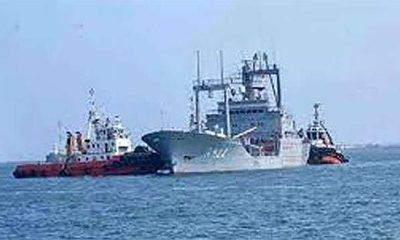
Iranian ships stranded, Lanka fears US sanctions