
News
NMSJ Chief urges Prez to take decisions through consensus


Former Speaker and Chairman of the National Movement for Social Justice (NMSJ) Karu Jayasuriya has urged President Gotabaya Rajapaksa to take tangible measures to bring all political parties together as the country faces the Covid-19 challenge.
The NMSJ, in a statement issued, attributed the following comments to its leader Karu Jayasuriya: “Different political ideologies or aspirations for power should not be prioritized. First and foremost, we must save the country and its people from this catastrophe before us.
The whole country must unite for that. We made an appeal towards this for the first time in Kandy recently. I called on the Most Venerable Mahanayake Theras to discuss these matters. It was then that we realised that we also had the blessings of the chief prelates towards our endeavours. Accordingly, we call on the President and the people of this country to come forward. We make this appeal with the utmost sincerity. If you have love for the country, all political forces and all communities must join hands and face this challenge without delay and the President should extend an invitation to all to join hands in this regard. This is also the opinion of the majority of the people in the country. Otherwise, this country will suffer dire consequences.
In fact, this endeavour should not be limited to the efforts taken to control the Covid-19 pandemic. As a country, we have to make decisions by consensus, even on matters of national importance, such as the government’s decision to ban chemical fertilizers at once as well as the Colombo Port City Project. This is also the position of the National Movement for Social Justice.
We are conducting this press briefing today to reaffirm our position. We hope that all political leaders as well as the civil society will pay attention to this.
If we are to take such an approach, there are a number of factors to consider. The legislature has been weakened due to the transfer of power to the executive by the 20th amendment. There is no discussion in Parliament today on matters of national importance. There is no participation of the people’s representatives.
In countries like the United States, the UK, and Europe where democracy reigns, all important political decisions are made taking into account the advice and guidance of experts. There are special committees and procedures for this purpose. In Sri Lanka, such matters are taken up through sectoral oversight committees. This is a very strong democratic process that is accepted throughout the world.
Our Honorable President is an experienced person after having lived in the United States for a long time. We are of the view that we do not need to explain in detail the importance of such committees to the US Congress with regard to the crucial decisions such committees make. We believe that perhaps he has a better understanding of it than many others.
If so, we propose to activate public representation through parliamentary sectoral oversight committees. Despite not being able to achieve accepted results from all sectoral oversight committees that were initiated in 2015 mainly due to the lack of interest of committee members, we must acknowledge that the sectoral oversight committees on education, justice and national security have been very active. It was through these committees that proposals to increase the number of attorneys in the Attorney General’s Department from 118 to 218, increase the number of High Court Judges from 70 to 108 and to establish two special courts to hear cases of corruption and bribery came to fruition. In addition the wages of judges and officials of the Attorney General’s Department were significantly increased on the proposals made by those committees.
Further, the University of Batticaloa was taken over and the long standing salary anomalies were rectified while the SAITM and Kotelawala faculties of education were merged according to the recommendations made by the parliamentary sectoral committee on education. We should also understand that a great deal was done to bring about unity among the Sinhala and Muslim communities after the Easter Sunday attacks.
Therefore, a sectoral oversight committee on health can be established to find solutions to the pandemic. It would be prudent to explore the possibility of allowing foreign and local experts to submit their views in addition to Opposition members as this is a national endeavour. We see this as a very timely step and can be set up in a few weeks.
A similar approach to the Port City Project would be the most appropriate course of action for the President and the Government. A peaceful solution to the present problem is to set up an All-Party Oversight Committee and seek expert local and foreign opinions and advice in order to finalise this project. No one has objected to the creation of special trade zones. The question arises with regard to the powers that are vested in it, and whether or not the institutions that govern them are in accordance with the constitution of the country. It is important to listen to the views of eminent legal academics such as Prof. Suri Ratnapala as well as institutions such as the Bar Association of Sri Lanka.
President J.R. Jayewardene launched the Public Private Partnership (PPP) concept for the first time in Asia under the Greater Colombo Economic Commission. A state-owned corporation dealing with leather products collaborated with two well-known Korean companies and established the largest export oriented footwear factory in Asia. Despite some difficulties at the inception, it later became a successful business venture.
The then Prime Minister of Malaysia Mahathir Mohamad and his wife visited Sri Lanka to study this. Deng Xiaoping, the then leader of China sent the Mayor of Shanghai to Singapore and Sri Lanka as his special envoy. They wanted to study how we operated.
Also, former President J.R. Jayewardene gave special powers and facilities to the factories of the Greater Colombo Economic Commission. These institutions also enjoyed administrative and commercial independence. The functions of the Customs Department were also streamlined while providing special facilities for selected imports. I responsibly state these facts based on the experience gained as the chairperson of those companies and a member of the Presidential Commission on Privatization.
We opine that the decision taken by the Government to completely stop the use of chemical fertilizers should be referred to a sectoral oversight committee. Important decisions like these should be made only after having extensive discussions with all relevant stakeholders. The safety of the environment, the safety of the people, the food security of the country, and the living standards of the farmers as well as the overall consumer needs of the country should be taken into consideration.
No one has objected to the promotion of compost or organic fertilizer. At an online forum with over 1200 participants, I listened to the various observations made by them. Everyone at the forum was of the view that the proposal to stop the importation of chemical fertilizer was correct but it would be difficult to implement for at least another few years. It is clear that all stakeholders of the agriculture industry have the same views. The protests carried out by members of the farming community in many parts of the country today illustrate this reality.
As such, these issues can be resolved amicably by subjecting these proposals to a lengthy study through oversight committees over a period of several months. Instead of criticizing one another in and out of Parliament, we strongly believe that the burning issues of the country can be resolved through such a cordial approach.
We present these proposals with the noble intention of resolving the issues affecting our country. I hope that these matters will be brought to the attention of the authorities and the public.”


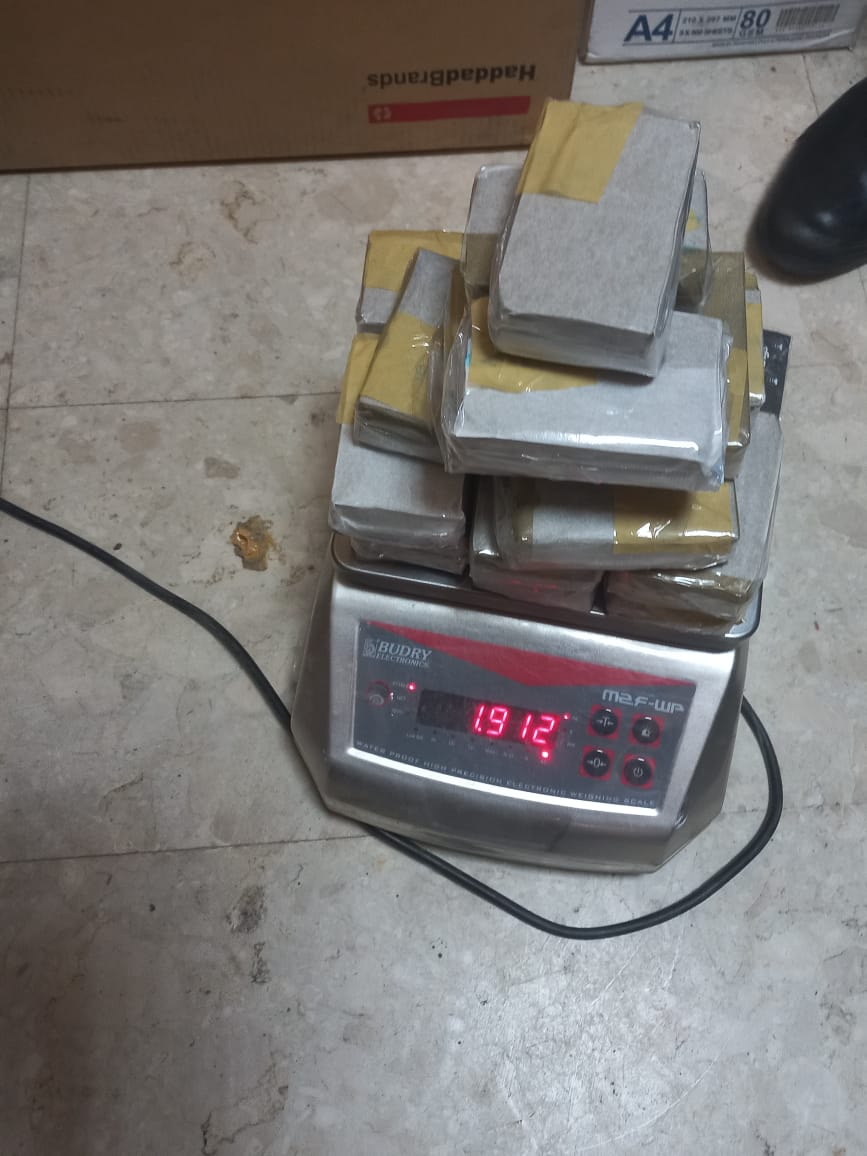
Three Sri Lankan male passengers who arrived from Muscat by flight no. OV 437 on Saturday (24) have been arrested by officers attached to the NCU at BIA as they were found to be carrying 12,306 grams of Cannabis class narcotics (suspected as Hashish & Kush) valued at 123 million rupees.
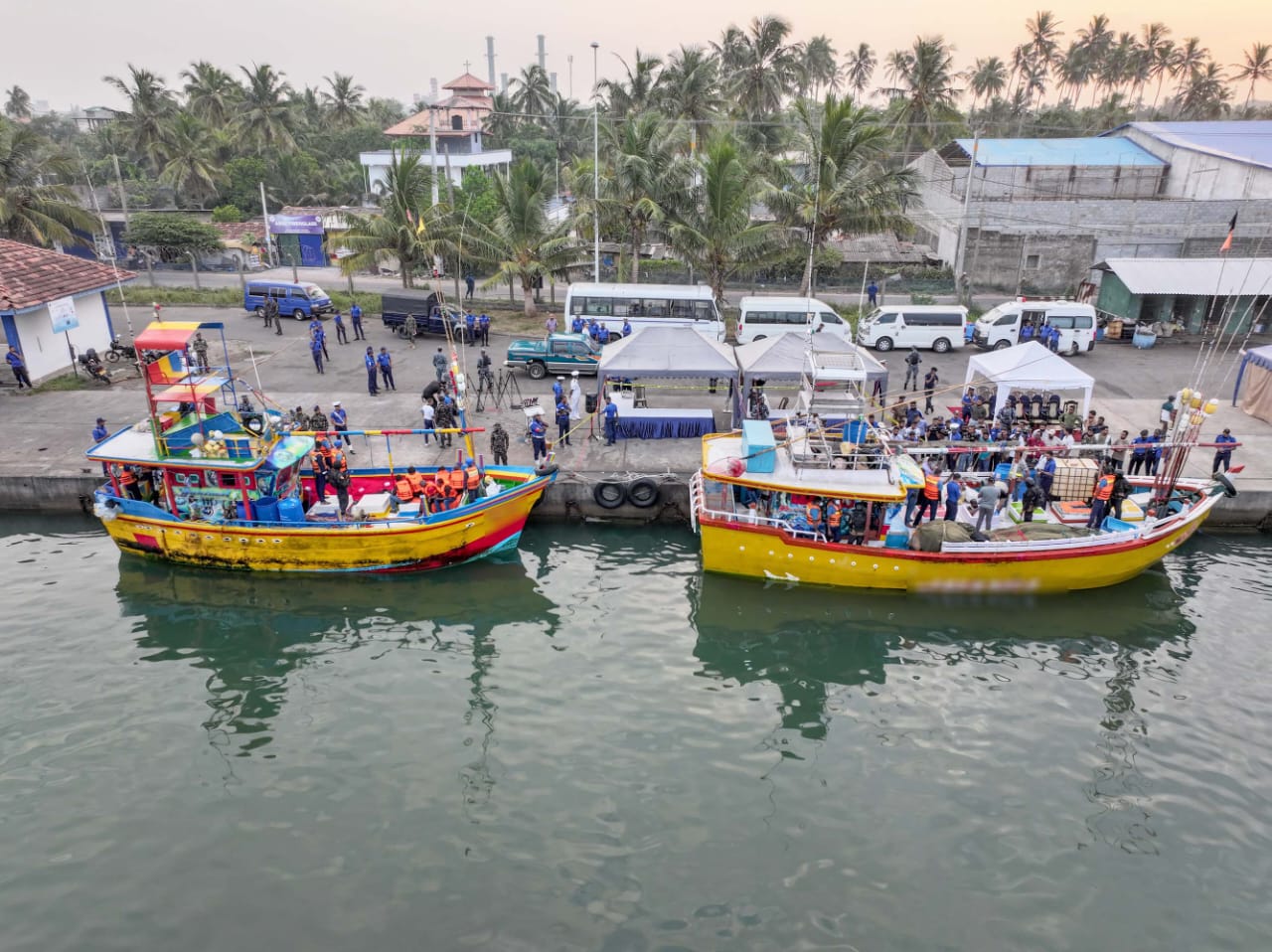
Building on its success in seizing major narcotic stocks in 2025, the Navy continued to support the “A Nation United” National Mission in 2026. In continuation of these efforts, during an
operation conducted on the high seas south of Sri Lanka, the Navy apprehended eleven (11) suspects aboard two local multi-day fishing trawlers suspected of drug smuggling.
Based on shared information, by the Sri Lanka Navy and Police, this special operation was conducted off the southern coast, deploying the Navy‟s Offshore Patrol Vessels. The operation
resulted in the interception of a multi-day fishing trawler suspected of smuggling narcotics, and the apprehension of five (05) suspects on board.
During further operations in the same area, naval units seized another multi-day fishing trawler (01), along with communication equipment and six (06) additional suspects, also believed to be involved in drug smuggling.
This morning (25 Jan 26), the two intercepted fishing trawlers, along with fourteen (14) sacks laden with suspected narcotics and the suspects, were brought to the Dikovita Fisheries Harbour.
An expert examination by the Police Narcotic Bureau confirmed that the fourteen (14) sacks contained more than 184 kilograms of heroin and over 112 kilograms of ‘Ice’ (crystal methamphetamine).
The Deputy Minister of Defence, Major General (Retd) Aruna Jayasekara, the Commander of the Navy, Vice Admiral Kanchana Banagoda, and the Inspector General of Police, Priyantha Weerasuriya, inspected the narcotics at the Dikovita harbour.
The Deputy Minister of Defence said that the current administration has initiated several projects for national development. As a flagship initiative, under the directives and guidance of the President, and under the supervision of the
Ministry of Defence, well-coordinated anti-narcotic raids have been launched.
This effort, part of “A Nation United” National Mission, involves the tri-forces, police, and all intelligence agencies working together under a coordinated plan to ensure that drug smugglers have no opportunity to bring narcotics into the country, he opined. He further stated that despite the national disaster situation, the state machinery, including the tri-forces, the police, and the public at large, remains united in rebuilding the nation, no room will be left for drug trafficking, which poses a severe threat to national security and public safety. Those
who engage in or support drug trafficking, under the cover of fishing activities, will find no escape, he added.
The Deputy Minister also reaffirmed that the tri-forces, police, and all law enforcement agencies are fully committed to their duty of suppressing this menace.
The Deputy Minister of Defence reported that, throughout 2025, a series of highly successful operations were conducted leading to numerous arrests. This was achieved through close coordination and mutual cooperation among the tri-services, the police, the Special Task Force, Police Narcotics Bureau, local law enforcement and international agencies. He noted that this
same spirit of cooperation and commitment has continued into 2026, resulting in the seizure of a large stockpile of drugs.
On behalf of the Honourable President, he extended gratitude to all who contributed to these efforts, specifically acknowledging the Commander of the Navy, the Inspector General of Police, the Police Narcotic Bureau, and the crews of the Navy’s Offshore
Patrol Vessels.
Moreover, the Deputy Minister declared that drug smuggling has become a national crisis, fueled by youth involvement and social crime. With borders secured under the “Nation United” National Mission, he warned traffickers to cease operations and urged users to abandon the destructive habit.
The Deputy Minister urged the public to report suspected drug smugglers to law enforcement via the hotlines 1818 or 1997 and also commended the role of media institutions and journalists in raising public awareness about the dangers of narcotics through responsible reporting.
Meanwhile, the two (02) multi-day fishing trawlers, along with a haul of narcotics, eleven (11) suspects, and communication equipment, were handed over to the Police Narcotic Bureau for
further investigation and legal proceedings.
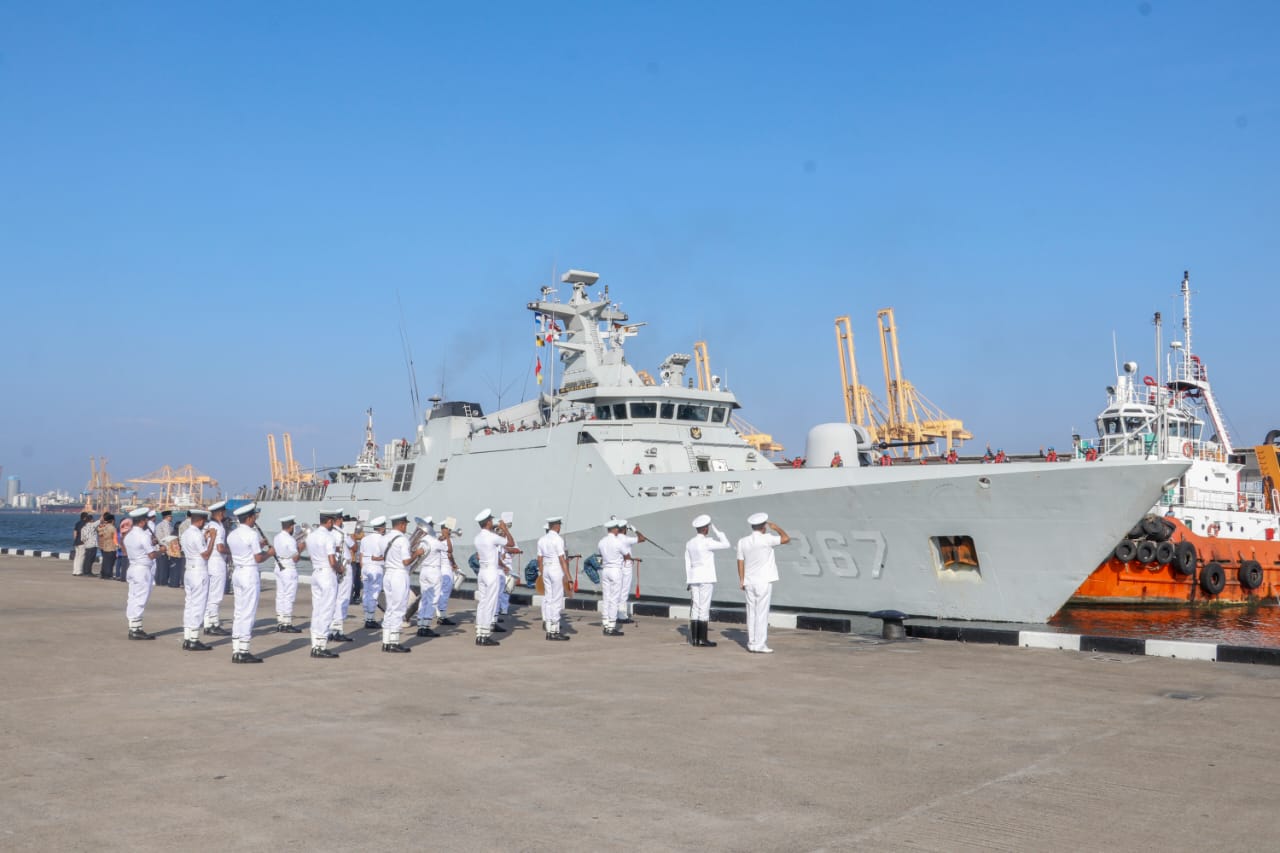
The Indonesian Naval Ship ‘KRI SULTAN ISKANDAR MUDA – 367’, which arrived in Sri Lanka for logistics replenishment and a goodwill mission, departed the island on 23 Jan 26.
The Sri Lanka Navy bade a customary farewell to the departing ship at the Port of Colombo, following naval traditions.
During the stay in Sri Lanka, crew members of the ship visited some popular tourist destinations within the city of Colomb

Three arrested with narcotics valued at Rs123 million at BIA

Navy intercepts 02 narcotics-laden trawlers with 11 suspects in southern seas

Indonesian Naval Ship ‘KRI SULTAN ISKANDAR MUDA – 367’ departs island

U19 World Cup: Japan defeat Tanzania by nine wickets

U19 World Cup: Ambrish’s four-fer powers India to third straight win

Josh Hoey breaks world 800m short track record with 1:42.50 in Boston

‘Dates have the highest sugar content to fight Coronavirus’

Sunday Island 27 December – Headlines

#SundayIsland 17th December – Headlines

Sunday Island – 28th March

Sunday Island Headlines – 21 March

Sunday Island – 21st February – Headlines
-

 Features7 days ago
Extended mind thesis:A Buddhist perspective
-
 Opinion6 days ago
American rulers’ hatred for Venezuela and its leaders
-
 Business15 hours ago
ComBank advances ForwardTogether agenda with event on sustainable business transformation
-
 Business4 days ago
CORALL Conservation Trust Fund – a historic first for SL
-
 Opinion4 days ago
Remembering Cedric, who helped neutralise LTTE terrorism
-

 Opinion3 days ago
A puppet show?
-

 Opinion6 days ago
History of St. Sebastian’s National Shrine Kandana
-

 Features5 days ago
The middle-class money trap: Why looking rich keeps Sri Lankans poor