
News
NJC sets preconditions for abolition of Executive Presidency


The National Joint Committee (NJC) has said that the Executive Presidential system should not be abolished unless the 13th Amendment to the Constitution is abolished. The NJC also called for the introduction of ‘the first-past-the-post system.’ The nationalist group declared a set of preconditions.
The following is the full text of the NJC statement:
The SJB has proposed an amendment to the Constitution to abolish the Executive Presidential system without changing the current electoral system or repealing the 13th Amendment. The Bar Association proposal to abolish the Executive Presidential System is on similar lines.
The Need to Change the Electoral System.
The proportional representation system was introduced by the UNP to fulfil their political aspirations. Under the existing proportional representation system so introduced there is no space for honest and independent professionals and intellectuals to contest an election. Even though the popular demand is that all existing 225 members of Parliament should “go home”, with the expectation of electing honest men and women there is no way that an honest citizen can contest outside the existing party system at the next General Election. There is no internal democracy in any of these parties and only those who are supported by the corrupt leaders of these political parties could get nominations. The public have now unequivocally expressed the view that they have no faith in the existing party system. Therefore it is a sine qua non that we revert to the “First-Past-the-Post System” that existed prior to the promulgation of the present Constitution so that independent candidates not representing any political party could contest. At least 2/3rd of the Members of Parliament should be elected to represent electorates if we are to change the colour and culture of the legislature and ensure a cleaner Parliament.
Abolition of Executive Presidency
SJB and BASL proposes the abolition of the Executive Presidency, introducing a clause to the effect that the President should “always act on the advice of the Prime Minister” (not the Cabinet). What difference would it make by replacing the President with a Prime Minister? Although it may be said that when executive power is vested with the Cabinet of Ministers the Prime Minister implement the collective will of the Cabinet. We know however that the reality is that when a powerful party leader is appointed Prime Minister he runs the show. The Ministers of the Cabinet will be beholden to the Prime Minister for appointing them and it would be unlikely, that any Minister would go against the Prime Minister’s decisions.
In the seventies, over 20,000 youth got killed and, the country was governed under emergency without any press freedom not under a Presidential system but under a Cabinet form of Government. Many a country, particularly in East Asia, recorded remarkable economic and social advancement under various forms of Presidential systems. Therefore, it is evident that the autocracy, mismanagement and corruption in Government stem not from the Presidential system, but due to the lack of an appropriate legal framework to curb corruption, and concentration of power in one power centre, without appropriate checks and balances. The abolition of the Executive Presidency, in effect, is synonymous to concentrating all executive and legislative power in one power centre, namely the Parliament, which the NJC considers as inappropriate.
Besides, it is now obvious that, after the next General Election, it is likely that there would be a hung Parliament, with which, a future Prime Minister will be compelled to satisfy the political demands of his coalition partners and will not be acting in the national interest. This will be an ideal environment for extremists to flourish, and take control of the State as it has happened in the past. In this respect, it may be pertinent to underline that the Provincial Council System has given Provincial Councils powers with regard to 73 different subjects and functions of Government, including Police and Land powers. If any of these provincial administrators act in a manner detrimental to the national interest, it could not be possible to rectify any mischief with no Executive President and a hung Parliament manipulated by extremists.
Therefore, we are strongly of the view that the Executive Presidency should be retained.
A set of 13 proposals have been submitted by the BASL. We appreciate their initiative to bring the Opposition to the negotiation table to resolve the present crisis. We understand that at an emergency meeting of the Bar Council had been hurriedly called and these set of proposals, including the Proposal to abolish the Executive Presidency, had been adopted without adequate notice to the members. The proposals were issued under the signature of the President of the Bar Association Mr. Saliya Peries, President’s Counsel and former Chairman of the controversial office of missing persons established by the Yahapalana Government. Whether a country needs an Executive Presidential System or a Cabinet form of Government cannot be decided by the Bar Association. The general membership of the Bar Association had no opportunity of expressing their views on this question. Whilst we recognise that the Bar Association should be vigilant to safeguard the rights of the ordinary citizen it has no role to play in deciding disputed political issues in the country. We would not be surprised if the present management of the Bar Association would next agitate to convert Sri Lanka from a unitary form of Government to a federal form of Government, a project which the Yahapalana Government was carrying through so enthusiastically. The Bar Association should stop pursuing objectives of political parties their leaders sympathise with.
No Attempt to Seriously Address Corruption
The SJB through their proposed Constitutional Amendment has proposed the reintroduction of the provisions in the 19th Amendment. We have not forgotten the mess it created. The National Procurement Commission created by the 19th Amendment had no teeth they have no power to stop a corrupt deal. Corrupt deals continued under the 19th Amendments. The Hambantota port was handed over for 99 years without competitive bidding.
The conduct of the Election Commission and the Bribery and Corruption Commission was equally repulsive. Although allegation after allegation is made against the Rajapaksa administration not a single successful prosecution was done. The reason for its failure is because the 19th Amendment in fact created politically motivated Commissions replacing Public Officers from the SLAS. Their sole objective was to satisfy the political needs of their masters and not to address corruption.
Therefore the National Joint Commission wish to reiterate the following;
(i)
The Presidential System of Government should not be changed. Any constitutional reform to abolish it, should be adopted only if
(a) The 13th Amendment is abolished and
(b) The “First-Past-the-Post System” introduced to enable a Member of Parliament to represent an electorate. However not more than 1/3 of the Members of Parliament can be accommodated under the proportional representation system to accommodate minority interest.
(ii)
Police and Land powers should be removed from the Provincial Council List
(iii)
Provincial Statutes should be subject to laws enacted by Parliament.
Parliament should be able to repeal Provincial Statutes if they so wish.
(iv)
Alienation of State land to foreigners, foreign states and foreign companies should be prohibited.
(v)
No Government contract or agreement relating to strategic enterprises and land should be permitted without approval of the Supreme Court and the Parliament. However, when such contracts or agreements on
strategic assets or lands being considered would have effective duration beyond the unexpired legitimate tenure of an incumbent Government, such contracts or agreements should also obtain 2/3rd majority of the Parliament, in addition to the approval of the Supreme Court, where the latter may even instruct to refer the matter for a referendum, if the said deal/contract/agreement could possibly have national (economic or political) sovereignty implications.
(vi)
All Government procurement contracts which fall within the categories, referred to under (v), should be based on competitive bidding, but with a transparent margin of local preference given for Sri Lankan bidders, stipulated to encourage domestic industrialization and national economic value addition.
22nd Amendment of 11 Parties
We also observe that the 22nd amendment proposed by the Group of 11 parties (submitted on their behalf by Mr. Wijeyadasa Rajapakse) fortifying the 13th Amendment and to ensure that the Provincial Police Commissions introduced by the 13th Amendment is untouched. The PHU, JNP and Yuthukama
Sansandaya was against the 13th Amendment. It is unfortunate that they have forgotten these principles in such a short period.
Therefore, we urge the proponents of the 21st and 22nd Amendments to reconsider these proposals without taking this country towards further ruination.
In an address to the Nation yesterday the President said that he will take necessary action to abolish the executive presidency. However as for the present Constitution he does not have the mandate to do so.

Latest News
PM holds bilateral meetings in the Philippines to strengthen cooperation in Education, Skills Development, and Agricultural Research

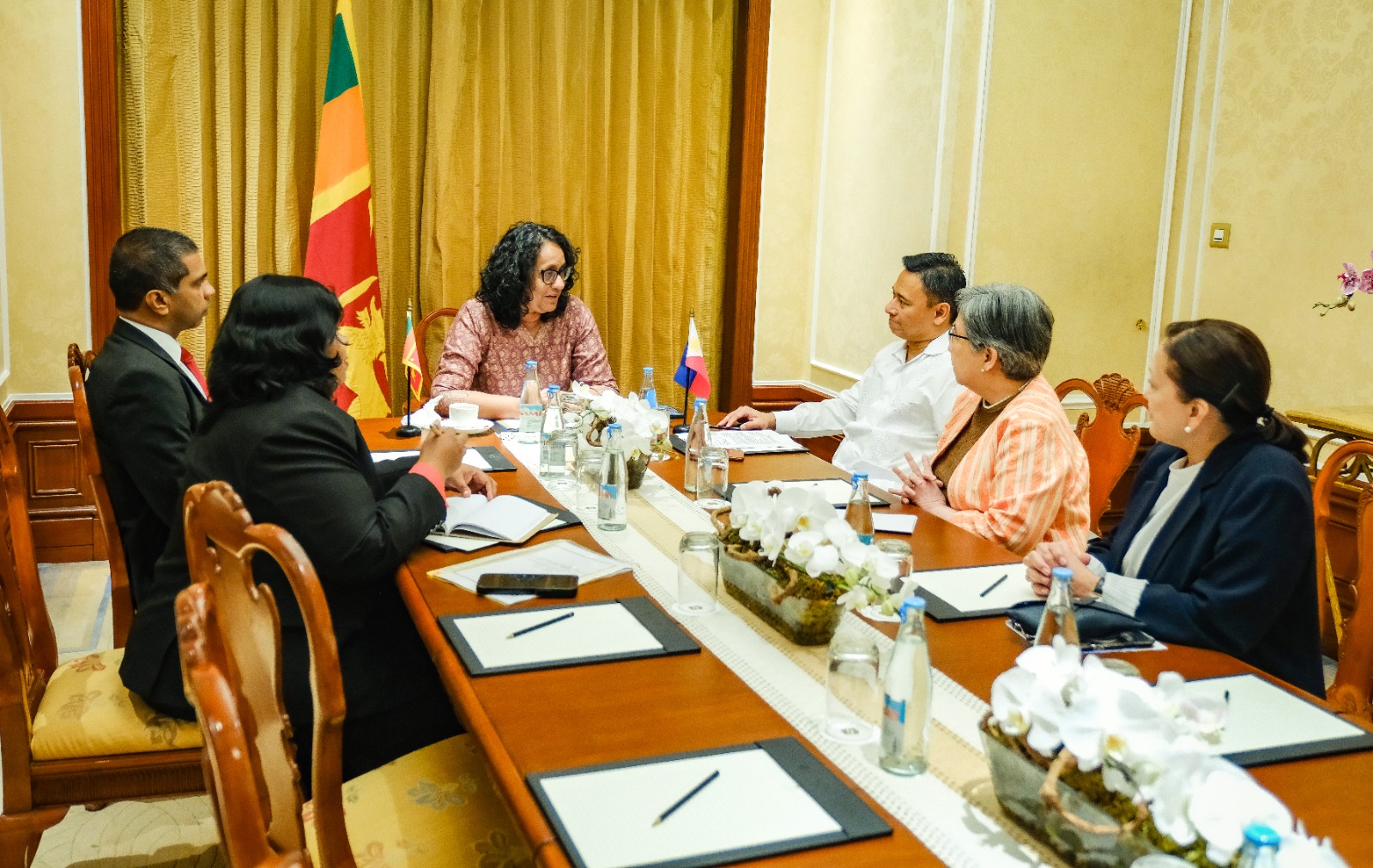
Prime Minister Dr. Harini Amarasuriya held a series of meetings with key Philippine institutions during her official visit to the Philippines from 09–11 March 2026, focusing on strengthening cooperation in education, higher education, technical skills development, and agricultural research.
On 09 March, the Prime Minister met with the Secretary of Education of the Philippines, Sonny Angara. Discussions focused on strengthening bilateral cooperation in the education sector, including sharing best practices in education policy, teacher training, curriculum reforms, and digital learning initiatives. The Prime Minister also briefed the Philippine delegation on Sri Lanka’s ongoing education reforms aimed at modernizing curricula and integrating technology into learning.
The Prime Minister also met with a delegation of the Commission on Higher Education of the Philippines (CHED), led by Chairperson Dr. Shirley C. Agrupis. Discussions centered on the development of higher education in both countries, with particular attention to research collaboration, academic partnerships between universities, student and faculty exchanges, and strengthening quality assurance frameworks.
In a separate meeting, the Prime Minister held talks with the Secretary and Director General of the Technical Education and Skills Development Authority (TESDA), Jose Francisco B. Benitez. The discussions focused on cooperation in technical and vocational education and training (TVET), including knowledge sharing, institutional partnerships, and possible alignment of qualifications frameworks to enhance skills recognition and workforce mobility.
The meetings reaffirmed the commitment of Sri Lanka and the Philippines, along with international research institutions, to strengthen collaboration in education, skills development, and agricultural research in support of sustainable development and human capital growth.
The Sri Lankan delegation included the Ambassador of Sri Lanka to the Philippines, Dr. Chanaka Talpahewa, and Senior Assistant Secretary to the Prime Minister, Ms. P.H. Piyumee Bandara.
[Prime Minister’s Media Division]
Latest News
Heat Index at Caution Level in the Western, Sabaragamuwa and North-western provinces and Monaragala district.

Warm Weather Advisory issued by the Natural Hazards Early Warning Centre of the Department of Meteorology at 3.30 p.m. on 09 March 2026, valid for 10 March 2026.
The public are warned that the Heat index, the temperature felt on the human body is likely to increase up to ‘Caution level’ at some places in Western, Sabaragamuwa and North-western provinces and in Monaragala district.
The Heat Index Forecast is calculated by using relative humidity and maximum temperature and this is the condition that is felt on your body.
This is not the forecast of maximum temperature. It is generated by the Department of Meteorology for the next day period and prepared by using global numerical weather prediction model data.

Effect of the heat index on the human body is mentioned in the above table and it is prepared on the advice of the Ministry of Health and Indigenous Medical Services.
ACTION REQUIRED
Job sites: Stay hydrated and takes breaks in the shade as often as possible.
Indoors: Check up on the elderly and the sick.
Vehicles: Never leave children unattended.
Outdoors: Limit strenuous outdoor activities, find shade and stay hydrated.
Dress: Wear lightweight and white or light-colored clothing.
Note:
In addition, please refer to advisories issued by the Disaster Preparedness & Response Division, Ministry of Health in this regard as well. For further clarifications please contact 011-7446491.

Prof. Priyanga Dunusinghe has warned that Sri Lanka could face a catastrophic situation due to a rapid and sharp drop in revenue caused by the escalating Gulf war.
Appearing on Derana ‘Big Focus’ yesterday, the Professor in Economics in the Department of Economics, and Head – Department of Information Technology, University of Colombo, Dunusinghe said that that drop in remittances from the Middle East, as well as exports, should be examined against the backdrop of runaway oil prices.
Dunusinghe said so responding to interviewer Pasan de Silva who sought expert opinion on the crisis. Referring to continuing Iranian retaliatory attacks on Gulf countries hosting US military bases, the academic pointed out that approximately one million Sri Lankans were employed in the region.
Global oil prices rose to over $100 per barrel on 08 March, for the first time since the Russia-Ukraine war erupted in February 2022. By noon prices were around USD 115 per barrel.
If a consensus couldn’t be reached soon, the consequences for Sri Lanka would be devastating, Dunusinghe said, suggesting that the government should seriously consider, what he called, a relatively small but immediate fuel hike to cushion the impact of future fuel price hikes.
Dunusinghe explained that in addition to the drop in remittances from the Middle East, Sri Lanka could lose employment opportunities in the war devastated region. Responding to the interviewer, the Prof said that if the situation further deteriorated the government would have to face the daunting challenge of evacuating Sri Lankans from the Middle East.
Referring to the devastating impact of Cyclone Ditwah, Dunusinghe pointed out that in terms of the agreement with the IMF, finalised in 2023, the debt repayment would have to be recommenced in 2028. The new Middle East war has placed the country in an extremely difficult situation, Dunusinghe said, while emphasising the responsibility on the part of the government to address the issues at hand immediately.
The rapidly changing oil markets indicated that regardless of optimism expressed by the US and Israel of swift victory, the ground realities were quite different, the academic said.
By Shamindra Ferdinando

Madagascar military leader dissolves government in surprise move

ICC Board meetings in Doha called off due to West Asia conflict

Trump says some sanctions to be lifted on oil producers amid Iran war

PM holds bilateral meetings in the Philippines to strengthen cooperation in Education, Skills Development, and Agricultural Research

Heat Index at Caution Level in the Western, Sabaragamuwa and North-western provinces and Monaragala district.

Showers likely in the Northern province and in Trincomalee and Anuradhapura districts

‘Dates have the highest sugar content to fight Coronavirus’

Sunday Island 27 December – Headlines

#SundayIsland 17th December – Headlines

Sunday Island – 28th March

Sunday Island Headlines – 21 March

Sunday Island – 21st February – Headlines
-
 News4 days ago
University of Wolverhampton confirms Ranil was officially invited
-

 News5 days ago
Legal experts decry move to demolish STC dining hall
-

 News4 days ago
Female lawyer given 12 years RI for preparing forged deeds for Borella land
-

 News3 days ago
Peradeniya Uni issues alert over leopards in its premises
-

 Business6 days ago
Cabinet nod for the removal of Cess tax imposed on imported good
-
 News4 days ago
Library crisis hits Pera university
-
 News1 day ago
Repatriation of Iranian naval personnel Sri Lanka’s call: Washington
-
 Business6 days ago
War in Middle East sends shockwaves through Sri Lanka’s export sector