
Latest News
Nigeria stun New Zealand to set tournament alight

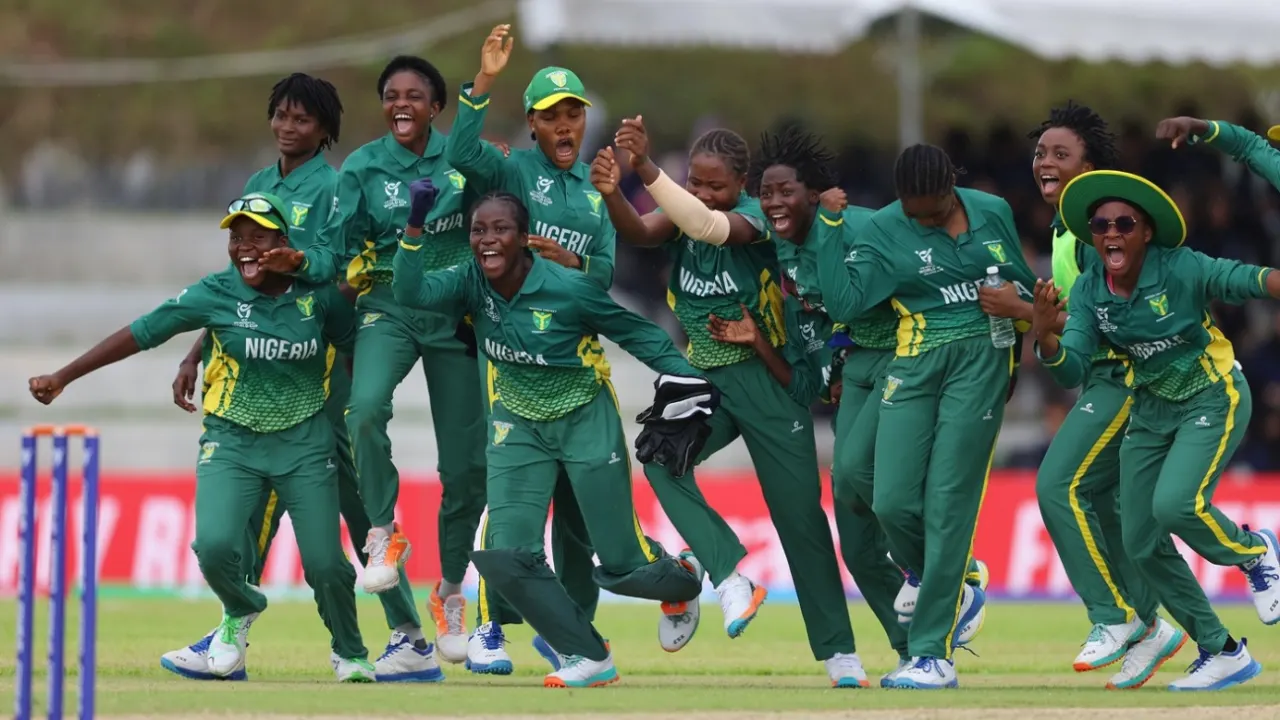
Nigeria stunned New Zealand to post their maiden victory at the Women’s Under-19 World Cup. This was their first completed game in their maiden Under-19 World Cup appearance after their first match was washed out on Saturday.
In a rain-affected game reduced to 13 overs a side, Nigeria scored 65 for 6 with contributions from captain Piety Lucky and Lillian Udeh. The chase started with New Zealand losing their opener Kate Irwin first ball to a run-out. Emma McLeod, the other opener, departed in the third over off the right-arm seamer Usen Peace’s bowling. New Zealand kept losing wickets in the middle overs and were 49 for 5 at the end of 11 overs.
With 17 needed, the penultimate over fetched New Zealand eight runs with captain Tash Wakelin hitting a four off the last ball of the over. New Zealand needed nine off the final over but only managed only six runs off Udeh, as Nigeria sealed a thrilling two-run triumph.
Anika Todd and Wakelin made 19 and 18 respectively but that wasn’t enough for New Zealand.
Brief scores:
Nigeria Women Under 19 65/6 in 13 overs [Lillian Udeh 18, Lucky Piety 19; Anika Tauwhare 1-06, Hannah O’conner 1-11, Anika Todd 1-18, Tash Wakelin 1-06, Hannah Francis 1-04] beat New Zealand Women Under 19 63/6 in 13 overs [Eve Wolland 14, Anika Todd 19, Tash Wakelin 18; Usen Peace 1-05, Adeshola Adekunle 1-14, Lillian Udeh 1-08] by 2 runs

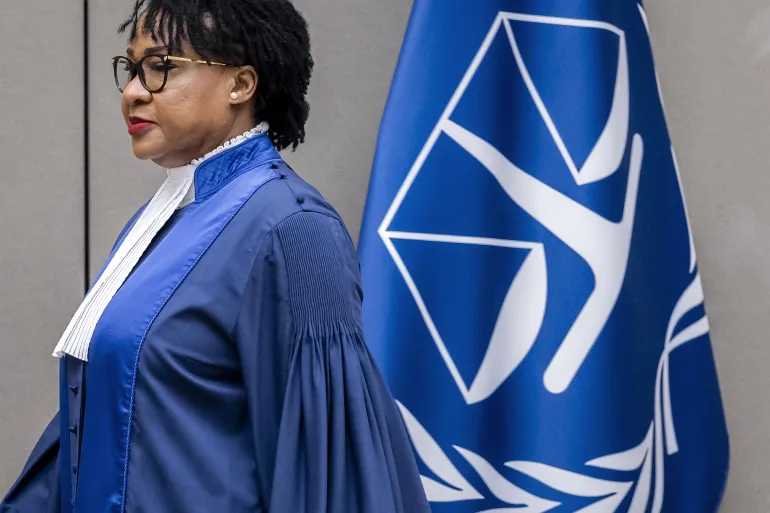
United States Secretary of State Marco Rubio has announced a new set of sanctions against the International Criminal Court (ICC), this time targeting the entity itself, as opposed to the tribunal’s officials or groups that provide support.
The announcement on Friday represented a major escalation from the administration of US President Donald Trump, which has vowed an “all of government” approach to dismantling the court.
“We will ban transactions with this rogue court, cutting off their resources and crippling their ability to operate against us because our message is clear: the United States and the American people are not subject to the jurisdiction of this fake ICC,” Rubio said in a video posted on social media. “Either the ICC will end its threats, or we will end the ICC.”
As justification for its actions, the administration has pointed to the court’s ongoing investigation into abuses committed in Afghanistan, which could ensnare US military and intelligence personnel, as well as the ICC’s arrest warrant for Israeli Prime Minister Benjamin Netanyahu and former Defence Minister Yoav Gallant for war crimes committed in Gaza.
Before Friday’s actions, the US had sanctioned ICC judges and prosecutors, a UN special rapporteur focusing on the occupied Palestinian territories and Palestinian rights groups that have provided evidence to the court.
Several rights groups have challenged those sanctions in US federal court, saying restricting how US citizens interact with the court treads on their constitutional freedoms. Sanctioned ICC judges have also launched legal challenges in the US.
[Aljazeera]

United States President Donald Trump said that Russia has agreed to supply 300,000 tonnes of diesel fuel to global markets amid discussions with Russian President Vladimir Putin.
“I have just concluded a highly successful discussion with President Vladimir Putin, of Russia, wherein it was agreed that Russia will immediately supply over 300,000 Tons of Diesel Fuel to the American and Global Marketplace, another 500,000 Tons during the month of November, and 1,000,000 Tons immediately thereafter,” Trump said in a post on his Truth Social platform.
The president added that Russia would deliver an additional 3 million tonnes of fuel “within a short period of time”. He said that the country would supply 500,000 tonnes in November.
An envoy for Russian President Vladimir Putin, Kirill Dmitriev, praised cooperation between Russia and the United States on diesel and energy in a post on X shortly after.
“Russia-US cooperation on diesel and energy will benefit the world,” Dmitriev wrote on X.
Petrol price pressures
The deal comes despite Ukrainian air strikes, which have taken more than half of the country’s oil refining capacity offline, according to claims made by Ukraine’s Ministry of Defence on Sunday.
The latest announcement comes a week after the G7 countries agreed to release 100 million barrels amid pressure from the White House.
Diesel prices have been elevated in recent months but have started to decline. The average price for a gallon is $6.27 ($1.66 per litre), according to the American Automobile Association (AAA), which tracks daily petrol prices. That’s down $0.10 from this time last week, but up $5.94 from this time one month ago.
[Aljazeera]
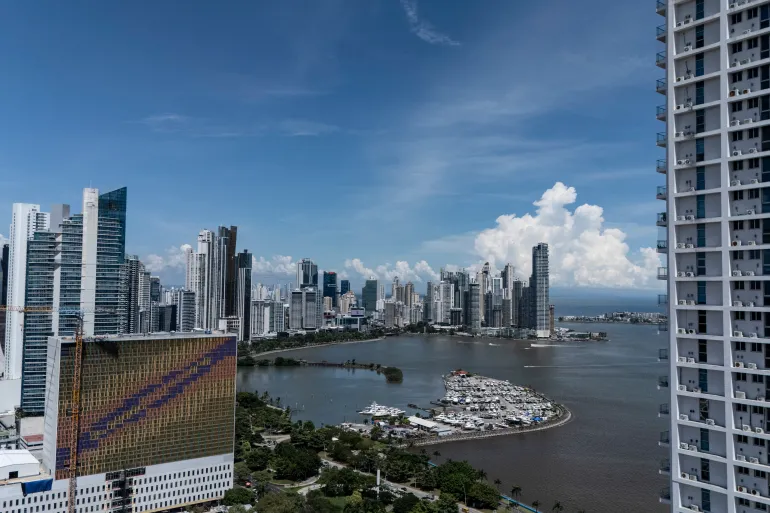
A magnitude 7.7 earthquake has hit southern Panama, triggering tsunami warnings across Central and South America.
The US National Weather Service issued tsunami warnings for Panama, Colombia, Ecuador, Nicaragua and Guatemala on Friday following the quake.
Chile’s naval Hydrographic and Oceanographic Service also issued a tsunami warning.
The US Geological Survey said the earthquake was centred about 10km (6 miles) southwest of the remote community of Pitaloza Arriba along the Pacific Ocean coast.
Residents of Panama City reported feeling tremors, with buildings shaking and people evacuating into the streets.
“We felt it very strongly. It knocked things over in the kitchen, but we’re okay, though we’re very scared,” 60-year-old Rosendo Dominguez, who is from Herrera province, where the earthquake struck, told The Associated Press news agency by phone.
“Everyone is outside, scared,” Dominguez added.
Videos shared by newspaper La Prensa showed the tower of a historic building had collapsed along with several balconies of a residential building in Penonome, a city about halfway between the epicenter and Panama City.
Panama’s ministry of education ordered schools closed.
There have been several destructive earthquakes in the region this year.
In June, twin quakes hit northern Venezuela, causing widespread devastation and killing at least 6,500 people.
In August, a magnitude 7.4 earthquake hit Colombia, killing at least 289 people.
[Aljazwwea]

Sri Lanka ITEC Alumni Association formally launched

Measures underway to protect Diyagama Forest as a Reserve — Deputy Minister of Environment

Showers or thundershowers will occur in most parts of the island after 1.00 p.m.

NPP govt. reminded of its responsibilities as US warship leaves Colombo

CERT: Beware of foreign Uni. scams on social media

Shiranthi receives treatment at National Eye Hospital

‘Dates have the highest sugar content to fight Coronavirus’

Sunday Island 27 December – Headlines

#SundayIsland 17th December – Headlines

Sunday Island – 28th March

Sunday Island Headlines – 21 March

Sunday Island – 21st February – Headlines
-

 Features7 days ago
The first woman in the foreign service or Ceylon Overseas Service it was then called
-

 News6 days ago
Geneva takes up Sallay’s case and govt. ignores opportunity to answer accusations
-
 News7 days ago
Nearly 20 Iranian tankers stranded off Lanka amid US sanctions
-

 Features5 days ago
Preventing grievances from becoming communal
-

 Sports3 days ago
Nissanka absence opens door for Sri Lanka’s young guns
-

 Features6 days ago
Sri Lanka Cricket Bill: Governance reform is not yet a cricket strategy
-

 News4 days ago
Gnansara Thera to be assigned to prison printing section: Officials
-

 News7 days ago
Lanka enters new phase of prosecutions as hurdles clear