
Life style
Newly published guide opens many windows on whale watching

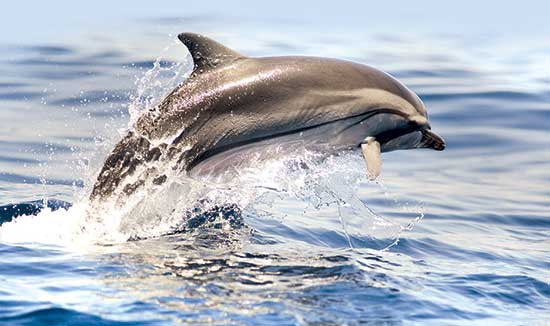
by Ifham Nizam
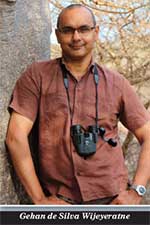
Shipping lanes to the south of Dondra pose the threat of ships colliding with whales as the area has very rich marine life which also attracts whale watching boats, says prolific wildlife writer and photographer Gehan de Silva Wijeyeratne, author of the recently published ‘A Naturalist’s Guide to the Mammals of Sri Lanka’.
He says international shipping industry organizations have written to the government to push back the existing shipping lanes and if no action is initiated, there is the danger of whale watching boats colliding with vessels.
Dr. Susannah Calderon and her colleagues at the University of Ruhuna have recommended the shipping lanes be moved 15 nautical miles south. The cost impact to all concerned will be negligible, but it significantly improves safety at sea, especially at night when the sea is dotted with the lamps from hundreds of small fishing crafts in the path of giant container carriers.
“It is primarily a safety issue though an important secondary impact will be that it reduces fatal collisions with whales, while generating favourable publicity for the government of Sri Lanka. It boils down to moving the shipping lanes further south and saving lives, Wijeyeratne stressed in an interview with The Sunday Island.
Asked what’s special about his latest publication, he said: “This is the first photographic field guide which covers nearly all of the mammals found in Sri Lanka. It covers 96 per cent of the land and marine mammals. The book, which is portable and affordable, also contains a large number of images from 40 photographers which are practically useful in the field to identify 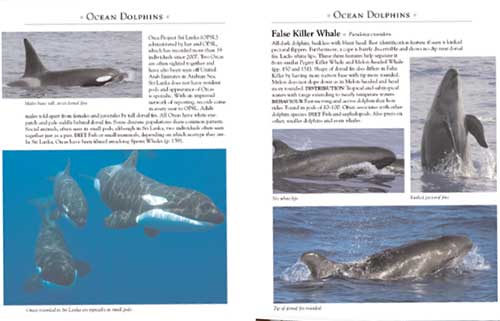 a mammal to species level. It also covers a number of small, discrete, nocturnal mammals whose existence that even many local wildlife enthusiasts will not be aware of.”
On the book’s coverage of the marine mammals, Wijeyeratne said there are two noteworthy aspects. Firstly, it covers all the species recorded in Sri Lankan waters expect for one, the Omura’s Whale. This will be included in a second edition. Secondly, it uses images of the whales and dolphins (cetaceans) which will show the animals the way a whale watcher will see them on the surface.
Artwork that shows the whole animal is important, but in field conditions, they are often of limited value to identify cetaceans which only show a little of their upper body in sections at a time they surface.
Q: You were the first to publicize that Sri Lanka was the best location for Blue Whale sightings and offered the best chance to see a superpod of Sperm Whales. Can you explain briefly how you set about branding Sri Lanka as a top international destination for whale watching?
A:
I started with field work to ascertain the facts and launched a media campaign initially with Jetwing Eco Holidays and Jetwing Hotels which was supported over many years by the Sri Lanka Tourism Promotion Bureau (SLTPB) and others in the media and tourism business. I have published 37 articles on whale watching in Sri Lanka. The first, in May 2008, was pivotal as it boldly stated that Sri Lanka was best for Blue Whales. This set everything in motion. My articles give due credit to many people who were a part of this amazing story. This includes Dr. Charles Anderson who first told me it would be feasible to see Blue Whales from the South.
A Belgian millionaire philanthropist who prefers to remain anonymous and helped create the infrastructure for whale watching by 13 tsunami affected fishing youth who set up Mirissa Water Sports and Sue Evans who was important for connecting all of us and Anoma Alagiyawadu (the Jetwing Lighthouse Naturalist) whom I tasked with collecting the initial data for the Encounter Rates I publicized in the media.
 Remarkably, no Sri Lankan marine biologist played any role in publicizing whale watching in the early years. However, soon after, they benefited by being thrust into the media spotlight by film crew researchers who had read the publicity which began with my various widely disseminated articles. Having read them, and sometimes after conversations with me, the film crews and the press came to Sri Lanka and incorporated local marine biologists into their story.
At the time I broke the first story, I do not think any of the local marine biologists had even one image of a Blue Whale of a publishable standard or had any idea that Sri Lanka was the best place in the world to see Blue Whales. Hopefully, the increased profile of local marine biologists has made it easier for them to raise the funds needed for their important research.
Q: Did the Sri Lanka Tourism Promotion Bureau help your efforts with publicity and branding?
A:
Yes indeed. At the start of the publicity campaign, we produced a series of informative and attractive publications designed by Chandrika Maelge. These were printed and distributed at key consumer and travel trade fairs such as the Bird Fair, WTM and Destinations where a number of important press and tour operators were informed about Sri Lanka being a good place for whales. At some of the press drinks events in London hosted by Jetwing Eco Holidays, around 35-45 press people would attend. These events were held in collaboration with the London Office of the SLTPB.
In some years, As many as three of these press events were held allowing personal interaction with a wide pool of media people. Another important and later development is the role played by Nalin Perera who ran the SLTPB office in London for several years and attended many consumer and travel trade fairs. I had developed media briefs for him which he would print and distribute. In one conversation, he estimated that he had printed and distributed over 10,000 copies of this material.
There were others who also disseminated my stories to the international press; a notable example being Chitral Jayatilake who shared my publicity pdfs with various wildlife documentary makers he invited to Sri Lanka.
Q: Did everyone readily embrace your ideas?
It took a couple of years. I remember even into the second year of the publicity campaign there were doubts from the big companies in tourism.
I remember Srilal Miththapala who was then President of The Hotels Association of Sri Lanka speaking to me and joining a celebrity whale watching event I was leading with Shyamalee Tudawe. This was organized by Olivia Richli of the Amangalla in Galle.
Srilal wanted to report back to the association if there was any truth to the claims being made by me about how easy it was to see Blue Whales. On the coastline, the people running small guesthouses readily embraced the story as tourists who were reading my stories turned up with copies of my articles and asked for boats to take them whale watching. The international press also readily took it on as I provided credible data.
Q: What do you say to criticisms that whale watching needs better regulation?
I agree on the need for better regulation and higher standards. The tourism industry has played its part in publicizing whale watching. Other state agencies also need to step up their efforts to regulate the industry in a way that is good for the welfare of the animals and provide a good visitor experience.
Q: What do you expect ‘A Naturalist’s Guide to the Mammals of Sri Lanka’ to achieve?
I would like people to understand that there is still a lot to be discovered about Sri Lanka’s mammals and I hope this portable and affordable guide will find its way into the hands of local naturalists and inspire more research and more practical steps to conserve habitats and species.


Why the future of the Sri Lankan
elephant will define the country’s future
Every civilisation is remembered not only for the monuments it built, but also for the landscapes it chose to preserve.
Sri Lanka’s ancient reservoirs, majestic stupas and remarkable irrigation systems continue to inspire admiration centuries after they were constructed. Equally remarkable, though often overlooked, is another inheritance that has endured alongside them.
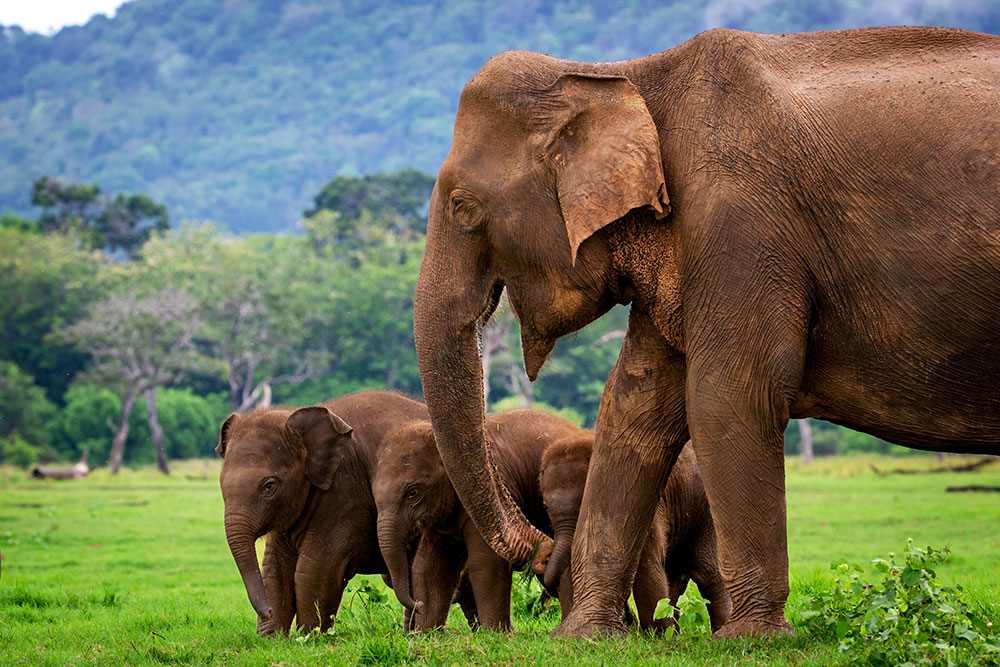
Across the island’s dry-zone forests, elephant herds still move through landscapes that have sustained both wildlife and human communities for millennia, reminding us that Sri Lanka’s history has always been inseparable from the natural world.
Long before ecology became a recognised scientific discipline, the architects of Sri Lanka’s ancient hydraulic civilisation understood a truth that modern environmental science has since reaffirmed: forests, water and human prosperity are intimately connected. The vast network of reservoirs and canals that transformed the dry zone into one of the world’s greatest agricultural civilisations depended upon healthy forested catchments to regulate rainfall, protect watersheds and replenish water supplies. Those same forests were home to elephants, whose movements helped shape dynamic ecosystems long before the rise of Anuradhapura.
The relationship between people and elephants was never without challenges, but for centuries both occupied the same broad landscapes. Seasonal cultivation, extensive forest cover and relatively low human population densities created conditions that allowed coexistence to evolve naturally. The lesson from history is not that conflict never existed, but that healthy landscapes made coexistence possible.
Against this historical backdrop, World Elephant Day on August 12 should become more than an annual observance. It should invite the nation to reflect upon the future of the landscapes that have shaped both its civilisation and its wildlife.
The future of the Sri Lankan elephant is not merely a wildlife issue.
It is a question about the future of the nation itself.
The Sri Lankan elephant (Elephas maximus maximus) is one of the island’s most distinctive natural treasures. Found nowhere else in the world, this endemic subspecies represents a unique evolutionary lineage that has adapted to Sri Lanka’s diverse landscapes over thousands of years. It is also one of the country’s most important keystone species, playing a vital ecological role that extends far beyond its own survival.
As elephants move through forests and scrublands, they disperse seeds, create natural clearings, maintain grasslands and shape habitats that support countless other plants and animals. Their presence helps sustain ecological processes upon which healthy forests depend. Protecting elephants, therefore, means protecting entire ecosystems.
Those ecosystems provide benefits that reach every citizen, whether they live in a rural village or an urban centre. Forests occupied by elephants regulate river flows, protect reservoirs, reduce soil erosion, store carbon and strengthen resilience against climate change. They safeguard biodiversity while supporting agriculture, tourism and water security.
Seen in this context, elephant conservation is not simply about preserving a charismatic species.
It is about protecting the natural infrastructure that sustains Sri Lanka’s economy and society.
Yet this relationship has become increasingly fragile.
Human-Elephant conflict has emerged as one of Sri Lanka’s most complex environmental and rural development challenges. Every year, lives are lost, crops are destroyed and hundreds of elephants die through preventable causes. Behind these statistics lie profound social and economic consequences for farming communities living at the interface between people and wildlife.
Scientific research has transformed our understanding of this conflict. Around 70 percent of Sri Lanka’s wild elephants live outside formally protected areas, occupying landscapes that include secondary forests, scrublands and traditional agricultural areas. This is not evidence that elephants have abandoned protected areas. Rather, it reflects the long-standing ecological reality that elephants have always depended upon wider landscapes extending beyond national parks.
The challenge, therefore, is not simply to protect elephants within isolated reserves.
It is to manage shared landscapes more intelligently.
This requires a fundamental shift in thinking. Instead of viewing Human-Elephant Conflict solely as a wildlife problem, Sri Lanka must recognise it as a challenge of landscape planning, governance and sustainable development. The question is no longer how to separate people from elephants completely, but how to design landscapes where both can thrive safely.
That shift in thinking forms the foundation of a new conservation philosophy, one that offers Sri Lanka an extraordinary opportunity to become a global leader in human-elephant coexistence. It is a vision rooted in the island’s own history, strengthened by modern science and guided by the belief that conserving elephants ultimately means conserving the landscapes that sustain us all.
A new conservation philosophy for a changing Sri Lanka
For much of the past century, the conservation of elephants has been shaped by a philosophy of separation. National parks were established, electric fences erected and elephants translocated or driven away from areas where conflict occurred.
While these measures have often been necessary to protect both people and wildlife, experience has shown that they cannot, by themselves, provide a lasting solution.
The reason is increasingly clear.
Human-elephant conflict is not fundamentally a problem of elephant behaviour. It is a consequence of how landscapes are planned, managed and transformed.
Elephants are intelligent, highly adaptable animals with extensive home ranges that have evolved over centuries. They continue to move along traditional routes in search of food, water and shelter, regardless of administrative boundaries. As forests become fragmented by settlements, roads, commercial agriculture and other forms of development, these ancient pathways increasingly intersect with human activities, creating conflict that neither elephants nor rural communities seek.
This understanding has prompted a profound shift in conservation thinking.
Instead of asking how elephants can be confined within protected areas, scientists are increasingly asking how landscapes can be managed to accommodate both people and wildlife safely. This approach, known as landscape-scale conservation, recognises that biodiversity cannot be sustained within isolated protected areas alone. It depends upon maintaining ecological connectivity across wider landscapes where forests, agriculture, water resources and human settlements coexist.
Every landscape that can sustain elephants is also a landscape capable of sustaining people.
Sri Lanka is uniquely positioned to embrace this approach.
Unlike many elephant-range countries, the majority of Sri Lanka’s wild elephants live outside protected areas, occupying secondary forests, scrublands, village commons and traditional agricultural landscapes. Rather than viewing this as a conservation failure, it should be recognised as evidence of the remarkable adaptability of the Sri Lankan elephant and the island’s long history of coexistence.
This adaptability may prove to be one of Sri Lanka’s greatest conservation advantages.
At the same time, Sri Lanka is undergoing a demographic transition that distinguishes it from much of Asia. Population growth has slowed significantly and is expected to stabilise before gradually declining during the coming decades. While pressures on land will remain considerable, the country has a unique opportunity to plan future landscapes more strategically than nations facing continuing rapid population growth.
This presents a rare opportunity.
With enlightened land-use planning and science-based conservation, Sri Lanka could become one of the world’s foremost examples of long-term coexistence between people and free-ranging Asian elephants.
A key element of this emerging philosophy is the concept of Elephant Managed Ranges.
Rather than attempting to exclude elephants from every human-modified landscape, Elephant Managed Ranges recognise that many areas outside protected forests have supported elephants for generations and can continue to do so under appropriate management. The objective is neither unrestricted elephant movement nor unrestricted human expansion. It is the careful management of shared landscapes to minimise conflict while maintaining ecological integrity.
Within these landscapes, community-managed electric fencing can protect villages and cultivated land without unnecessarily restricting elephant movements through surrounding habitats. Habitat restoration, ecological corridors and better land-use planning can further reduce conflict while allowing wildlife to continue performing its vital ecological functions.
This approach places local communities at the centre of conservation.
Farmers are not simply victims of Human-Elephant Conflict. They possess generations of practical knowledge about elephant movements, seasonal patterns and local landscapes. Their experience, combined with scientific research, should guide future conservation strategies. Conservation succeeds when rural communities become active partners rather than passive recipients of government interventions.
Modern technology can further strengthen this partnership.
Satellite imagery now enables continuous monitoring of forests and land-use change. GPS telemetry provides detailed information on elephant movements and habitat use. Artificial intelligence can analyse large ecological datasets to identify emerging conflict hotspots and improve early-warning systems. Drone technology and remote sensing can assist wildlife officers in monitoring inaccessible areas and responding more efficiently to incidents.
Technology alone, however, is not the solution.
Its value lies in supporting informed decision-making based upon reliable scientific evidence. Effective conservation still depends upon strong institutions, interdisciplinary collaboration and the willingness to integrate research into public policy.
Climate change adds another dimension to this challenge.
Sri Lanka is already experiencing more frequent climatic extremes, including prolonged droughts, intense rainfall, floods and increasingly variable seasonal weather influenced by the El Niño-Southern Oscillation, the Indian Ocean Dipole and fluctuations in the monsoon systems. These changes affect water availability, agricultural productivity and wildlife distribution across the island.
Healthy forests provide one of the country’s most effective natural defences against these impacts. They protect watersheds, regulate streamflow, reduce soil erosion and maintain ecological resilience during periods of climatic stress. The same forests that sustain elephants also safeguard reservoirs, rivers and agricultural systems upon which millions of Sri Lankans depend.
Protecting elephant landscapes therefore strengthens the country’s resilience to climate change while conserving biodiversity and securing essential ecosystem services.
The future of the Sri Lankan elephant will not be secured through fences alone.
It will depend upon whether Sri Lanka has the wisdom to manage its landscapes as interconnected living systems, where forests, water, wildlife and people are recognised as partners in a shared future.
From Conservation to National Vision
The future of the Sri Lankan elephant will ultimately be determined not by wildlife management alone, but by the choices Sri Lanka makes about its own future.
Around the world, governments are beginning to recognise that nature is not simply something to be protected. It is an essential component of national wealth. Forests, wetlands, rivers and biodiversity are increasingly understood as natural capital that supports economic growth, food security, public health and climate resilience.
The Sri Lankan elephant is one of the country’s most valuable natural assets.
Its importance extends far beyond wildlife tourism or cultural symbolism. The landscapes that sustain elephants also regulate water supplies, protect watersheds, conserve biodiversity, store carbon and strengthen the resilience of ecosystems upon which millions of people depend. Healthy elephant landscapes underpin agriculture, reduce the impacts of floods and droughts and contribute directly to the nation’s environmental security.
Conservation should therefore no longer be viewed simply as a public expenditure.
It is a long-term investment in Sri Lanka’s prosperity.
Nations that conserve their natural capital strengthen their economic capital. The two are increasingly inseparable.
Every healthy elephant landscape generates ecological, economic and social benefits that far exceed the cost of protecting it. Increasingly, these landscapes will also become valuable within emerging international mechanisms for biodiversity finance, ecosystem restoration and climate adaptation.
Protecting elephants, therefore, is also an investment in Sri Lanka’s future competitiveness.
A Whole-of-Government Responsibility
No single institution can resolve Human-Elephant Conflict.
The Department of Wildlife Conservation has a central role, but the future of elephants is equally influenced by decisions made in agriculture, forestry, irrigation, transport, tourism, finance, rural development and land-use planning.
This is why elephant conservation should become a whole-of-government responsibility.
Sri Lanka now has an opportunity to establish a Presidential Initiative for Human-Elephant Coexistence and National Elephant Conservation, bringing together all relevant ministries and institutions under a shared national vision.
Working through the Presidential Secretariat, such an initiative should coordinate the efforts of the Ministries responsible for Environment, Wildlife, Forest Conservation, Agriculture, Irrigation, Tourism, Finance, Digital Technology and Rural Development. Provincial Councils, Local Authorities, universities, research institutions, conservation organisations, farming communities and the private sector should all become partners in implementing practical, science-based solutions.
This should not be viewed as another environmental programme.
It should be recognised as a national development initiative that strengthens biodiversity, water security, climate resilience and sustainable rural livelihoods simultaneously.
Successful conservation depends upon collaboration rather than institutional fragmentation.
Planning for the next generation
Meaningful conservation cannot be planned within five-year political cycles.
Elephants live for six or seven decades. Forest restoration takes generations. Climate change will continue to reshape landscapes throughout this century.
Sri Lanka, therefore, requires a long-term national framework that extends beyond successive governments.
A National Elephant Conservation and Management Master Plan (2027–2057) would provide that continuity.
The Master Plan should establish a clear national vision supported by measurable objectives, regular independent scientific review and adaptive management based upon emerging research.
It should identify priority elephant landscapes, strengthen ecological corridors and integrate Elephant Managed Ranges into national land-use planning. Habitat restoration, community-managed fencing, improved compensation mechanisms, biodiversity finance and conservation education should become central components of the strategy.
Modern technologies must also become integral to conservation management. Satellite monitoring, GPS telemetry, artificial intelligence, remote sensing and predictive modelling can transform the way Sri Lanka understands elephant movements, anticipates conflict and manages landscapes. Used responsibly, these tools will enable conservation decisions to become increasingly proactive rather than reactive.
Above all, the Master Plan should ensure continuity.
Governments may change.
Policies may evolve.
The national commitment to conserving elephants and the landscapes they inhabit should remain constant.
Sri Lanka’s opportunity to lead
Few countries possess the combination of advantages that Sri Lanka enjoys.
The island supports one of the world’s highest densities of wild Asian elephants and the endemic Sri Lankan elephant (Elephas maximus maximus), found nowhere else on Earth. It possesses internationally respected conservation scientists, a long history of coexistence between people and elephants and a demographic transition that creates opportunities for long-term landscape planning unavailable to many other elephant-range countries.
These are strategic national assets.
If managed wisely, they place Sri Lanka in a unique position to become the world’s leading example of landscape-scale coexistence between people and free-ranging Asian elephants.
The international community is searching for successful conservation models that reconcile biodiversity protection with human development.
Sri Lanka has the opportunity not merely to participate in that conversation, but to lead it.
By integrating science, public policy and community participation, the country can demonstrate that conservation and development are not competing objectives. They are mutually reinforcing.
Such leadership would strengthen Sri Lanka’s international reputation while contributing meaningfully to global biodiversity conservation and climate resilience.
Beyond World Elephant Day
World Elephant Day should mark more than an annual celebration of one of the world’s most remarkable animals.
It should become a national reminder that the future of the Sri Lankan elephant is inseparable from the future of the country’s forests, watersheds and rural landscapes.
The science already exists.
The conservation expertise already exists.
The technology is available.
The policy foundations are increasingly well established.
What remains is the national leadership required to unite these strengths within a shared long-term vision.
History teaches us that great civilisations endure because they understand the relationship between people and the natural systems that sustain them. Sri Lanka’s ancient hydraulic civilisation flourished because forests protected water and water sustained society. Modern science has reaffirmed the same principle.
The forests that shelter elephants also safeguard rivers, reservoirs, biodiversity and the resilience of communities facing an increasingly uncertain climate.
To conserve those landscapes is to invest in the country’s future.
World Elephant Day should, therefore, become more than an occasion for reflection.
It should become the moment when Sri Lanka commits itself to a new national covenant: one that recognises elephant conservation as an integral part of environmental security, sustainable development and responsible stewardship of the nation’s natural heritage.
For, in the end, the future of the Sri Lankan elephant is not simply about ensuring the survival of an endangered species. It is about whether Sri Lanka possesses the wisdom to preserve the living landscapes that shaped its civilisation, the foresight to restore those that have been diminished, and the vision to entrust this enduring natural legacy to generations yet unborn.
About the Author: Dilum Alagiyawanna
is a telecommunications engineer turned environmental and wildlife conservationist, citizen scientist and wildlife documentary filmmaker. He is an environmental policy researcher and writer whose work integrates science, public policy and sustainable development to advance wildlife conservation, climate resilience and landscape-scale environmental management, with particular emphasis on the long-term conservation of Sri Lanka’s elephants and other threatened species.
By Dilum Alagiyawanna
Civilisation Shaped by Forests,
Water and Elephants
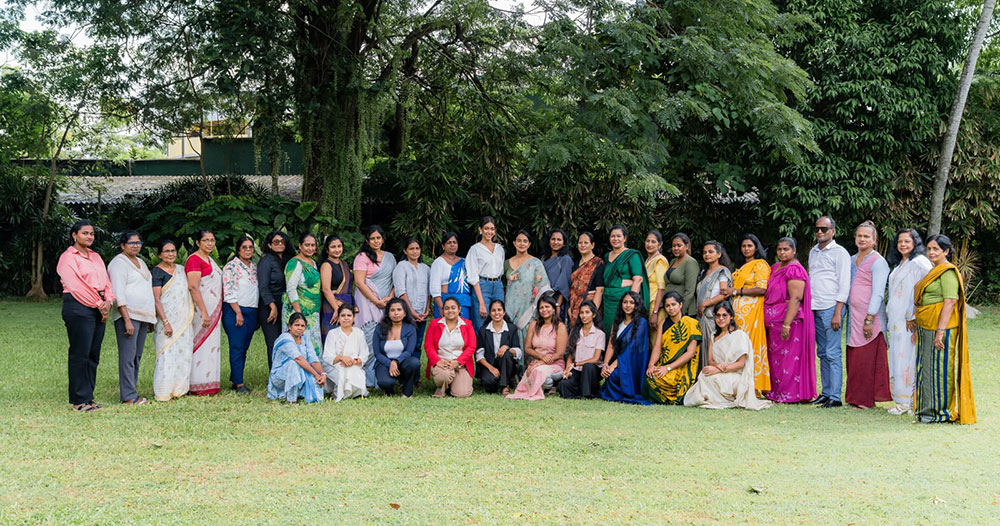
This month July 16th, 17th, 18th and 19th, the international spotlight will turn to Colombo as the CCWE (Ceylon Chambers of Women Entrepreneur) Fashion Week and International Summit will be held at Cinnamon Life, supported by HNB, and hosted by Cinnamon Life. This event will usher in an extraordinary celebration of style, creativity and innovation, bringing together acclaimed designers, industry leaders, emerging talents and fashion visionaries from around South Asia. Organised by the Ceylon Chamber of Women Entrepreneurs (CCWE) under the theme ‘Threads of Inclusion. Woven from Every Walk of Life,” this event goes far beyond a traditional fashion week.
This event promises to be a defining moment in Sri Lanka’s fashion calender. The runway will become a canvas of artistic expression, where sculptured silhouettes, exquisite textiles, impeccable tailoring and masterful craftsmanship come together in collections that celebrate both heritage and contemporary design. Each collection will offer competing narratives revealing fashion as an ever evolving dialogue between culture, identity and imagination. The event promises an unforgettable experience where fashion transcends trends and become a powerful expression of culture, identity and innovation. With Colombo welcoming the creative community. this landmark celebrations is poised to elevate Sri Lanka’s presence on the global fashion stage with confidence, sophistication and unmistakable style
What is the CCWE Fashion Week and International Summit 2026?
The CCWE Fashion Week & International Summit 2026 is Sri Lanka’s premier platform that brings together fashion, entrepreneurship, trade, sustainability, innovation, and social inclusion under one national initiative.
Organised by the Ceylon Chamber of Women Entrepreneurs (CCWE) under the theme “Threads of Inclusion—Woven from Every Walk of Life,” the event goes far beyond a traditional fashion week. It is a social impact movement designed to empower women entrepreneurs, showcase emerging designers, celebrate diversity, create international business opportunities, and position Sri Lanka as a regional hub for inclusive and sustainable fashion.
The four-day programme will feature :
International Summit with regional and global speakers, Fashion showcases by leading Sri Lankan and South Asian designers, Community fashion segments highlighting women from diverse backgrounds, Women’s Leadership Awards, Trade and networking opportunities, youth, innovation and entrepreneurship initiatives
The event also serves as a fundraising platform to strengthen women-led enterprises and create lasting economic opportunities across Sri Lanka.
CCWE Fashion Week and & International Summit 2026 will be held from 16th to 19th July, 2026, at Cinnamon Life, Colombo.
The programme includes: 16th July – International Summit and Opening Ceremony, 17 July – Fashion Showcases and Designer Collections, 18 July – Grand Finale Fashion Show, 19 July – Trade Fair, Business Networking and Community Engagement Programme
What our partners say –Manoji Wadugodapitiya
“Fashion has the power to transform lives, but true beauty lies in creating opportunities for everyone. What inspires me most about the CCWE Fashion Week is its commitment to ensuring that women from every background are given a platform to shine. It is not merely a fashion event—it is a celebration of courage, resilience and possibility.
Sadee Greenwood
“The CCWE Fashion Week represents a fresh direction for Sri Lanka’s fashion industry. It beautifully combines creativity with purpose. It is exciting to see fashion being used as a vehicle for social impact, entrepreneurship and international collaboration. I am proud to be associated with an initiative that gives back to society while elevating Sri Lankan talent.
Prathiba Liyanaarachchi – Miss Sri Lanka 2025
“As Miss Sri Lanka 2025, 1 believe every young woman deserves the confidence to dream beyond her circumstances. CCWE Fashion Week sends exactly that message. It celebrates confidence, diversity and empowerment while inspiring the next generation of women leaders. I am honoured to be part of this meaningful journey.
Professor Samudrika Wijayapala, Designer, Panel Judge
“Having evaluated the designers, I have been impressed by the remarkable creativity and originality displayed this year. Beyond technical excellence, many collections reflect meaningful stories of culture, sustainability and inclusion. CCWE Fashion Week is nurturing not only talented designers but responsible creators who understand the power of fashion to influence society.”
Gihan Dassanayake, Head Choreographer
“Fashion is storytelling through movement. Our responsibility is not simply to create beautiful runway presentations but to allow every model to confidently tell their own story.
This year’s choreography reflects the diversity of Sri Lanka and South Asia, bringing together experienced professionals alongside first-time community participants. Watching them walk the same runway with equal confidence truly captures the spirit of inclusion that defines this event.
Sherly Jayawardena,
Chairperson – Ceylon Chamber of Women Entrepreneurs (CCWE)
“CCWE has always believed that entrepreneurship is one of the strongest tools for social and economic transformation. This Fashion Week reflects our vision of building an inclusive ecosystem where women, communities and businesses grow together. Every partnership, every designer and every entrepreneur participating in this event becomes part of a much larger movement to create opportunity for future generations.
Dr. Ayanthi Gurusinghe,
President – Ceylon Chamber of Women Entrepreneurs (CCWE)
“CCWE Fashion Week & International Summit 2026 is much more than a fashion event—it is a national movement for inclusive economic development.
Our vision is to weave together entrepreneurs, designers, policymakers, development partners, communities and international delegates onto one platform where opportunity is accessible to everyone.
The theme, ‘Threads of Inclusion—Woven from Every Walk of Life,’ reflects our belief that every individual has a story worth celebrating. Whether they are from a rural village, an urban business, a differently-abled community, or an emerging entrepreneurial background, they all deserve visibility and opportunity.
Through this initiative, we aspire to position Sri Lanka as South Asia’s leading destination for inclusive fashion, women-led enterprise development and sustainable innovation while creating meaningful economic opportunities that extend well beyond the runway.
By Zanita Careem
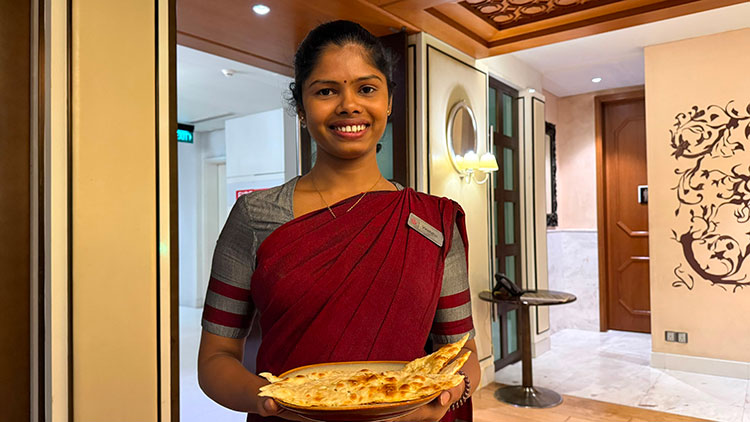
NH Collection Colombo, offers an array of dining experiences that bring together diverse cuisines, distinctive venues, and memorable moments in the heart of the capital. Guiding these experiences is Executive Chef Priyantha Vithanage, whose extensive industry experience and passion for innovation continue to shape the hotel’s gastronomic offerings. With expertise spanning a variety of international and local cuisines, he plays a key role in curating distinctive menus and memorable dining experiences that reflect creativity, quality, and authentic flavours.The culinary journey begins at AYU, where guests can enjoy an extensive selection of local and international cuisine throughout the day. From breakfast through to dinner, the restaurant presents a vibrant dining atmosphere, complemented by themed dining experiences inspired by flavours from around the world.
Those looking to explore the vibrant tastes of Thailand can step into Thai Rasa, where renowned Thai Mama brings together traditional recipes and contemporary presentation in an elegant setting. Whether for a business lunch, an intimate dinner, or a private celebration, the restaurant offers a memorable dining experience accompanied by warm hospitality and dedicated private dining spaces.
The journey continues at Adityaa, where the rich traditions of Indian cuisine are celebrated through a menu carefully crafted by the hotel’s resident Indian Chef Mangala. Bringing authenticity to every dish, he takes pride in preparing many of his own spice blends, ensuring rich flavours and a true taste of India. Guests can savour an array of flavourful thalis, aromatic biryanis, and freshly handcrafted naans paired with traditional home-style curries, creating a dining experience that is both comforting and satisfying.
As the sun begins to set, Vistas Rooftop Bar offers the perfect setting to take in panoramic views of Colombo’s skyline. Guests can unwind with signature cocktails, premium spirits, fine wines, and flavourful bites while enjoying live entertainment and the vibrant atmosphere of the city. From sundown high tea experiences to relaxed evenings under the city lights, every visit offers a unique perspective of Colombo.
Beyond its signature restaurants, NH Collection Colombo also offers inviting spaces for guests seeking a more relaxed setting. Collections serves freshly brewed coffees, handcrafted cakes, pastries, refreshing shakes, and sweet treats, making it an ideal stop throughout the day. Mansion, the hotel’s exclusive bar and private lounge, provides a sophisticated retreat where guests can enjoy expertly crafted beverages, pre-dinner cocktails, relaxed conversations, or the venue’s renowned Irish coffee in an intimate atmosphere. NH Collection Colombo welcomes guests to discover exceptional dining experiences and create memorable moments in the heart of Colombo.
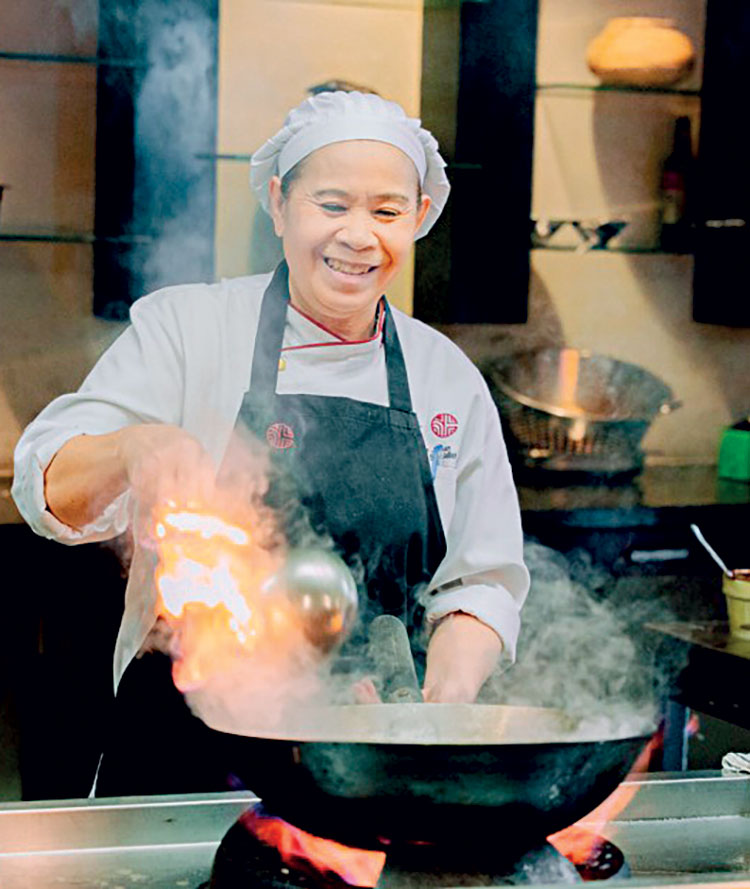
Thai Rasa – a taste of Thailand by Thai Mama

A rt of Indian Thali

Bangkok pub fire death toll rises to 32 with 15 in intensive care

England vs Argentina: FIFA World Cup semifinal – Messi, Kane and prediction

ICC adds Super Series and Super 7 twist to 2027 ODI World Cup

Trump meets Iraq PM at White House, promises ‘a lot of deals’

A few showers may occur in the Western, Sabaragamuwa and North-western provinces and in Kandy, Nuwara-Eliya, Galle and Matara districts

Negombo Prison riot: No convicts among 21 inmates killed

‘Dates have the highest sugar content to fight Coronavirus’

Sunday Island 27 December – Headlines

#SundayIsland 17th December – Headlines

Sunday Island – 28th March

Sunday Island Headlines – 21 March

Sunday Island – 21st February – Headlines
-

 News6 days ago
Herath warns prospective migrant workers not to get fleeced by racketeers
-
 Features4 days ago
Prison riots and politics: NPP’s biggest challenge and Sri Lanka’s biggest opportunity
-

 Editorial5 days ago
What’s the world coming to?
-
 Foreign News6 days ago
Tensions erupt in Indian state after 11-year-old raped and murdered
-

 Features6 days ago
Devanesan Annan – in Memoriam
-

 News7 days ago
Negombo Prison riot: Ensuring protection of prisoners fundamental responsibility of the state – UN
-
Editorial6 days ago
Punishment in hellholes
-

 News6 days ago
Representatives of the Organization of Professional Associations (OPA) of Sri Lanka meet the Prime Minister