
News
New USD 2.8 mn project in Northern Province


ILO initiative backed by Australia and Norway
The International Labour Organisation (ILO), in partnership with the Government of Australia and the Government of Norway, recently launched the GROW Project– Generating Resilient Opportunities for Work – a transformative US$2.8 million initiative aimed at strengthening livelihoods, climate resilience, and social empowerment for marginalised communities in Sri Lanka’s Northern Province.
The Northern Province — home to over 75,000 women-headed households and more than 21,000 persons with disabilities — continues to face significant challenges following years of conflict, economic hardship, and intensifying climate hazards. GROW addresses these intersecting challenges head-on through a three-pronged strategy: economic empowerment, social inclusion, and climate resilience according to a statement issued by ILO Country Office for Sri Lanka and the Maldives.
Speaking on the relevance and importance of the project for the province, Northern Province Governor Nagalingam Vedanayagam said: “With the support of the Government of Australia and the Government of Norway, we have seen the positive impact of collaborative and innovative efforts to rebuild our economy and restore livelihoods. The GROW project demonstrates our continued joint commitment to advance inclusive, climate-resilient development for our communities.”
GROW builds on more than a decade of successful interventions under the ILO’s Jobs for Peace and Resilience (JPR) Programme including the LEED, LEED+, EGLR, PAVE projects. Implemented from 2025 to 2028, the project focuses on creating lasting and inclusive employment through climate-resilient agriculture and aquaculture, social empowerment, and market system development.
“Australia and Sri Lanka’s development partnership is built on joint development solutions to support the growth of a strong, successful Sri Lanka. Australia is excited to partner, alongside the Government of Norway, with the International Labour Organisation for the GROW programme. This will build on our previous engagements in the North to ensure equitable growth, climate-resilient development and resilience for the region.” said Australian High Commissioner to Sri Lanka, Paul Stephens
Funded with $1.9 million from the Government of Australia and $900,000 from the Government of Norway, GROW is aligned with both countries’ development strategies — emphasising women’s empowerment, disability inclusion, food security, and climate adaptation.
“Norway is delighted to support the GROW project and believe that it can make a difference in the lives of many people of the Northern Province. Reconciliation is not a destination — it is a process. GROW can contribute positively to this process,” said Martine Aamdal Bottheim, Deputy Head of Mission, Embassy of Norway to India, Sri Lanka, and Bhutan.
The Director, ILO Country Office for Sri Lanka and the Maldives, Ms. Joni Simpson stated “GROW brings together farmers, cooperatives, companies, government, and civil society in a model that is collaborative, inclusive, and evidence based. Together with our partners we believe this project will build stronger livelihoods, more cohesive communities, and a fairer future for all.”
GROW will develop and expand partnerships with private companies in high-potential value chains such as gherkin, seaweed, horticulture, and tilapia, creating sustainable livelihoods, promoting digitization, and community-led empowerment. The programme will also strengthen government extension services and embed long-term sustainability through institutional capacity building and support for short food value chains.







It has been reported that former Inspector General of Police (IGP) C.D. Wickramaratne has been found dead at his residence in Athurugiriya this morning (17)
it is suspected that he may have taken his own life.

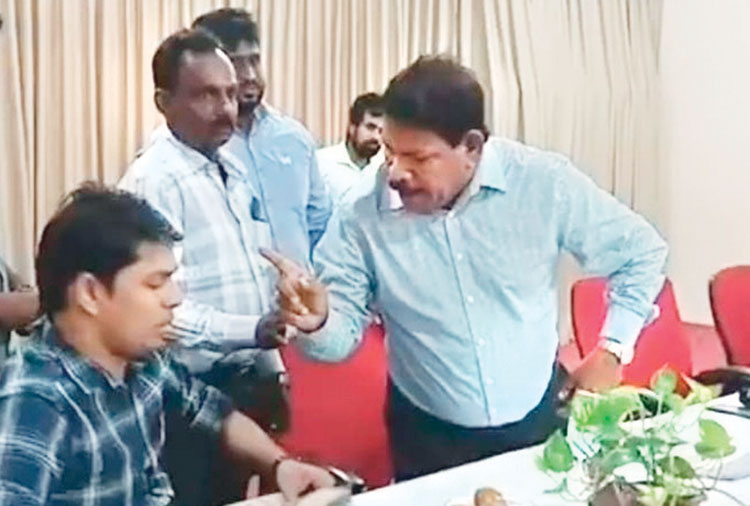
A heated argument broke out between Jaffna District MP Archchuna Ramanathan and Fisheries Minister Ramalingam Chandrasekar during the Kilinochchi District Coordination Committee meeting held yesterday (16).
A video footage of the incident shows the MP and the Minister engaging in a heated verbal exchange, following which a physical confrontation appeared to develop when the Minister attempted to grab files reportedly in the possession of MP Ramanathan.
“If you lay a hand on me, I’ll lay a hand on you too… got it?” Ramanathan is heard telling the Minister during the exchange.
Police and officials present at the meeting intervened to prevent the situation from escalating further.
The circumstances that led to the confrontation were not immediately clear.
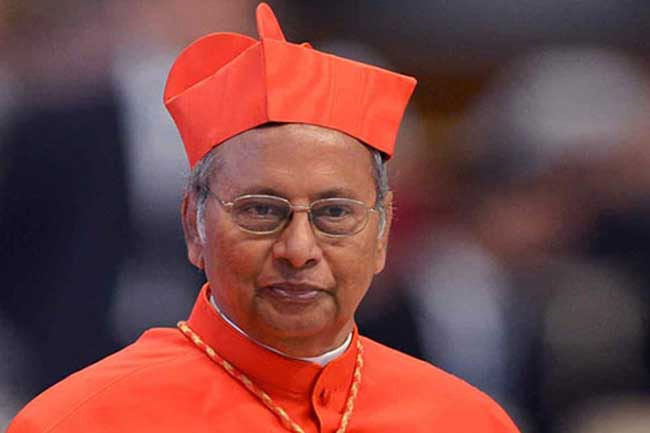
Archbishop of Colombo Malcolm Cardinal Ranjith has filed an intervening petition before the Court of Appeal in connection with a petition filed by former head of the State Intelligence Service, Major General (Retired) Suresh Sallay, challenging his arrest and detention under the Prevention of Terrorism Act over investigations into the Easter Sunday terror attacks.
The Cardinal has sought permission from the court to make submissions in relation to Sallay’s petition and requested that it be dismissed.

Can Argentina and Messi beat Spain and Yamal to defend World Cup?

Anushka Sanjeewani, Vishmi Gunaratne return for Pakistan ODIs

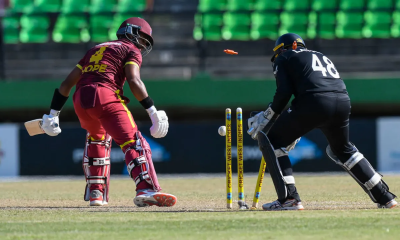
Lennox stars again as New Zealand take series lead after West Indies collapse

Former IGP C.D. Wickramaratne found dead at his residence

Venezuela earthquake: Number of known dead rises to nearly 5,000 victims

A few showers may occur in the Western, Sabaragamuwa and North-western provinces and in Kandy, Nuwara-Eliya, Galle and Matara districts

‘Dates have the highest sugar content to fight Coronavirus’

Sunday Island 27 December – Headlines

#SundayIsland 17th December – Headlines

Sunday Island – 28th March

Sunday Island Headlines – 21 March

Sunday Island – 21st February – Headlines
-
 Features6 days ago
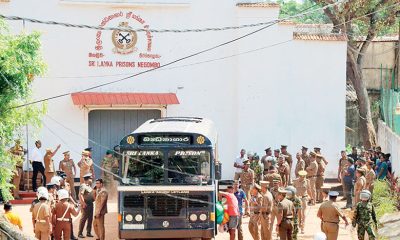
Prison riots and politics: NPP’s biggest challenge and Sri Lanka’s biggest opportunity
-

 Editorial7 days ago
What’s the world coming to?
-
 Features3 days ago
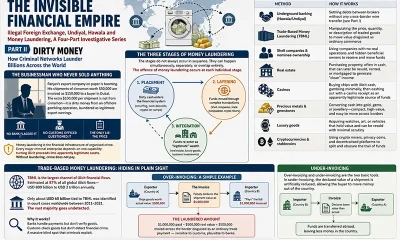
Dirty Money
-

 Editorial6 days ago
Much ado about crime: Fish or cut bait
-

 Features6 days ago
More on Saudi Arabia: ARAMCO and beyond
-
 Midweek Review3 days ago
The sordid tale of theft and tragedy at Finance Ministry
-
 Latest News3 days ago
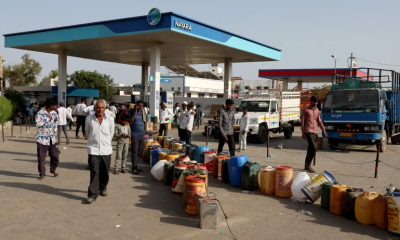
Oil prices hit 1-month high as US-Iran attacks dim Strait of Hormuz outlook
-

 Features5 days ago
Deepening Democracy – Constitutions and Constitutionalism