
News
New private sector retirement age: Question mark over mandatory or voluntary status


…concerns over workers’ inability to receive EPF at 55
By Shamindra Ferdinando
Treasury Secretary S.R. Attygalle yesterday (22) said that the implementation of the 2021 budget proposal to increase the retirement age of private sector workers to 60 would have to be discussed with stakeholders before a final decision was made.
Prime Minister Mahinda Rajapaksa, in his capacity as the Finance Minister presented to Parliament the government policy with regard to the private sector retirement and now the implementation would have to be worked out, Attygalle said.
The Treasury Secretary said so when The Island asked him whether private sector workers would be deprived of an opportunity to withdraw their EPF (Employees Provident Fund) at 55 years.
When The Island pointed out that many workers required the EPF for various family commitments, particularly education purposes and pay dowry et al, the Treasury Chief said the benefit of private sector workers receiving an opportunity to work till 60, too, should be taken into consideration.
Responding to another query, Attygalle emphasized the proposal pertaining to compulsory retirement age dealt only with the private sector. “No. It did not affect the armed forces or the police,” Attygalle explained, pointing out the rationale in bringing the retirement age of both public and private sector workers on par.
The top Finance Ministry official emphasized that there couldn’t be any confusion in that regard as the particular proposal dealt with the private sector.
The Finance Secretary said that a decision would have to be made with regard to the increase of retirement age of private sector workers to 60 whether it was voluntary or mandatory.
At the moment, the retirement age of men and women in the private sector stands at 55 and50, respectively.
Responding to another query, Attygalle pointed out that at the time the then government established the fund in terms of the Employees’ Provident Fund Act No 15 of 1958, the life expectancy of the men and women were 58.8 and 57.5, respectively.
The largest superannuation fund in the country is meant to provide retirement benefits for the private and semi government sector employees.
Attygalle explained that the government policy was to introduce required changes to the EPF Act in accordance with the much improved life expectancy of both men and women, estimated at 72 and 76.6, respectively.
The passage of budget 2021 is a mere formality as the government enjoys a staggering 2/3 majority in parliament. The second reading of the budget was passed on Saturday (21) with a majority of 99 votes.
State Minister of Money, Capital Market and State Enterprise Reforms Ajith Nivard Cabraal strongly endorsed the move. When The Island sought an explanation how private sector workers’ concerns about them having to wait five years more to obtain EPF funds, State Minister Cabraal said that he earned the wrath of some for suggesting 20 percent of the fund should be released to members in view of the corona epidemic. The former Central Bank Governor made the proposal in March this year in his capacity as the senior economic affairs advisor to the Premier Mahinda Rajapaksa.



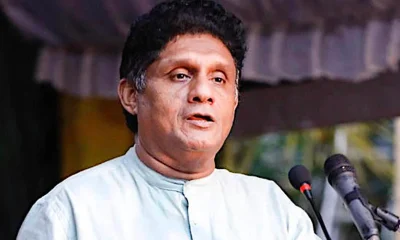

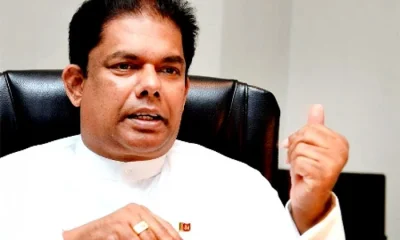


Chairman of the Committee on Public Finance (CoPF), MP Dr. Harsha de Silva, told Parliament yesterday that President Anura Kumara Dissanayake had personally telephoned him in response to a letter highlighting the prolonged delay in appointing an Auditor General, a vacancy that has remained unfilled since 07 December.
Addressing the House, Dr. de Silva said the President had contacted him following the letter he sent, in his capacity as CoPF Chairman, regarding the urgent need to appoint the constitutionally mandated head of the National Audit Office. During the conversation, the President had sought his intervention to inform the Constitutional Council (CC) about approving the names already forwarded by the President for consideration.
Dr. de Silva said the President had inquired whether he could convey the matter to the Constitutional Council after their discussion. He stressed that both the President and the CC must act in cooperation and in strict accordance with the Constitution, warning that institutional deadlock should not undermine constitutional governance.
He also raised concerns over the Speaker’s decision to prevent the letter he sent to the President from being shared with members of the Constitutional Council, stating that this had been done without any valid basis. Dr. de Silva subsequently tabled the letter in Parliament.
Last week, Dr. de Silva formally urged President Dissanayake to immediately fill the Auditor General’s post, warning that the continued vacancy was disrupting key constitutional functions. In his letter, dated 22 December, he pointed out that the absence of an Auditor General undermines Articles 148 and 154 of the Constitution, which vest Parliament with control over public finance.
He said that the vacancy has severely hampered the work of oversight bodies such as the Committee on Public Accounts (COPA) and the Committee on Public Enterprises (COPE), particularly at a time when the country is grappling with a major flood disaster.
As Chair of the Committee responsible for overseeing the National Audit Office, Dr. de Silva stressed that a swift appointment was essential to safeguard transparency, accountability and financial oversight.
In a separate public statement, he warned that Sri Lanka was operating without its constitutionally mandated Chief Auditor at a critical juncture. In a six-point appeal to the President, Dr. de Silva emphasised that an Auditor General must be appointed urgently in the context of ongoing disaster response and reconstruction efforts.
“Given the large number of transactions taking place now with Cyclone Ditwah reconstruction and the yet-to-be-legally-established Rebuilding Sri Lanka Fund, an Auditor General must be appointed urgently,” he said in a post on X.
By Saman Indrajith

The NPP government was exploring the feasibility of introducing a regular pension, or annuity scheme, for Employees’ Provident Fund (EPF) contributors, Deputy Minister of Labour Mahinda Jayasinghe told Parliament yesterday.
Responding to a question raised by NPP Kalutara District MP Oshani Umanga in the House, Jayasinghe said the government was examining whether EPF benefits, which are currently paid as a lump sum at retirement, could instead be converted into a system that provides regular payments throughout a retiree’s lifetime.
“We are looking at whether it is possible to provide a pension,” Jayasinghe said, stressing that there was no immediate plan to abolish the existing lump-sum payment. “But we are paying greater attention to whether a regular payment can be provided throughout their retired life.”
Jayasinghe noted that the EPF was established as a social security mechanism for private sector employees after retirement and warned that receiving the entire fund in a single installment could place retirees at financial risk, particularly as life expectancy increases.
He also cautioned that interim withdrawals from the EPF undermined its long-term sustainability. “Even the interim payments that are given from time to time undermine the ability to give security at the time of retirement,” he said, distinguishing the EPF from the Employees’ Trust Fund, which provides more frequent interim benefits.
Addressing concerns over early withdrawals, the Deputy Minister explained that contributors have been allowed to withdraw up to 30 percent of their EPF balance since 2015, with a further 20 percent permitted after 10 years, subject to specific conditions and documentary proof.
Of 744 applications received for such withdrawals, 702 had been approved, he said.
The proposed shift towards an annuity-based system comes amid broader concerns over Sri Lanka’s ageing population and pressures on retirement financing. While state sector employees receive pensions funded by taxpayers, including EPF contributors, the EPF itself has been facing growing strain as it is also used to finance budget deficits.
Jayasinghe said the government’s focus was to formulate a mechanism that would ensure long-term income security for private sector employees, placing them on a footing closer to a pension scheme rather than a one-time retirement payout.
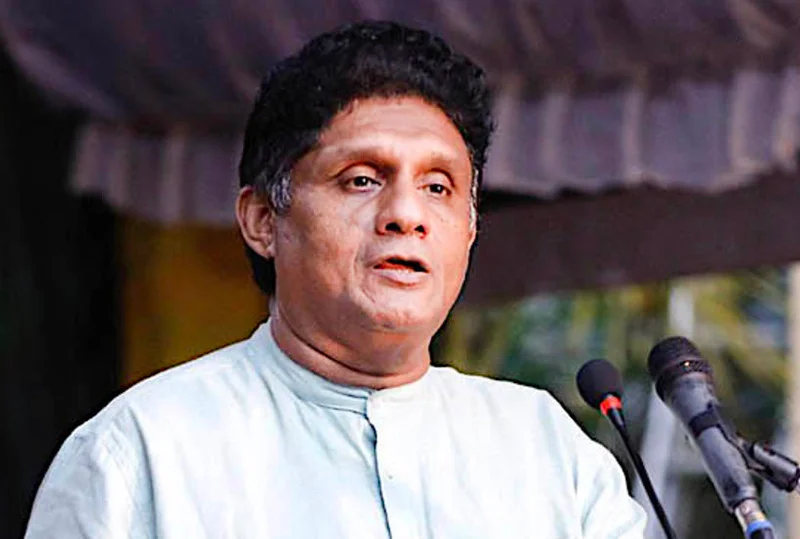
Opposition Leader Sajith Premadasa yesterday strongly criticised proposals to increase electricity tariffs, warning that the move would deepen the hardships faced by the public already reeling from disasters and rising fuel costs.
Premadasa, who is also the leader of the SJB, told Parliament that the government was considering an electricity price hike at a time when people were struggling to recover from recent crises, while coping with higher fuel prices. He accused the administration of acting contrary to its own election pledges and the expectations of suffering people.
Making a special statement, the Opposition Leader recalled that the government had come to power promising to reduce electricity bills by 30 percent, within three years, by shifting from fuel-based power generation to cheaper renewable sources, such as solar, wind and hydropower. Instead, he said, those commitments had been abandoned.
Premadasa pointed out that the CEB has sought approval from the Public Utilities Commission of Sri Lanka (PUCSL) for an 11.57 per cent tariff increase for the first quarter of 2026 to cover its losses. He questioned whether the government had assessed the impact of such an increase on low- and middle-income households, as well as state institutions.
He also asked why the government had failed to honour its promise to cut electricity tariffs by one-third through a transparent pricing mechanism.
The Opposition Leader further criticised the limited time allocated for public consultations on the proposed new energy policy, saying it was unfair and should be extended, particularly given the prevailing national crises.
Premadasa warned that the removal of competitive tariff structures for industries would be unjust to large-scale consumers using more than five million units of electricity, and called for comparative reports before any subsidies are withdrawn.
He added that despite earlier assurances to reduce electricity bills by 33 percent, the government has once again increased fuel prices, even as global fuel prices decline, continuing, what he described as, a pattern of broken election promises.
Accusing the government of being constrained by International Monetary Fund (IMF) conditions, Premadasa said the simultaneous increases in fuel and electricity prices were exacerbating the economic burden on the public.
By Saman Indrajith

Prez seeks Harsha’s help to address CC’s concerns over appointment of AG

Govt. exploring possibility of converting EPF benefits into private sector pensions

Sajith accuses govt. of exacerbating people’s suffering to please IMF

Kelaniya Duruthu Perahera

Ditwah disaster: Opposition seeks chairmanship of proposed committee to investigate alleged govt. lapses

EPDP’s Devananda and missing weapon supplied by Army

‘Dates have the highest sugar content to fight Coronavirus’

Sunday Island 27 December – Headlines

#SundayIsland 17th December – Headlines

Sunday Island – 28th March

Sunday Island Headlines – 21 March

Sunday Island – 21st February – Headlines
-
 News1 day ago
Broad support emerges for Faiszer’s sweeping proposals on long- delayed divorce and personal law reforms
-

 News2 days ago
Private airline crew member nabbed with contraband gold
-

 News1 day ago
Interception of SL fishing craft by Seychelles: Trawler owners demand international investigation
-

 News4 days ago
Health Minister sends letter of demand for one billion rupees in damages
-

 Opinion6 days ago
Remembering Douglas Devananda on New Year’s Day 2026
-

 Features2 days ago
Pharmaceuticals, deaths, and work ethics
-
 News1 day ago
US raid on Venezuela violation of UN Charter and intl. law: Govt.
-

 Latest News2 days ago
Curran, bowlers lead Desert Vipers to maiden ILT20 title