
Business
Nestlé brands NESCAFÉ and MAGGI win at the SLIM-KANTAR People’s Awards 2025 for the fourth consecutive year

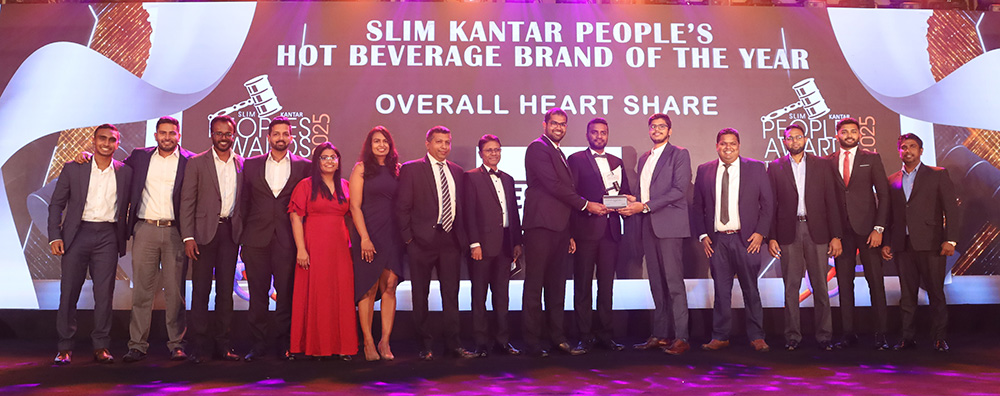
Nestlé’s household favourites emerged victorious once again at the SLIM-KANTAR People’s Awards 2025 taking home two awards. NESCAFÉ was voted People’s Hot Beverage Brand of the Year while MAGGI was the joint-winner for People’s Snack Brand of the Year respectively for the fourth consecutive year. Organized by the Sri Lanka Institute of Marketing (SLIM), the SLIM-KANTAR People’s Awards is widely considered as one of the most prestigious awards ceremonies in the country, rewarding brands and personalities that are closest to the hearts of Sri Lankans.
Loved by Sri Lankans for its distinct aroma and rich taste, NESCAFÉ is made with the goodness of 100% pure coffee beans to create great coffee experiences that make life better. Made using Sri Lankan spices and the finest ingredients, the tasty goodness of MAGGI noodles has been a household favourite by Sri Lankans for over 40 years.
Sharing his thoughts, Bernie Stefan, Managing Director of Nestlé Lanka said “Winning the People’s Awards for the fourth-year running is a testament to the deep connection our brands have forged with Sri Lankan consumers. This recognition not only highlights the unwavering dedication and relentless efforts of the teams behind NESCAFÉ and MAGGI but also underscores our commitment to consistently delighting our consumers. We are truly humbled by these accolades and remain steadfast in our mission to deliver products of the highest quality. For over 118 years, we have prioritized the needs and preferences of our consumers, and their love, trust, and loyalty are instrumental in driving our success.”


Pan Asia Banking Corporation PLC reported a strong financial performance for 2025, marking a year in which the Bank reinforced its position among Sri Lanka’s steadily expanding financial institutions. The Bank’s overall asset base surpassed Rs. 300 Bn, reaching Rs. 308.02 Bn its largest balance sheet to date while Profit After Tax amounted to Rs. 4.01 Bn. Earnings Per Share stood at Rs. 9.05, reflecting a solid core earnings base and disciplined balancesheet execution during a year of gradually easing macroeconomic pressures.
Total operating income grew to Rs. 16 Bn, supported by resilient net interest generation and sharp growth in non-interest revenue. Even though benchmark interest rates trended downward for much of the year reducing gross interest income at the market level, the Bank protected its core income through proactive liability repricing, careful funding management, and the retirement of high-cost borrowings. A healthier deposit mix supported by CASA growth helped reduce interest expenses by 4%, allowing the Bank to maintain profitability despite softer yields on loans and government securities.
A clearer picture of Pan Asia Bank’s true performance emerges once the nonrecurring sovereign debt gain recorded in 2024 is set aside. On this normalized basis, 2025 stands out as the Bank’s strongest year of underlying profitability in its 30-year history. Underlying Profit After Tax surged 35% to Rs. 4.01 Bn, while underlying Profit Before Tax climbed an impressive 52%, highlighting the Bank’s accelerating earnings momentum. Underlying EPS rose 35% to Rs. 9.05, supported by improved returns, with underlying ROE and ROA rising by 169 and 52 basis points, respectively. Together, these gains reflect the depth of the Bank’s core business strengths, broadbased revenue growth, and disciplined margin management during a year shaped by declining interestrate conditions.
Income diversification also played a pivotal role. Net fee and commission income expanded by 37%, supported by heightened lending activity, improved trade flows, stronger card-related transactions, and remarkable growth in remittance-related business. These developments helped offset the moderation in trading gains, which were affected by lower capital gains on unit trusts and government securities. A derecognition gain of Rs. 278.63 million on FVOCI assets and reduced marktomarket losses helped stabilize noninterest income, allowing the Bank to sustain earnings despite a more subdued trading environment.
Credit quality improved significantly. The Stage 3 loan ratio declined to 1.73% from 3.10% a year earlier one of the greatest improvements within the sector—reflecting the Bank’s continued emphasis on highquality underwriting, better borrower monitoring, and an effective earlywarning framework. Impairment expenses normalized following the unusually large reversal seen in 2024. ( Pan Asia Bank)
Business
SriLankan Cargo secures another South Asian First with IATA CEIV Live Animals Certification
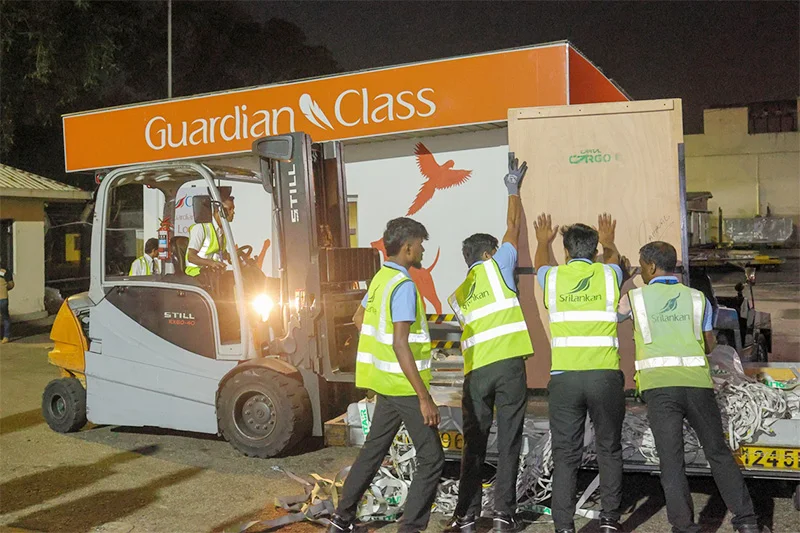
SriLankan Cargo, the air freight arm of SriLankan Airlines, has secured another regional first by becoming the first airline in South Asia to be awarded the Center of Excellence for Independent Validators (CEIV) for Live Animals Logistics Certification from the International Air Transport Association (IATA). Regarded as the premium global standard for the air transport of live animals, the certification serves as a powerful pledge to pet parents, livestock owners, conservationists and all shippers that SriLankan Cargo will transport animals in humane, safe and stress-free conditions across its worldwide network.
Chaminda Perera, Head of Cargo at SriLankan Airlines, commented on the achievement, stating, “Earning the IATA CEIV Live Animals Certification underscores our dedication to animal welfare and operational excellence, ensuring safer handling, trained teams and peace of mind for our customers.”
Sheldon Hee, Regional Vice President, Asia-Pacific, said, “The CEIV Live Animals certification is not only about compliance, but ensures the safety and welfare of live animals transported by air. This is particularly relevant as this is a market that continues to grow with more than 200,000 live animal shipments globally in 2025. We are pleased to see SriLankan Airlines achieve this important certification and ensure the implementation of the highest standards across the supply chain.”
The certification stands out for placing animal safety and welfare at the forefront, supported by best-in-class infrastructure and operational excellence. Achieving it requires a rigorous, multi-step process of training, assessment, validation, certification and recertification, ensuring that only organisations fully compliant with the IATA Live Animals Regulations and the Convention on International Trade in Endangered Species gain membership in this highly exclusive circle of airlines, which currently numbers 12 worldwide.
SriLankan Cargo remains firmly committed to upholding the highest standards stipulated in the IATA Live Animals Regulations throughout the shipment lifecycle, from acceptance and handling to loading, transportation and final delivery. Working closely with veterinary authorities, ground handlers and cargo partners, the airline ensures every check box relating to welfare and compliance is consistently ticked.
SriLankan Cargo also operates purpose-built facilities with precise temperature control procedures and robust contingency plans, enabling animals to travel in optimal conditions, including during transit. Dedicated CEIV-trained team members oversee each movement, safeguarding comfort, wellbeing and regulatory adherence at every stage.

Prime Lands Residencies PLC (CSE: PLR) reported strong financial performance for the quarter ended 31 December 2025, keeping shareholder expectations intact.
The company’s share price increased by more than 40% over the last three months, reflecting heightened investor confidence. Market expectations remained elevated given the scale of project launches over the past two years, including three towers in The Border Colombo (484 units), J’adore Negombo (333 units), The Golf Colombo 08 (64 units), Mon Vie Colombo 05 (349 units), Prime Colombo 9 (559 units), and The Seasons Colombo 08 (44 units).
Quarterly revenue grew by 43% year-on-year to Rs. 2.80 billion, compared to the corresponding period last year. This growth was primarily driven by accelerated construction progress in Towers C of The Border Colombo project, together with first time revenue recognition from The Seasons Colombo 08. Revenue from the newly launched remaining projects is yet to be recognized in line with construction milestones and the company’s prudent revenue recognition policy, establishing the growth potential in earnings in upcoming periods.

Muscular South Africa stroll into Super Eight with all-win record

Pakistan bat first, drop Shaheen Afridi in must-win encounter against Namibia

New Bangladesh sports minister wants to fast track cases against Shakib and Mortaza

Climber on trial for leaving girlfriend to die on Austria’s highest mountain

IMF MD commends government’s efforts in stabilizing the country’s economy

India look to go into Super Eight stage with all-win record

‘Dates have the highest sugar content to fight Coronavirus’

Sunday Island 27 December – Headlines

#SundayIsland 17th December – Headlines

Sunday Island – 28th March

Sunday Island Headlines – 21 March

Sunday Island – 21st February – Headlines
-

 Life style4 days ago
Marriot new GM Suranga
-

 Business3 days ago
Ministry of Brands to launch Sri Lanka’s first off-price retail destination
-

 Features4 days ago
Monks’ march, in America and Sri Lanka
-

 Opinion7 days ago
Will computers ever be intelligent?
-

 Features4 days ago
The Rise of Takaichi
-

 Features4 days ago
Wetlands of Sri Lanka:
-

 News4 days ago
Thailand to recruit 10,000 Lankans under new labour pact
-

 News4 days ago
Massive Sangha confab to address alleged injustices against monks