
News
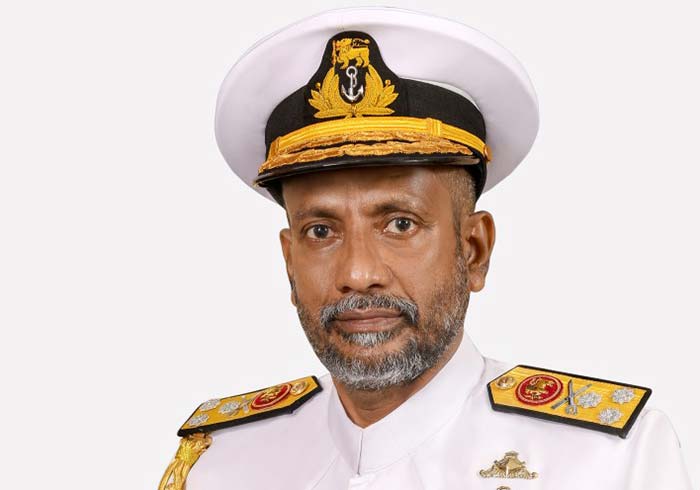
Navy Commander explains persistent problem of large number of Indian vessels poaching in SL waters

By Rathindra Kuruwita
Sri Lanka has a 5,000-boat strong high seas fishing fleet which can go up to 2,000 nautical miles away from Sri Lanka, Commander of the Navy, Vice Admiral Priyantha Perera said.In contrast, the Indian fishing industry, while not as technologically advanced, has expanded to a point of being unsustainable, he said.
“They have a large number of boats, but they can operate only in their coastal seas and then they poach in our territorial waters using disastrous mechanized bottom trawling techniques,” he said.
Vice Admiral Perera highlighted that the Indian fishing industry has expanded beyond a sustainable capacity. Typically, Indian fishermen, operating within their own waters, are permitted to fish on Saturdays, Mondays, and Wednesdays. He noted that, in a few weeks, they will suspend fishing for a three-month period, allowing fish to breed and replenish the ocean.
“However, Indian fishing boats who claim to engage in high seas fishing face no such restrictions. However, instead of going into the high seas these vessels come to Sri Lankan waters and poach here. The area around Delft Island and in the five to 10 nautical mile shallow seas off Point Pedro have a lot of crabs and prawns. This is a high value yield. Sri Lankan vessels go into the high seas and catch tuna, which brings a lot of money. During meetings with Indian counterparts, our Ministry officials asked Indians why they can’t also follow suit,” he said.
Vice Admiral Perera emphasized that Sri Lankan fishing is subject to rigorous regulations. Fishermen based in Sri Lanka’s North are not equipped for high-seas operations; instead, their focus remains on harvesting prawns and crabs, the Navy commander said.
“Compared to South, East and North Central provinces where fishermen are more likely to engage in high seas fishing, there are only a few fisheries harbours in the North. Myliddy Fishery Harbour is the only place the Northern fishermen must dock large boats. One also needs to have other supporting industries in place for high seas fishing, and these, too, are lacking in the North,” he said.
Indian fishermen also destroy large quantities of equipment of Northern fishermen, he said, adding that he Navy has apprehended 15 Indian trawlers along with 110 of their fishermen in Sri Lankan waters so far in 2024.
“This has not put an end to Indian poaching. When we make arrests, they stop coming for a week or two but return in numbers later. On Saturdays, Mondays, and Wednesdays there are about 400 Indian fishing vessels poaching in Sri Lankan waters around Katchatheevu Island. Another 200 operate around KKS and in the East on those days. So, on average around 600 Indian vessels poach in our waters on Saturdays, Mondays, and Wednesdays. We can’t stop them by using excessive force,” he said.
The Navy commander added that the Navy can’t stop such a large number of Indian vessels with three or four boats. This can only be stopped through a change in the way Indians practice their craft.
“It is not practically possible to seize hundreds of fishing vessels. Also these arrests lead to political implications. We must think of everything.”
The relationship between Indian and Sri Lankan fishermen have deteriorated, too, he said. However, the tensions so far are limited to South India and Sri Lanka’s North.
The Navy commander went on to say that this is not an indication of tensions between India and Sri Lanka. “But the solution to this problem seems far off unless the Indians change their practices,” he said.







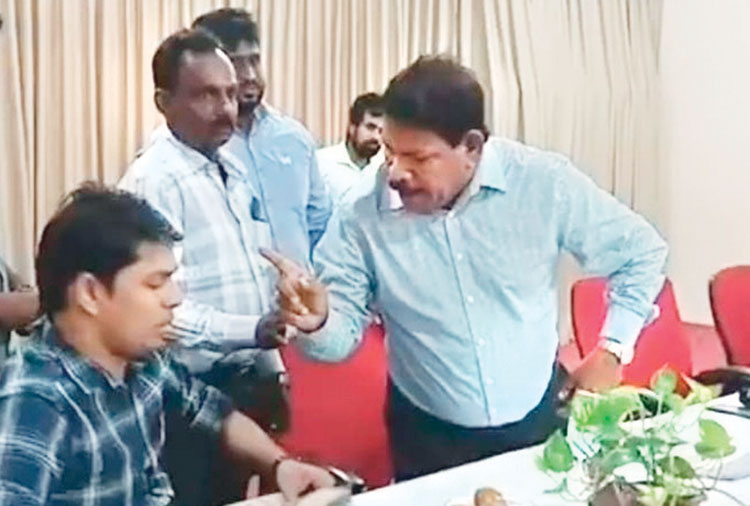
A heated argument broke out between Jaffna District MP Archchuna Ramanathan and Fisheries Minister Ramalingam Chandrasekar during the Kilinochchi District Coordination Committee meeting held yesterday (16).
A video footage of the incident shows the MP and the Minister engaging in a heated verbal exchange, following which a physical confrontation appeared to develop when the Minister attempted to grab files reportedly in the possession of MP Ramanathan.
“If you lay a hand on me, I’ll lay a hand on you too… got it?” Ramanathan is heard telling the Minister during the exchange.
Police and officials present at the meeting intervened to prevent the situation from escalating further.
The circumstances that led to the confrontation were not immediately clear.
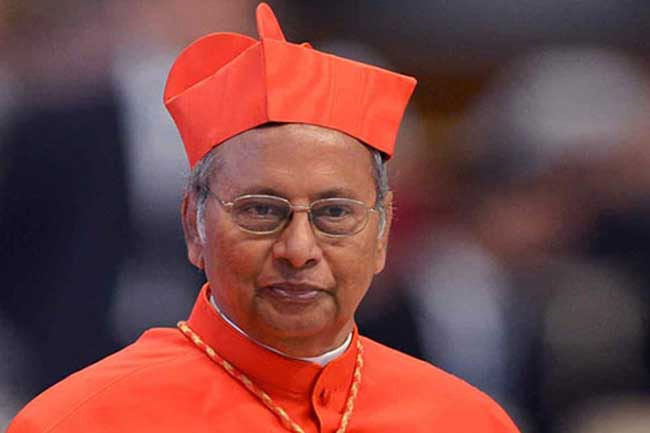
Archbishop of Colombo Malcolm Cardinal Ranjith has filed an intervening petition before the Court of Appeal in connection with a petition filed by former head of the State Intelligence Service, Major General (Retired) Suresh Sallay, challenging his arrest and detention under the Prevention of Terrorism Act over investigations into the Easter Sunday terror attacks.
The Cardinal has sought permission from the court to make submissions in relation to Sallay’s petition and requested that it be dismissed.
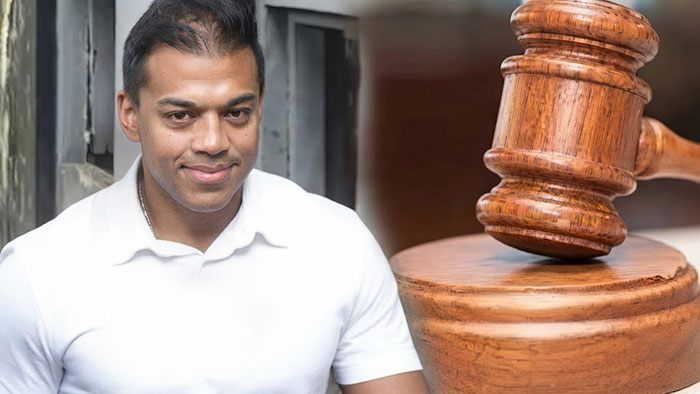
The Colombo High Court yesterday fixed for Aug. 31 the pre-trial conference in the money laundering case filed by the Attorney General against former President Mahinda Rajapaksa’s son, Yoshitha Rajapaksa, and his great-aunt Daisy Forrest.
The case was taken up before Colombo High Court Judge Rashmi Singappuli.
State Counsel Oswald Perera requested court to fix a date for the pre-trial conference and informed the judge that the prosecution would announce its position regarding the second accused, Daisy Forrest, at the conference. He also said the prosecution intended to notify court of amendments to the indictment.
After considering the submissions, Judge Singappuli ordered that the pre-trial conference be held on Aug. 31.
The Attorney General has indicted Yoshitha Rajapaksa and Daisy Forrest under the Prevention of Money Laundering Act, alleging that they deposited nearly Rs. 59 million in bank accounts knowing, or having reason to believe, that the funds had been unlawfully acquired.

Venezuela earthquake: Number of known dead rises to nearly 5,000 victims

A few showers may occur in the Western, Sabaragamuwa and North-western provinces and in Kandy, Nuwara-Eliya, Galle and Matara districts

Harmer, Markram and Wolvaardt win top honours at CSA awards

War of words erupts between Minister Chandrasekar and Archchuna in North

Cardinal seeks dismissal of Sallay’s petition

Money laundering case against Yoshitha, fixed for pre-trial conference

‘Dates have the highest sugar content to fight Coronavirus’

Sunday Island 27 December – Headlines

#SundayIsland 17th December – Headlines

Sunday Island – 28th March

Sunday Island Headlines – 21 March

Sunday Island – 21st February – Headlines
-
 Features5 days ago
Prison riots and politics: NPP’s biggest challenge and Sri Lanka’s biggest opportunity
-

 Editorial6 days ago
What’s the world coming to?
-
 Features2 days ago
Dirty Money
-

 Editorial5 days ago
Much ado about crime: Fish or cut bait
-
 Features5 days ago
More on Saudi Arabia: ARAMCO and beyond
-
 Latest News3 days ago
Oil prices hit 1-month high as US-Iran attacks dim Strait of Hormuz outlook
-
 Midweek Review2 days ago
The sordid tale of theft and tragedy at Finance Ministry
-

 Features4 days ago
Deepening Democracy – Constitutions and Constitutionalism