
Latest News
Narcotics and prescription drugs valued over Rs. 28158 million seized during naval operations in 2024


The Navy’s operations in 2024 yielded impressive results, bringing to justice 407 persons, both local and foreign, involved in a wide array of illegal acts such as smuggling of narcotics, prescription drugs, and contraband as well as apprehending those involved in human smuggling. These operations were conducted in close coordination with law enforcement agencies and maritime partners in the region. Meanwhile, the gross street value of narcotics and prescription drugs seized in these operations has been valued at over Rs. 28158 million.
The Sri Lanka Navy consistently carries out operations in partnership with regional maritime partners, to address an assortment of illicit activities, including drug trafficking, within the ocean region.
The Navy has collaborated closely with the Sri Lanka Police, Police Narcotic Bureau, Police STF, Excise Department and other law enforcement agencies as well as the Indian Navy and Maldivian Coast Guard, actively sharing information during these operations. In such operations conducted in 2024, significant quantities of illicit substances were seized, including more than 622kg of heroin worth [street value] over Rs. 15554 million , more than 1211kg of Crystal Methamphetamine (ICE) worth over Rs. 11508 million, more than 1752kg of Kerala cannabis worth over Rs. 700 million, more than 119kg of local cannabis worth over Rs. 23 million and 1,179,746 prescription drugs worth over Rs. 373 million. In addition, based on information by the Navy, the Police and Police STF destroyed 107626 plants of local cannabis.
Additionally, 21 local fishing boats along with 230 individuals suspected of involvement in drug trafficking have been apprehended and produced for onward legal action. Accordingly, the gross street value of narcotics and prescription drugs held in the operations in the past year has been valued at over Rs. 28158 million.
Also, the Navy has apprehended 02 suspects attempting to illegally sell 226 bottles of liquor as well as 234670 illegal cigarettes, 972 aphrodisiacs (madana modaka) drug pills and 52 suspects in connection to those illegal acts. Moreover, 11 elephant pearls and over 04kg of gold, made ready to be smuggled from the country, with 14 suspects were held as part of the naval operations in the year 2024. Apart from that, the Navy intercepted a craft with 05 individuals, for smuggling wild animals, through island waters.
The Navy also seized over 65687kg of smuggled Tendu leaves, more than 7272kg of dried turmeric, over 368kg of ginger, 8330 bottles and 56786 packets of agrochemical, 727 cosmetic products and apprehended 81 Sri Lankan nationals, 03 Indian nationals and an Indian dhow in the past year. Preventive of human smuggling and illegal migration efforts, the Navy held 01 boat from India and 20 persons for their involvement in human smuggling. Upon being held, they were handed over to authorities for legal proceedings.
As part of the “Clean Sri Lanka” national initiative, the Sri Lanka Navy has strategized its operations for 2025, aiming to combat illegal activities, including drug trafficking in the country’s maritime zones, promote maritime stability, and support the realization of Sri Lanka’s national maritime aspirations.
[Navy Media]

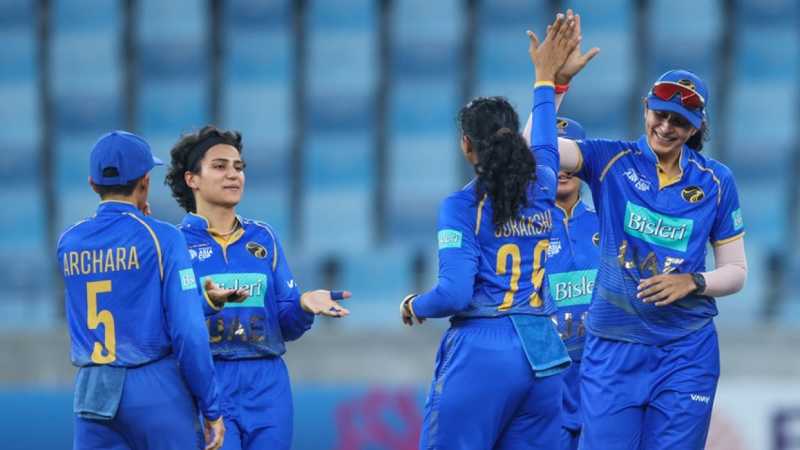
A complete performance from UAE’s bowling unit kept their semi-final hopes alive at the 2026 Women’s T20 Asia Cup, skittling Indonesia for 73 and then completing the chase with six wickets to spare. They now have to beat Bangladesh on September 8 and also hope other results go their way.
UAE were on top right from the first ball courtesy offspinner Suraksha Kotte, who starred with 3 for 16. Kotte struck with the first two balls of the innings, dismissing Indonesia opener Maria Corazon and No. 3 Ni Luh Dewi for first-ball ducks. UAE captain Esha Oza (2 for 11) then dismissed the other opener Rahmawati Pangestuti in the fourth over.
Indonesia captainN8 Puu Ayu Nanda Sakarini top-scored with a lone hand of 39 off 52 balls, with four fours and a six, accounting for 53.4% of Indonesia’s runs. But with little support, they could not find a way back in and were bowled out for 73.
Slow left-arm spinner Heena Hotchandani (2 for 6) and seamer Samaira Dharnidharka (1 for 12) also got among the wickets. Legspinner Vaishnave Mahesh struck twice in the 20th over to clean up the tail.
UAE openers Theertha Satish and Oza put on 17 for the first wicket. After losing Theertha in the fifth over, Oza hit two boundaries in each of the sixth and eighth overs. No. 3 Rinitha Rajith then hit three fours off Sofia Velic in the ninth over.
A brief wobble followed for UAE as they slid from 62 for 1 to 68 for 4. Oza fell for a 29-ball 30 at the start of the 11th over to Ni Ariani and Velic grabbed two wickets in the 12th. However, with only six runs needed, UAE wrapped up the chase at the start of the 14th over, the tournament hosts securing two points with 41 balls to spare. This was also Indonesia’s final match of the campaign, bowing out with losses in all three games.
Scores:
UAE Women 75 for 4 8n 13.1 overs (Esha Oza 30, Rinitha Rajith 22; Ni Riani 1-10, Sang Maypriani 1-17, Sofia Velic 2-25) beat IndonesiaWomen 73 in 19.4 overs (N8 Putu Ayu Nanda Sakarini 39, Desi Wulandari 12; Suraksha Kotte 3-16, Heena Hotchandani 2-06, Esha Oza 2-11, Samira Dharnidarkha 1-12 ) by six wickets
(Cricinfo)
Latest News
Sun directly overhead Moratuwa, Kesbewa, Handapangoda, Idalgashinna, Yudhaganawa, Kotiyagala and Panama about 12.08 noon today (05)

The sun is going to be directly over the latitudes of Sri Lanka from 28th of August to 07th of September due to its apparent southward relative motion.
The nearest places of Sri Lanka over which the sun is
overhead today (05) are Moratuwa, Kesbewa, Handapangoda, Idalgashinna, Yudhaganawa, Kotiyagala and Panama about 12.08 noon
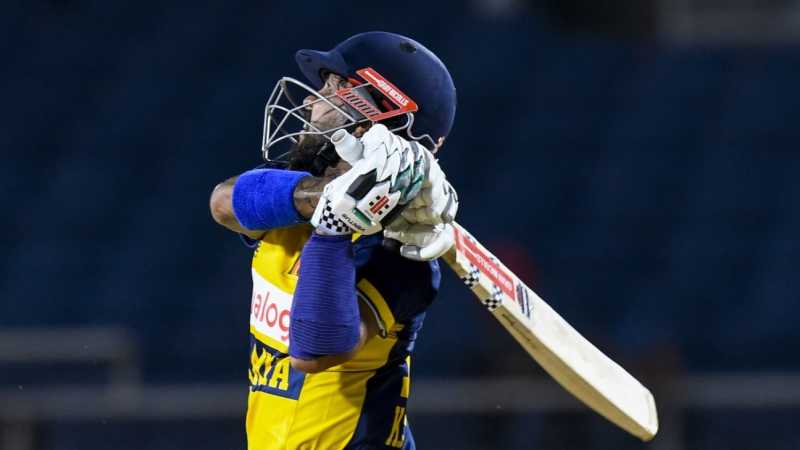
Kusal Mendis and Binura Fernando have been ruled out of Sri Lanka’s upcoming T20I series against England, with the SLC saying that the two were “still undergoing rehabilitation” after injuries picked up at the 2026 Lanka Premier League.
The update came just over a day after the two were named in the 16-member squad, with Kusal retained as captain of both the T20I and the ODI sides.Charith Asalanka, who had returned to the vice-captain’s position for the series, will now lead the side in the T20Is. Though Kusal hasn’t been ruled out of the ODIs just yet, were he to miss out, Asalanka, as the designated vice-captain, might step in there too.
Kusal has been out of action since July 19 with a right hamstring injury, while Binura hasn’t played since August 5, SLC putting his absence down to a back injury.
Pavan Rathnayake, the 24-year-old top-order batter, has replaced Kusal in the T20I touring party, while Dilshan Madushanka, the fast bowler who was in the squad for the Tests against India recently but didn’t get to play, has come in for Binura.
(Cricinfo)

Malaysia declares emergency in Sarawak as haze from Indonesia worsens

UAE keep semi-final hopes alive after convincing win over Indonesia

Sun directly overhead Moratuwa, Kesbewa, Handapangoda, Idalgashinna, Yudhaganawa, Kotiyagala and Panama about 12.08 noon today (05)

Showers above 75 mm are likely at some places in the Uva, Central and Eastern provinces and in Polonnaruwa and Mullaittivu districts after 2.00 p.m

Namal remanded until Sept. 18 over Airbus deal investigation

Dengue cases surpass 96,000 this year

‘Dates have the highest sugar content to fight Coronavirus’

Sunday Island 27 December – Headlines

#SundayIsland 17th December – Headlines

Sunday Island – 28th March

Sunday Island Headlines – 21 March

Sunday Island – 21st February – Headlines
-

 Features6 days ago
“Wrap Me Up in My Blazer”— A Gentlemanly Bradby Reminiscence
-

 Features5 days ago
When Sri Lankan stories find their own voice
-
 Features6 days ago
JVP/NPP government as seen from outside by Lionel Bopage now domiciled in Australia
-

 News5 days ago
BASL takes exception to Justice Ganepola being denied a place in SC
-
 Features6 days ago
Prof. Savitri Goonesekere: What has she done?
-

 News2 days ago
Denied of promotion to SC despite vacancies, justice Gurusinghe retires
-

 Latest News3 days ago
Grade 5 scholarship exam results released
-

 Features6 days ago
World Trade Politics: Canada rebuffs Trump’s tariff blackmail