
Sports
Namibia’s South African connection poses some challenge for Sri Lanka


Rex Clementine in Geelong
Having cruised past world’s number one ranked and number two ranked teams on their way to win the Asia Cup, a team like Namibia should be of little concern for Sri Lanka. But the former champions would have spent considerable time discussing Namibia due to the fact that this is a side that’s rich with South African talents.South Africa is a nation with abundance of cricketing talents and due to their extreme quota policy, we have seen some of the finest players in the game shifting to places like England, Australia and New Zealand and in recent years to not so greener pastures like Namibia.
Namibia with a population of 2.5 million people shares borders with South Africa, from whom they gained independence in 1990 with apartheid about to collapse.David Wiese with a reputation of being one of the cleanest strikers of the ball provides the biggest challenge to opposition teams and the Sri Lankans would have done their home work against him. They have got decent momentum as well ahead of the World Cup having beaten Zimbabwe in a series and earlier this week overcame a strong Ireland side in a warm-up game.
Drawn up alongside Netherlands and UAE, the Sri Lankans would think that their biggest challenge comes from Namibia in the qualifying round.Dasun Shanaka’s side have most bases covered and they are likely to go with extra pace during the qualifying round. When they had to qualify in the last tournament, that’s a formula that stood in good stead for them so both Dushmantha Chameera and Lahiru Kumara are certainties to play, with both touching 140kmph.
That kind of pace is rarely associated by associate nations although several Namibia players have received exposure having played in different leagues around the world. It remains to be seen whether Sri Lanka will persist with Charith Asalanka. The Richmondite was Sri Lanak’s star performer in the last World Cup but fell out of favour during the Asia Cup. His place was taken by Dhananjaya de Silva, who has done reasonably well. Sri Lanka will be based in Geelong for the qualifying round where all three of their games take place.
Namibia: Gerhard Erasmus (c), JJ Smit, Divan la Cock, Stephan Baard, Nicol Loftie Eaton, Jan Frylinck, David Wiese, Ruben Trumpelmann, Zane Green, Bernard Scholtz, Tangeni Lungameni, Michael van Lingen, Ben Shikongo, Karl Birkenstock, Lohan Louwrens, Helao Ya France.Sri Lanka: Dasun Shanaka (c), Danushka Gunathilaka, Pathum Nissanka, Kusal Mendis, Charith Asalanka, Bhanuka Rajapaksa, Dhananjaya de Silva, Wanindu Hasaranga, Maheesh Theekshana, Jeffrey Vandersay, Chamika Karunaratne, Dushmantha Chameera, Lahiru Kumara, Dilshan Madushanka, Pramod Madushan.
Umpires: Joe Wilson (WI) and Rod Tucker (AUS).
Third Umpire: Paul Reiffel (AUS)
Match Referee: Andy Pycroft (ZIM)

Latest News
Last over in multi-day cricket to continue despite a wicket after latest amendments to Laws

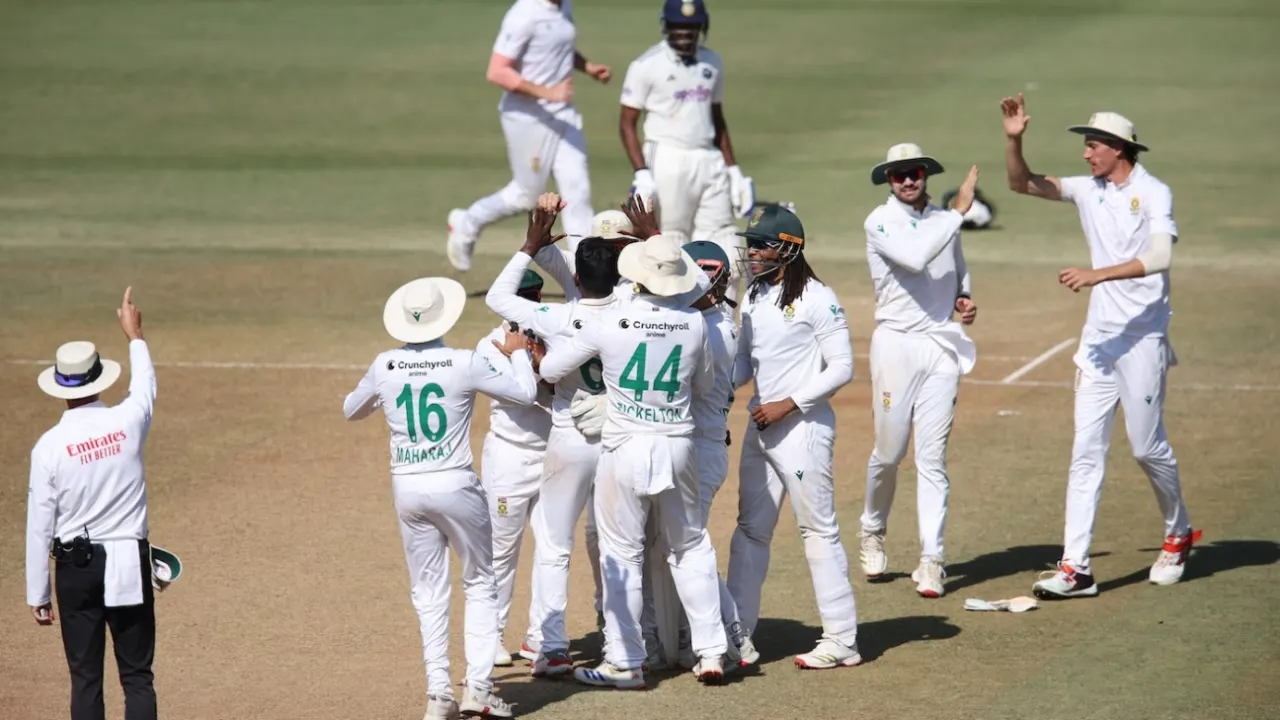
The final over of the day’s play in multi-day cricket, including potentially in Tests, will not end if there is a wicket. As per the new edition of the Laws of Cricket, which were announced by the MCC on Tuesday, the over will be completed, and a new batter will need to walk in.
That is one of the significant changes the MCC has carried out in the Laws, which also includes allowing laminated bats in adult recreational cricket, improvising the understanding and definition of hit wicket, and simplifying the definition of overthrows. Overall, the MCC said in a media statement on Tuesday that it has carried out “73 material changes” to the Laws, along with some “linguistic changes”.
This is the third time the MCC’s Laws sub-committee has edited the Laws since the 2017 Code came into effect: first in 2019, and again in 2022. While the latest changes to Laws will be effective from October 1, 2026, they will be also be discussed by the ICC’s Cricket Committee at its next meeting to ratify the new tweaks to be included in the international Playing Conditions.
The MCC has also left it for the national governing boards to decide on whether they will adopt changes to the Laws in their playing conditions in their domestic cricket.
Last over to continue despite a wicket
One of the key reasons the MCC’s Laws sub-committee felt the last over of the day could not be carried forward to the next morning in case a wicket fell was that not only was it favourable to the batting team but it also robbed the match of some “drama”.
“The final over of a day’s play will not end if there is a wicket,” the MCC said, expanding on the reason for tweaking Law 12.5.2. “This is a significant change that will impact multi-day cricket. It was felt unfair that, if a fielding side takes a wicket in the final over of the day, the batting side does not have to send out a new batter.
“This doesn’t save time (which is the case at lunch and tea) as the remaining balls need to be made up the next day, and it takes the drama out of the game, while letting the incoming batter off the hook – at a time when the conditions are often more favourable to bowling. The new change means that the final over of the day will be bowled fully, even if a wicket falls during it (assuming conditions remain fit).”
Laminated bats
The MCC has also authorised that laminated bats can be used in adult recreational cricket. A laminated bat is a combination of different types of wood which significantly reduces the cost of a bat compared to a bat made of pure high-quality willow. With an English willow tree usually taking 15-plus years to mature and the demand for the bats rising exponentially, the MCC has been doing research on laminated bats for a long time.
In 2017, it approved the used of laminated bats in junior cricket. And now having coordinated closely with bat manufacturers globally, including holding a conference last October at Lord’s, the MCC has approved laminated bats are good for use by adults in club cricket.
The MCC said allowing laminated bats was “part of an attempt to slow the rising costs” of bats globally. It is for the NGBs (National Governing Bodies) to decide at what level laminated bats, which the MCC has called Type D bats, will be used.
“Laminated bats can use up to three pieces of wood, allowing for more of the best quality willow trees to be used, and for lower quality willow to be glued to a high-quality face,” the MCC said. According to the MCC, laminated bats did not offer any “performance advantage” over the normal bats.
Hit Wicket Law
There are two changes to the Hit Wicket Law (35.1.1 and 35.2). Firstly, the MCC has defined a batter is hit wicket if they fall onto the stumps while attempting to find the balance well after receiving the ball. The MCC said “receiving the ball lasts until the batter has gained control of their balance after playing the ball. If the batter is off balance because of the shot they played, hops around for a few steps, and falls onto their stumps, that is as a result of the action they took to receive the ball. The ball may be long gone, but the striker is still out Hit wicket”.
Strikers, though, wouldn’t be declared Hit Wicket when they, while regaining balance, come into contact with a fielder who pushes them onto the stumps. “If, however, the contact with the fielder is purely incidental – perhaps they are falling onto the stumps – and in doing so their bat brushes the wicketkeeper, that will not protect them. If a part of the batter’s equipment becomes detached and makes any contact with another player before hitting the stumps, then they cannot be out Hit wicket. So if the batter accidentally lets go of the bat, and it hits the wicket, the batter will be out Hit wicket. However, if the bat hits the wicketkeeper and then the wicket, it will be Not out.”
Overthrows Law
The MCC has essentially discarded its “vague” wording used in Law 19.8, which deals with overthrows, and thus created a distinction with misfield. The updated version defines an overthrow as an “attempt to direct the ball towards the stumps to stop run-scoring or attempt a Run out”.
Whereas for a misfield, the MCC said, “whether an attempt to stop the ball or pass it to another fielder close to the boundary – should not be treated as an overthrow.”
Ball ‘finally settled’
No longer does the ball need to be in the bowler or the wicketkeeper’s hand for it to become dead. The MCC pointed out this was “quite a big” change in the Law (20.1.1.1), wherein the umpire will have “much greater leeway to determine whether a ball is finally settled, which can often be extremely important, particularly on the final ball of a close game”.
The MCC said: “The ball no longer has to be in the bowler or wicketkeeper’s hands to be finally settled. It can be in the hands of any fielder, or stationary on the ground. This allows umpires the freedom to make reasonable decisions on when the ball is Dead, even if one fielder, or one batter, is still attempting to play on.
The two previous clauses – regarding the ball being finally settled and clear to the umpire that none of the players regard it as being in play – have been combined into one place.”
The updated Laws and other tweaks have been published on the MCC website. The MCC said the new edition of Laws was drafted on two principles: firstly, they are “fit for the modern game”, and that they are “inclusive” for everyone.
“Cricket is a fast-evolving sport, and this edition is drafted with the modern game in mind, as we are constantly looking to ensure that the Laws, which the Club has administered since being founded in 1787, are fit for all levels of cricket across the globe,” Fraser Stewart, the MCC Laws Manager, said in the media statement.
[Cricinfo]

England won the toss and elected to bat first in the 3rd T20I in Pallekelle.
Sri Lanka: Pathum Nissanka, Kamil Mishara, Kusal Mendis (wk), Pavan Rathnayake, Kamindu Mendis, Dasun Shanaka (capt), Janith Liyanage, Dunith Wellalage, Maheesh Theekshana, Dushmantha Chameera, Matheesha Pathirana
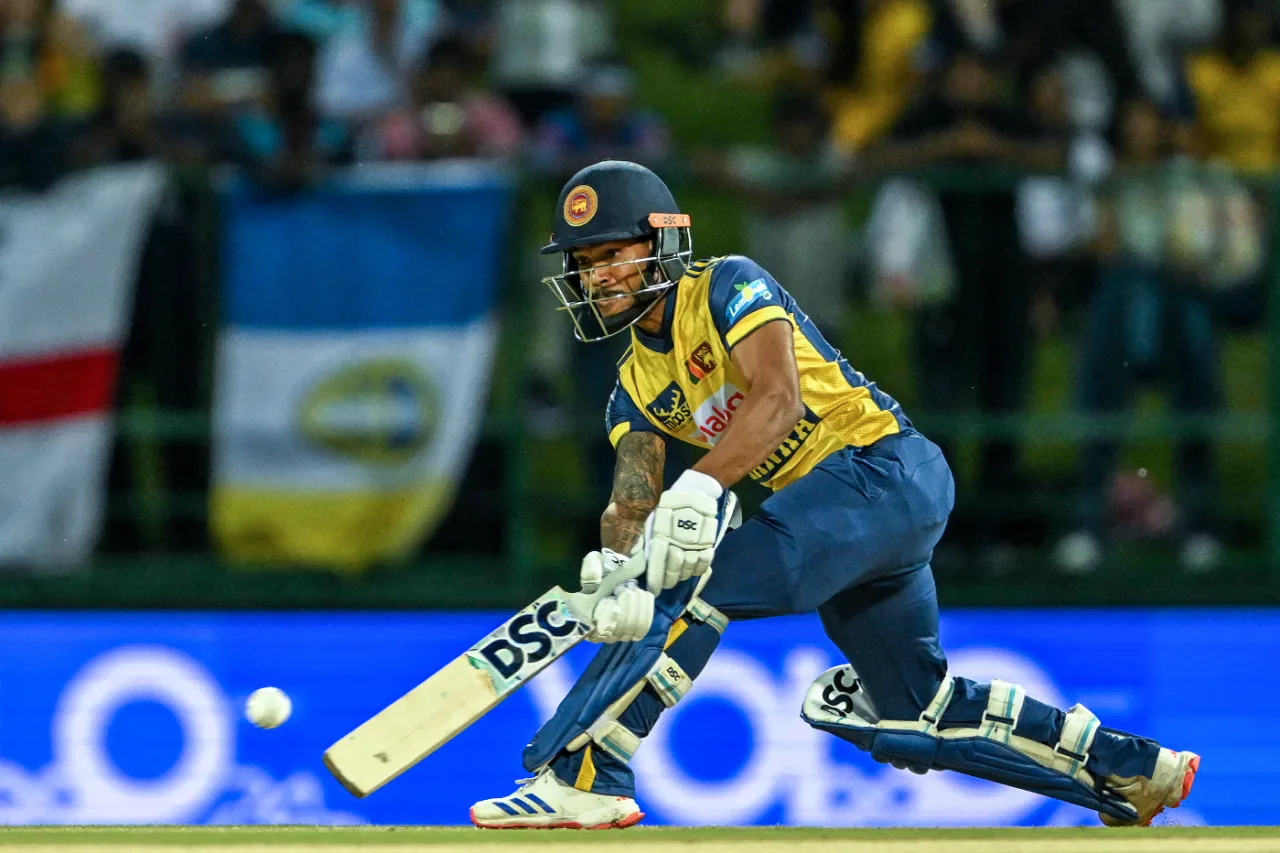
Where in other formats, Sri Lanka have had brief shining moments in the past few years, their T20I returns have been consistently modest. Since the start of 2022, there has not been a single calendar year in which Sri Lanka have won more T20Is than they have lost. This, despite some of their oppositions through this period not being especially highly-ranked.
(Sri Lanka arrive at this World Cup in now customary disarray. A captain has been switched. Or more accurately, circled back to [Dasun Shanaka had led Sri Lanka before, but had given up the captaincy to Charith Asalanka, who in turn was ousted to make way for Shanaka’s return.] Selectors have tried options out of nowhere and ditched them almost as fast. The coach and support staff are operating under pressure. In the last few months they have been beaten by Zimbabwe, trounced by Pakistan and in their most recent series, at home, England have been all over them.
When discussing Sri Lanka men’s teams of this era, you are frequently left discussing what could be rather than what is. Members of this top order – Pathum Nissanka, especially – have the potential to light up a global tournament. Wanidu Hasaranga’s quality is known, even if his recent returns have not been stellar. Dunith Wellalage has the broad skillset to impose himself in home conditions. And Dushmantha Chameera – when in good rhythm – is a reliable leader of the seam attack.
But together, these players have not put together winning performances. Glimmers of brilliance. Patches where the Lankan batters dominate attacks. A penetrative opening burst followed by an opposition resurgence through the middle overs. These have been the general trends. Up against the T20I pedigree other teams are bringing to this event, Sri Lanka are again in the position of hoping for magical inspiration.
Between 2009 and 2014, Sri Lanka made the semi-final of four men’s T20I World Cups, winning the championship in Dhaka. They have not progressed to the knockouts in any tournament since.
They have just lost a series to England on the back of drawing one against Pakistan, both at home.
Pathum Nissanka is one of the few batters in the world with an ODI double-hundred and a T20I century. That his triple-figure score in the shortest format came against India in an Asia Cup gives you a sense of his ceiling. There are also few batters who take on the short ball as effectively as he does.
Also making a charge is Pavan Rathnayake who struck an excellent ODI hundred and has shown signs of an enterprising style in T20Is as well.
This World Cup is likely to be the last for Kusal Perera. This is the only format he plays internationally and it is the one most suited to his batting, although in what has been an unusual, injury-riddled career, he is probably better known for that sublime Test innings – the 153 not out in South Africa. Kusal is not an automatic starter in the Sri Lanka XI (he has not played a T20I since November), particularly following Rathnayake’s arrival. But he will likely be required at some stage in this campaign.
Best XI

Somali woman executed for murdering a child in a case that sparked outrage

Last over in multi-day cricket to continue despite a wicket after latest amendments to Laws

England will bat first in 3rd ODI

Members of the National Student Parliament meet PM

Sri Lanka aim to overcome disarray and end trophy drought

Mrs. I.J. Aberathne appointed Director General of the Department of Trade and Investment Policy

‘Dates have the highest sugar content to fight Coronavirus’

Sunday Island 27 December – Headlines

#SundayIsland 17th December – Headlines

Sunday Island – 28th March

Sunday Island Headlines – 21 March

Sunday Island – 21st February – Headlines
-
 Opinion5 days ago
Sri Lanka, the Stars,and statesmen
-
 Business6 days ago
Climate risks, poverty, and recovery financing in focus at CEPA policy panel
-

 Business4 days ago
Hayleys Mobility ushering in a new era of premium sustainable mobility
-

 Business4 days ago
Advice Lab unveils new 13,000+ sqft office, marking major expansion in financial services BPO to Australia
-

 Business19 hours ago
SLIM-Kantar People’s Awards 2026 to recognise Sri Lanka’s most trusted brands and personalities
-

 Business4 days ago
Arpico NextGen Mattress gains recognition for innovation
-

 Business3 days ago
Altair issues over 100+ title deeds post ownership change
-

 Business3 days ago
Sri Lanka opens first country pavilion at London exhibition