
Latest News
Myanmar quake toll passes 1,600 as people dig for survivors with bare hands

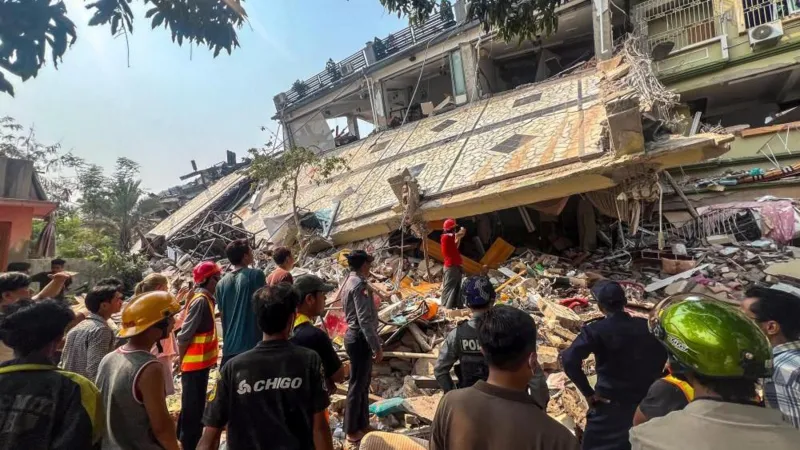
The number of people known to have died following the devastating earthquake in Myanmar has risen to more than 1,600, with people in some areas telling the BBC they had been left to dig through rubble for their loved ones with their bare hands.
An acute lack of equipment, patchy communication networks and wrecked roads and bridges were also hampering the search for survivors.
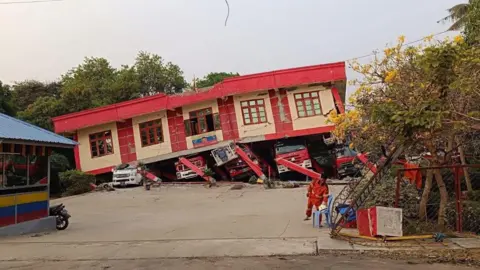
The quake has flattened much of Mandalay, the country’s second-largest city. There was applause when rescuers pulled a woman alive from the wreckage of a 12-storey apartment block some 30 hours after it collapsed, but the Red Cross says more than 90 people may still be trapped there.
In a nearby township, rescue workers found the bodies of 12 preschool children and a teacher under a building housing a kindergarten.
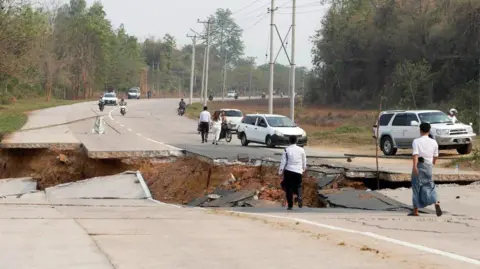
Cracks and surface distortions to the main highway between the biggest city Yangon, the capital Nay Pyi Taw and Mandalay had caused severe transport disruptions, UN humanitarian agency OCHA said.
There were also shortages of medical supplies including trauma kits, blood bags, anesthetics, essential medicines and tents for health workers, it said.
Although rescue teams have been at work since yesterday and international aid has begun to enter the country, help is yet to reach the worst-hit areas and ordinary people have been trying to dig survivors out by hand.
Widely shared footage shows two men moving rubble to pry out a young woman trapped between two concrete slabs.
The BBC has spoken to locals who said that people were screaming for help from under the debris.
Elsewhere, other rescue workers have been listening out for signs of life. ”We can only rescue people when we hear them,” one said.
Earlier on Saturday, a rescue team in the Sintkai township in Mandalay’s Kyaukse district pulled out a number of people trapped in the debris of a private school. Six of them – five females and one male – had died by the time the rescue teams arrived. Among the victims were students, teachers and school staff.
A lack of equipment is greatly slowing down the rescues, a worker told BBC Burmese: “We are making do with the equipment we have. We have been trying for hours to pull out a girl trapped under the collapsed school.”
Another worker in Mandalay told a BBC reporter in Yangon that communication had been near impossible.
“The main thing is that we don’t have internet lines, we don’t have phone lines, so it’s very difficult to connect with each other. The rescue team has arrived. But we don’t know where it will go, because the phone lines are down.”
A Mandalay resident said people were doing their best in the chaotic circumstances.
“There is no coordination in the rescue efforts, no one to lead them, or tell them what to do. Locals have had to fend for themselves. If they find dead bodies in the debris, they don’t even know where to send the bodies; hospitals are overwhelmed and unable to cope,” the resident said.
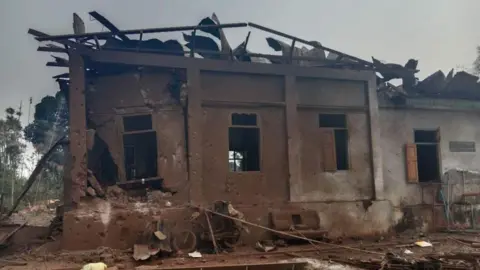
The junta has put the number of damaged buildings in the Mandalay region, the epicentre of the earthquake, at more than 1,500. Power outages have exacerbated the situation, and according to officials restoring power could take days.
Mandalay airport is not functional as the runways were damaged during the earthquake. The military council said that it had been working to resume operations and a temporary hospital, medical relief camp and shelter have been set up there.
Less than 25km (15 miles) from Mandalay in Sagaing, the older of two bridges connecting the regions has completely collapsed and the newer one has developed cracks, cutting off access for rescue teams.
“Right now, there are not enough people even for emergency rescue. We can’t pick up bodies, there are so many people trapped. We can’t cross either bridge, so we are all trapped in the rubble. Please help emergency rescuers come and rescue us,” a local resident told BBC Burmese.
The recently constructed capital Nay Pyi Taw, where the military junta is headquartered, has been hit by aftershocks and small tremors. The city has seen extensive damage with high numbers of casualties, collapsed buildings and buckled roads.
Meanwhile, even while the junta has made a rare international appeal for aid, it has continued air strikes and drone attacks against the ethnic armies and armed groups it has been fighting in the country’s four-year civil war.
BBC Burmese confirmed that seven people were killed in an air strike in Naungcho in northern Shan state. This strike took place around 15:30 local time, less than three hours after the quake struck.
Pro-democracy rebel groups fighting to remove the military from power have reported aerial bombings in Chang-U township in the central Sagaing region, the epicentre of the quake. There are also reports of airstrikes in regions near the Thai border.
The UN’s special rapporteur on human rights in Myanmar, Tom Andrews, urged the junta to cease bombing raids.
“The problem is that you still have military operations going on right now… Military strikes by the military junta,” he told the BBC.
“I’m calling upon the junta to just stop, stop any of its military operations. This is completely outrageous and unacceptable.”
[BBC]


Madagascar’s military ruler Col Michael Randrianirina has dissolved the government unexpectedly, dismissing the prime minister and the entire cabinet, according to a statement from his spokesperson.
“The government has ceased its functions” it said, adding that Randrianirina will appoint a new prime minister “in line with the provisions stipulated by the constitution”.
No reason was given for the move.
Randrianirina seized power last October from Andry Rajoelina, following weeks of youth-led protests on the Indian Ocean island. Rajoelina had been elected president for a third term in a disputed poll in 2023.

The ICC Board and committee meetings scheduled for later this month in Doha have been called off due to the ongoing military conflict in West Asia. ESPNcricinfo understands that specific meetings, particularly those pertaining to the finance committee will take place virtually over the next few weeks. The possibility of in-person meetings in April remains open but much will depend on whether airspace has sufficiently re-opened for the board and committee members to fly safely.
The meetings were originally scheduled for March 25 to 27 and were due to include ICC Board Directors, Chief Executives, Committee members and ICC senior leadership. Three of the key issues up for discussion were global broadcasting rights ,with the deal between the ICC and *JioStar set to end in 2027, initial discussions over the next FTP and Olympic qualification for LA 2028. The second of those have already begun informally with several members approaching others as they make plans for cricket’s next four-year calendar.
This was the first time the ICC was due to meet in Qatar, which reports a cricketing participation growth rate of 447%. With limited flights to and from the country, hosting the meetings was deemed impossible at this time.
The crisis in West Asia has had an impact on scheduling too. The white-ball series between Afghanistan and Sri Lanka, scheduled to be held in the UAE from March 13 to 25, is likely to be postponed indefinitely.
[Cricinfo]
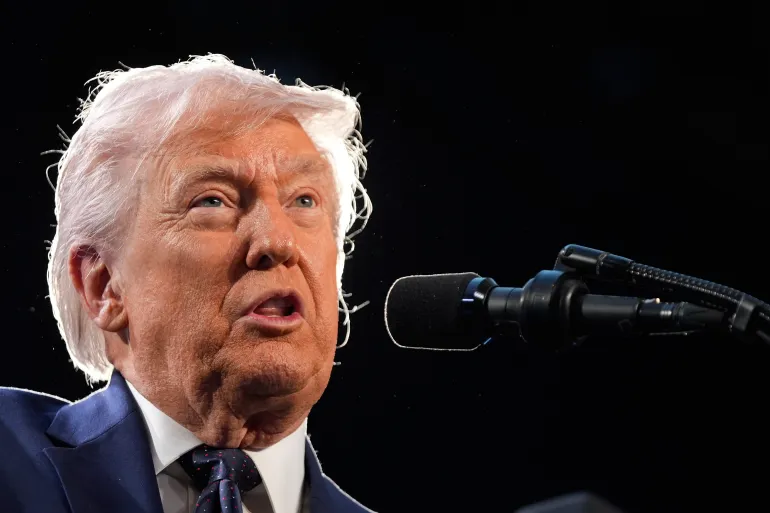
United States President Donald Trump has said his administration will lift some sanctions on oil-producing countries to keep energy prices down amid the US and Israel’s war on Iran.
Trump made the comments on Monday after a rollercoaster 24 hours that saw crude oil prices soar to nearly $120 a barrel before dropping below $90.
“So, we have sanctions on some countries. We’re going to take those sanctions off until this straightens out,” Trump said at a news conference at his golf club in Miami, Florida.
“Then, who knows, maybe we won’t have to put them on – there’ll be so much peace,” he said.
Trump did not specify which countries would be subject to sanctions relief. Washington currently maintains sanctions on the oil sectors of Russia, Iran and Venezuela.
The Reuters news agency, citing multiple unnamed sources, reported on Monday that Trump was considering easing sanctions on Russia as part of his plans to keep oil prices down.
US Treasury Secretary Scott Bessent last week announced a 30-day waiver on sanctions on Russian oil sales to India amid concerns about growing pressure on global supplies.
Crude oil prices continued their retreat after Trump’s comments, with Brent crude hovering at around $84 a barrel as of 02:00 GMT on Tuesday.
Global energy markets have been on tenterhooks since the US and Israel launched joint strikes on Iran on February 28, with crude prices surging as much as 50 percent compared with before the conflict.
Iranian threats have effectively closed the Strait of Hormuz, through which about one-fifth of the global oil supply transits, forcing major Gulf region producers to cut production amid an accumulating backlog of supply, as shipping has largely halted.
Global energy supplies have also been threatened by Israeli strikes on Iranian oil facilities and drone attacks, widely blamed on Iran, on oil and gas infrastructure in US allies in the region, including Qatar, Saudi Arabia, and Kuwait.
Analysts have predicted that oil prices could rise to $150 or even $200 a barrel if the strait remains effectively closed for a prolonged period.
“I would say that it is possible for prices to reach new all-time highs in the coming weeks, but this is contingent on the Strait of Hormuz remaining closed in the weeks ahead,” Homayoun Falakshahi, the head of crude oil analysis at global trade intelligence firm Kpler, told Al Jazeera.
“If the strait stays closed through April, then prices could continue to jump,” Falakshahi said.
Trump, who campaigned on ending the US’s so-called “forever” wars in his 2024 election bid, on Monday offered conflicting signals about how long the war on Iran might last.
During his news conference, Trump said he expected the war to be over “very soon”, but that attacks on Iran would not stop “until the enemy is totally and decisively defeated”.
Trump made the remarks shortly after he told Republican lawmakers in a speech that the US had “already won in many ways, but we haven’t won enough”.
Earlier on Monday, Trump said in an interview with CBS News that the war was “very complete, pretty much” and that his military campaign was “very far ahead of schedule”.
[Aljazeera]

Madagascar military leader dissolves government in surprise move

ICC Board meetings in Doha called off due to West Asia conflict

Trump says some sanctions to be lifted on oil producers amid Iran war

PM holds bilateral meetings in the Philippines to strengthen cooperation in Education, Skills Development, and Agricultural Research

Heat Index at Caution Level in the Western, Sabaragamuwa and North-western provinces and Monaragala district.

Showers likely in the Northern province and in Trincomalee and Anuradhapura districts

‘Dates have the highest sugar content to fight Coronavirus’

Sunday Island 27 December – Headlines

#SundayIsland 17th December – Headlines

Sunday Island – 28th March

Sunday Island Headlines – 21 March

Sunday Island – 21st February – Headlines
-

 News4 days ago
University of Wolverhampton confirms Ranil was officially invited
-

 News5 days ago
Legal experts decry move to demolish STC dining hall
-

 News4 days ago
Female lawyer given 12 years RI for preparing forged deeds for Borella land
-

 News3 days ago
Peradeniya Uni issues alert over leopards in its premises
-

 Business6 days ago
Cabinet nod for the removal of Cess tax imposed on imported good
-
 News4 days ago
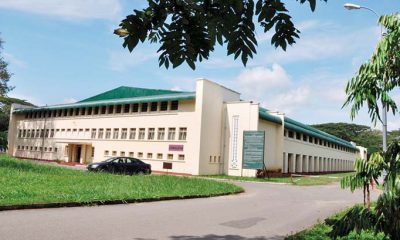
Library crisis hits Pera university
-
 News1 day ago
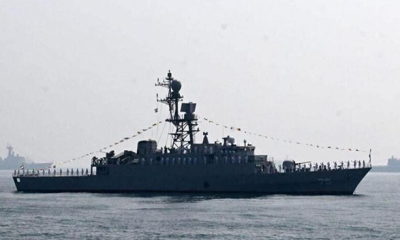
Repatriation of Iranian naval personnel Sri Lanka’s call: Washington
-

 Business6 days ago
War in Middle East sends shockwaves through Sri Lanka’s export sector