
Features
My Memories of The Rt. Revd. Lakshman Wickremesinghe (1927 – 1983)

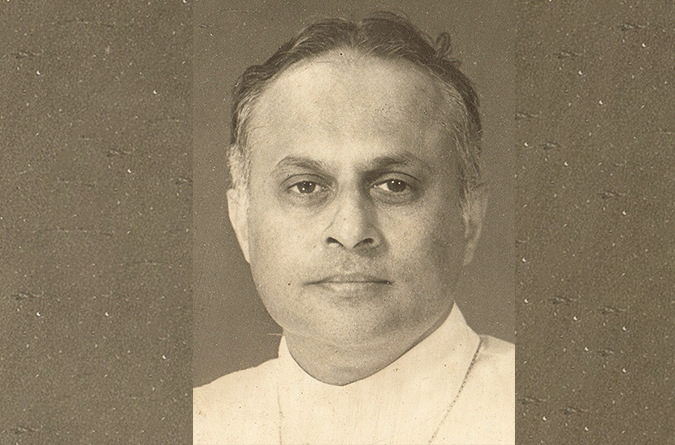
Tissa Jayatilaka wrote this article which was published on Sept. 20, 2013. It is reproduced on account of the Bishop’s 40th death anniversary which fell on Oct. 23.
Thirty years have passed by since we experienced three significant events in the recent history of our country. Coincidentally July 23, September and October of 1983 are yoked together in our memory. What we have come to identify as “Black July” of Sri Lanka, when unarmed Tamil citizens were attacked and killed by goons associated with leading members of the Government of Sri Lanka of the time, began on July 23, 1983. Two months later on September 23, one of Sri Lanka’s finest sons spoke sincerely, eloquently, passionately and apologetically about our national tragedy focusing on ‘Black July’ when he addressed his diocese in Kurunegala, in what turned out to be his last Pastoral Address. A month later on October 23, that marvelous son of Sri Lanka lay dead. I refer to the late Bishop Cyril Lakshman Wickremesinghe and write these several inadequate words to remember him with love and gratitude on this thirtieth anniversary of that insightful Pastoral Address.
Lakshman Wickremesinghe, one of four children of Cyril Leonard and Esme Wickremesinghe, was born on March 24, 1927 and died on October 23, 1983. A brilliant product of Royal College, Colombo, the young Lakshman distinguished himself both in the classroom and on the playing fields there carrying away almost every school prize on offer and winning his ‘colours’ in rugger and athletics. Securing a First in Political Science from the University of Ceylon, he went to Oxford and after a few years of study at that ancient university, moved to Ely Theological College in Ely, Cambridgeshire. He was ordained a priest in England where he gained training and experience in parish work after ordination. Returning home to Ceylon, he did a few years of parish work in Mutwal before moving to Peradeniya where he served as the much loved and respected Anglican Chaplain of the University of Ceylon from 1958 to 1962.
The Revd. Lakshman Wickremesinghe was consecrated Bishop of the Kurunegala Diocese in 1962 by his illustrious predecessor Bishop Lakdasa de Mel, prior to the latter’s move to Calcutta on his being appointed Metropolitan of the Province of India, Pakistan, Burma and Ceylon.
I first heard of Bishop Lakshman from my grandaunt Soma Kumari Samarasinha, the first Ceylonese principal (1946 to 1964) of Hillwood College, the leading Anglican girls’ school in Kandy. From 1962 onwards until her retirement two years later, Mrs. Samarasinha worked closely with Bishop Lakshman in guiding the destinies of Hillwood. He was a frequent and welcome visitor to the Hillwood principal’s bungalow during this period.
My acquaintance with Bishop Lakshman deepened after his nephew Rajiva Wijesinha and I became colleagues and friends while we were both fellow-teachers in the Department of English at Peradeniya. Rajiva stayed at my home when he came up to Peradeniya and he reciprocated my hospitality by inviting me to stay at his parental home Lakmahal, the Wickremesinghe- Wijesinha residence on Alfred House Road in Kollupitiya. During my visits to Lakmahal, I had occasion to meet Bishop Lakshman in a more intimate setting as he dropped in, whenever in Colombo, to see his mother Esme, sister Muktha, brother-in-law Sam Wijesinha and family.
As the years went by, I got to know other facets of the many-layered personality of Bishop Lakshman as he was a close friend of my senior Peradeniya colleagues and intimate friends, Ian Goonetileke and Kingsley (K.M.) de Silva. Bishop Lakshman was a regular visitor to the Goonetileke and de Silva households in Peradeniya. Quite literally and metaphorically, Peradeniya was Bishop Lakshman’s spiritual home. Thanks to Ian and Kingsley, I not only got to know Bishop Lakshman better but I also got to know of him better during the mid-to-late 1970s.
Messrs. Goonetileke and de Silva educated me in particular on Bishop Lakshman’s principled opposition to opportunistic politics and his immense capacity to ‘talk truth to power’. He was a fearless champion of all that ennobles humanity. He used to refer to Ian and Roslin Goonetileke’s Upper Hantane home as the Saloon initially and later as the Aramaya. From around 1975 onward, Ian began to grow disillusioned with university life due to the increased politicization of university administration. The rot begun by I.M.R.A. Iriyagolle in the 1965 – 1970 era was now deepening in the post – April 1971 setting. Although born and baptized a Christian, Ian had moved away from the church and in later life was not a practicing Christian. Bishop Lakshman, who shared most of Ian’s political convictions, was most interested in supporting Ian in his political stances while remaining even more interested in getting Ian back to the Christian fold. I wish to quote from some of Bishop Lakshman’s letters to Ian that shed light on both of the above factors- – political collaboration and the possible securing of Ian’s return to his spiritual base. Here is an extract from a letter Bishop Lakshman wrote to Ian on September, 12, 1975:
Your article on Ananda Coomaraswamy was a sheer delight to read – “quintessence Ian”! I am also happy at a more fundamental level that you have so much in common with Coomaraswamy, have slowly moved towards an orientation to and experience of the Transcendent, which is also engendering an interior purification within you. I have always hoped and prayed that in your own way and in your own time you will return to the Source!
The concluding paragraph of Bishop Lakshman’s letter addresses Ian’s disquiet about the quality of life in Peradeniya of the mid-seventies:
I hope you stand the strain by God’s grace in the days to come. All I can [say] is that a very important ‘light’ (representing our way of life and thought) in Peradeniya will be extinguished, if you have to depart.
Nearly five years pass by. At the end of much soul-searching Ian has now taken the painful decision to take early retirement and leave his beloved Peradeniya. In a letter quoted below in full from Lakmahal (obviously on a visit to his parental home in Colombo) dated March 23, 1980 Bishop Lakshman writes:
My dear Ian & Roslin,
This is a brief note before I leave for a week in New Delhi (in the company of Bala Tampoe) to wish you both for your anniversary tomorrow. My prayers avail for you as you prepare to leave for a new abode, and detach yourselves with great difficulty, from the sylvan abode of Upper Hantane. Anicca vata sankhara!
This is my last letter to you addressed to the ‘Saloon’ later turned into an ‘Aramaya’, the scene of so many memories of people, events/happenings and culinary delicacies enjoyed in the midst of quiet reflections on the currents of life in society.
I am reminded of some lines of an Indian poet [Bano Tahira Sayeed] who is in the tradition of Tagore, thinking of your house/saloon/aramaya:
You are a delicious reminder of my past. I envy you your permanence. I, myself, am a mirror of life’s jolts and jerks.
I am that gold which is in the process of purification in the furnace, I am a candle, burning and scattering light, I am a portrait of life itself, Unlike you, who are a ghost of my past.
You have been facing life’s jolts and jerks recently, and to my mind being purified, and being burnt to scatter light in the days to come .
My constant prayer for you has been this and will be always until the shadows lengthen, the busy world is hushed and the fever of life is over:
Lord, teach me to accept your bewildering ways. In my poignant pain, amid deprivation and denial Show me your hidden but all-embracing love.
With my deep gratitude and undimmed affection–Lakshman
Bishop Lakshman and Ian Goonetileke continued to see eye to eye on politics until the end of their earthly lives. Ian, however, despite Bishop Lakshman’s best efforts, died without regaining his lost belief in institutionalized religion.
Ian’s obituary consequent to the sudden death of Bishop Lakshman is reflective of the close friendship he shared with the late Bishop:
He [Bishop Lakshman] wore the purple sash to the manner born but it was never allowed to restrict his passionate concerns for the human condition. When he died he had almost certainly begun to embody the rare and splendid fusion between thought and action, religion and politics, because he had realized, not without struggle, that spiritual emancipation must, in the last analysis, rely almost exclusively on the liberation of man as a political animal. His final message [Pastoral Address of September 23, 1983] bears abundant testimony to the unswerving addiction to the voice of his moral conscience in the thick of contradictions.
My wife (a practicing Buddhist) and I (an extinct Christian) have lost a trusted, cherished and compassionate comrade, always willing to chance his arm in defense of the teetering conscience or the clouded sensibility. For nearly a quarter century until 1980 he was a frequent visitor in our Peradeniya home, and his arrival (announced or unannounced) was sufficient to clear the air of moral ambiguities and environmental wounds. He brought with him cleansing vistas of beauty, strength, symmetry and a balanced joy, and mundane problems melted before the alchemy of his swiftly directed common sense and a clinical, though, impish humour.
Bishop Lakshman’s influence was widespread and extended way beyond his diocese and Sri Lanka. He sought to indigenise the Anglican Church confining himself to Christianity in the Indian region, specifically to its Hindu and Buddhist context. In a lecture titled Christianity Moving Eastwards that he delivered at The House of Saints Gregory and Macrina at Oxford in May 1983, Bishop Lakshman spelt out his personal vision:
Many years ago I left Oxford and England, and taking the advice of
the Buddha, I went in search of myself as a Christian who was rooted
in the Sri Lankan ethos. In his sermon to certain agitated princes and
princesses, the Buddha had observed that it was more valuable to go
in search of oneself than in search of lost ornaments (whether they be
metal or mental). Mine has been a long and painful search. By the grace
of God I have been able to find my identity as a Sri Lankan Christian, and
in doing so, to share the company of those who have been seeking the Indian
face of Christianity. The result has been what Clement envisaged for the Gnostic
Christian – – a more mature and authentic faith in Christ Jesus.
He was an active member of the Kurunegala group of Amnesty International, through which he worked for victims of human rights violations throughout the world irrespective of political or religious considerations. He was a founder member of the Christian Workers Fellowship (CWF) that came into being in the late 1950s, a movement built mainly through a lay initiative to show the relevance of the Christian gospel in the midst of social change. He played a leading role in the establishment (November 1971) and furtherance of the national Civil Rights Movement serving as its Chairman from 1978 for a few years.
In addition to Sevaka Yohan Devananda, Bishop Lakshman was a close friend of three well known activist clergymen – Fr. Tissa Balasuriya, Fr. Paul Caspersz and Fr. Aloysius Peiris, founders respectively of the Centre for Society and Religion, Satyodaya and Tulana. He identified himself with the work and mission of these organizations.
Among Bishop Lakshman’s outstanding leadership qualities was his ability to bring different individuals and organizations together to build consensus and a unity of purpose. He was thereby able to get together several Christian organizations of different denominations involved in development and human rights activities to form the movement of “Christians in the Struggle for Justice”.Significantly the first meeting of this movement was held at Bishop’s House, Kurunegala, on Hartal Day, August 12, 1982.
In a similar vein, Bishop Lakshman was also a great believer in inter – faith dialogue. He was a very close associate of the late Ven. Dr. Kotagama Vacchissara Thero, Professor of Buddhist Philosophy at the Vidyodaya University (now the University of Sri Jayewardenepura). The latter’s untimely death, like the former’s later on, was a significant loss to the progressive movement of our country. Both Bishop Lakshman and his father were regular visitors to the Temple of the Ven. Revata Thero, one-time Atamasthandadipathi (Chief Priest of eight sacred places) at Anuradhapura.
The Ven. Sangharakkhita Thero, Isurumuni Viharadipathi and Chief Sangha Nayake of Nuwara Kalaviya also knew Bishop Lakshman intimately. The Isurumuni Viharadhipathi attended Bishop Lakshman’s funeral in Colombo as well as the religious ceremony held for the interment of his ashes in the Kurunegala Cathedral during which event the Ven. Sangharakkhita delivered an oration. Bishop Lakshman helped in founding the Vimukthi Dharma Kendra (The Liberation Doctrine Centre), an organization for dialogue among the four major religions of Sri Lanka, Buddhism, Hinduism, Christianity and Islam, devoted to the theme of social liberation.
All of these manifold activities in Bishop Lakshman’s search for truth and justice must surely have come at a significant price. He must have endured many a moment of agonized soul searching in his spiritual and political journey. He came from an affluent and privileged ‘upper class’ family that was heavily committed to the establishment and status quo, and Bishop Lakshman, like any normal human being, had a deep-seated attachment to and affection for his family. Some of his political actions based on ‘indigenous Marxist socialism’ (see his D.T. Niles Memorial Lecture titled Living in Christ with People delivered in Bangalore, India in 1981, for details) that he subscribed to, so at variance with his family culture, would certainly have caused more than ripples in the family pond.
Yet he soldiered on undeterred and unfazed. Bishop Lakshman’s enormous strength of character and integrity and the mutual understanding that he and his family shared made possible his maintenance of a fine balance between family commitment and personal conviction. Bishop Lakshman was a man of ‘unyielding convictions’ as he once described himself and there were occasions when he refused to compromise. The tribute paid to Bishop Lakshman on his passing by the Christian Workers Fellowship illustrates the above aspects of his personality:
As a priest and bishop, Bishop Lakshman provided a prophetic and courageous witness to the truly human values of our country, and to the centrality of his struggle for total liberation. Though from an affluent family, he deeply identified himself with the poor workers and peasants of Sri Lanka.
No account of Bishop Lakshman’s life and work will be complete without reference to his deep concern for the Tamil citizens of Sri Lanka and his robust involvement with the fight for justice for our fellow-citizens. Like his struggle with his loyalty to his family on the one hand and his devotion to personal conviction on the other referred to above, Bishop Lakshman’s toil for justice for the Tamils of Sri Lanka was a complex endeavour. He was acutely aware of the many deprivations the marginalized Sinhala peasantry in particular had suffered over the centuries and the many tribulations they continued to labour under.
He was conscious of and receptive to the deep-seated cultural problem of the Sinhala Buddhists in their effort to maintain their identity. He recognized that the Buddhist Sinhalese do not want the dominant culture of Sri Lanka to be either a variation of Dravidian culture or a pale imitation of western culture, either in its religions or secularized form. Where he differed from the majority of the Buddhist Sinhalese, however, was in his conviction that in the final integration of our country, the minorities have a real place as have minority cultures.
Hence Bishop Lakshman’s reaching out to the Tamils was indicative of his quest for human justice. He cared deeply for all human beings from all backgrounds, from all over the world, transcending man-made barriers of ethnicity and class. He was a regular visitor to Jaffna, to the plantation areas in the central highlands and to the eastern province.
His passionate concern for the Tamils of Sri Lanka find expression in a significant talk Bishop Lakshman gave in 1976, the year in which the United Left Front Government (1970 – 1977), under various pretexts, was trying to postpone the general elections then due. The title of that talk was Elections and Christians and whilst challenging the calculated move of the then Government, Bishop Lakshman in the course of that talk also touched on the national political need to redress the grievances of the Tamil citizens of Sri Lanka. He reiterated the need to –
ensure that Sinhala [political] parties give more attention to redress the grievances of the exploited and destitute mainly Tamil estate workers. On many estates, their living conditions are sub-human. Recent Land Reform measures introduced to benefit the landless Sinhala peasantry, have resulted in [Tamil] workers being banished from some estates and becoming destitute. Party manifestos must provide some solution to this issue, and not avoid it because it is an unpleasant and unprofitable matter among the Sinhala voters. It is important that we recognize that persons of Indian origin also have basic human rights, which require state aid.
He then refers to the need for a ‘regional transfer of power and resources’ from the centre to the periphery:
… There is the issue of the Jaffna or Sri Lanka Tamils. They demand transfer or devolution of power and resources from the Sinhala-dominated central government, so that they may have the opportunity to develop their minority community in their traditional territory. To condemn their demand for a separate state and allege their close links with Tamilnadu, is to ignore their main grievance.
If they are not permitted to develop their minority interests in Sinhala territory, they want the space to do so in their homelands. If the Sinhala people want to safeguard their territory against inroads by this Tamil minority, they must accede to their alternative demand! I would like to see all party manifestos dealing creatively with this legitimate demand for a regional transfer of power and resources, under the aegis of the Sinhala – dominated central government. It is a basic human right, we must recognize.
Bishop Lakshman was, as we know, a most perceptive and sensible human being. He thus concluded his talk by hoping that ‘what I consider ethically desirable, will be politically possible’. Alas, no political leader of Sri Lanka has yet been able to make Bishop Lakshman’s vision for Sri Lanka a reality. I am convinced that Bishop Lakshman died eventually more of a broken heart than of a heart attack given his lack of success, try as hard as he did, to bring about reconciliation and harmony among the different ethnic groups of our island home.
Bishop Lakshman’s final message also focused closely on the Sinhala – Tamil conflict. His fragile health coupled with over-work brought on a heart ailment that in turn made it necessary for him to rest and recuperate. On his recovery, he took a sabbatical in Birmingham, England. Cutting short his sabbatical, he returned home in August 1983 after the awful ethnic violence of July.
Disregarding his personal wellbeing, Bishop Lakshman sought to comfort the afflicted. He visited his clergy and people – especially the Tamils among them — in the Kandy and Matale areas where the harm caused to the Tamils was extensive. He visited the ‘refugee camps’ in these areas and then went to Jaffna by train. In between his criss-crossing the country, he rushed to a Meeting of the Christian Conference of Asia (CCA) in Singapore. Having gone around the island, met people and familiarized himself with all that had happened in Sri Lanka in his absence, he began to prepare his Pastoral Address to the Diocesan Council to be delivered on September 23, 1983. The primary focus of his Address, as noted above, was the predicament of the Tamils of Sri Lanka, the upheaval of July 1983 and the resultant national crisis.
At the Diocesan Council, at which the above- referenced Pastoral Address was given, a resolution was bought forward on the “Tamil Problem”. This resolution which included an apology by the Sinhala people to the Tamils, was passed by an overwhelming majority. Incidentally he was the first Sinhala citizen of public standing who first offered a public apology to the Tamils for the atrocities committed against them in July 1983. Observing that we must admit the fact that the massive retaliation mainly by the Sinhalese against defenseless Tamils cannot be justified on moral grounds, Bishop Lakshman wanted us to acknowledge our shame. He then went on to say:
And we must do so for the right reasons. It is not enough to be ashamed for the reason that inhuman passions enslaved a section of the Sinhalese for a short period. Nor must we be ashamed because our sense of moral outrage will improve our image abroad. We must be ashamed as Sinhalese for the moral crime other Sinhalese have committed.
Acknowledgement of our shame had, Bishop Lakshman noted, to be accompanied by our apology to those Tamils who were unjustified victims of the massive retaliation. It is only by such a sincere apology that ‘we shall also recover our moral and religious values’. In the course of his Address, Bishop Lakshman also admitted that;
I am among those who have tried hard and failed [to bring about national unity]. But I know and trust in God, who is ever creative in bringing good out of evil.
And he concluded his Address with the words of the late D.T. Niles:
Hope in God arises out of the ruins of our expectations.
Bishop Lakshman died a month after he delivered his September 23, 1983 Pastoral Address substantiating and illustrating for the final time, his tremendous moral clarity and splendid vision. Sadly, and tragically, our expectations for a just and fair Sri Lanka continue to remain unrealized thanks to the obtuseness of the current Government and those from all parties – – political and otherwise – – in the Sinhala establishment who openly or tacitly support the status quo.
Hope in us was briefly rekindled after the brutal internecine war with the Tamil Tigers ended in May 2009, but efforts at a genuine reconciliation have disappointingly fallen short of expectations to-date. The extremism of the Sinhala and Tamil ultra-nationalists that is yet apparent today renders the moderates amongst us impotent. Our national curse has been (and is) Sinhala ineptitude and intransigence feeding Tamil ineptitude and intransigence thanks primarily to the machinations and skullduggery of our respective political leaders.
Will we Sri Lankans ever achieve the moral clarity and mature vision of a Bishop Lakshman Wickremesinghe before we destroy what is left of Sri Lanka?


by Jehan Perera
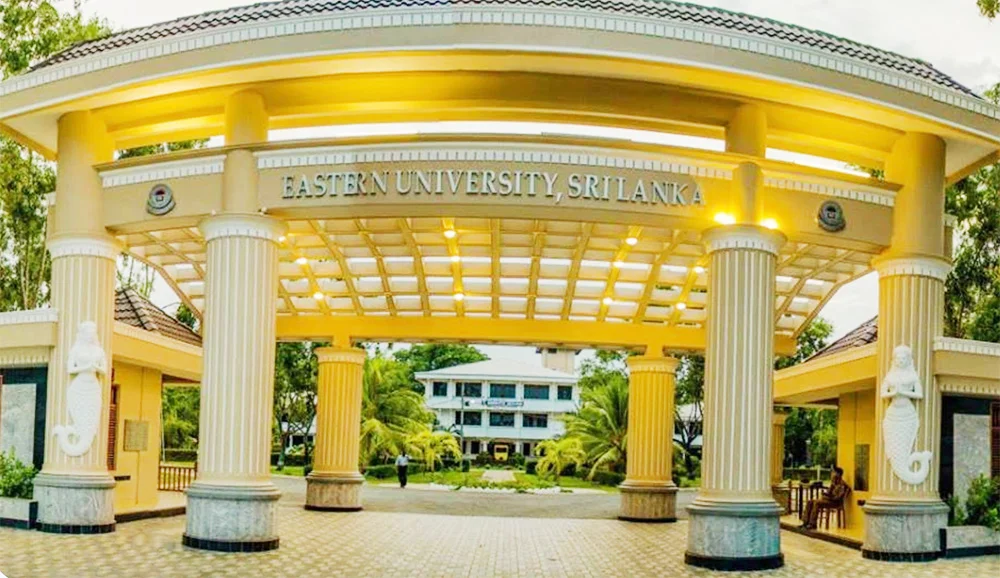
There is an important change in the way peace is being understood in Sri Lanka. The notion that peacebuilding is not simply the responsibility of governments, politicians and peace organisations, but is also a responsibility of educational institutions, appears to be permeating the consciousness of at least a section of the academic community. This was visible on International Peace Day at an event held at Eastern University by the Faculty of Health-Care Sciences. The event was unusual not least because the medical and nursing faculty of the university had decided that peacebuilding was relevant to its academic and professional responsibilities.
Peacebuilding has too often been treated as something undertaken after conflict, when the fighting has stopped and the immediate task is to rebuild relationships between communities. But peace cannot be sustained by governments and peace organisations alone. If it is to become long lasting, the values and practices of peace have to become part of the institutions through which a society educates its younger generations. Universities and other educational institutions are therefore important to peacebuilding. They are among the places where the foundations of a culture of peace can either be built or neglected.
The experience of the Faculty of Health-Care Sciences at Eastern University provides a practical example of what this can mean. Led by its Dean, Prof Thillainathan Sathaananthan, the faculty organised an event which went beyond the ordinary academic scope of a medical faculty. University academics are experts in writing project proposals and applying for research grants. On this occasion, the members of the Faculty of Health-Care Sciences used those skills to apply for a UNESCO grant that they won to conduct an International Peace Day event. The significance lies less in the Rs 200,000 grant than in the decision to use the university’s institutional capacity and resources to invest in peacebuilding. The event at Eastern University needs to be understood as more than a successful university programme. It represents a possible paradigm shift in peace thinking.
Institutional Commitment
The Peace Day event obtained the support of the university administration, including Vice Chancellor Prof P Peratheepan, and reached out to secondary schools in the vicinity to mobilise their attendance. The event itself was meticulously organised. There were cultural items including traditional and modern dance and song in the three languages, performed by combinations of solo, duet and multiple singers, dancers and actors drawn in part from nearby secondary schools. There was a panel discussion by senior academics on the general theme of peacebuilding and how to prepare for it. A discussion among the students followed, where each student spoke on behalf of a religion that was not theirs. This is significant because peacebuilding cannot remain an idea discussed by specialists at conferences. It has to become part of the way institutions educate and prepare people for life in a plural society.
The Faculty of Health-Care Sciences at Eastern University has provided a model through its Peace Medicine course modules that were introduced to the curricular as a compulsory core course over 10 years ago. Two senior academics, Dr Kuveriel Eliyas Karunakaran and Dr Thillainathan Sathaananthan, have written a book on “Peace Medicine- A Health Care Concern” that was published five years ago. Its Peace Medicine Module integrates principles of medical ethics, compassion, equity, social justice and community engagement into health education and practice. In his introduction, former Vice Chancellor of Eastern University, Prof T Jayasingam noted “This book is an introduction to a theme which had already been operating in the Faculty of Health Care Sciences as a course.”
Doctors, nurses and health workers know better than anyone the harm that war and violence does. They are the people who treat the wounds and trauma that violence leaves behind. In a hospital, a patient is not asked what their religion or ethnicity is before they are treated. Health care is one of the places where peace is practised every day. The Faculty has therefore found a way of connecting its professional responsibilities with the wider social responsibility of peacebuilding. The question is whether this experience can be replicated throughout the country, at universities and at other educational institutions, so that peacebuilding becomes part of the consciousness of education itself. If that happens on a sufficient scale, it can begin to generate a culture of peace that becomes increasingly difficult to reverse.
Local Action
The Eastern University event corresponded closely to the United Nations theme for this year’s International Day of Peace, “Invest in Peace – For Everyone, Everywhere, Every Day”, which honours the “everyday architects of peace”, people driving local action, laying the groundwork for stability and building lasting peace from the ground up. The emphasis on investment is important. An investment means that something is put in: time, courage and resources. There is no more violent conflict in Sri Lanka today. But the absence of war does not automatically produce a culture of peace. The factors that fed the country’s conflict have not disappeared from the world. Racism, corruption and the violation of laws and human rights are the raw materials of conflict. So too are unresolved grievances, discrimination and the failure to recognise the suffering of others.
A country that does not deal with its past does not escape it. The past can return in the next generation. This is why the experience of Eastern University needs to be replicated countrywide, both at universities and at other educational institutions. The objective should not be to turn every academic discipline into peace studies. Rather, peacebuilding needs to become part of the consciousness of education itself. Eastern University shows that a medical faculty can develop Peace Medicine. A law faculty can examine the relationship between justice, rights and peace. Faculties of education can prepare teachers to work in diverse communities, while the humanities and social sciences can examine the different narratives through which communities understand their histories. Every institution can find its own way of making peacebuilding relevant to what it teaches.
Sri Lanka has had many declarations, pledges and programmes in the past. What matters is whether these produce changes in behaviour and institutional practice. Peacebuilding requires confronting difficult issues rather than avoiding them. It requires respect for different identities, but also engagement across those identities. It requires dealing with grievances in the present while also addressing unresolved issues from the past. It requires truth, accountability, reparations and guarantees of non-recurrence. It requires people to learn that the rights of another community do not diminish their own rights. The International Peace Day event at Eastern University was evidence of a change in the way at least some academics in a part of the country deeply affected by war are thinking about their responsibilities. Peace needs to be invested in and the most important investment will be in the minds of those who will inherit the future.
 by Ahilan Kadirgamar
I have always noticed the little paper tags that are inside the packaging of some products that say quality assured or quality control. I often wonder who might have checked the product and stamped that tag, but I also forget the tag soon enough. Decades later, when I entered academia, I was taken aback by the emphasis placed on quality assurance in our universities. It is not something that could be forgotten and done away with; the entire university system is obsessed with quality assurance.
Beginning with the staff induction programme, quality assurance is drilled into the newly recruited lecturers. It is the norm, not seen as doing any harm and only trying to improve quality. It is accepted as given, and not questioned. Quality Assurance Cells and Committees are omnipresent and hover above the Departments and, at times, even the Faculty Boards. Quality Assurance reviews are feared by the Deans and Vice Chancellors. University life itself seems secondary to the rule of quality assurance. What do we make of this system of quality assurance and what are its implications for our university system?
Corporate speak
Universities globally have been going through major changes with neoliberal education policies. In many countries, universities increasingly became corporatised to be run like businesses in the 1980s. As state support for universities declined, cost cutting became the norm. They started hiring adjunct or part-time staff. Many public non-fee levying universities around the world began to charge fees. Decade by decade, tuition fees became more and more exorbitant, forcing students to take student loans. The total student debt in the United States now stands at close to US$ 2 trillion; which is about 20 times the GDP of Sri Lanka. As the higher education landscape transformed in the West, university administrations began to recruit Presidents, Vice Chancellors and administrative officials with corporate backgrounds and experience.
Such corporatisation of universities in the West has since been imported into countries like Sri Lanka, introducing a new corporate vocabulary, including quality assurance, graduate competencies, programme outcomes, intended learning outcomes, etc. University teaching has become secondary to documenting so-called outcomes. The teacher-student relationship, the environment of the lecture hall and even administering the university have been over-determined by the processes of ensuring quality. How did such major changes come about in such a short time? Indeed, academics of just two generation ago, would never have heard of these terms and processes in the Sri Lankan university system.
World Bank Trojan horse
Since the early 2000s there have been a number of World Bank projects that have drastically changed the character of Sri Lankan universities. Quality assurance as a central agenda within universities, and many other changes to the working of our universities, came through these World Bank initiatives. The Improving Relevance and Quality of Undergraduate Education (IRQUE) project and Higher Education for the 21st Century (HETC) project were two such earlier projects that set up the Quality Assurance and Accreditation Unit (QAAU) under the University Grants Commission (UGC) and established systematic quality assurance reviews for state universities. The public often thinks these are grants from the World Bank to modernise our universities. However, they are not grants but loans.
The most recent such project, Accelerating Higher Education Expansion and Development (AHEAD) is a US$ 100 million loan from the World Bank implemented from 2018 to 2023, which consolidated the quality assurance structures from the earlier projects. Furthermore, these projects are implemented with tremendous arrogance, prioritising their implementation over all other concerns in the universities, when the project over six years for example accounts for just one fourth of our budget allocation for universities this year.
The AHEAD project drastically changed course curricula, sought to increase student enrolment in science, technology, engineering, mathematics (STEM) disciplines, commercialise the university research agenda and create university-business linkages. All of this was pushed to supposedly help us face development challenges. We have heard the ideological attack on our universities and even students claiming they are “unemployable graduates”. These changes to our higher education system were supposedly going to create jobs and increase employment.
The irony of the AHEAD project is that just as it was ending in 2023, apparently after having reached its targets, the Sri Lankan economy was collapsing. The World Bank often gets the direction of causality wrong. It is the economy that creates jobs for graduates, and not the training or kind of graduates that create jobs. It is decades of World Bank policies, and those of its ideological twin the IMF, that have led to such high youth unemployment, not only in Sri Lanka but also in many other countries in the global South.
Sri Lanka entered an IMF agreement in March 2023 and started a new Country Partnership Framework with the World Bank in June 2023. These programmes have little to say about, and actively discourage, government initiatives that aim to create an industrial policy or an employment creation policy. Instead, they push for austerity measures, which not only restrict the allocation for education among other sectors, but also end up contracting the economy to the detriment of increasing employment. Their goal is the commercialisation of higher education, to make universities into businesses and run them like factories.
In this context, the ideology of quality assurance is powerful. The International Organisation for Standardisation (ISO), whose different standards are necessary for marketing, is the institution that came up with the concept of “quality assurance”. It promoted quality assurance as a process of identifying defected products. Therefore, when the World Bank promotes this conceptual framing, our students are, in fact, seen as products on the assembly line, with quality assurance processes aiming to prevent the release of defected products from the university system. For the US$ 100 million we borrowed for the AHEAD project and the many more million dollars in similar World Bank projects, there is no evidence of increased employment of graduates.
Commodity fetishism
Over a century and a half ago, Karl Marx critiqued the economic analysis prevalent at that time that associated some inherent or monetary value for commodities without considering the social relations that underlie the production of those commodities. Marx called this commodity fetishism. Furthermore, he theorised that such commodity fetishism was also a reason for the alienation of human beings from the world. If our labour and what we produce is seen devoid of the social relations that underlie them, we lose our connection with the people and the world. In this process we become alienated from what we produce and the world.
We are now in a world where our students themselves are fetishised as commodities for the market. Universities are no longer communities concerned about knowledge and human growth, but mere factories producing commodities, which have to be produced without defects to be marketed. In this way, quality assurance has become the cause for the alienation of students, academics and our universities themselves, from the larger relationship with our economy and society.
Our university system does need reform. It is grossly underfunded and not providing the financial support and facilities for our students. Universities have become hierarchical spaces without the academic freedom and democratic ethos necessary for producing knowledge. Academics and students need to engage more with their communities to make their learning and research meaningful, not to mention their contribution to and integration with society. However, when it comes to even questions of governance and regulation of the universities, such concerns are merely reduced to improving quality. In our contemporary times, this singular focus on quality assurance, as opposed to addressing the larger structural issues, is crippling our universities. There may be no way out, but to put back quality assurance where it started, those little tags on goods, to perhaps be noticed but quickly forgotten.
Ahilan Kadirgamar is a political economist and Senior Lecturer, University of Jaffna.
(Kuppi is a politics and pedagogy happening on the margins of the lecture hall that parodies, subverts, and simultaneously reaffirms social hierarchies)

 The entertainment scene, globally, is agog with excitement, and, why not!
Yes, a new global star has emerged … from Thailand, and she hit the headlines by winning America’s Got Talent.
Rattikarn Amloy, known to millions by her stage name Nene Royal, was crowned the winner of America’s Got Talent (AGT) Season 21 at the live finale at Pasadena Civic Auditorium, California, taking home the USD 1 million grand prize.
The 16-year-old rocker, from the holiday island of Phuket (I’ve been to Phuket, courtesy Tourism Authority of Thailand), has struck a power chord around the world, and is the first Thai national ever to win the hit NBC show.
She beat nine other finalists, including runner-up magician Geno Ploeger, after a blistering final performance.
Nene’s story is pure rock and roll fairy-tale. She says she picked up a guitar at age seven, fell in love at the first chord, and taught herself mostly by watching videos online. That dedication earned her a music scholarship to Kajonkiet International School Phuket.
Her audition at America’s Got Talent — a swaggering, shredding rendition of The Cranberries’ classic ‘Zombie’ — exploded online, amassing over 200 million views across AGT’s platforms, more than any act this season.
She kept wowing: ‘Hysteria’ by Muse, then ‘Black Hole Sun’ by Soundgarden which earned her Spice Girl Mel B’s Golden Buzzer, sending her straight to the live shows.
For the final, she unleashed ‘Seven Nation Army’ by The White Stripes. Judge Howie Mandel shouted: “You should win. Give her the million, America.” Mel B praised her “mysterious, mystical stage presence”.
And for the grand finale, she lived every teen rocker’s dream — performing on stage, alongside US rock giants Linkin Park.
When host Terry Crews announced her as winner, the teenager collapsed to the stage floor in tears. “I’m very happy and you know I’m emotional right now,” she said.
And Thailand erupted. Her school held watch parties, posting: “You did it, congratulations, champion. We are so proud of you.”
Even Prime Minister Anutin Charnvirakul sent a personal congratulation. He had earlier hosted Nene at Government House in July, where she played guitar while he sang a Thai rock song. His office said her talent “brought pride to Thai people.”
Corporate Thailand also rallied behind her — Charoen Pokphand Foods, owned by billionaire Dhanin Chearavanont, even rented a giant billboard in Times Square, New York, to cheer her on.
With her blistering guitar solos, rock-ballad shrieks and fearless spirit, little Nene Royal has just become Thailand’s biggest new global star.
What’s more, this amazing teenager will be bringing her powerful vocals, guitar skills and signature rock-metal style to the stage, as opening act, before one of the world’s biggest rock bands, America’s Avenged Sevenfold, in Singapore, on 13 October.
Unfortunately, we are still to see a local artiste, grab the spotlight, on a global scale … like Thailand’s Nene.
Yes, they do shine, but mostly on social media, and that, too, with the aid of AI (Artificial Intellegence).

Showers above 50 mm expected in Uva, Eastern and Central provinces and in Polonnaruwa and Mullaittivu districts after 2.00 p.m.

PAFFREL raises concerns over Anti-Corruption (Amendment) Bill

First cases taken up by SC after enactment of 22A dismissed

Now NR named 4th suspect in Krrish case

Sri Lanka Red Cross Society honoured with Friend of Singapore Red Cross Award

Eastern University and the making of a culture of peace

‘Dates have the highest sugar content to fight Coronavirus’

Sunday Island 27 December – Headlines

#SundayIsland 17th December – Headlines

Sunday Island – 28th March

Sunday Island Headlines – 21 March

Sunday Island – 21st February – Headlines
-

 News6 days ago
Mastermind Naufer Moulavi among 15 found guilty
-

 Midweek Review6 days ago
Thileepan’s fast unto death: An authentic narrative that many missed
-
 Latest News5 days ago
Showers above 100 mm are likely at some places in the Western, Sabaragamuwa, Central and North-western provinces and in Galle and Matara Districts
-

 Editorial6 days ago
Big Bad Bills
-
Editorial5 days ago
Crimes punished and unpunished
-

 Features4 days ago
Beyond traditional jobs: Why Sri Lanka needs to facilitate the gig economy
-

 News6 days ago
No referendum needed for passage of 22 A: SC
-
 Latest News6 days ago
Ms. P. M. Jayadeera (Engineer) appointed Director General of Irrigation