
Life style
My aim to get back Mount Lavania Hotel to where it should be

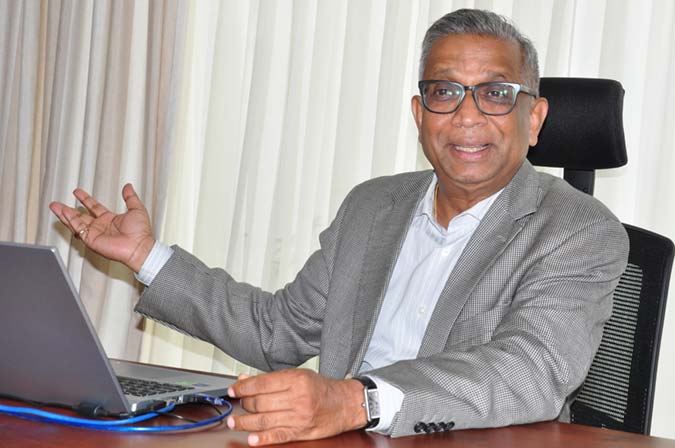
 Anura Dewapura has been appointed as Chief Operating Officer at Mount Lavinia Hotel Group. He brings over four decades of hospitality experience to the role, where he is responsible for managing the overall profitability, operations, performance, and strategic direction to the properties and Mount Lavinia Hotel catering division.
With extensive experience in luxury hotel and resort management here and abroad , Dewapura joins the Mount Lavinia Hotel in a critical time to spear head the much-needed turn around the property’s strategic planning and direction, positioning, product and services development.
With the experience in turning around distressed properties and several pre-opening hotels in various locations in the world, Dewapura had spent working in various positions at Starwood Luxury Collection, Hilton Curio Collection, Marriott Autograph Collection and Independent lifestyle and luxury hotels in Europe, Asia, Australia, Middle East, Caribbean, and North America.
Anura was born in Sri Lanka – Swedish and US citizen, trained & educated hospitality industry in Europe. Having worked in over 17 countries moved back to motherland Sri Lanka from New York USA.
Anura’s passion for hospitality with transformational and purpose driven leadership style, core values, empathy, humility, strategic mind, and drive contributed to many success stories in the businesses including Mount Lavinia Hotel from 2008-2012 period. Anura loves to travel, to explore cultures, cuisines and enjoys golf, Jazz and Bluegrass music.
Former Executive Chef earned his BA honors degree in International Hotel Management from University of Manchester Metropolitan UK and Higher Diploma in Catering from Swiss Management Institute in Switzerland an attended PDP program at Cornell University in US. Anura is a Certified Hotel Administrator, prestigious certification awarded from American Hotel & Lodging Educational Institute.
Q Tell us about your journey. How did it all start?
A : My Hospitality journey started from Home, with the aspiration of being a European Chef amidst my parents dislike. I cooked my first meal when I was 12 to feed my brother and sister during 1971 insurgence time and the rest was history.
After being an Executive Chef in Europe at the age of 28, Sweden,in Denmark, Spain and Australia where I worked for. I left the kitchen after preparing a dinner for “Michelin Awards Event” for sixty five two and three Star Michelin Chefs which I consider as one of my biggest accomplishments.
Later I moved to administration positions such as Director of Food and Beverage, Director of Operations, General Manager, Managing Director and my most recent position Regional Director of operations Upstate New York and currently I am working as Chief Operating Officer of Mount Lavinia Hotel Group.
I was privileged enough to fulfill my passion for travelling the world through my career, where I have been to eighteen countries.
Q As an experienced hotelier what do you think it takes to succeed in this industry?
A : To be successful in this industry I personally advocate commitment, discipline and empathy with the correct understanding of the customer needs regarding what, when and how they want it. These practices bear my philosophy of serving customers.
On the other hand a clear vision of who I want to be with a proper plan have led me to succeed without obstacles. I believe service excellence will make someone keep thriving forward to raise the bar of success for the survival in the hospitality industry.
This industry keep evolving and altering all the time with trends, travelling patterns, technology, habits and generational changes. Therefore being able to welcome new trends and adapting to them is a must. I believe the adage, “you are good as your last day performance” has made me the person who I am today.
I like to feel people, guests and team by talking and engaging with everybody. I am a future driven personality with no hesitation with past. And I live with certain moral values where I don’t treat anyone differently than I should be treated, therefore it has been a journey of handling everyone equally with respect and same level of interest under any designation and any dissimilarity.
My love for this Job; as long as I love what I do, I keep on doing it.
Q What are some of the trends you see impacting the hospitality industry?
A : Technology does the most impact on this industry. It will efficiently enhance the service by providing many platforms, implemented systems for customers (online facilities), under palm access, quick and accurate fingertip information but for the best outcome, technology should be used with better balance without any extremes. According to my personal experience, I believe finding a balance between technology and human touch is a pre-requisite.
I also believe in good employees and employee retention. It’s quite a challenge to protect skillful employment by providing them with benefits, salaries, titles, team work and interactions while they are properly treated with respect and empathy under good care. My goal is to make them want to come to work; not they have to come to work. This itself a success.
Q Tell us about something that Mount Lavinia offers that no else can?
A : My love for this property, its culture and character, heritage and people who work here made me to come back. Though I was successful in my career abroad, I was a Sri Lankan, deep within me and Mount Lavinia Hotel where I worked was my best choice. Of course, it was a challenging task after the Covid and the economic crisis. But I was determined to come back and bring the hotel to its former glory.
I had the opportunity to build a good team around me. The uniqueness of this hotel; no one will find it anywhere. Why? This has a historic background, beautiful architecture, colonial heritage , breathtakingly beautiful setting, dedicated employees working for more than 60 years (Chef Publis, Aruni, Camilas, Kumari) they are pretty much Mount Lavinians.
Their love for this beautiful property, is an unusual trait,I feel my job is to build up on them while focusing and guiding them towards the right direction, the direction to success. Mount Lavinia is a destination not just a hotel. That’s why we are going to create a home out of it with good food, fine wine, art, culture, entertainment and specially, best and most romantic Terrace in the world with a 360 angle of ocean view. Above characteristic had made the Hotel; best pick for weddings and for other events.
Q How would you describe your management philosophy?
A : I’m a purpose driven Transformational Leader. I am keen for why I came here, which showcase my purpose of getting back Mount Lavinia where it should be and more than used to be. I have transformed once and I’m fully aware of my capability complex of transforming again. My target is to make the hotel the best in town. It is easy to work around a motivated team and exceed the expectations of our guests and ownership.
Q As a new COO what are your targets and expectations for next year?
A : We are working on with two targets, to build this place with a good management team and build up a trained and talented employees and work together for a common mission and vision. My aim is to deliver a service excellence and a superior product. To obtain the desired outcome a wide variety of guest and employee focused strategies will be implemented.
Second target would be to meet the profit oriented financial objectives for year 2024 and by the end of 2024 we are expecting a well-established, efficiently running, profitable and well positioned Mount Lavinia Hotel with a promising future. I believe in myself and my team can achieve these targets within a year.
Q Do you have any plans to adopt more sustainable practices in your planned initiatives?
A : Yes I do. When I was the GM we implemented a concept of “Green going Greener”, which is a sustainable effort of Mount Lavinia Hotel . The hotel is committed to maintain environmental issues, while seeking opportunities to protect resources, reduce waste, and conserve energy and water through the maintenance of quality service expectations for guests.
Energy conservation, waste management, water conservation, community development, switching to use environment-friendly products and erosion control are the key performance areas which were practiced back in the days. The hotel had received Bronze and Silver certifications for EarthCheck Awards in years 2010 and 2011 respectively. Therefore I would love to re-introduce this concept and work alongside the Green policy I personally believe it is our responsibility as individuals to follow up a planet saving approach for a favourable future.
Q Your plans to position the hotel as a destination?
A : Mount Lavinia Hotel itself is a destination. The paradise beach with alluring city views, mesmerizing history with a romantic love story, tantalising food, good music, art and culture are distinct features of Mount Lavinia It is called “Governor’s Mansion Destination “. My plan is to recreate this excitement and experience while serving top class culinary cuisine, bringing guest chefs, artists, reviving our theme dinner concepts such as Soul food, Ape kama, Latin food, Italian food are on the cards.
Q Moving forward what legacy would you like to leave behind from your leaderships with many years of experience?
A : “It’s the legacy that I left that brought me back”. I would like to be remembered as the person who transformed and brought Mount Lavinia to new heights and to deliver the superior results in service, products, profitability and value for the ownership.
Q Making a vision into a reality can be very daunting. We would love a deep dive into your process for all your initiatives?
A : When creating a vision and a mission, initiatives should be started with the team by ensuring that they believe in it too. That’s pretty much the ground work which will be obtained with training, product knowledge, and customer service while practically applying from every angle of the organization by acquiring a strong HR, value systems, culture, and teamwork for a fulfilled vision. We have to start from the bottom from operating standards reviving all policies, procedures and the best practices of the overall hotel. These strategies will go parallel with the plan delivering products and service, meeting customer expectations over and beyond.
It is my duty to identify both strengths and weaknesses and help them to develop and work on these strengths to be successful. In a nutshell we are constructing a successful foundation for the future.We have done it once and we are capable of doing it again.
Q At Mount Lavinia Hotel, your popularity with the staff is well known. Share some of your secrets in keeping an engaged, safe and happy team?
A : My day starts in the morning walking through departments and talking to my team along the way. I do respect them thier point of view. I am a a good listener, trying to solve thier problems. I care for thier wellbeing and trying to put a smile on everybody’s faces that makes me genuinely happy. I will make sure to keep them motivated on their job.
Q You are currently focusing on building a strong leadership team financial success and tremendous growth for the hotel. How do you plan to give your best in these times of growth?
A :I I will build long term strategies based on trends and demands in keeping with the hospitality industry trends We have to make ourselves prepared for the waves of changing and adopt ourselves to planning and implementation. My mission is to exceed the expectations of the guests.team members, supplies,shareholders by providing a hospitality experience with respect and integrity.
Q How are you settling as COO Mount Lavinia Hotel?
A : It is like coming home but different from my previous arrival in 2008. It is challenging but so far everything is running smoothly according to my expectations.I have a strong leadership and a competent team to make my plans successful.My aim is to make Mount Lavania hotel a trendsetter in the hospitality industry in the near future.
Q How do you see tourism in Sri Lanka then when you were GM and now?
A : The tourist arrivals globally fell abruptly and came to a halt, Thanks to the government efforts, tourism is picking up and we need to have professional experts, and have a committed vision to bring in more tourists and make Sri Lanka the hub of tourist destination.We have the best pristine beaches,fine dining experiences,fascinating sightseeing and rich cultural heritage. However tourism in Sri lanka has much more untapped potential. However,it is only through right policies and proper planning, we can leverage the economic prospects of the travel and tourism industry.
Q What are some lessons learnt with your prior experience in traveling and working in different countries?
A : I have led several hospitality organizations in US and around the world. I have learnt much from my associates and prior experiences. I believe the team spirit is best positive vibe to ensure a smooth running in any organisation specially in the hospitality sector.
Q What are your plans for the upcoming season?
A : “Christmas around the world” is this year’s theme for the season of joy. We are planning to commence our festive celebrations by the Thanksgiving Dinner which will be an extravagant event like never before. Christmas tree lighting ceremony has also lined up in the seasonal agenda while country themed Christmas dinners will be served and their traditions and cultures will be celebrated throughout the month of December. Christmas day Brunch will be star among the festivities because of the big scale planning and Christmas-eve dinner will be organized to usher the true seasonal atmosphere for the guests.
The 31st night is bundled up with all goodness and surprises for a glamorous welcoming of year 2024.
In his new capacity at the Mount Lavinia Hotel, Anura will steer the hotel towards unprecedented success. His dynamic leadership, coupled with a strong focus on operational excellence and customer centric strategies will undoubtedly set a new benchmark in the hospitality industry.

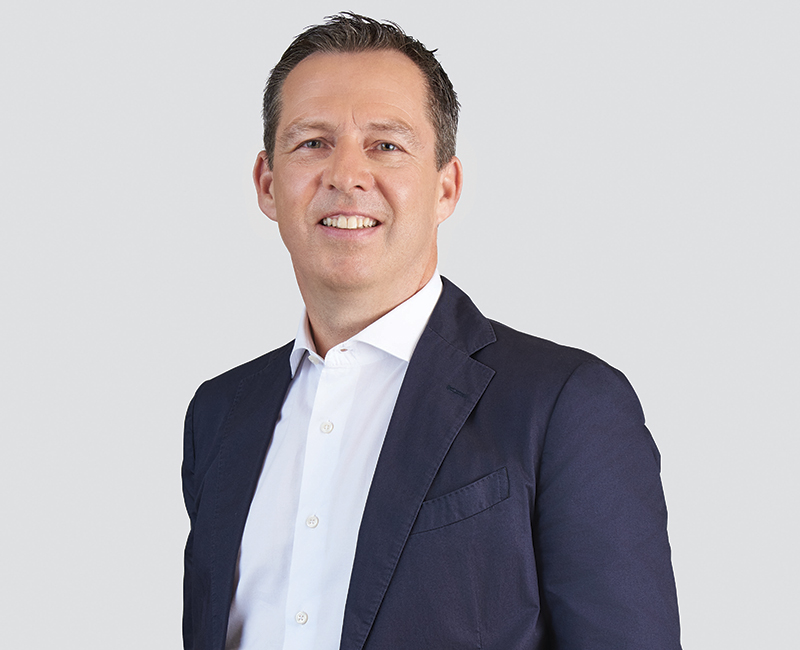
Bernie Stefan is the Chairman and Managing Director of Nestlé Lanka Limited, overseeing Nestlé’s operations in Sri Lanka and the Maldives. He assumed this role in March 2023. Under his leadership, Nestlé has strengthened its footprint in Sri Lanka, touching individuals and families, communities and spearheading sustainable development.
Since taking charge in 2023, Stefan has brought with him over two decades of international experiences, steering the company with a clear focus on sustainability, innovation and long term growth.
Bernie describes the anniversary as a moment of pride and reflection on over a century of commitment to Sri Lanka and its people.
Under his leadership, Nestle has expanded its footprint while staying true to its mission: to improve lives by providing nutrition and wellness for all Sri Lankans. Beyond the commercial success, the company has focused on community impact – supporting local farmers. promoting sustainable practices and contributing to public health initiatives.
 (Q) Nestlé has been part of Sri Lankan homes for 120 years. How has the brand evolved alongside the changing lifestyles of Sri Lankan families?
(A) We at Nestlé are extremely proud of our 120 year journey of enriching Sri Lankan lives. It has been a journey guided by purpose and working together for good – touching individuals and families, the community, and the planet. As lifestyles and needs have evolved, so, too, have our products – offering convenient, tasty and nutritious solutions that meet everyday moments, whether it’s energy on the go or a quick and tasty meal. A true symbol of this legacy is our flagship brand, Nestomalt – synonymous with power, strength and energy – which today is enjoyed as the first cup of the day by a majority of Sri Lankan households.
(Q) Many Sri Lankans have grown up with Nestlé products at their breakfast table or during tea time. How does the company stay emotionally connected with generations of consumers?
(A) Our product range caters to the nutritional needs of consumers from birth to old age. We always ensure that the consumer is at the centre of everything we do. This deep understanding of consumer preferences, ensures not only that our products deliver taste and nutrition but also our communication is in tune to the local context. Our brands have been deeply rooted in the lives of the Sri Lankan community over many decades – be it through Milo school sports programmes or Nestomalt marathons. Being an organisation that has been present in Sri Lanka for such a long time, it also means that consumers hold many nostalgic memories from their childhood with our products.
(Q) From childhood treats to everyday beverages, Nestlé products often carry nostalgic memories. How important is this sense of nostalgia to the brand’s identity?
(A) Brands need to evolve with time and remain relevant. Nostalgia does bring a deep bond and connect with consumers. However, through product and packaging renovations, we have successfully ensured that our brands remain relevant to consumers. One of our oldest Nestlé brands in Sri Lanka, Milkmaid , today, has an online recipe platform with over 300 recipes. This is another example where we have ensured that our brands are able to connect with today’s consumers.
(Q) Has Nestlé adapted its products to suit modern lifestyles while still respecting local tastes?
(A) Our ability to cater to local taste preferences has been a crucial factor to the success of our brands. With the setting up of our local manufacturing operations in 1984, we now manufacture over 90% of Nestlé products sold locally. The deep consumer understanding our teams possess, combined with our global R&D expertise in the food and beverage sector, have given us the ability to tailor make our products to cater to the Sri Lankan taste palette while offering convenience. This is evident in the success of our Nescafe and Nestea 3-in-1 variants and the Ready-to-drink beverage range of Milo and Nescafe, that deliver convenience and great taste.
(Q) How is Nestlé aligning its practices to sustainability and mindful living?
(A) We are committed to reaching net zero carbon emissions by 2050. Promoting circularity is also a focus area in this journey. We have plans to be 100% plastic neutral this year. Our sustainability initiatives cover the entire value chain, from farm to fork. In Sri Lanka, we are focusing a lot on increasing yield and promoting regenerative agricultural practices across our dairy and coconut value chains. In our manufacturing operations, we have continuously striving towards reducing water and energy usage. We have also implemented numerous initiatives to reduce our carbon footprint in logistics, such as the adoption of rail transportation. We also focus on fostering behavioural change on responsible waste disposal amongst the youth through our School Waste Management Programme.
(Q) What moments or milestones best reflect its connection with everyday life in the country?
(A) Our ability to provide consumers with good food moments each and every day is something that I and the team are extremely passionate about. Also, the deep connect we have with the community, be it our dairy and coconut farmers, the numerous suppliers and trade partners, has been built on trust over the years. Today, we have farmers, suppliers and even employees from across generations and this speaks volumes about our business practices and the trust we have built in Sri Lanka for over a century.
(Q) Nestlé is known globally for innovation. How do you balance global expertise with the unique lifestyle and culinary culture of Sri Lanka?
(A) As I mentioned, understanding the taste palette, nutritional needs and the lifestyles of Sri Lankan consumers and ensuring our products fulfill these needs is key. Having access to one of the world’s leading R&D facilities gives us the unique ability to ensure our products deliver to these consumer needs and preferences. Further, it enhances our ability to ensure the freshness and bio-availability of certain nutrients contained in our products. We’ve also made significant strides in packaging innovation, where we use less plastic and materials that are better suited for recycling. The introduction of Coconut Milk Powder in 1986 was a first for Sri Lanka, and this is another great example of the deep understanding we have of local culinary culture.
(Q) How is the younger generation engaged with the brand today?
(A) Appealing to the discerning youth population will be key to ensuring the future success of our brands. Understanding the nuances of each generation is important. It is also evident that consumption patterns and lifestyles across generations are evolving rapidly. Staying abreast of these changes is something we are deeply committed to. In addition to delivering on taste and nutrition, being trendy and youthful – the purpose for which our brands stand for – is equally important. NESCAFÉ and MAGGI PAPARE BLAST are two brands that have developed a strong connect with Sri Lankan youth.
(Q) What vision do you have for the next chapter in Sri Lanka, especially in shaping lifestyle trends?
(A) Looking ahead, our vision is to continue enriching Sri Lankan lives by providing tasty and nutritious products and promoting healthier and active lifestyles. We will keep innovating to meet evolving consumer needs, while strengthening local sourcing and reducing our environmental impact. The next chapter is about deepening our positive impact – supporting communities, empowering youth and contributing to a resilient food system.
(Q) As the head of Nestlé Sri Lanka, what does celebrating 120 years personally mean to you?
(A) Celebrating 120 years in Sri Lanka is deeply meaningful to us, as it reflects the trust generations of Sri Lankan families have placed in Nestlé. This milestone is a testament to the dedication of our people and the strong partnerships we have built across the country. For me personally, it is both a moment of pride and a responsibility – to honour this legacy while continuing to work together for good, doing what is right for our consumers, our communities, and Sri Lanka.
By Zanita Careem
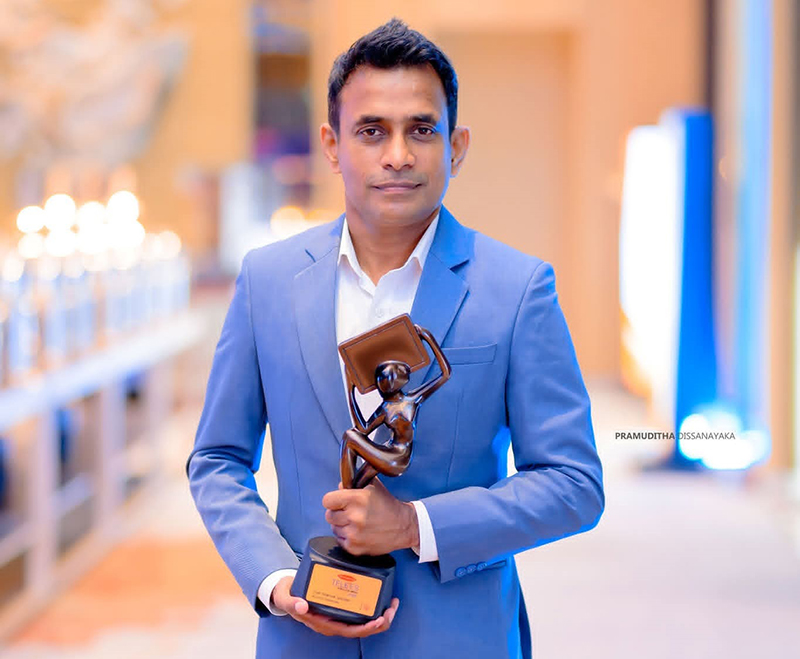
At a time when entertainment often overshadows education on television, K.C. Saranga has rewritten the script—securing a remarkable third consecutive win for Best Educational Programme at the Raigam Tele’es 2025.
His flagship programme, Jeevithayata Vidyawa (Science for Life), aired on Ada Derana, has not only dominated its category but also elevated the standards of educational broadcasting in Sri Lanka.
Reflecting on the milestone, Saranga described the win as more than a personal achievement. “Maintaining an award ceremony of this magnitude for 22 years is no small feat. Raigam Tele’es plays a pivotal role in uplifting the industry. By consistently recognising and rewarding Sri Lankan creators, it provides the necessary oxygen for television to evolve as a professional craft,” he said.
A veteran with over 25 years in the industry, Saranga—currently General Manager (News and Current Affairs) at TV Derana and Head of the Ada Derana News Channel—has seamlessly transitioned from hard news to impactful educational programming. His success underscores a broader vision: to harness television’s full potential as an audio-visual learning tool.
“There is a significant void in Sri Lankan television when it comes to high-quality educational productions,” he noted. “Television is an audio-visual medium; its true power lies in its ability to show, not just tell. We use multimedia elements—graphics, animation, and dynamic presentation—to grip the viewer’s attention.”
Saranga emphasised that his goal was to match global benchmarks. “If world-class science documentaries are available in English, our mission was to bring that same global standard to the Sinhala-speaking audience,” he said.
Through Jeevithayata Vidyawa, complex scientific concepts—from aerodynamics to cyclones—are presented in a manner that is both accessible and engaging, redefining the notion of “edutainment” in local television.
Expressing gratitude, Saranga credited his team and network for the continued success.
“This achievement is a result of a shared vision. My deepest gratitude goes to the management of Ada Derana. In an industry often driven by conventional ratings, they have consistently provided a sanctuary for creative freedom, allowing ‘out-of-the-box’ ideas to flourish,” he said.
He added: “To my incredible production team—this trophy belongs to you. Your technical skill and commitment have transformed simple ideas into a national standard. Finally, thank you to our viewers; your curiosity is our ultimate motivation. We will continue to prove that learning is an inspiring journey.”
Saranga’s hat-trick stands as a testament to the power of innovation in educational broadcasting—proving that knowledge, when presented with creativity and purpose, can captivate audiences just as effectively as mainstream entertainment.
By Ifham Nizam

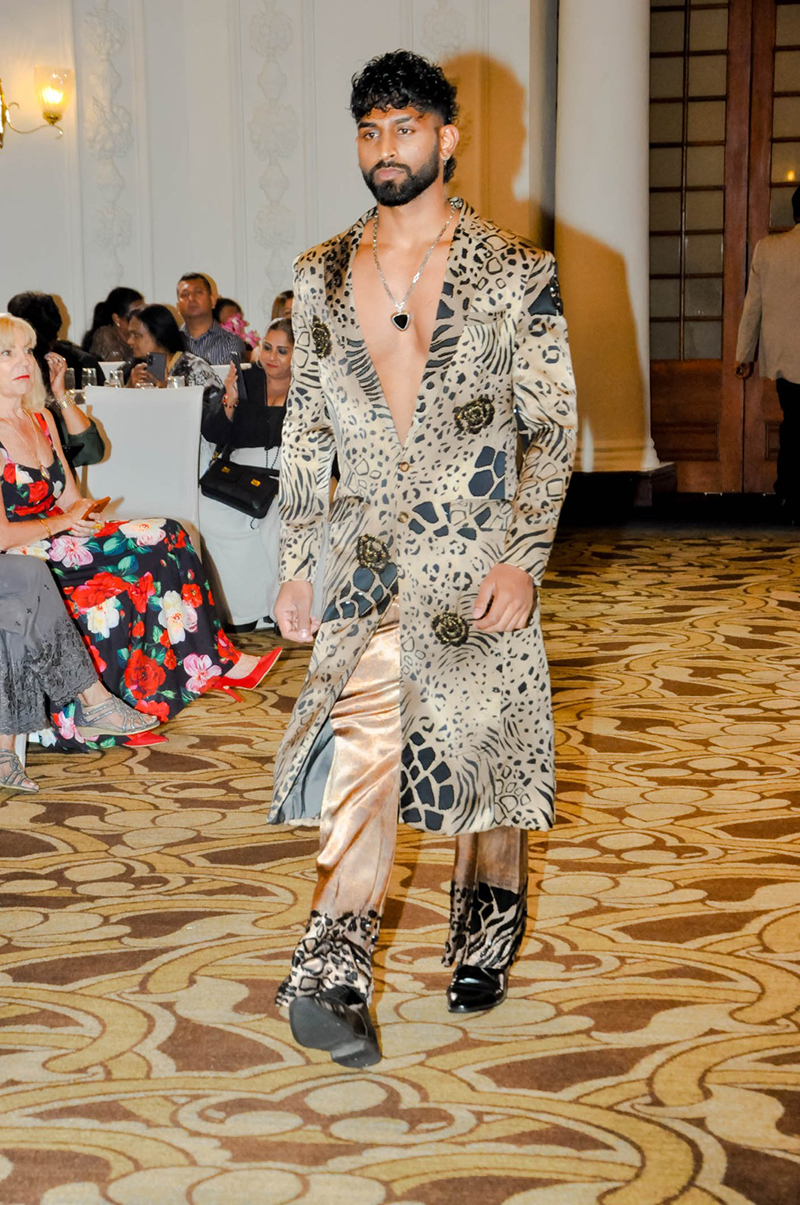
The event “Style Surge,” organised by the Lions Club Elevate, was an evening filled with glamour, leadership and purpose collided in a spectacular fusion. The grand Ballroom at Galle Face Hotel became a canvas of fashion; every detail, from the floral centrepiece to the curated lighting, whispered elegance, while glamour set the stage, purpose was the back bone.
The show featured a curated selection of Sri Lankan designers, each bringing their signature styles to the stage.
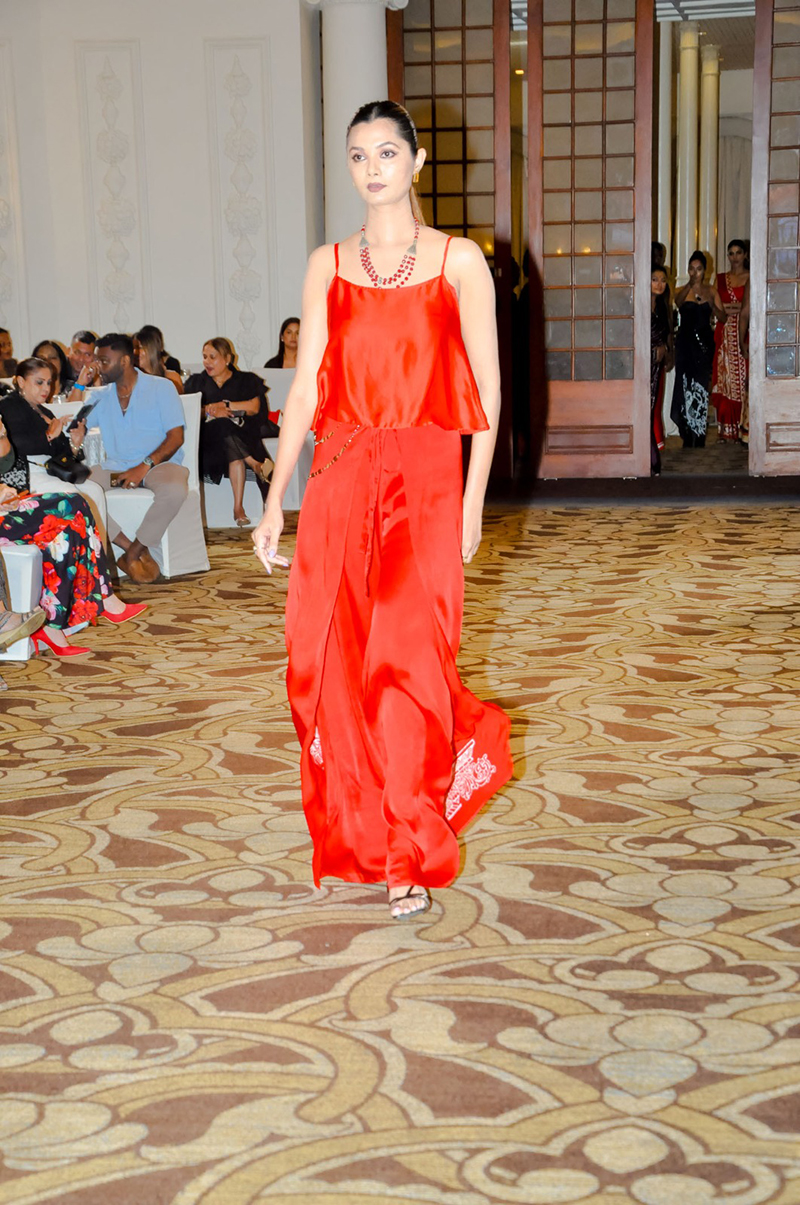
The designers captivated the audience with bold, contemporary silhouettes that fused modern trends with traditional influence, creating pieces that were both sophisticated and wearable.
The batik ensembles by doyen of Batiks, Eric Suriyasena, were masterpieces, demonstrating the designer’s mastery in balancing artistry and practicality. Each piece told a story, highlighting the cultural nuances of Sri Lanka, while contributing to the glamour of the event.
The hair and make up for the models were curated by Salon Avra by Thushari de Silva and was nothing short of perfection,
From sleek, modern looks to elegant textured styles, Salon Avra ensured every model complemented the designer’s vision, highlighting the intricate details of each ensemble. The artistry on stage reflected a seamless collaboration between fashion beauty and presentation.
Style Surge unfolded an evening of elegance, creativity and purpose. It brought together Colombo style conscious crowd, social leaders and fashion enthusiasts and transformed the venue into a vibrant celebration of couture and compassion.
As the lights dimmed,the runaway came alive with a striking showcase of designs, ranging from contemporary chic to timeless sophistication, by designers like Eric Suriyasena, Anushko, Azeena Sulaiman and Jaywanthi Panibharatha. Leading fashion brands showcased were Aluminium, Disala, Eriq and Elegant Closet, and they presented a blend of contemporary and traditional fashion. Jewellery for the show was designed and sponsored by Blue Majestara Ceylon, . The Chief Guest was District Governor Lion Mahesh Borolugoda and his wife Lion Lady Sunethra Borolugoda.
Beyond glamour, this event, Style Surge, carried a meaningful mission to help rennovate two schools and improve educational facilities for future students
Lions Club of Colombo Elevate district 306D6, the organisers of this event, have been long synonymous with community development .The event underscores the power of fashion as a force of good.
Proceeds and awareness generated though the evening will be directed towards the clubs ongoing humanitarian initiatives, reinforcing its commitment to uplifting communities while engaging the public in an inspiring way.
In every sense, the event was more than a fashion show, it was a statement. This event reaffirms that glamour can also carry a purpose, creativity can spark compassion, and a runaway that can become a powerful platform for social change. This fashion show was graced by distinguished guests of honour , including designers Aseka Wijewardena, Michael Wijesuriya, Yolande Aluwihare, and Shyara Mendis
This event was organised by Lion Diana Nilanthi, Shen, Lion Thushari de Silva and Lion Shashika Hettiarachchi, whose commitment to creativity and attention to detail transformed the event into a truly memorable evening. They were the driving force that brought the vision of the show to life. Their meticulous planning, conceptualising the theme, coordinating the designers ensured the show ran seamlessly, from start to finish Pix by Thushara Attapathu
By Zanita Careem

-

- Thushari de Silva


-
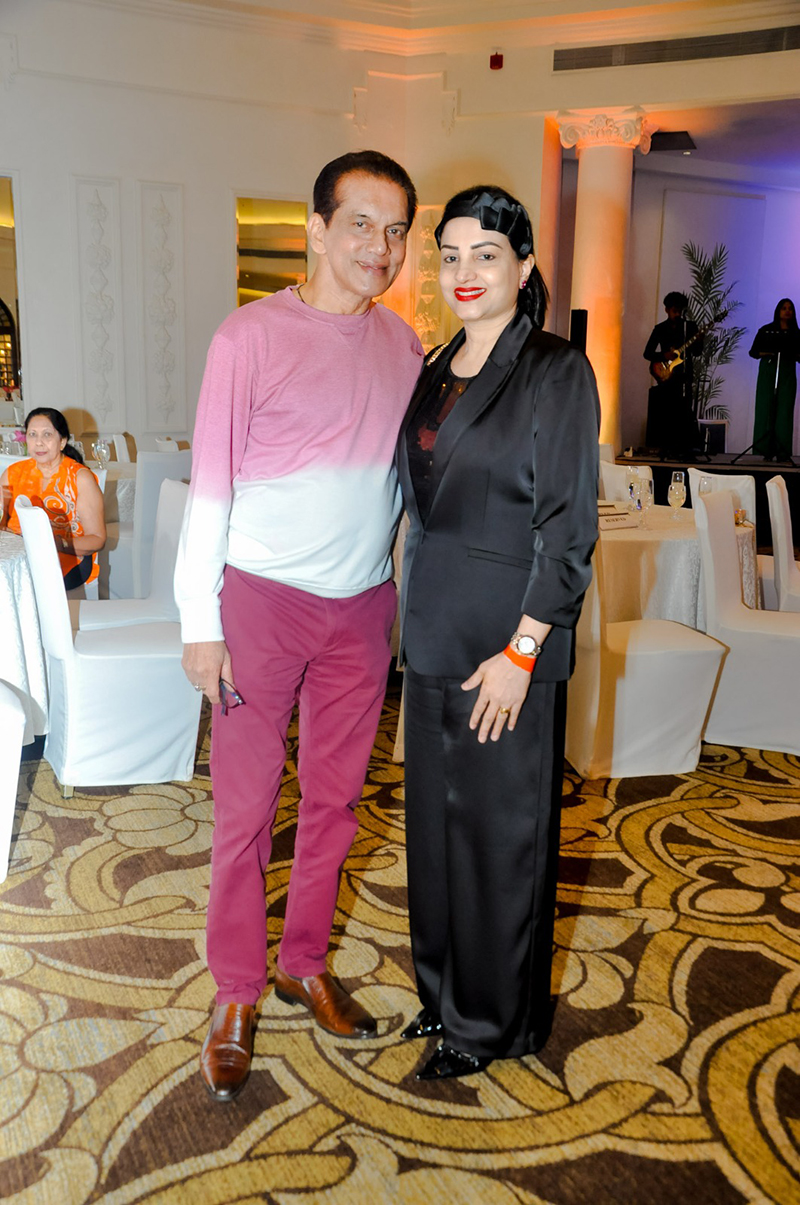
- Kamal Addiarachchi
-

- Azeena with a guest
-

- Enjoying the Kamal Addiarachchi night of style

Sooryavanshi blitz, Jurel 81* help Rajasthan Royals take down Royal Challengers Bengaluru with ease

Sun directly overhead Pomparippu, Anuradhapura, Mihinthale, Galenbindunuwewa, Agbopura and Serunuwara about 12:11 noon today (11)

Showers expected in the Western, Sabaragamuwa, North-western , Southern and Uva provinces and in Anuradhapura, Mannar, Kandy and Nuwara-Eliya districts after 2.00 p.m.

Opposition NCM against Energy Minister defeated

Chinese Ambassador assures Lanka China will not allow a fuel crisis to develop here

Minister Jayatissa blames administrations since 2010 for not following proper procedures when procuring coal

‘Dates have the highest sugar content to fight Coronavirus’

Sunday Island 27 December – Headlines

#SundayIsland 17th December – Headlines

Sunday Island – 28th March

Sunday Island Headlines – 21 March

Sunday Island – 21st February – Headlines
-

 Features7 days ago
Ranjith Siyambalapitiya turns custodian of a rare living collection
-

 News7 days ago
Global ‘Walk for Peace’ to be held in Lanka
-

 News5 days ago
Lankan-origin actress Subashini found dead in India
-

 News3 days ago
AG: Coal procurement full of irregularities
-

 Business2 days ago
Israeli attack on Lebanon triggers local stock market volatility
-

 Features7 days ago
Beyond the Blue Skies: A Tribute to Captain Elmo Jayawardena
-

 Features7 days ago
Aspects of Ceylon/Sri Lanka Foreign Relations – 1948 to 1976
-

 Business3 days ago
Hayleys Mobility introduces Premium OMODA C9 PHEV