
Latest News
Mpox declared public health emergency in Africa


Mpox, the high infectious disease that used to be called monkeypox, has been declared a public health emergency in Africa by the continent’s top health body.
Scientists from the Africa Centres for Disease Control and Prevention (Africa CDC) say they are alarmed by the speed at which a new strain of mpox has been spreading.
Since the beginning of the year, more than 13,700 cases and 450 deaths have been recorded in the Democratic Republic of Congo.
The virus, which can cause lesions across the whole body, has spread to other African countries, including Burundi, the Central African Republic (CAR), Kenya and Rwanda.
The declaration of a public health emergency will help governments co-ordinate their response and potentially increase the flow of medical supplies and aid into affected areas.
Africa CDC head Jean Kaseya warned that the disease could spiral out of control if immediate steps were not taken to contain it. “This declaration is not merely a formality. It is a clarion call to action. It is a recognition that we can no longer afford to be reactive. We must be proactive and aggressive in our efforts to contain and eliminate this threat,” he said.
Health chiefs outside Africa will also be monitoring the situation to assess the risk of the outbreak spreading further.
On 29 July, the European Centre for Disease Prevention and Control said the risk from the mpox virus was “very low” in Europe.
Mpox spreads from animals to humans and between people through close contact with someone who is infected – including through sex, skin-to-skin contact and talking or breathing close to another person.
It can cause symptoms such as fever, muscle aches and lesions across the body. If left untreated, mpox can be deadly.
There are two main strains of the virus known to exist. The milder one caused the global outbreak in 2022 that affected Europe, Australia, the US and many other countries – and was mainly spread through sexual contact.
The second more deadly strain, endemic in central Africa, is behind the new recently discovered variant in DR Congo.
There are three vaccines that exist but only people at risk or who have been in close contact with an infected person are usually able to have it.
Dr Kaseya said there were plans to secure about 10 million doses to limit the spread of the disease in Africa.
[BBC]


Greece has announced plans to ban access to social media for under-15s, becoming the latest European country to restrict children’s exposure to online platforms.
Prime Minister Kyriakos Mitsotakis said the move was aimed at tackling rising anxiety and sleep problems among young people, as well as what he described as the “addictive design” of social media.
The restriction will come into force from January of next year.
In December Australia became the first country in the world to require TikTok, YouTube, Snapchat and other top sites to remove accounts held by under-16s, or face heavy fines. France, Austria and Spain are among a growing number of nations pursuing similar curbs.
The UK government has launched a consultation on whether to implement a ban for under-16s, while Ireland and Denmark are considering similar measures.
Social media companies argue that blanket bans will be ineffective, difficult to enforce and could isolate vulnerable teenagers. Reddit is challenging Australia’s law in court.
In a video message posted on TikTok on Wednesday, Mitsotakis said: “Many young people tell me they feel exhausted from comparisons, from comments, from the pressure to always be online.”
(BBC)
Latest News
Sun directly overhead Chilaw, Bingiriya, Halmillawewa, Panduwasnuwara, Gokarella, Kawudupelella, Koppaveli and Kirankulam about 12:12 noon. today (09)
On the apparent northward relative motion of the sun, it is going to be directly over the latitudes of Sri Lanka from the 05th to 15th of April this year.
The nearest areas of Sri Lanka over which the sun is overhead today (09th) are Chilaw, Bingiriya, Halmillawewa, Panduwasnuwara, Gokarella, Kawudupelella, Koppaveli and Kirankulam about 12:12 noon.
Latest News
Heat Index at Caution Level in the Western, Sabaragamuwa, Southern, Eastern, North-western, Northern and North-central provinces and in Monaragala district

Warm Weather Advisory
Issued by the Natural Hazards Early Warning Centre
Issued at 4.30 p.m. on 08 April 2026, valid for 09 April 2026.
The Heat index, the temperature felt on human body is likely to increase up to ‘Caution level’ at some places in the Western, Sabaragamuwa, Southern, Eastern, North-western, Northern and North-central provinces and in Monaragala district.
The Heat Index Forecast is calculated by using relative humidity and maximum temperature and this is the condition that is felt on your body. This is not the forecast of maximum temperature. It is generated by the Department of Meteorology for the next day period and prepared by using global numerical weather prediction model data.

Effect of the heat index on human body is mentioned in the above table and it is prepared on the advice of the Ministry of Health and Indigenous Medical Services.
ACTION REQUIRED
Job sites: Stay hydrated and takes breaks in the shade as often as possible.
Indoors: Check up on the elderly and the sick.
Vehicles: Never leave children unattended.
Outdoors: Limit strenuous outdoor activities, find shade and stay hydrated.
Dress: Wear lightweight and white or light-colored clothing.
Note:
In addition, please refer to advisories issued by the Disaster Preparedness & Response Division, Ministry
of Health in this regard as well. For further clarifications please contact 011-7446491.

Greece to ban social media for under-15s from next year

Showers will occur at a few places in the Western, Sabaragamuwa and North-western provinces and in Galle, Matara, Kandy, Nuwara-Eliya and Mannar districts after 2.00 p.m.

Sun directly overhead Chilaw, Bingiriya, Halmillawewa, Panduwasnuwara, Gokarella, Kawudupelella, Koppaveli and Kirankulam about 12:12 noon. today (09)

Heat Index at Caution Level in the Western, Sabaragamuwa, Southern, Eastern, North-western, Northern and North-central provinces and in Monaragala district

AG: Coal procurement full of irregularities

Rs 13.2 bn NDB fraud: House committee declares serious breach in banking system

‘Dates have the highest sugar content to fight Coronavirus’

Sunday Island 27 December – Headlines

#SundayIsland 17th December – Headlines

Sunday Island – 28th March

Sunday Island Headlines – 21 March

Sunday Island – 21st February – Headlines
-

 Features4 days ago
Ranjith Siyambalapitiya turns custodian of a rare living collection
-

 News4 days ago
Global ‘Walk for Peace’ to be held in Lanka
-

 News2 days ago
Lankan-origin actress Subashini found dead in India
-
 Opinion6 days ago
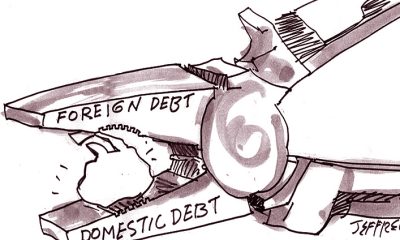
Hidden truth of Sri Lanka’s debt story: The untold narrative behind the report
-

 Features4 days ago
Beyond the Blue Skies: A Tribute to Captain Elmo Jayawardena
-

 Features6 days ago
The Ramadan War
-

 Features4 days ago
Aspects of Ceylon/Sri Lanka Foreign Relations – 1948 to 1976
-

 Editorial5 days ago
Brouhaha over a book