
Foreign News
Mozambique’s ruling party wins landslide in disputed poll

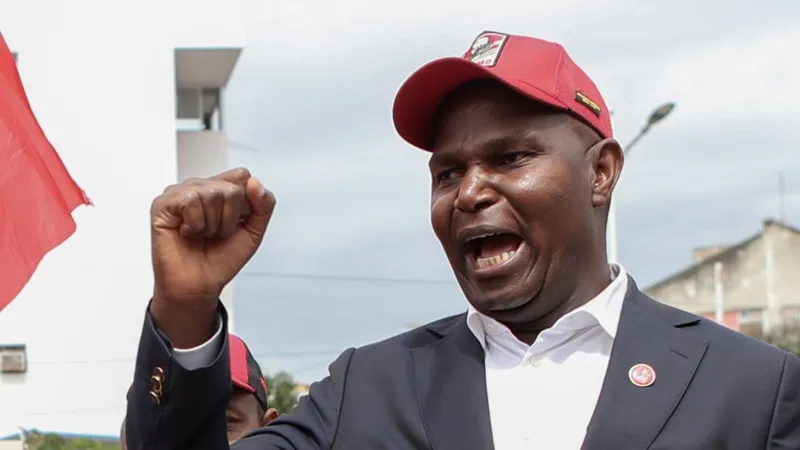
Mozambique’s ruling party, Frelimo, has won the country’s divisive, violence-marred election, extending its 49-year grip on power in the southern African nation, according to official results.
Daniel Chapo, Frelimo’s relatively unknown presidential candidate, seen as an agent of change, will replace Filipe Nyusi, who has served two terms.
At 47, Chapo, who gained 71% of the vote, will be the first president born after independence in 1975. His closest challenger, Venancio Mondlane got 20%.
Chapo said in his victory speech: “We remained silent all this time, for respecting the law. We are an organised party that prepares its victories.”
Following the announcement of the result, there have been violent protests in several towns and a number of people have been killed. There is also heavy police presence in some areas.
The election has been marred by allegations of rigging and the killing of opposition supporters, prompting protests across the country.
Zimbabwe’s President Mnangagwa, who has also been hit by allegations of election fraud over the years, prematurely congratulated Chapo on his “resounding victory”, even before the results were announced.
Ossufo Momade, the candidate of former rebel group Renamo, which was previously the main opposition party, came in third with 6%.
Political analyst Tomas Viera Mario told the BBC that Renamo had lost its “historical position” because Momade, 68, had failed to attract young voters.
The numbers announced surprised all voters, including some members and sympathisers of the ruling party, especially Frelimo’s landslide victory.
The deputy chairperson of the electoral commission Fernando Mazanga, who was appointed by Renamo, said the “results are against electoral justice”.
“These results do not represent the reality,” he said.
The electoral commission says 43% of the more than 17 million registered voters took part in the poll.
Parliamentary and provincial elections were held at the same time as the presidential vote.
Frelimo won 195 of the 250 seats in parliament. The opposition Podemos, which backed Mondlane for president, got 31 seats and Renamo secured 20 seats.
Frelimo also won all the provincial elections.
President Nyusi followed the election results with a jubilant television address to the nation. “With more than 70% of the votes, I don’t see any teacher failing a student,” he said.
The election had been seen as a turning-point for the resource-rich country which is wracked by economic problems, corruption, and poverty.
Mondlane had called for a national strike on Thursday in protest at the alleged rigging.
He said that the protests would honour his lawyer and a party official who were shot dead last week in what he described as politically motivated killings.
He claimed that he won the election despite preliminary polls showing that Chapo was well ahead.
Mondlane now has until December to contest the results.
On Monday, he organised nationwide demonstrations, which were dispersed by police firing live rounds and tear gas.
The election has also been criticised by EU election observers, who said some results may have been doctored.
They said there were “irregularities during counting and unjustified alteration of election results”.
Political analyst Adriano Nuvunga decried what he called a pattern of fraudulent elections in Mozambique.
The electoral commission has declined to comment on allegations of vote-rigging, according to Reuters.
Chapo will be sworn into office in January.
[BBC]


A court in Malta has acquitted businessman Yorgen Fenech of masterminding the murder of prominent anti-corruption journalist Daphne Caruana Galizia.
Fenech, 44, was acquitted on Wednesday at the end of a jury trial. He had been tried on charges of complicity to murder and for the lesser charge of criminal association to commit murder.
If found guilty, Fenech could have faced life in prison.
Caruana Galizia’s family were seen weeping in the packed courtroom in Valletta after the businessman was cleared of both counts by an 8-1 margin following eight hours of deliberation by the jury.
“Nine years after Daphne’s brutal assassination, the institutional failures that enabled her murder remain unaddressed and unreformed,” the slain reporter’s family said in a statement.
“Lasting justice means no person should ever face the same risks again. Our country failed to protect Daphne’s life. It owes it to her to prevent other lives being lost.”
Fenech’s family members were seen celebrating the jury’s decision.
The killing of Caruana Galizia in October 2017 shocked Europe’s journalist community and set off a political firestorm in Malta, focusing international attention on its police and judiciary.
Dubbed a “one-woman WikiLeaks”, Caruana Galizia had exposed corruption at the highest level in the Mediterranean island country, shining a spotlight on links between Malta’s business and political elites. She was 53 when she was killed.
Prosecutors argued that Fenech had wanted Caruana Galizia killed because she was about to reveal information about him.
Fenech has denied the accusations. His defence instead pointed fingers at his one-time friend Keith Schembri, the former chief of staff of then-Prime Minister Joseph Muscat and a target of Caruana Galizia’s blogs.
Muscat, who was never linked to the murder, stepped down in January 2020 due to the political fallout from the assassination.
Police told the court that Schembri had never been a suspect. He has denied any role in the murder.
An independent inquiry in 2021 found that officials in Malta had failed to protect Caruana Galizia from threats to her life before her death.
[Aljazeera]
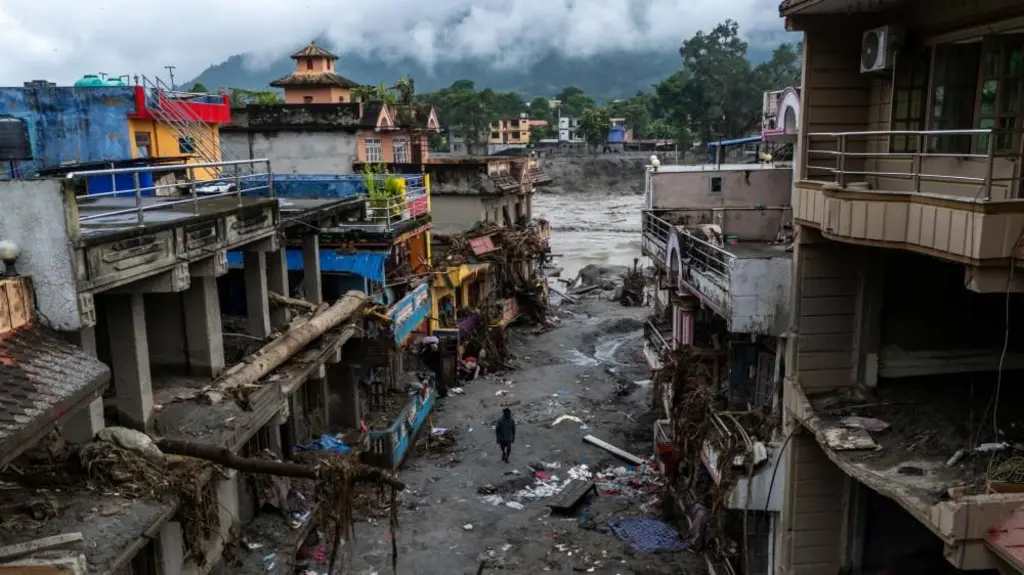
A head teacher’s quick decision to evacuate his school saved 900 pupils from deadly flash floods along the Nepal-Tibet border
Rajendra Dawadi tells the BBC he was tipped off about incoming flood waters and moved students to higher ground with just minutes to spare. One pupil says she and her friends survived by just 10 seconds and watched as a nearby bazaar was swept away
Wednesday’s disaster has killed at least 794 people and more than 2,500 people are missing in Nepal, local officials say
In Tibet, the official death toll is 16, with 546 reported to be missing, according to Chinese state media –
[BBC]

A ferry carrying around 260 people has capsized off the coast of northern Cyprus with a search underway for survivors, according to local media.
The catamaran-style boat was travelling from the port of Kyrenia, also known as Girne, and started sinking a few kilometres off the coast of the island state on Sunday.
There were no immediate reports of casualties.
[Aljazeera]

Sandhu’s 6 for 7 seals Pakistan’s semi-final spot

INS Udaygiri makes port call in Colombo

Showers in the Uva, Central and Eastern provinces and in Polonnaruwa district

22A: Exclusion of 8 petitions questioned, action filed against SC Registrar, others

Thailand shuts door on undesirables from Sri Lanka

Expertise France and the EU launch media project to strengthen environmental journalism in Sri Lanka

‘Dates have the highest sugar content to fight Coronavirus’

Sunday Island 27 December – Headlines

#SundayIsland 17th December – Headlines

Sunday Island – 28th March

Sunday Island Headlines – 21 March

Sunday Island – 21st February – Headlines
-

 News5 days ago
Denied of promotion to SC despite vacancies, justice Gurusinghe retires
-

 Latest News6 days ago
Grade 5 scholarship exam results released
-

 News5 days ago
22A: SC urged to suspend hearing, appoint full bench
-

 Midweek Review6 days ago
The local and global dynamics of Sri Lanka’s 22nd Amendment
-

 News3 days ago
Namal remanded until Sept. 18 over Airbus deal investigation
-

 Latest News2 days ago
Tharanga creates history with Diamond League crown in Brussels
-

 News5 days ago
Govt. seeks NATO assistance
-

 News6 days ago
40 professional organisations and TU oppose proposed 22A