
Latest News
Moungi Bawendi, Louis Brus and Alexei Ekimov win Nobel Prize in Chemistry


Scientists Moungi Bawendi, Louis Brus and Alexei Ekimov have won the 2023 Nobel Prize in Chemistry for “the discovery and synthesis of quantum dots,” which illuminate computer monitors and television screens and are used by doctors to map tumours.
“The Nobel Laureates have succeeded in producing particles so small that their properties are determined by quantum phenomena. The particles, which are called quantum dots, are now of great importance in nanotechnology,” the Nobel Committee for Chemistry said in a statement on Wednesday.
“Researchers believe that in the future they could contribute to flexible electronics, tiny sensors, thinner solar cells and encrypted quantum communication.”
Bawendi, of MIT; Brus, of Columbia University; and Ekimov, of Nanocrystals Technology Inc., were honoured for their work with the particles just a few atoms in diameter, according to the Royal Swedish Academy of Sciences, which announced the award in Stockholm.
Nanoparticles and quantum dots are used in LED lights and can also be used to guide surgeons while removing cancer tissue.
Quantum dots’ electrons have constrained movement, and this affects how they absorb and release visible light, allowing for very bright colours.
The dots are nanoparticles that glow blue, red, or green when illuminated or exposed to light. The colour they emit depends on the size of the particles. Larger dots shine red, and smaller dots shine blue. The colour change is due to how electrons act differently in more or less confined spaces.
While physicists had predicted these colour-change properties as early as the 1930s, creating quantum dots of specific controlled sizes was not possible in the lab for another five decades.
In a highly unusual turn of events, Swedish media reported the names of the winners before the prize was announced.
“There was a press release sent out for still unknown reasons. We have been very active this morning to find out exactly what happened,” Hans Ellegren, the secretary-general of the academy, told the news conference where the award was announced. “This is very unfortunate, we do regret what happened.”
Ekimov, 78, and Brus, 80, are early pioneers of the technology, while Bawendi, 62, is credited with revolutionising the production of quantum dots “resulting in almost perfect particles. This high quality was necessary for them to be utilised in applications,” the academy said.
Bawendi told the news conference that he was “very surprised, sleepy, shocked, unexpected and very honoured”. “The community realised the implications in the mid 90s, that there could potentially be some real world applications,” Bawendi said.
Asked about the leak, he said he didn’t know about the prize until he was called by the academy.
The academy, which awards the physics, chemistry and economics prizes, asks for nominations a year in advance from thousands of university professors and other scholars around the world.
A committee for each prize then discusses candidates in a series of meetings throughout the year. At the end of the process, the committee presents one or more proposals to the full academy for a vote.
The more than century-old prize is awarded by the Royal Swedish Academy of Sciences and is worth 11 million Swedish crowns ($997,959).
(Aljazeera)

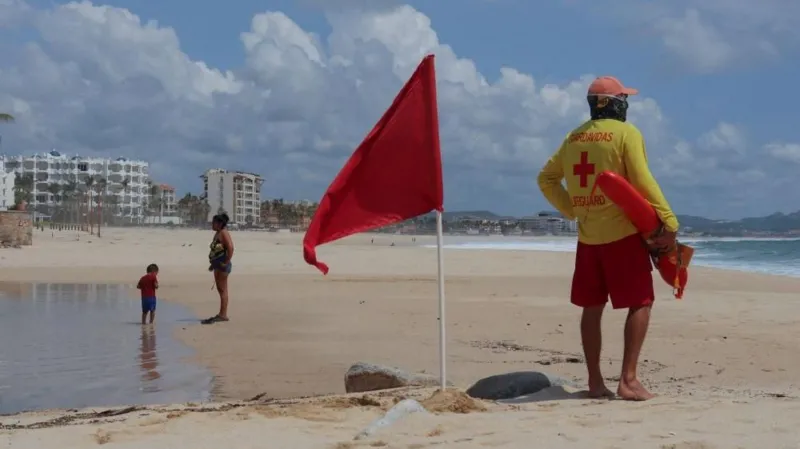
People living on the northern Pacific coast of Mexico are bracing for the arrival of Hurricane Polo, which is forecast to make landfall later on Monday or early on Tuesday.
The category three storm, with maximum sustained winds near 115 mph (185 km/h), is expected to move over the state of Baja California Sur, a region popular with tourists and home to the resort destination of Los Cabos.
Meteorologists at the US-based National Hurricane Center (NHC) have warned of heavy rainfall which could lead to life-threatening flooding and mudslides, especially in areas of steep terrain.
Residents on Sunday stocked up on essentials such as drinking water and food as the storm approached.
The NHC warned of the storm surge Hurricane Polo could unleash, which it said could be accompanied by large and destructive waves.
In Cabo San Lucas, famous for its natural rock arch, the authorities restricted access to the beaches. Some restaurants also closed in the town, which acts as a base for sport fishers and whale watchers.

The regional government of Baja California Sur has ordered schools to remain closed on Monday as a preventive measure.
Governor Víctor Manuel Castro Cosío said temporary shelters had been opened should residents need to be evacuated.
The federal authorities have also deployed thousands of members of the navy and the army along with specialised machinery.
Polo has been slowly moving towards Mexico’s coast line.
Meteorologists said it was being fuelled by extremely warm waters caused by the El Niño climate phenomenon.
(BBC)
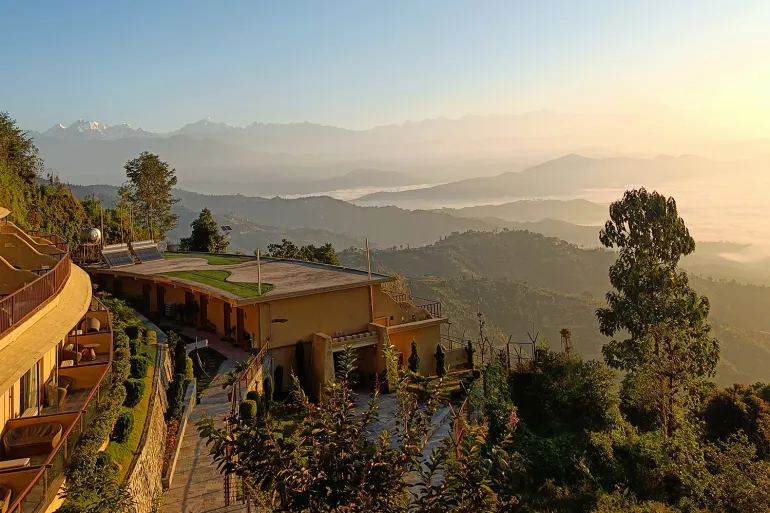
Like every year, Pushpraj Rimal, a tour planner and taxi driver in Nepal’s capital, Kathmandu, was looking forward to September for his business to boom.
But what he got instead was a series of cancellations by tourists after catastrophic floods last month killed more than 1,450 people and destroyed key highways, deeply impacting the Himalayan nation heavily dependent on tourism.
“It is still a lockdown kind of situation,” the 42-year-old told Al Jazeera nearly a month after the disaster.
Pushpraj, who speaks Nepali and Hindi, works on commission for several hotels and trekking companies in Kathmandu and the scenic town of Pokhara, known for its lake nestled in the Annapurna mountain range. Pokhara also serves as a base for Himalayan trekkers.
Nepal’s tourist season peaks after the monsoon ends in August and the skies are clearer. Tourism attracts thousands of international travellers, accounting for nearly 8 percent of Nepal’s gross domestic product and employs more than 1 million people.
Last year, Nepal saw more than 1.15 million tourists visiting the country, nearly a third of them during the September-November season.
But the floods this year, triggered by a glacial mountain collapse along the Nepal-Tibet border in the north, have pushed tourists away from the unaffected areas as well.
“I had rented two cars for two months, but I have done one fourth of the business I usually do in a season. Tourists generally start pouring in from September, but most of them have cancelled this year,” he said.
“I will get no commissions from the hotels or trek organisers, nor has the taxi business worked well. … I am now waiting for the season to end.”
Rimal has two children, Hema, 14, and Rahul, 12, whom he had promised a tablet this Dussain, a prominent Hindu festival that usually falls in October. “But it seems impossible now. I will have to break their hearts and my promise to them for the very first time.”
(Aljazeera)

World javelin leader Rumesh Tharanga lived up to his reputation to win Sri Lanka a highly anticipated gold medal, beating wet weather and track conditions at the Asia Games in Nagoya Japan a little while ago.
He took the lead with a massive 88.33 metres effort in his penultimate throw before sealing the contest with 88.55 metres throw.
He beat a strong field inclusive of reigning Olympic champion Arshad Nadeem of Pakistan. (Reemus Fernando)

Mexico’s Pacific coast braces for Hurricane Polo

Washout against Afghanistan sends India into semi-finals

‘Still a lockdown’: Deadly floods hit Nepal tourism as peak season begins

Tharanga wins highly anticipated Asian Games gold

Tharanga on cusp of Asian Games Gold

Rain threat looms over lopsided India vs Afghanistan quarter-final

‘Dates have the highest sugar content to fight Coronavirus’

Sunday Island 27 December – Headlines

#SundayIsland 17th December – Headlines

Sunday Island – 28th March

Sunday Island Headlines – 21 March

Sunday Island – 21st February – Headlines
-

 News6 days ago
Mastermind Naufer Moulavi among 15 found guilty
-

 Midweek Review6 days ago
Thileepan’s fast unto death: An authentic narrative that many missed
-
 News7 days ago
Protest against setting up of cement factory in highly populated area near BIA
-

 Editorial7 days ago
Trouble beginning in earnest
-

 Latest News5 days ago
Showers above 100 mm are likely at some places in the Western, Sabaragamuwa, Central and North-western provinces and in Galle and Matara Districts
-
Editorial6 days ago
Big Bad Bills
-
 News7 days ago
Police may seek clarification from US
-
 News7 days ago
Govt. confident of 2/3 majority despite NPP split speculation