
Features
Mother’s social life, her pupils who became her friends and Colombo’s Sindhi community

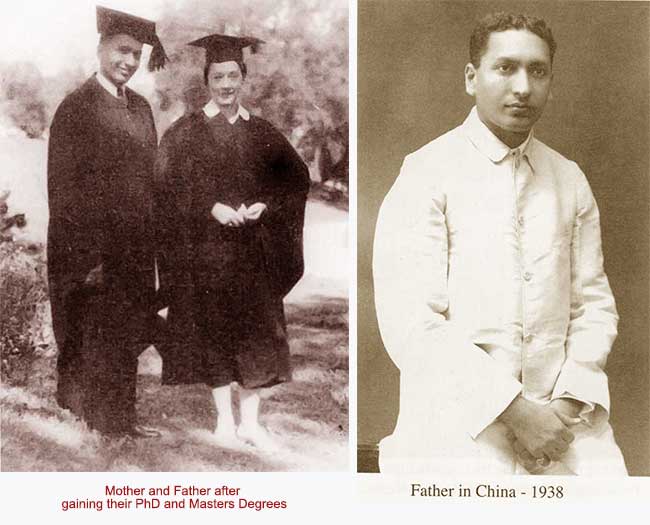
Futile bid to teach Father bridge
(Excerpted from Chosen Ground: The saga of Clara Motwani by Goolbail Gunasekera)
I am often asked if Mother had any social life to speak of The answer would be yes and no. She had very little leisure, but this was of her own making. To her, visiting her school hostel in the evenings and chatting with the girls, or just chit-chatting with her family constituted what Mother would term leisure. But she did have many close friends.
One was Lady de Silva whose nephew I eventually married, although we did not meet as a result of that friendship. Lady de Silva was on the Board of Trustees of Visakha. Mrs. Constance Gunasekara was another dose friend. Mother admired her forthright attitudes, and appreciated the enormous support she got from Constance whose daughter Rohini was a pupil of the school. Such. was the involvement of parents in Visakha at that time that Dr. C.H.Gunasekara activated a rarely used artistic talent to build the sets for the operetta The Bohemian Girl.
Miss Chandra de Zoysa, the Vice Principal of Visakha (long after Mother had left), and Yoga de Soysa were personal friends as well, following Mother in the role of President of the Sri Lanka Women’s Federation. She often spoke of Mrs. Winifred Rodrigo, a lady she very much liked for her unorthodox views. Mrs. Rodrigo (Wincy) was a lady ahead of her times. She was, in fact, the first woman to graduate with a degree from the University of Ceylon.
According to Mother, Wincy once dressed herself as a village woman and sat in a hospital queue, just to prove that the common person found it hard to get medical treatment in a hurry. When Wincy eventually reached the doctor, she found she knew him socially.
“What on earth are you doing in fancy dress?” he is said to have inquired.
“Checking on you, and your goings on,” she replied laughing.
Now that sort of tale Mother remembered. She and Wincy enjoyed a long friendship.
The famous Canadian-born doctor, Mrs. Mary Rutnam, was another close friend Mother admired a great deal. I was a ‘Rutnam baby’, in fact, as she was Mother’s doctor when I was born. Dr. Rutnam had married a Tamil, and had four highly educated sons and one daughter. In common with other educated foreign mothers, Dr. Rutnam wanted an educational variation for her five children.
Accordingly, Donald went to Cambridge and became a civil servant. Alan went to the University of London to study medicine, Robin went to the prestigious Macgill University in Canada while Walter went to Antioch University in the USA. Robin and Walter joined the business world of Colombo while Helen, her only daughter, went to Paris and then to Canada.
Dr Rutnam’s granddaughters, Anne and Nadine, are family friends as well they might be. They had a perfectly stunning mother to whom I quite lost my four-year-old heart two years before Anne was born. Anne grew up being told by tactless friends, “You are pretty of course but not a patch on your mother.” She’s resigned to all of this.
As a Sindhi, my father belonged to a community that had a large representation in Colombo. While he did not belong to the wealthy merchant class (alas), he was nonetheless very respected as an academic. My parents often stayed with the Chandiram family in their huge mansion down Charlemont Road. It had to be huge, to accommodate Mr. Chandiram’s family of eight children all of whom (the girls, I mean) were Mother’s pupils.
When the Chandirams experienced business reverses, Father reminded his old friend of the time he had advised him to buy land in Nugegoda which was going at a ridiculously low price. Father was fond of saying ‘I told you so’. He did so now.
If you had listened to me,” he told Mr. Chandiram, “you’d have that land as an investment.”
It was true that Father was a whiz at advising others how to make money, but never made it for himself
“How would I, a mere professor, dare to advise a business tycoon,” he would tell his friend, Muni Kundanmal, and then proceed to advise him on every aspect of his financial affairs. Father understood finance, but he used to say his nerves would not stand the strain of any risk. He had no trouble, however, advising others to take risks.
Mother got on excellently with her husband’s Sindhi community. Kamala Hirdiramani and Dru Mirchandani were frequent bridge partners of hers. But apart from this, we often had fabulously cooked Sindhi food at their homes as well as in the homes of the Shewakram and Melvani families. In Nuwara Eliya we did likewise in the Butani household. Mr Butani’s daughters Maya and Pushpa are still friends. Try as they might, our cooks never quite learned to get that flavour.
Apart from Dr. and Mrs. E. M. Wijerama, whom we saw on a regular basis, Mother was very fond of the first pupils she had had at Visakha. After all, she was barely a few years older than they were when she became Principal of the school at age 23. Su and I were often flower girls at their weddings, and most of them remained her friends until she died. Among these were her very dear pupils like Beryl de Silva, Lakshmi Edirisinghe, Bona de Lanerolle, Christobel Weerasinghe and several others I have mentioned throughout this book in one connection or another.
Eileen and Conrad Dias were another couple for whom Mother had a great affection. She would always say that Conrad was the epitome of a perfect gentleman, in that he never raised his voice. She would accompany them on week-end trips out of Colombo. It was usually a sort of bridge holiday. Father was not included in such outings, for the simple reason he was not often in Colombo and even if he were, he just could not learn the game. He tried.
“How can I be expected to know what cards people have in their hands?” he would complain.
“Follow the bidding,” Mother would explain.
“But they try to hoodwink me,” he would say indignantly. “It’s cheating.”
“Nonsense, dear. You must try to out-guess them.” “I’m a trusting being,” he would reply.
As the names of Mother’s friends come crowding into my mind, I realize the futility of attempting to mention them all. Her life revolved round her schools. Her leisure time was greatly taken up by us, her two daughters, but when we went away to university, she had the time to indulge in her favourite pastimes: playing bridge and studying comparative religion.
During the last 18 years of Mother’s life, she lived with Bunchy and me. He was high on her list of favourite people, superseded only by Su, Khulsum and myself. Mother had a heart condition, and for this reason I felt happier when she was under my roof. When I asked Bunchy if I could invite her to live with us, he complied with an alacrity I found very sweet. Mother told him this herself Not wishing to show emotion at this emotional moment, he said:
“I have a reason, you know. When I fight with Gool, you always take my side.”
Mother’s living with us meant our daughter Khulsum grew up with a live-in grandmother. I recommend this to all young couples. No mother will have the patience of a grandmother, who willingly becomes a captive audience to children wanting to act out plays, dance and sing. No one but a grandmother will so cunningly ensure that the game of Monopoly always goes in a grandchild’s favour.
I would watch Khulsum and Mother seated at a card table. In front of Khulsum were notes of every Monopoly currency. At Mother’s end of the table, notes were in very short supply. Khulsum was a real little Rockefeller.
“Pay me, Granny,” she would chortle, as Mother moved up five properties to land on a Hotel bearing one.
“That was a four you threw,” I’d tell her.
“No, I saw a five,” said Mother, paying out a few hundreds more than were needed.
“I saw a five too,” little Miss Croesus would say indignantly.
“And why can’t you count out the money accurately?” I would ask Mother.
Her mind would scurry round for an excuse.
“I’m an American. I never learnt to count in pounds,” she would say. “This little girl is just so clever.”
The little girl in question would preen happily while Bunchy and I gasped with exasperation and left them to a game played entirely to Khulsum’s satisfaction.
But Mother did not only play Monopoly with Khulsum. She also taught her to play Scrabble, thus ensuring that her granddaughter familiarized herself, painlessly, with unusual words. Khulsum was soon scoring unbelievably high marks by putting down words like `Zo’ and Xd on triple word squares. Mother did not allow her to win in Scrabble unless she was able to do so on her own steam.
When Mother died, the vacuum she left in our lives was unbelievable. By then her great-granddaughter had also been born, and her last words were to Tahire.
“I love you, Granny,” Tahire said as she said goodnight.
“I love you too, honey,” Mother replied, before falling asleep. She never woke up.



 The current outbreak of anti-immigrant protests in Durban, South Africa is bound to have taken many a subscriber to value-based politics or political idealism quite by surprise. After all, this is evidence that despite the historic accomplishments of nation-builders of the stature of the late President Nelson Mandela it cannot be taken for granted that identity politics, including racism in its worst forms, is no more in South Africa.
At the time of this writing details are scarce on the substantive root causes of the protests but it could very well be that economic grievances, particularly on the part of the majority community in South Africa, are contributing considerably to the disaffection. Shrinking employment and material prospects are likely to figure majorly among the factors igniting the unrest.
Fortunately, the local authorities in Durban are losing no time in calling for peaceful co-existence among the relevant communities and are pointing to the vital importance of stepping-up national integration processes. Apparently, immigrants in sizable numbers from neighbouring countries are present in Durban. However, international TV footage of the protests quoted some local authorities as saying that the majority of the immigrants in some centres that housed them were not illegal migrants and had the documents that entitle them to be in Durban.
In the Durban protests the world has fresh proof of the socially divisive consequences of the gathering globe-wide economic disaffection, touched off particularly by the continuing crisis in West Asia. Going ahead, the world would need to brace for increasing identity-based unrest of the kind it is just witnessing in South Africa.
Considering that the material lot of ordinary people everywhere could only aggravate progressively, with the US and Iran showing no signs of negotiating an end to their confrontation any time soon, it will be left to the more democratic and progressive sections of the world community to initiate positive measures collectively to bring a measure of relief to the discontented.
The swiftness with which such relief will be provided would depend crucially on the importance those sections taking up these undertakings attach to value-based politics as opposed to Realpolitik of power politics.
Going by these yardsticks, Italy could be considered to be moving in the right direction. Recently Italy came to the fore in initiating the collective named, ‘Rome Coalition for Food Security and Access to Fertilizer’, which has as one of its aims the swift provision of fertilizer to economically weak African countries.
In a recent statement Italian Minister of Foreign Affairs and International Cooperation, Antonio Tajani, said that a principal aim of the project was to ensure that the farmers of Africa gained easy access to fertilizer, considering that food security is a growing concern among some of Africa’s economically vulnerable countries.
The statement went on to mention that some 30 countries hailing from the Mediterranean region, the Middle East, the Balkans as well as the FAO had been invited to join the coalition. The venture is far-seeing in that food security is main among the reasons for social discontent which in turn could degenerate into endemic political turmoil and bloodshed. Separatist violence and geographical fragmentation of countries wouldn’t be too far behind these developments, as Africa itself has often proved.
It is hoped that more G7 countries would take the cue from Italy and do what they could to ease the hardships of economically distressed countries, particularly of the global South. In these efforts they would need to break rank with the US, which is today brutally indifferent to the consequences of its policy of making ‘America First’, come what may.
Going by current developments, the Trump administration seems to be blithely oblivious to the wider, deleterious effects of its policy course in West Asia. Besides rendering Iran militarily and otherwise impotent nothing else seems to matter to Washington, as regards West Asia. This is policy short-sightedness of an extreme kind. After all, right now West Asia could be said to be sitting on the proverbial powder keg.
On the other hand, Iran is not giving the world the impression that it is doing anything constructive to get out of the policy straitjacket that it wove for itself decades ago. Rather than enter into a policy of ‘live and let live’ in relation to Israel in particular and initiate a process of reconciliation with the latter, it has chosen to operate within policy parameters that continue to damn Israel. This has put Israel always on the ‘defensive’ so to speak and prevented the opening up of space for meaningful dialogue.
That said, Israel is obliged to explore the possibilities of entering into a negotiatory process with the Arab-Islamic world that could lead to a de-escalation of tensions and bloodshed. It cannot continue to look at its neighbours through lenses that distort them as archetypal enemies who should be ‘wiped off completely from the face of the earth.’
In other words, the need is urgent for Realpolitik to give way to value-based politicks. Italy is beginning to prove that the latter approach could be pursued with some success. May be the EU and the UK could throw their weight behind these initiatives as well and establish that international politics could be refashioned on the basis of humane, civilized norms. The UN would need to be fully supportive of these moves and prove an organizational nucleus of the operations that follow.
In fact the time is ripe for people of conscience to collectively stand up on the side of peace and say ‘No’ to war and violence. Organizations such as the ICRC, the WHO and Medicines Sans Frontiers have already taken up this call. Referring to the widespread destruction of health facilities and their dehumanizing results these organizations have said, among other things, that ‘This is not a failure of the law. It is a failure of political will.’
True, ‘failure of political will’ among those powers that matter accounts for the runaway, uncontrollable nature of war and destruction in contemporary times, but more fundamentally it is a failure of the human conscience. It could very well be that the phenomenal levels to which violence and war have been unleashed today have had the effect of deadening consciences. This is a matter for urgent study and wide discussion.

 I would describe Indunil Kaushalya Dissanayaka as innovative and creative, and she operates under the name of Cuteefly.
Indunil always comes up with something novel to celebrate special occasions, and she does it with candles … and that’s her profession.
She was in the spotlight when she created a happening scene, with candles, for Christmas, Sinhala and Tamil New Year, and Valentine’s Day.
As lanterns light up Sri Lanka for Vesak, the Colombo-based candle maker is quietly turning wax and wick into little pieces of the festival.
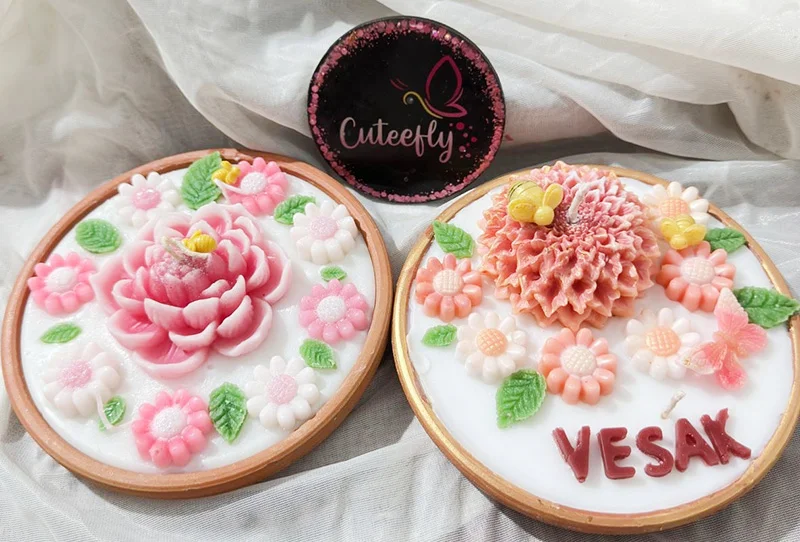
Candles reflecting Vesak themes
Her candles reflect Vesak themes – light, peace, remembrance, giving, etc., to enable you to fill your Vesak celebration with devotion and beauty.
Among her Vesak creations is a lotus-shaped soy candle, scented with sandalwood, lavender, etc., meant to burn during this Vesak Poya Day.

Indunil Kaushalya Dissanayaka: Customers
praise her for her creativity
These handcrafted Vesak candles are perfect for offering at the temple, she says.
What makes her creations so novel is that they come in different shapes, scents, themes, and all are handmade.
What’s more, her customers have heaped praise on her for her creativity.
According to Indunil, her creations are perfect as a thoughtful gift … to bring beauty, unity, and light into every moment.
Says Indunil: “Our beautifully handcrafted Unity candles are designed with premium detail and love, making them perfect for celebrations, gifts, and meaningful occasions.”
Cuteefly, says Indunil, is available online.
Readers could contact Indunil on 0778506066 for more details.
He Facebook Page is: Cuteefly.

Handmade with love

 Yes, dark spots do crop up on the skin, especially with sun exposure and, of course, as the skin ages.
However, these tips should be of immense benefit to those who are faced with dark spots.
* Lemon and Honey Glow Mask:
You will need 01 teaspoon lemon juice and 01 teaspoon honey.
Mix the lemon juice and honey well and then apply this mixture, only on the dark spots.
Leave for 10–15 minutes and then rinse with cool water.
Benefits:
Lemon helps brighten pigmentation.
Honey moisturises and heals skin.
Gives a natural glow.
* Aloe Vera Gel Treatment:
All you need is fresh aloe vera gel.
Apply the gel apply on dark spots, before going to bed.
Leave overnight and wash in the morning.
Benefits:
Reduces acne marks and pigmentation.
Soothes irritated skin.
Helps skin repair naturally.
* Turmeric and Yoghurt Paste:
You will need 01 teaspoon yoghurt and a pinch of turmeric
Mix the yoghurt and turmeric into a smooth paste and apply on affected areas.
Leave for 15 minutes and then wash gently with lukewarm water.
Benefits:
Turmeric brightens skin naturally.
Yoghurt removes dead skin cells.
Helps fade dark spots gradually.
Use these packs 02-03 times a week as results are generally seen over time.
You can also try this out: Mix a ripe papaya into a smooth paste and apply to the face, or directly on to the dark spots. Leave for 15-20 minutes and then wash with lukewarm water.

Advisory for strong winds and rough seas for the sea areas extending from Kankasanthurai to Chilaw via Mannar and from Galle to Pottuvil via Hambantota

West Indies to host Sri Lanka, New Zealand and Pakistan in 2026 home season

Hacking claims, mismatched answer-sheets: Controversies rock school exam in India

Iran says it targeted American base after fresh US strikes

Farmers Affected by the Nilwala Salinity Barrier paid Rs. 1.2 Billion in Compensation

State Vesak Festival held with the participation of the President

‘Dates have the highest sugar content to fight Coronavirus’

Sunday Island 27 December – Headlines

#SundayIsland 17th December – Headlines

Sunday Island – 28th March

Sunday Island Headlines – 21 March

Sunday Island – 21st February – Headlines
-

 Business7 days ago
Historic launch of CCWE Fashion Week & International Summit 2026
-

 News5 days ago
All-New GRAVITE launches at LKR 6.99 Mn
-
 Features5 days ago
The NPP’s pivot to the past
-
 News4 days ago
Police probe underway to ascertain links between criminals deported from UAE and local politicians
-
 News3 days ago
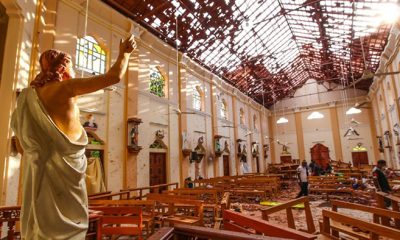
Easter Sunday carnage: Court told Maulana’s statement cannot be accepted without cross-examination
-

 Opinion7 days ago
The need to reform Buddhist ecclesiastical order
-

 Features5 days ago
End of Peacekeeping
-

 Opinion3 days ago
Undermining the democratic political framework